“S.B., what’s a matter with her?”: Josephine Keza, the fly on the walls of Arbuckle’s Labor Day Party[1]

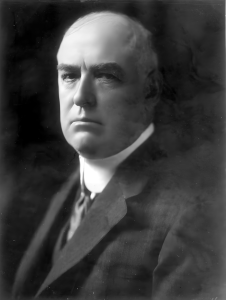
Josephine Keza, 1921 (Collection of the author)

Assistant District Attorney Milton U’Ren interviewed Josephine Keza, a Polish immigrant and hotel maid, in room 1220 of the St. Francis Hotel on September 16, 1921, one week after Virginia Rappe’s death. Her statement, read into the record of the first Arbuckle trial, provides a different take on Virginia Rappe’s arrival at the Labor Day party. 

Mrs. Keza had been going in and out of all three rooms of the Arbuckle suite—1219, 1220, and 1221—throughout the late morning of Monday, September 5. Arbuckle, Fred Fishback, and Lowell Sherman let her work around them. Missing in her account is Ira Fortlouis, the gown salesman, whose sighting of Rappe in the Palace Hotel resulted in her invitation to Arbuckle’s suite and what happened to her during the course of the afternoon.

Keza noticed Arbuckle shaving in room 1219’s bathroom. She paid special attention to a man named “Freddie,” the comedy director Fred Fishback, Arbuckle’s roommate in 1219. She heard him trying to telephone Rappe from the room’s telephone and getting no answer. If so, it adds another link in the chain of events. It means that (1) Fishback didn’t need Fortlouis to tell him what he already knew, that Rappe was staying at the Palace; and (2) Fishback tried her room first before having her paged in the hotel dining room.

Keza also saw that Fishback was in charge of the liquor supply, keeping it under lock and key in room 1221’s closet. In her rambling account, she may have seen him drinking, too. (During the three Arbuckle trials, Fishback was adamant about shunning both alcohol and cigarettes.)

U’Ren, of course, wanted to know what Arbuckle did, which wasn’t easy, given Keza’s Polish accent and command of English. She was, nevertheless, observant. The party proved to be a rich source of gossip for her workmates below.

To Keza, the comedian and the actress were on familiar terms when she entered the reception room, 1220, shortly after Rappe’s arrival. She knew Fishback and Arbuckle’s friend, the actor Lowell Sherman, who had also come from Los Angeles for the long weekend in San Francisco. At first, they were the only ones in the room.

Q. And then Mr. Arbuckle came in?
A. Yes, sir, then he came out from the bathroom and he come right straight to Miss Virginia and he talked to her very closely. I can’t say if he kissed her, or he spoke to her. They were talking very quiet. I didn’t listen.
[. . .]
Q. Did you hear the sound of a kiss?
A. No.

Whether Arbuckle planted a kiss is moot. But other guests saw that he and Rappe paired off and that she enjoyed his company.

Understanding Keza was one thing. Getting the sequence of events from her must have been maddening. U’Ren wanted to hear what the other witnesses had told him. Arbuckle had been disturbed in whatever he was doing to Rappe on his bed in 1219. As soon as he left the room, his guests tried to help Rappe. As she eavesdropped from an adjacent room, Keza only heard a certain disregard, even resentment.

Q. Did you hear a crowd in 1219 while you were in 1218?
A. Yes. I was in 1218. There was a whole bunch talking and hollering and they go back to the parlor and holler and were dancing and that girl was crying.
Q. Did you hear anybody knocking on the door [of 1219] before the crowd went into the room.
A. No, sir.
Q. Did you hear anybody say, “Open the door”?
A. No, I didn’t hear that.

This had to frustrate U’Ren, who was, perhaps, more than just enthusiastic about taking on the Arbuckle case. Keza wasn’t corroborating what the other guests were saying, especially the women he intended as state witnesses.

Keza heard people laughing as Rappe screamed “Oh my God! No, no, no!” Continuing to listen to the hubbub of the guests inside Arbuckle’s suite, Keza caught a glimpse of a partially clad couple running between one room and another.

A. [. . .] I couldn’t catch it quick, because I was taking my towels, or something, from the closet, but I saw a man come through the room [i.e., the hallway], but I couldn’t say whether from 1219 or 1220, but he came out from one of those two rooms, and then I saw a woman, undressed, go out and run quick to number 1220. She was undressed, she had nothing on, just a combination suit, what you call it.[2]
Q. She could have come from 1220 and run in[to] 1221?
A. She didn’t go to 1221, she go to 1220, the parlor. I didn’t see where she came from, but I saw her right in the hall. She sneaked as quick as she could. First the fellow get up, then she was the next one, then they slammed the door.
Q. First a fellow, then a girl?
A. The fellow first.
Q. How was the fellow dressed?
A. I didn’t see. I just saw the bare feet of a man. I saw the shoes—
Q. (Interrupting) Was the girl in her bare feet?
A. She had her shoes and stockings on.

U’Ren intended to leave the mysterious couple out of his direct examination of Josephine Keza. He had also left out other details so that he could make Rappe’s utterances into a single one, more like a woman suddenly afraid of being hurt, of being raped, after Arbuckle had her cornered in his bedroom, on the other side of 1219’s hallway door. This was how a messy case was cleaned up by district attorneys, to make the crime easy to understand for a jury.

Arbuckle’s lawyers knew what U’Ren did. They considered him a dirty prosecutor for his neat work. And U’Ren hardly protested when Gavin McNab, the comedian’s lead counsel, had him hand over Keza’s statement to be read aloud to jurors. They had more evidence to consider, not only did Rappe’s cries of pain extend over a period of time. They had a few snapshots of what the real Labor Day party was like along with the straightened versions on the part of both the prosecution and the defense.

(See also “I heard a man’s voice say ‘Shut up.’”)


[1] This is from Keza’s statement, where she quotes an exchange she heard between two women in room 1221. “S.B.” was likely the stenographer’s abbreviation for “stupid bitch,” in reference to Rappe.

[2] A “combination suit,” a single undergarment, consisting of a camisole and panties.

Hollywood’s Problem Presented in Allegorical Fashion, February 1922

During the first week of February 1922, Roscoe Arbuckle came close to being convicted of manslaughter in a San Francisco courtroom; the director William Desmond Taylor was found murdered in his Los Angeles home; and Will H. Hays, the new motion picture czar, was planning to come West to “clean up” Hollywood.

The producer Carl Laemmle and other film executives insisted that the majority of actors, actresses, and those behind the camera were moral people. But there was an undercurrent that ran counter to such glowing self-regard and, for our work-in-progress, it deserves study, context, and certain degree of respect.

Helen Merrill of the San Francisco Journal wrote a regular column with a feminist slant—as it was in the early 1920s—and, on February 17, she turned to allegory and parody to describe the delicate situation that Arbuckle made for his stakeholders: They were losing women, or, at least very influential women who weren’t going to stop with suffrage and Prohibition.

Such opinion pieces are now antiquated. But they help us imagine the Zeitgeist of the era. They reveal the hole Arbuckle had dug for himself during the weeks before his third trial and ultimate acquittal for manslaughter. Despite the effort undertaken to win over American women in the movie magazines— including reuniting Arbuckle with his estranged wife, he was still tainted by, if not guilty of, the death of Virginia Rappe.

Mrs. Merrill, like many American women, wasn’t focusing on “Fatty” but rather his Labor Day party. We know little about what happened, but it was likely once common knowledge on the streets of San Francisco and as far away as Los Angeles. Mrs. Merrill only needed to have casual conversations with fellow journalists, the police, detectives, lawyers, bailiffs et al. If she had sat in on the two previous trials, she would have heard what was in the lost court transcripts. The scantily clad guests, the pairing off, the multiple partners, who participated, as well as the liquor, smoking, eating, the dirty dancing of 1921, and the rest could be imagined, inferred from the sanitized reportage. Mrs. Merrill was a fixture in a rather chummy, well-connected world so could read between the lines. She knew the showgirls who partied with Arbuckle, the actor Lowell Sherman, and other male attendees.

And Rappe? She is lost in this parable. Long before she was wrongly portrayed as a “bit player” in so many Arbuckle case narratives, Rappe really was a bit player to Mrs. Merrill and her kind. They didn’t know if she was just another working girl at Arbuckle’s party or a good girl as she was initially portrayed, a pretty face whose smile Arbuckle mistook for a genuine interest in him.


Woman’s Editorial

by Helen Merrill

The moving picture Industry is a new empire containing the most powerful agencies for good and evil of any dominion since the beginning of the world. “It has no natural limit, but is as broad as the genius that can devise or the power that can win.” In its separate states, kings, queens and subjects have grown phenomenally rich as the empire’s sacred treasure, Aladdin’s lamp, has been passed among them. As they rubbed the lamp, behold! Precious gold poured into their laps. The multitude, rich, poor, old and young brought oil to feed the lamp. The children offered only drops of oil, but they were very precious and very great in number and made the flame burn more brilliantly than the oil that all others brought.

Certain rich men in the land discovered that the secret of releasing the lamp’s treasure was to turn its light upon pictures for the oil bearers to behold. Whoever conceived the most attractive pictures, whoever portrayed them were allowed to approach nearest to the lamp. Many fair maids and brave youth, in their eagerness. succumbed to temptation in order to win the magic lamp’s metal. Then, not I knowing what to do with their unaccustomed riches, wallowed in prodigality. Vice claimed them and they began to flaunt grossness, not only in their private lives. hut in licentious pictures.

But “the gods are just, and of our pleasant vices make instruments to scourge us.” Suddenly, a clown, Roscoe Arbuckle, whose antics made the people laugh, indulged in a base orgy where death entered in. It was then that the deceived multitude learned that the whole empire was threatened with decadency. As the lamp burned low, the rich men who had discovered its secret walled loudly and assembled to study the cause.

“It is because, though we have an empire,·we have no emperor,’’ they decided. So they sought in a place of honor, in the administration of the United States Government, one to become their ruler. He was Will Hays, who told them that the multitude brought lees oil to the lamp because they were offended, and feared that the hearts of the young would become petrified if they continued to behold evil.

The rich men at once decided to build a model city, where those who aspired to rub the lamp should live, and where there would be a community church erected for the dwellers in the city of virtue to rush in and hear good counsel.

But scarcely had the execution of the plans for improvement of the empire begun, when William D. Taylor, one or the rulers of an important state, was sent to his death. The multitude is again turning coldly from the lamp and the rich men of the empire are rending their garments and lamenting the changeableness of public opinion. Their new ruler, Will Hays, has doubtless counseled them that the world has at last awakened to the dangers which hover round the lamp, when its vicinity might so easily have been made a realm of security, honor and joy.

As the work or upbuilding goes on under his sway, may he succeed in persuading them to write in letters of fire upon the walls of all the temples: ‘‘Better that a millstone were hung about thy neck and that thou wert cast into the bottom of a well than that thou shouldst offend one of these little ones.’’

Art imitating life? Lowell Sherman with a pair of lovelies on his hands in Molly O (1922). This scene was filmed a few weeks before Arbuckle’s ill-fated party on September 5, 1921. (Archive.com)

Vamps! Fitting a bête noire of the motion picture industry into a work-in-progress

The following passage is from our work-in-progress. It is a preamble to a section titled “Fatty’s in Town” and introduces a person—a caricature really—found in William J. Mann’s bestselling Tinseltown (2014), an entertaining book about the unsolved murder of the actor and director William Desmond Taylor, which occurred two days before the second Arbuckle trial ended in a hung jury. Although Mann misidentifies the Rev. Dr. Wilbur Crafts as the leader of the Lord’s Day Alliance—who, for the record, was Rev. Harry L. Bowlby—Crafts did play a role in the crusade to regulate motion picture content.

In 1895, Crafts and his wife, Sara Jane Crafts, founded the International Reform Bureau in Washington, D.C. as a platform from which to lobby on behalf of Christian values. Over the years, they were primarily concerned with temperance, though also campaigned against smoking, gambling, drugs, divorce, and the Ku Klux Klan. They also lobbied for suffrage and the education of children. Late in his career, after the 21st Amendment (Prohibition) was passed, Dr. Crafts turned his attention to Hollywood.

Mann describes Crafts as Adolph Zukor’s bête noire. That designation gives Crafts too much credit, Zukor, the president of Famous Players-Lasky/Paramount, the biggest studio in Hollywood, wasn’t so easily intimidated, and this self-appointed crusader didn’t have the political muscle to force a change. Crafts’s campaigns against Hollywood did make the news though and Zukor didn’t ignore the message. He sensed that a change would soon be needed to protect the industry from government interference.

service-pnp-hec-30500-30501v

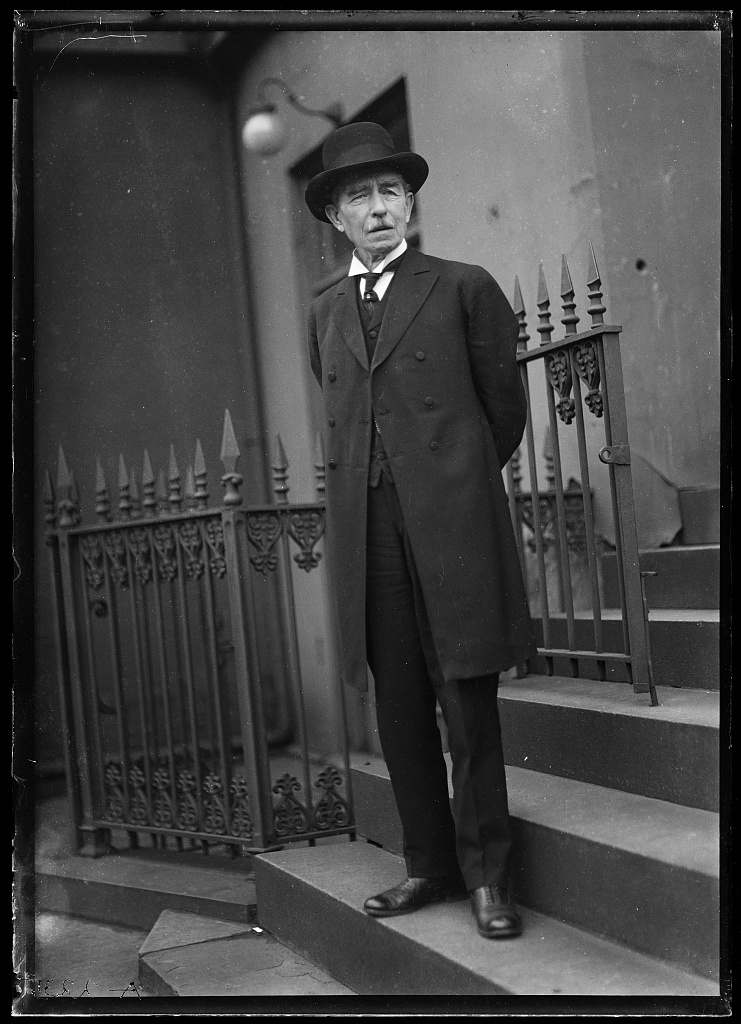
Rev. Dr. Wilbur F. Crafts (Library of Congress)


Fatty’s in Town

The Rev. Dr. Wilbur Fisk Crafts, superintendent of the International Reform Bureau, virtually anticipated the arrival of Virginia Rappe and Roscoe Arbuckle. The great man went to San Francisco for its lifestyle and to save people like themselves from themselves.

Dr. Crafts was the veteran of many hard campaigns to establish blue laws throughout the United States and the Volstead Act. Indeed, the old gentleman with his trim gray beard and mustache considered Prohibition a lifetime achievement. Then he embarked on a renewed campaign—to regulate the offensive content of motion pictures, including the posters outside theaters.

Such activism brought in the donations that funded the Reform Bureau and Dr. Crafts now had the time to take on the motion picture industry in earnest. In 1916 he had lobbied the House Committee on Education for a federal censorship of motion pictures. But Mutual and other studios had better lobbyists and Wilbur was frustrated. He also wanted to ban newsreels of boxing matches, not only for their violence but the way they incited race hatred when the bout was between Jack Johnson and a white boxer. Then, between Thanksgiving and Christmas 1920—and in recognition of the tercentennial of the Mayflower landing—the man of faith forced himself to attend one motion picture after another in the theaters of Washington, D.C. and came away appalled by the “criminal and vicious tendencies” he witnessed firsthand, and the “sex thrill” taking the place of the “alcoholic kick.”

The depictions of women and their effect on young people were particularly offensive. “I would rather have my son stand at a bar,” he said, “and drink two glasses of beer than have him see the vampire woman that I saw. He may get over the effects of the beer in a week, but he could not forget that vampire woman until he was eighty years old.”

Dr. Crafts promised to rescue “rescue the motion pictures from the Devil and 500 un-Chrisitan Jews.” Then he came to many of the latter in the motion picture capital of the world, Los Angeles, in April 1921. There, he would speak to studio executives about the need “to reform and uplift the character of film productions” and to sell his idea of an interstate motion picture commission, which entailed hiring devoted men and women like himself. But he only met with one producer, Benjamin B. Hampton, whose westerns didn’t have any vamps. Then Crafts boarded a train for San Francisco.

He had two objectives. First, to protest the showing of a new film, Fate (1921). Its ingenue star, Clara Smith Hamon, was seen as exploiting the story of her life as the teenage mistress of the late Jake Hamon, the Oklahoma oilman—and friend of President Warren Harding—whom she had killed in self-defense, a plea her lawyers cleverly used to beat a murder charge. Second, Dr. Crafts intended to establish a branch of the Anti-Saloon League in the “wickedest and wettest” city in the nation and launch a campaign to “clean up” San Francisco to be launched in the fall of 1921. And here Dr. Crafts met his real match—modern women—a “pernicious evil.”

“Women of today have only two objects in life,” he said to the San Francisco Examiner,

to vamp and be vamped. We intend to change that [. . .] The only way to keep the girls of today straight is to make them fear the consequences of wrongdoing. There is no such thing as a prodigal daughter, and there shouldn’t be.

He went on. A certain leniency toward the “fallen woman” was not just a grave mistake, it was criminal. Crafts didn’t like “movie queens,” the “chic” and “baby doll” type on the cover of so many magazines and now everywhere in every American city. He preferred the pert breasts and arm freedom of the Venus de Milo—this even though the man of the cloth a month earlier decried a nude statue by Charles Cary Ramsey in New York for not being draped enough). But many clubwomen were no less appalled by his obvious misogyny and the mischaracterization of their city.

“Contempt is the proper spirit in which to treat such utterances as Crafts is quote as making,” said Mrs. Frank G. Laws, president of the California Civic League. Mrs. Carrie Hoyt, a Berkeley feminist and political worker, was more vocal. I think it is a crime for a man to make such statements as he is quoted as saying,” she said in the Oakland Tribune.

What he needs is a deputation of California women to demonstrate to him that they neither have time nor inclination to “vamp or be vamped.” He needs to be shown what manner of women we of the west are. [. . .] A man has no right to come and advertise to the world that San Francisco is the wickedest city of the nation. We are not so wicked as many other cities. What vice we have is not hid. Our women may go anywhere they please and if the go right, they are not insulted.

There was no deputation. Dr. Crafts initiative against motion pictures, pretty young women, and San Francisco faded away. The Zeitgeist that made the city such an attractive destination for sinners, especially the sinners of the film colony in Los Angeles, who opened their arms to him, or so he thought, were glad to see their gadfly gone. Dr. Crafts spoiled no one’s fun for the time being and the prodigal daughters of San Francisco awaited.

* * *

Arbuckle and his companions, the director Fred Fishback and the actor Lowell Sherman, set out from Los Angeles on Friday, September 2,  [to be continued ]


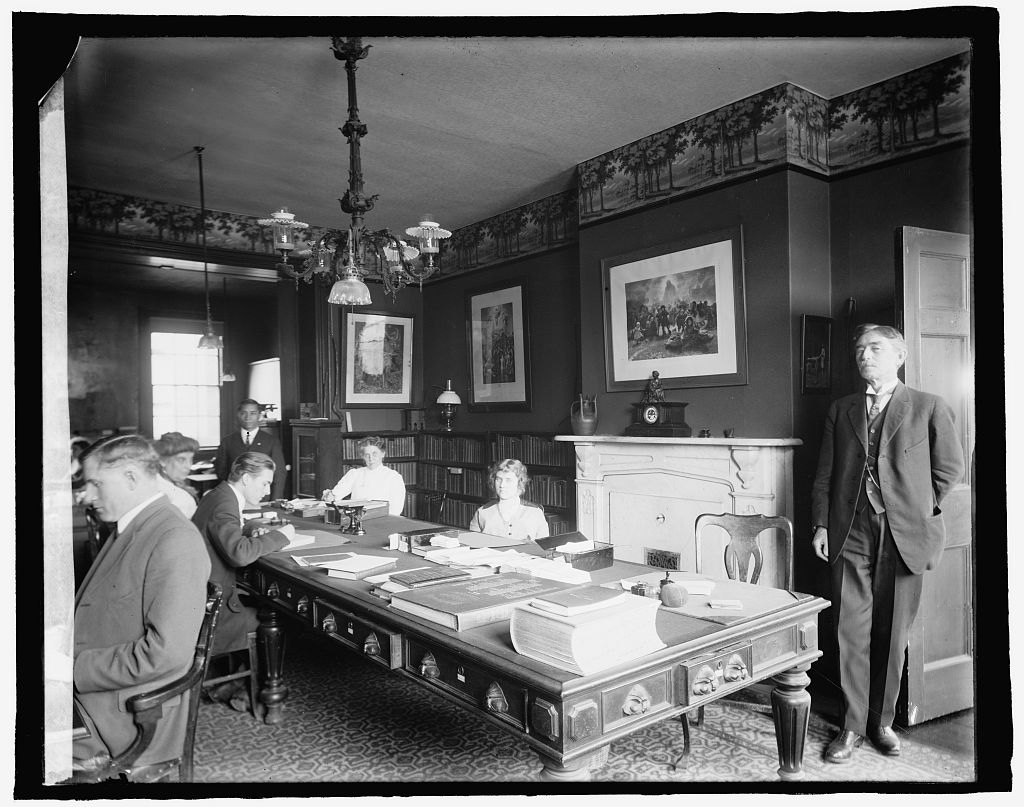
service-pnp-npcc-31600-31661vThe Rev. Dr. Crafts and the staff of the International Reform Bureau. The African American man in the background ran the organization’s printing press. (Library of Congress)

100 Years Ago Today: Arbuckle calls Rappe a bum

For most of Saturday, September 10, Roscoe Arbuckle and his pals Fred Fishback and Lowell Sherman once again drove north on Highway 4, which is now California 99 and Interstate 5, to San Francisco. Only this time in a much less joyful mood and with company. Arbuckle rode in his Pierce-Arrow which was driven by his chauffeur, and also carried his manager Lou Anger, and Frank Dominguez, his newly appointed attorney. Fishback followed in his car, accompanied by Sherman and Al Semnacher, the late Virginia Rappe’s manager/booking agent.

They had left Los Angeles at 3: 00 a.m., stopped for breakfast in Bakersfield, and reached Fresno at about 11:00 a.m., making good time.

As the two cars were being serviced and refueled at the A.B.C. Garage, an employee heard one of Arbuckle’s companions speaking to Arbuckle. “Say, a motor cop had been following you for a long while.”[1]

“Well,” the comedian retorted, “he’s been following you too.” Then he strolled over to the Hotel Fresno to purchase cigars and the latest papers to see what was being reported about him and Rappe, who was very much on his mind now if she hadn’t been over the past five days.

A desk clerk, Joe Davis, recognized Arbuckle standing by the cigar stand in the hotel lobby. Davis approached the film star and asked, “Well, who was the girl?”

Although outwardly jolly and carefree—like “Fatty” in the movies—Arbuckle took the opportunity to vent about his troubles, as one does with a stranger who one imagines is offering a sympathetic ear. He revealed a little of the man behind the celebrity who, on screen, seemed no more than a fat but lovable simpleton.

After giving the question some thought, Arbuckle lied about Rappe and disparaged her in the same breath. “I don’t know who she was,” he said, “some bum, I guess. They brought her in and we ‘bought a drink,’ and the first thing I knew she was drunk, and we got a room for her and called the manager in order to get a doctor.”

 “We’re going up to find out about this now,” Arbuckle continued, adding that he and his party were due at the Palace Hotel in San Francisco at 3 o’clock in the afternoon. But they wouldn’t arrive at the Oakland Ferry for another five hours.

Source: San Francisco Examiner, September 11, 1921 (Newspapers.com)

[1] The following is adapted and quoted from “I Don’t Know Who She Was—Some Bum, I Guess,” Arbuckle Says; Sacramento Bee, 10 September 1921, 1; and “Arbuckle to Be Held Pending Probe of Death,” Fresno Morning Republican, 11 September 1921, 1, 6.

Bit Player #6: Betty Campbell on the meaning of a “rough party”

[In this sidebar adapted from our work-in-progress, Betty Campbell provides one of the few eyewitness accounts of what Arbuckle’s party was like for most of Labor Day 1921. The word “rough,” of course, was the 1920s euphemism for “sexual harassment” or abuse. Presumably, Virginia Rappe fell for some other variation of Sherman’s entrapment, that is, if she didn’t enter room 1219 with her consent. Incidentally, in Arbuckle first time taking the stand at his first trial, he claimed to have found Rappe in 1219’s bathroom.]

Neither the Grand Jury nor the Coroner’s Court heard Betty Campbell. San Francisco County District Attorney Matthew Brady knew that she had attended Roscoe Arbuckle’s Labor Day party late in the afternoon with her friend, the store model Dolly Clark. But he had shown more interest in Clark. Campbell though had a story too and while so many other witnesses were giving testimony, hers was published in the San Francisco Examiner.[1]

The youngest guest at the Labor Day party, Campbell was a chorus girl in the Ziegfeld Follies and Al Jolson’s traveling show. She wanted to be a motion picture actress and her photographs, taken by the Hartsook Studio, attested to that aspiration as did her being a guest at Arbuckle’s Labor Day party. Her description of the latter half of the party reveals that Rappe’s crisis in room 1219 was merely an interruption, which barely cast a pall over the rest of the afternoon. Her description also revealed the kind of activity that the press was calling an “orgy,” a “debauch,” or, simply “the weird affair” and what was meant by “rough” in the parlance of the 1920s, a word used by other Labor Day party witnesses.

Source: Newspapers.com

Despite her youth, Campbell was no ingenue and no stranger to courtrooms and being questioned by lawyers. That summer she was named as the correspondent in the divorce case between a Southern California millionaire, Guy Lewis, the so-called “Bean King of Ventura County,” and his wife. While she was caught “spooning” with a millionaire, Campbell was not so willing to do the same with just any man.

“Lowell Sherman, the actor, came over and sat by me,” she recalled, “and began to get rough in his speech and actions, so I got up and walked away. A little later he went into his bedroom, leaving the door open, and called: ‘Come in here—I want to talk to you.’”

“Like a fool, I went in,” Campbell said. “Sherman immediately closed the door

and locked it. I heard them laughing outside. I kept my head, and when Sherman stepped toward me, I said: “Wait a moment—I want to fix my hair,” and ran into the bathroom. Just as he had done, I slammed the door and locked it. He tried to get in for a time, but gave it up and went back into the parlor. I watched my chance and ran out through the bedroom. As I came through the door, Freddy Fischbach [sic] tried to push me back into the room again. I shut the door on him and a little later got out safely.

“If I hadn’t been quick and in full possession of my senses,” Campbell added, “the same thing would have happened to me that happened to Miss Rappe. Only it was not Arbuckle who tried it.” In regard to the comedian, he was a “gentleman.” Although he drank a “considerable” amount of liquor in Campbell’s presence as the afternoon wore on, he wasn’t intoxicated.

“He did little except dance,” she said, “make clownish remarks, and sit shrugging his shoulders in that funny way of his.” Campbell felt safe enough in his company to be his dance partner. She stayed at the party for supper, too, during which she overheard Arbuckle lament, “I’m not going to take any blame for anything that happened to that girl.”

“This was the only remark that indicated nervousness,” Campbell, said. Otherwise, Arbuckle was merry and showed no remorse or concern for Virginia Rappe, who, Campbell, learned from others at the party, had been in room 1219 alone with him.

The other revelation that Campbell made to reporters was that Arbuckle left the party when supper was served. He had to make an appearance at a local theater. She is the only source for this anomaly in his Labor Day schedule.

Assistant District Attorney Milton U’Ren, caught flatfooted on learning of Campbell’s newspaper story, told the press that he and his colleagues were “very anxious to locate Miss Campbell,” but she had “mysteriously disappeared.”


[1] The following is based on “Girl Tells of Revel at Arbuckle Party,” San Francisco Examiner, 13 September 1921, 1, 2; “Lewis Co-Respondent Also Arbuckle Flame,” Oxnard Daily Courier, 14 September 1921, 1; Universal Service, “Show Girl Who Told of Assault Attempt at Orgy Disappears,” [Pittsburgh] Gazette,14 September 1921, 2; and other corroborative sources.

100 Years Ago Today: “Fatty” leaves L.A. for S.F., September 2, 1921

Roscoe Arbuckle and his companions set out from Los Angeles on Friday, September 2, the day before Al Semnacher left with his party of Virginia Rappe and Maude Delmont. Arbuckle, his chauffeur, and, perhaps, the director Fred Fishback took turns driving. The actor Lowell Sherman enjoyed the view from the backseat.

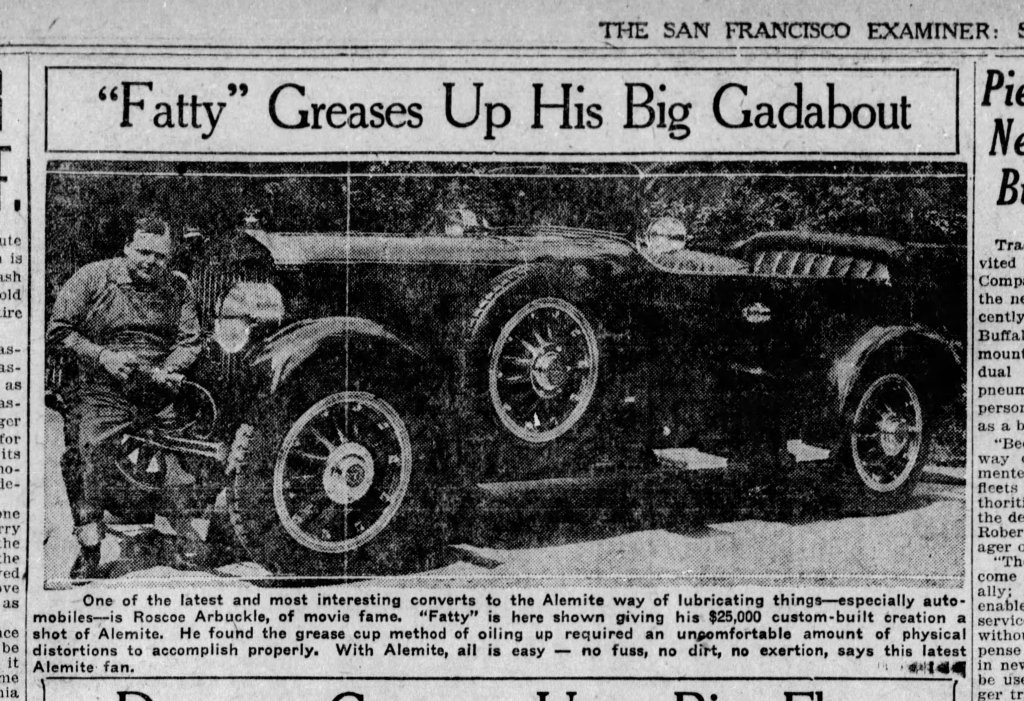
Greg Merritt, in Room 1219, was the first to posit this route, which began on Highway 2 North, the future U.S. Route 101, built atop the old Spanish royal road known as the Camino Real. But this route is conjectural. Arbuckle could have taken the more picturesque coastal route or the quicker inland route to the east that Semnacher took (present-day I-5). The Camino Real, however, would have allowed him to spend the night in Paso Robles, the approximate halfway point between Los Angeles and San Francisco, as he had done in June when he drove his custom purple Pierce-Arrow for display in the new San Francisco showroom of its builder, Don Lee.

Such a layover was quite different from the humble Selma ranch where Semnacher’s entourage stayed. Paso Robles boasted a beautiful hotel and curative hot springs. Arbuckle and Sherman could also sample some of the booze they’d packed for the trip. (Fred Fishback didn’t drink. He was, however, a kind of “cheerleader” to paraphrase Malcolm Lowry’s Consul in Under the Volcano.)

Roscoe Arbuckle using a grease gun on his Pierce-Arrow, ca. late 1920 (Newspapers.com)