At this writing, we are revising the part of the manuscript dealing with Arbuckle’s first trial venue, the Police Court preliminary investigation that would determine whether to charge him with murder or manslaughter before referring the case to the Superior Court of San Francisco.
There is an extant court transcript for us to reference. And this phase of the Arbuckle case was well documented by the press, especially the reporting filed by Evelyn Wells of the San Francisco Call and John H. Richardson of the Los Angeles Evening Herald. Both newspapers were part of the Hearst chain and their coverage hardly evinces the yellow journalism asserted by most other Arbuckle case narratives. Nevertheless, one can find some strange items like the piece about Virginia Rappe’s mysterious past. An edited version first appeared in the Los Angeles Evening Herald on September 26, 1921. But a much longer version, reprinted here, was published in the Pomona Bulletin the following day.
In all likelihood the feature was “propaganda” provided by Arbuckle’s defense lawyers, or a “friendly” third party, to associate Rappe with the Chicago underworld and the demimonde of the notorious Levee district. The target audience was the press, especially the wire services, and ultimately the jury pool in San Francisco, the prosecutors, and the judge.
The following reportage, without byline or dateline, covering Rappe’s early years and introduction to show business, is a marvel of creativity, more like the work of screenwriter than a lawyer if one can imagine the prose as intertitles in a silent film. (During the third Arbuckle trial, a witness was found to posit Rappe as a nightclub entertainer early in her career. See Inexpert witness shopping (Chicago style).) And if this piece wasn’t propaganda, the story of Anna Mariania–Virginia Rappe shows the frustration that many journalists had in trying to piece together Rappe’s background, so much so that they resorted to making things up. Resorting to fiction, too, is hardly restricted to 1921. One can find creative license throughout “authoritative” biographies of Arbuckle and other actors of the silent era, histories, scholarly monographs, and the like.
Virginia Rappe Was Child of Steel Puddler
From obscure poverty as the daughter of an immigrant steel worker to a place in the sun of screen popularity with attendant luxury, this was the career of beautiful Virginia Rappe, according to investigators into the past of the girl for whose death Roscoe Arbuckle, film comedian, is now imprisoned.
Though known by thousands, she was a girl alone. Seemingly she did everything possible to remain alone, to cut herself off from a past with its share of storm and cloud in the hope of future happiness. But a tragic death intervened.
Contrary to recent reports of the girl’s parentage, Virginia Rappe was born Anna Mariania, say those who claim to know. The secret of her dark, flashing beauty lay in an Italian–Jewish parentage. Her father, according to information obtained by investigation, was a steel puddler at Braddock, Pa..[1]
But the life of a steel worker’s daughter amid the grime and soot of the mills was not to the taste of Anna. Eager to see the world, to taste of a life more alluring than that to which she was accustomed, the girl joined a repertoire troupe, which passed through her home town, and went on the road.
The leader of the show was named Rappe, and it was from him that the future film favorite took the name by which she was afterward known, Virginia Rappe.
After some months with traveling show, it is said Virginia went to Chicago. Here she became a cabaret dancer, and was a popular entertainer at the famous establishment of “Big Jim” Colosimo, king of the Chicago tenderloin, who was mysteriously murdered a year ago.[2]
Her strange, dark beauty, exploited in a “hooch” dance, became one of the attractions of the resort, and drew the attention of many admirers.[3]
But the lure of the movies took possession of the girl who had already gone far on the road from the humble home at Braddock. The bright lights of Chicago’s night life held her, but not so closely. She longed for something else. Ambition whispered, “You can star in pictures. Others do. Why not you?”
And she listened.
Among those who came to Colosimo’s was a certain motion picture director. He was attracted to the girl, who told him of her desire to come to California, to enter motion pictures. He encouraged her. With her beauty and talent, he said, she could make a success. He would help her.
Virginia came. Six years ago it was she left Chicago. In time the film director starred her in comedies and she became well known as a screen beauty.
There were tales of many admirers. There was Tony, who was only a waiter at one of the city’s most exclusive restaurants, but whose hot Italian blood flamed with love for the voluptuous beauty of Miss Rappe.
His room was a photograph gallery of the picture girl. He had three portraits of her on the ceiling that he “might see her the first thing in the morning and the last thing at night,” so he said.
And she returned his love. After dinner with other admirers when her waiter sweetheart would serve her every wish, she would leave the first man of the evening to go home with her more humble love.
There were rumors that one who had done much for her had deserted her. But who could tell? She was the same vivacious beauty, in love with a “good time.” And it was while out “for a good time” that Death stalked in where only Joy had come before.
Source: The Bulletin (Pomona, California), 27 September 1921, 8.
[1]Braddock, a suburb of Pittsburgh, was the site of Andrew Carnegie’s first steel mill.
[2]Vincenzo “Big Jim” Colosimo, called the “underworld czar” of Chicago, who made his fortune on prostitution, was shot to death on May 11, 1920, possibly by Al Capone or an out-of-town hitman as he advanced in his “career.”
[3] Hooch, i.e., any sexually provocative dance better known as the “hoochie-coochie.”
[With the long hot summer of 2022 ahead of us, the following excerpt from our work-in-progress seems appropriate.The outcome of the Coroner’s trial can be found here.]
There was no rest for the weary. In this case we are referring to Maude Delmont who was scheduled to testify in the Coroner’s Court the morning following her late night Grand Jury testimony.[1] On Tuesday at 11:00 a.m., Delmont entered the small courtroom. Still dressed in black, still propped up by a policewoman, she was tense. Although she was a head taller than her escort, she seemed fragile, gray, looking ten years older than a woman should look in her late thirties even for 1921.
The corners of her mouth drooped and her dark hair showed strands of gray. Kinder reporters saw her crow’s feet as “lines of sorrow” that suggested an “intimacy of years” spent with Rappe. But the reality would soon be common knowledge, that Mrs. Delmont had only known Rappe for a matter of days. Faced with this surprising revelation, Delmont countered that “friendship cannot be reckoned by the clock”. She went on,” the moment I met Virginia I felt there was a real bond between us. We were together every minute almost after we met, and it seems to us now as though I’d always known and loved her.” Nevertheless, that no immediate family members stepped forward made her position all the more strange, even to Delmont herself.
Unlike the night before, when Delmont only faced the Grand Jury and one of Matthew Brady’s assistants, she now faced Arbuckle and his three lawyers. They, too, had been up for hours but it was the comedian’s bloodshot eyes fixed on Delmont that grabbed reporters’ attention. Arbuckle, of course, like any suspect in a criminal trial, was now an object of study, especially when it came to his facial expressions, body language, and nervous tics. Newspapermen and -women, as watchful as psychologists, described such nonverbal communication to the readers to interpret such signs as innocence or guilt or the shades of gray in between.
Arbuckle, too, squeezed and twisted his green golf cap in his fists. He leaned forward in his chair just behind the railing that separated him from the defense counsel’s table. At times he yawned, either tired or bored, and said nothing to his lawyers. But they had in their possession a full copy of Delmont’s statement to the District Attorney—as well as everything she had said to detectives and to reporters.
After identifying herself and where she lived, Delmont drank deeply from a glass of cold water. She put the glass down, asked for warm water, and the inquest was held up while a coffee cupful was brought to her. Then she answered Dr. Leland’s questions. With trembling hands, Delmont took sip after sip as if not to lose her voice or composure. She described herself as a “beauty specialist” but currently unemployed in that vocation
Suspecting that she had been coached, Leland admonished her. “I want you to disregard any advice that may have been given to you and to disregard any previous stories,” he said, “and to tell the truth as you know it.”
“I am here to tell just the truth,” Delmont protested. But Leland still lectured Delmont on the significance of her testimony as the complaining witness against Arbuckle. He warned her to “consider her statements well.” He was also concerned about how Delmont was simply saying what she thought he—and Brady—wanted to hear without giving it enough thought.
“Maybe I am leading you,” Leland said. “Sometimes people go to sleep and just say yes.”
Delmont came to life. “I’m not asleep,” she said, “for I had a little hypodermic before I came here, and I am all right.”
This rather candid admission came as a surprise. So had an earlier one, when Delmont described drinking liquor on the journey to San Francisco. She admitted to drinking six whiskies while in Selma alone, which likely left observers with the impression that Coroner Leland was dealing with an alcoholic—one who had injected either morphine, a temporary palliative for delirium tremens, or possibly a stimulant to revive her for the morning hearing. (One indication that it was morphine was Delmont’s sipping water, for dry mouth is a telling side effect.)
As the Coroner posed questions to his prize witness, she told everything in “minutest detail,” repeating what she had undoubtedly said before the Grand Jury twelve hours ago albeit, as Ellis H. Martin of the San Francisco Call wrote, “with touches of color here and there, giving the tale adornment”—some of which surely couldn’t be printed in newspapers.
Delmont described meeting Semnacher and arranging the trip to Selma, where she, Semnacher, and Rappe, stopped to meet and stay with Delmont’s friends. Then her party departed for Fresno, where she hoped to collect money owed to her occasional employer, the Labor Journal. But the others insisted on pushing on to San Francisco, where they arrived at the Palace Hotel around 9:30 on the Sunday night of September 4. The following morning while eating breakfast in the hotel, a page handed Rappe a note inviting her to Arbuckle’s suite at the nearby St. Francis.
This was a one-off detail found only in Delmont—Semnacher’s version citing Fishback as the source of the invitation. Delmont, too, even recalled the note itself, which read, “Come on up and say hello.” It bore Arbuckle’s signature but apparently lacked his full name. Semnacher, Rappe, and she then discussed whether the Arbuckle in question was “Andy” or “Fatty”—the former being Maclyn Arbuckle’s younger brother, who was also an actor.
Whether Rappe and the others had settled on one or the other Arbuckle wasn’t reported from Delmont’s testimony. Rappe did, however, decide to find out if the invitation was worth answering.
“You call up in twenty minutes,” she instructed Delmont. “If I don’t want to bother with the party, I’ll come right down. If not, you come up.”
A little while later Delmont and Semnacher entered room 1220.
Dr. Leland asked about the presence of liquor in the Arbuckle suite.
Delmont saw two or three bottles of scotch as well as bottles of gin and orange juice.
“Everybody helped themselves,” Delmont said.
“Was Miss Rappe happy?” Leland asked.
“Oh, yes, everybody was happy.”
“Was anybody paying any particular attention to any other person?”
“No.”
“There was nothing selective then about the affair.”
“No.”
The questions then turned to how Rappe got into room 1219. Delmont no longer claimed that Arbuckle dragged Rappe into room 1219 by the wrist. Nor did she recall hearing him say to Rappe that he had “wanted” her since 1916. Instead, Delmont seemed to be aligning or “correcting” herself with Zey Prevost’s initial statement—the one Brady and his assistants obviously found more credible.
Rappe, according to Delmont, wasn’t forced. She entered room 1219 of her own free will to use its bathroom. Then Arbuckle immediately followed Rappe. When she came out of the bathroom, Delmont saw them talk for a moment in the middle of the bedroom. Here Leland must have asked Delmont to back up a little, to where she had said in her initial statement, the one published in the San Francisco Chronicle and other newspapers. What happened to Arbuckle grabbing Rappe and dragging her into room 1219? What happened to his wanting her for five years? But Delmont now attributed the manhandling of Rappe to Arbuckle.
“Arbuckle took hold of her, she told me afterward,” Delmont said. “I was not paying much attention then. I was having a good time. I can’t say if he went into the bathroom with her,” Delmont recalled. “I guess he dragged her in.” This last remark wasn’t allowed to enter the record since Delmont had essentially changed her story.
“Everybody was feeling kinda good,” Delmont continued.
“What was the attitude of the men up to this time?” Leland asked.
“They were all nice.” There was no vulgarity.
“There was no familiarity?”
“None, except that Fatty Arbuckle moved his chair beside Miss Rappe.”
Delmont described the arrival of Alice Blake and Zey Prevost, that a phonograph was sent up to 1220, and that everyone danced and drank. Many of Leland’s questions dealt with the latter.
Delmont admitted to drinking “eight or ten drinks of Scotch whisky.”
“Were you beginning to feel the effect of the drinks?” Leland asked.
“Undoubtedly,” Delmont answered.
Dr. Leland asked Delmont about what Rappe and Arbuckle had to drink. She said Rappe may have had three tall glasses of gin and orange juice. How did Delmont know? She was sure of it, she responded, and, perhaps Rappe told her. The important thing, said Delmont, was that Rappe wasn’t there to drink. She was there for the dancing, enjoying herself and the company. Delmont was still sure that Rappe only had three drinks.
Since “alcoholism” had been the diagnosis of Drs. Kaarboe and Rumwell, it seemed reasonable to press on with this line of questions. Leland asked if Rappe could have had any drinks before Delmont joined the party.
“She was there only five minutes,” Delmont replied, “and common sense will tell you that she couldn’t have had many.”
Asked about Arbuckle’s drinking, Delmont said that he “was more intoxicated than anyone else in the party. He was just a little gone. He showed it in his eyes and being very talkative. He was not staggering or anything of that sort.” He was animated, talkative.
Why Delmont got out of her street clothes and wore a pair of men’s pajamas was also of interest. Given the times, this probably had more significance, in terms of speaking to a woman’s character, than it would today. Perhaps, too—and this is an outlier—Dr. Leland was curious about the temperature in the Arbuckle suite. Did it account for Arbuckle being drenched in sweat and both Delmont and Rappe removing clothing for relief?
Delmont, trying to sound reasonable, said that while dancing she became overheated. “So, I asked Mr. Sherman if he would mind if I slipped on some pajamas and he said, ‘No, certainly not’ and he took me into his room, got a suit of his pajamas from a dresser drawer and went out while I put them on.”
When she returned from room 1221, she noticed that Rappe and Arbuckle were absent. “I asked the others where Virginia was,” Delmont said. “I called to her and didn’t get any answer.”
As Delmont described this episode, she hadn’t factored in what she had said earlier, that she had seen Arbuckle talking to Rappe outside 1219’s bathroom, that she had seen him walk past Rappe and close the connecting doors between 1220 and 1219. Had she forgotten her earlier statement that she already knew where Rappe and Arbuckle were? Was she attempting to accommodate the statements of others? In what seems like an obvious attempt to please the prosecutor with a story that better fit the charges, she had handed Arbuckle’s lawyers an advantage they couldn’t wait to use. Delmont might as well have been their accidental creature, an amicus arbucklensis.
According to her account, about fifteen minutes passed and then Delmont began to worry about Rappe’s absence. “I didn’t see why Virginia would not come out,” she said. “I didn’t think it was nice for her to be in there with Mr. Arbuckle.”
She then said the silence from 1219 was finally interrupted by a scream.
“What was the nature of the scream?” Leland asked.
“As a woman in agony,” replied Delmont.
Asked what happened next, Delmont said, “Then I became angry [. . .] I took the shoes I had on—with French heels—and kicked at the door to room 1219. I kicked with all my might. [. . .] I kicked ten or twelve times on the door of the room, but there wasn’t a sound.”
Minutes passed. Delmont called the desk on the wall phone in room 1220. Harry Boyle, the assistant manager, took the call and came up at once. According to Delmont, it was the telephone conversation that prompted Arbuckle to open the door. According to Delmont, the comedian stood framed in the doorway. Then he said, referring to Rappe, “She’s in there.”
Leland asked about his appearance. Delmont, like Prevost, said that Arbuckle’s pajamas “were wringing wet and clinging to him”—and on this detail the Los Angeles Times either inserted or fully quoted her as saying “wringing wet with perspiration.” And he was “wearing Virginia’s hat.”
On hearing that, Arbuckle, who had been trying to maintain a straight face, smiled and laughed to himself.
The questions now turned to what happened after Arbuckle stepped aside.
“We all rushed in,” Delmont said, claiming that she led the way into 1219.
Rappe was found lying on the “twin bed” nearest the wall, screaming, tearing at her clothes, and crying out, “I’m hurt, I’m dying. He did it.”
Asked who was present in the room, Delmont named Zey Prevost, Alice Blake, Fred Fishback, and Harry Boyle. As to what was done for Rappe to bring her out of her hysteria, Delmont answered a battery of questions. “I took off her clothing [. . .] and we put her in a cold bath. [. . .] Yes, she was pretty fully clothed [. . .] Had on shirtwaist, stockings and everything. [. . .] She commenced to tear at her clothes. [. . .] Virginia would scream, then faint by turns.”
Delmont didn’t know how or who dried off Rappe following the cold bath. She only remembered that Rappe was rolled in a sheet. Then another room was engaged for her.
Leland asked what was Arbuckle doing during this time? Delmont recalled seeing him wandering around indifferently. But when room 1227 was ready, he started to carry her there. But halfway, Boyle took Rappe from Arbuckle when it seemed as though he might drop her.
As the lunch hour approached, Leland got to the end. He asked Delmont what happened in room 1227. she said Rappe finally regained consciousness.
She said Rappe pressed her abdomen. “Oh, it hurts me here! [. . .] Maudie, what has happened to me? What could he have done to me?’
“Don’t you remember anything?” Delmont asked.
“Not one thing,” Rappe said. “I can’t remember anything.”
When the hotel doctor saw her in room 1227, Delmont, without naming which one, claimed that Rappe wouldn’t tell him what happened.
She just screamed, “Don’t touch me!” Then Delmont continued, describing that she was left alone with Rappe, that the doctor came again.
“What did you do afterward?” Dr. Leland asked. Here Delmont accounted for George Glennon’s visit, which was virtually a social call in 1227 and, as Rappe slept, in 1220. “Oh,” Delmont recalled fondly, “the house detective—he was very nice—he and I went back and drank all the gin and orange juice.” The bibulous pair also consumed the last of the scotch until three in the morning. Then Delmont returned to 1227 and slept in the same bed until six. On Tuesday, the nurses came.
Dr. Leland asked the jurors if they had any further questions. One raised his hand.
“Did Miss Rappe offer any objections when Arbuckle went into the room with her.”
Delmont answered, “No.”
[1] pp. 000–000: “Death Revel Reviewed Before Jury,” San Francisco Call, 13 September 1921, 1, 2;“Woman Witness Tells Why She Is Actor’s Nemesis,” Oakland Tribune, 13 September 1921, 2; United Press, “Arbuckle Sees Ray of Hope,” [Long Beach] Daily Telegram, 13 September 1921, 1; “Sensational Details of Party Told at Virginia Rappe Inquest,” San Francisco Chronicle, 14 September 1921, 7; Robert H. Willson, “Stories Told Coroner Jury Conflicting,” San Francisco Examiner, 14 September 1921, 4; A.P. Night Wire, “Proceedings of the Day,” Los Angeles Times, 14 September 1921, 1, 2.
Our unconventional narrative leads in with the life or legend of Virginia Rappe. It leads out with an epilogue that follows some of the figures from the Arbuckle trial and the so-called “Rappe curse.”
Practically all members of the jury declared that the most important piece of evidence in their minds was the testimony of Dr. Charles Barnes of Omaha, defense surprise witness, who impeached the testimony of one of the state’s principal witnesses, Mrs. Fox, and declared that he had treated Miss Rappe for the same sort of trouble which the defense claimed was the cause of her death.
A century ago this week, Minta Durfee made the decision to part ways with Roscoe Arbuckle. Like the vaudeville actress that she was at heart, she could see that her role in “standing by” her estranged husband for eight months was over. Despite Adolph Zukor’s promise to release two new Arbuckle films as well as Gasoline Gus (1921), he and other stakeholders in Arbuckle agreed with Will H. Hays, the Chairman of the Motion Picture Producers and Distributors of America, that the ban on Arbuckle’s films should continue for the present.
Arbuckle was also prevented from going back to work on new films. If Durfee hoped to ride on his coattails again in making her own comeback, those hopes had been dashed. She decided to return to her apartment on Riverside Drive and Arbuckle remained behind in Los Angeles to settle his debts. He put his West Adams Street mansion on the market and looked for someone to buy his beloved Pierce-Arrow “palace car” that he drove to San Francisco and his ill-fated Labor Day party at the St. Francis Hotel.
On her return to New York City, Durfee got off the train in Omaha to spend a couple of days with a special friend, made during the course of the third Arbuckle trial, Dr. Charles Edwin Barnes. His rebuttal testimony on April 10, challenged the assertion of Katherine Fox, Virginia Rappe’s guardian and mentor, that Rappe had been healthy and suffered from no illnesses (see also Katherine Nelson Fox . . .). Dr. Barnes took the stand and said that he had treated Rappe for cystitis in Chicago during the summer of 1909 and that Mrs. Fox herself had brought Rappe to him.
Barnes, too, also embarrassed Fox, letting on that he had known her for years, ever since 1898 when they lived across the hall from each other in his mother’s boarding house. Since the press had long taken sides with the defense, this revelation somehow made Fox’s assertions of Rappe’s robust health false. Barnes even addressed Fox in the courtroom by her maiden name of “Dot” Nelson in such a way that even put her status as a widow in doubt.
Mrs. Fox, who sat through Barnes’ testimony, shook her head at his claims of having treated Rappe and even performing surgery on her. The prosecution challenged Dr. Barnes’ notes and records. But ultimately, in surrebuttal Fox was compelled to admit that she knew Dr. Barnes in 1898, something she denied during her cross-examination. This, too, the press saw as another reason to question her entire testimony, even though she wasn’t aware that he went on to attend medical school.
Soon after her final appearance on the stand, the final arguments were made for and against Arbuckle’s guilt. Then the case went to the jury in the late afternoon of April 12. They made their decision to acquit in minutes and returned to the courtroom with a ready statement that could have been written by Arbuckle’s manager Lou Anger or his studio bosses, Joseph Schenck or Adolph Zukor, insisting that a great injustice done to the comedian and that his career be restored.
Newspaper reporters were quick to see that Dr. Barnes had scored a “direct hit” on the prosecution’s case. For us, however, it is another indication that the victim—the woman—was on trial no less than the famous motion picture comedian.
The defense scored in the third trial of Roscoe “Fatty” Arbuckle today when it placed Dr. Charles E. Barnes of Omaha, formerly of Chicago, on the witness stand to rebut the testimony previously given by Mrs. Catherine [sic] Fox of Chicago. At the conclusion of Dr. Barnes testimony and several other witnesses from Southern California the defense announced it had completed its case. The state asked time to check up by telegraph certain portions of Dr. Barnes’ testimony, and the court [i.e., Judge Louderbeck] granted until 10 o’clock tomorrow morning for the prosecution get this information. The court announced, however, that if the state was not ready to proceed at that time he would order the case closed and arguments started.
Dr. Barnes testified that for three months—from June through August—in 1909 he had treated Miss Rappe for an abscess and a chronic ailment and that it was Mrs. Catherine Fox, whom he pointed out in the court room as Miss Dot Nelson, who had introduced him to Miss Rappe and who had brought the girl to his office for treatment.
Mrs. Fox has testified that during the year 1909 she had seen Virginia every day and that at no time was the girl under the care of a physician.
“When did you first meet Dot Nelsen [sic]?” the doctor was asked.
“The latter part of 1908, at the boarding house run by my mother,” Dr. Barnes replied. “Dot Nelson lived in a room across the hall from my room at the time and I saw her every day. The last time I saw her was in August 1909,” the witness continued.[2]
“Do you see any change in the person you recognize as Dot Nelson,” Assistant District Attorney Leo Friedman asked the witness.
“None whatever, I could never mistake her. She has changed but very little,” the witness replied.
Shortly after he met Miss Rappe in a social way, at the States restaurant, said the physician, he treated her for acute gastritis. Then in June, 1909, he declared, she visited him with Miss Nelson, because of her health. An examination revealed an abscess and a condition which necessitated an operation. The operation, Dr. Barnes said, was performed by himself and a Dr. Wicks.[3] He found the organ, which was mentioned so prominently in this case [i.e., the bladder], in a diseased condition, and continued his treatments for over a period of three months.
Five prescriptions, which the physician said he had written for Miss Rappe, were introduced in the evidence. The prosecution tried in vain to confuse the doctor regarding the dates, but the witness always corrected his cross-questioner and at times caused the spectators to laugh at his answers.
The court, however, took the pleasure of the laughing away from the spectators by announcing he would clear the room if it was repeated.[4]
Although some newspapers reported the “chronic ailment” as cystitis, what little testimony that survives in reportage doesn’t have Dr. Barnes using this exact term.[5] In any case, he had exposed Mrs. Fox as an “imposter” and liar. Marjorie Driscoll of the San Francisco Chronicle, who had covered the three trials for months, wrote effusively—and, perhaps, relieved that Barnes had finally put an end to the Arbuckle case so that she and her colleagues could move on.
Dr. Charles M. [sic] Barnes was literally and figuratively the biggest gun fired by the defense. He was a double-barreled weapon, for his testimony not only tended to show that Virginia Rappe had at one time suffered precisely from the ailment claimed for her by the defense, but the load from the other barrel landed squarely on Mrs, Catherine Fox, state witness to Miss Rappe’s excellent health.
Dr. Barnes identifies Mrs. Fox in open court as the “Dot Nelson” who had visited his office in company with Virginia Rappe in the summer of 1909, when she was treating Miss Rappe for serious illness. Mrs. Fox had previously admitted having born the nickname of “Dot” in the days before her marriage, when she was Miss Nelson.
Mrs. Fox sat in the front row and radiated silent but vigorous denials as Dr. Barnes testified. If looks could slay, Dr. Barnes would have crumpled on the spot.
Dr. Barnes produced his prescription book containing duplicates of prescriptions he said he furnished Miss Rappe. The state drew some consolation from his admission that there no dates in the book, but he insisted that it covered the period in question, declaring that he remembered many cases therein referred to.
Whereas Mrs. Fox previously testified that she never knew Dr. Barnes, Dr. Barnes yesterday said that for two years between 1899 and 1900 he and Mrs. Fox, then Miss Nelson, not only lived in the same boarding house, kept by his mother, but occupied rooms across the hall from one another. He also said that he had seen her on other occasions since that time, and described a meeting in a Chicago café, denied by Mrs. Fox.
A ray of light for the state appeared during the cross-examination when Dr. Barnes said that he considered Miss Rappe cured of her illness at the time his treatments ceased. The prosecution failed, however, to shake his testimony involving Mrs. Fox.[6]
Dr. Barnes held such a privileged place in the outcome of the third Arbuckle trial that he and his wife were invited by Minta Durfee to accompany her and husband back to Los Angeles in the Pierce-Arrow.
So, who was Barnes? He was an incompetent surgeon and a quack. But so were many doctors during the early twentieth century who provided what they believed to be what we now call “alternative medicine.”
According to the Directory of Deceased American Physicians, Barnes was born in Madison, Wisconsin, in 1881. While on the stand during the third Arbuckle trial, Barnes disclosed that he had lived in the same boarding house as Katherine Fox, but there is no census data for either of them until 1910.
A graduate of the Chicago College of Physicians and Surgeons (1903), Barnes was trained as an allopath. His career had few highlights until much later, but he did have a curious connection to the art model community of Chicago to which Rappe belonged.
In September 1905, the Physical Culture Society of Chicago appointed him as one of three physician judges for a beauty contest in which he decided on which woman would be “the model,” displaying the most beautiful “symmetry of form.”
In 1907, Dr. Barnes married the daughter of a physician, Laura Reese. The couple had no children and lived on West Garfield Boulevard, on Chicago’s South Side, before moving to the Saratoga Hotel in 1908.
Dr. Barnes practiced medicine in Chicago at least until the summer of 1909—when he had crossed paths again with Katherine Fox and with Virginia Rappe for the first time. But Mrs. Fox had been married to Albert Fox a wealthy window glass salesman and heir to a glass-making firm in upstate New York, for six years, and had likely long since moved from the boarding house of Dr. Barnes’ mother.[7]
That same year saw Dr. Barnes declare bankruptcy. In the autumn, he relocated to Crete, Nebraska. There he took over another physician’s practice and opened the “Barnes Hospital.” Dr. Barnes also practiced in Mountain Grove, Missouri (1909) and Rock Island, Illinois (1911). While there, he found himself in court for the first time in a replevin suit over a lost bulldog that he refused to return to its original owner.
In late 1916, Dr. Barnes opened a new practice in Omaha, Nebraska. Not only did this give him access to more patients and billings, but he could now avoid accusations of malpractice, especially when he performed surgeries. In Omaha, Dr. Barnes ran advertisements for treatments of chronic diseases that required less heroic measures, such as hay fever, asthma, constipation, lumbago, pimples, “cancer cured without a knife,” and the like. He claimed he could cure what other doctors could not and advertised long lists of diseases that one might find on bottles of patent medicines. Ironically, none of his advertisements mentioned cystitis.
in the late 1910s, Barnes’ career suffered a few setbacks though none as severe as what some of his patients suffered while under his care. In 1919, he attacked his office girl and threatened to dissect her because she refused to comb her hair. She sued him for $15,000. He also had to deal with unsatisfied patients who also took him to court. Then, in 1921, his advertisements no longer ran in Omaha newspapers.
In early April 1922, he took the stand as a surprise witness at the third Arbuckle trial. His photograph, in which he is wearing what look like medical lamp goggles, appeared in the Omaha newspapers and he became a local celebrity.
The doctor who saved Arbuckle’s career? Source: Newspapers.com
Unlike other witnesses who claimed to have treated Rappe during her youth, Dr. Barnes wasn’t still living in Chicago, where such witnesses came forward or were recruited by the lawyer Albert Sabath (see Inexpert witness shopping Chicago style . . .). Although Sabath likely sought such a star rebuttal witness, that Barnes didn’t appear until the third trial suggests that he had come forward himself. The late date is telling because Dr. Barnes might have neutralized Mrs. Fox during the second trial, which nearly convicted Arbuckle except for one juror voting in his favor. One could almost imagine Barnes writing Minta Durfee. It might explain why they became friends.
Dr. Barnes moved on after his brief taste of fame. In 1923, he advertised his latest offering, “Electronic Diagnosis and Treatment,” for which he trained under Dr. Albert Abrams, the inventor of such devices as the “Oscilloclast” and the “Radioclast.” That Dr. Barnes proudly mentioned this association shows his nerve or recklessness since Dr. Abrams was already known as quack and had been under investigation for years.
In 1925, Dr. Barnes and his wife separated. Then his career suffered as he turned to more desperate ways to earn income. Three years after his testimony clinched Arbuckle’s acquittal, he himself was arrested under circumstances no less bizarre than the comedian for whom he bore a resemblance.
Dr. Charles E. Barnes, wealthy Omaha physician, charged with being the head of an immense dope ring, was released under $10,000 bond, the maximum provided by law, after he waived preliminary hearing before U.S. Commissioner Mary Mullen here today.
Andrew Durant, an actor and female impersonator, and D. H. Armstrong, also arrested with Barnes, are being held for investigation.
Dr. Barnes is charged with having sold Fred Mapes, under indictment for embezzling from the Becker Asphaltum company of which he was general manager, a quantity of morphine yesterday. Mapes gave the doctor a marked $10 bill in payment for the drugs and police charged the money was found in Barnes’ possession.
Miss Josephine Nepodal, eighteen-year-old office assistant of Dr. Barnes, is held under technical arrest also. She has given the police valuable information in the case.[1]
In February 1926, Dr. Barnes was charged on 31 counts of violating the Narcotics Act, for which he could receive five years for each, or a total of 155 years in prison.
Incredibly, and while still under indictment for the narcotics violations, Barnes was arrested in January 1927, on first degree murder for the death of a Sunday school teacher and farmer’s daughter, with the unfortunate name of Wealthy Timpe Nelson, who was married on her deathbed as she bled out from a botched abortion for which her fiancé paid Dr. Barnes $125.[2]
Barnes’ lawyer tried to get the charge reduced to manslaughter—and as he awaited trial, his wife sued for divorce. Dr. Barnes served no time for his crimes. A diabetic, he died, at the age of 46, on May 20, 1927, after a short illness attributed to his own preexisting condition. Mrs. Barnes arranged for his funeral in Chicago, where he is buried in Mt. Hope Cemetery.
[1] “Release Barnes on Bond,” Lincoln Star-Journal, 4 August 1925, 13.
[2] “Dr. Barnes Bound Over in His Case,” Lincoln State Journal, 24 January 1927, 1.
[1] Qtd. in “Arbuckle Freed of Manslaughter,” Omaha Daily, 13 April 1922, 2.
[2] Realize that this woman was married to Albert Fox at the time. There is no mention of him here.
[3] Most likely Seth Wicks, who, like Barnes, graduated from the College of Physicians and Surgeons in 1903. He could hardly vouch for Barnes’ allegations since he died in 1920.
[4] Associated Press, “Arbuckle Defense Closes Case with Doctor’s Evidence,” El Paso Times, 11 April 1922, 2.
[5] A typical example is found in “Doctor Tells of Treating Miss V. Rappe,” Oxnard [California] Daily Courier, 10 April 1922, 1.
[6] Marjorie C. Driscoll, “Defense Ends Testimony in Arbuckle Case,” San Francisco Chronicle, 10 April 1922, 7.
[7] We haven’t been able to identify her as yet to corroborate his testimony.
On the hundredth anniversary of Roscoe Arbuckle’s acquittal we present the following transcription of the closing arguments delivered on April 12, 1922.
Originally published in 1924, “The Trial of Roscoe Arbuckle” is all that is left of thousands of pages of testimony from the three Arbuckle trials—which would all be in the public domain—save for a few extracts found in newspapers and these are often paraphrased by reporters. Nevertheless, it is probably the best digest of all three trials—as well as being reprises of the same arguments made at the previous two trials that ended in hung juries.
The annotations will be updated from time to time and are incomplete at this writing.
There are also some typographical errors due in part to scanning. Our proofreader will correct these in the coming days.
The blog entries will be less frequent now as we return to the manuscript proper and seek a publisher.
That said, we will cover some of the aftermath of the trial here as time permits.
Library of Congress
Classics ofthe Bar The Trial of Roscoe Arbuckle[1]
Two mistrials having previously resulted, there began on March 20, 1922, at San Francisco, California, the third and final trial of Roscoe Arbuckle, popularly known as “Fatty” Arbuckle, celebrated moving picture actor, who was accused of being responsible for the death of the beautiful screen actress, Virginia Rappe, which had occurred in that city in November of the preceding year.
A post-mortem examination indicated that peritonitis, brought about by a rupture of the bladder, was the immediate cause of Miss Rappe’s death; the prosecution contending that this had resulted from an unlawful assault made upon her by the defendant at the St. Francis Hotel, where she had gone as a guest, and where an informal party was being given in a suite of rooms occupied by Arbuckle and two of his friends.
There was no eyewitness to the alleged assault but it appeared from the evidence, and the fact was strongly stressed by the prosecution, that for a period of time-the exact duration of which was indefinite under the evidence-Arbuckle was in one of the rooms alone with Miss Rappe, with the door closed and locked, a room which she had entered in apparent good health and where, the prosecution averred, the mortal injury was received.
The charge was involuntary manslaughter-homicide committed without malice but in the perpetration of an unlawful act.
The defense asserted the true state of facts to be as follows: The defendant and his friends occupied a suite of three rooms. Room 1220 was the reception room or parlor; on its left was room 1221, while on its right was room 1219, both being bedrooms. The visiting guests were primarily in the reception room but, as occasion required, in discriminately went into the other rooms of the suite. Miss Rappe left the reception room and proceeded to the bathroom of room 1221. Finding this bathroom occupied she re-entered and crossed the reception room and went into room 1219 unobserved by the defendant. Shortly thereafter the defendant, who was not fully dressed and was wearing a bath robe, entered 1219, which was his own bedroom, with the intention of fully dressing, and, to secure privacy, locked the door between the two rooms. The defendant testified that there was no one in room 1219 as he entered it, that he went into the bathroom adjoining, and here he said he found Miss Rappe ill and helped her to a bed.
The defense sought to maintain that the fatal affliction of Miss Rappe was either due to natural causes or, if to some external force, it was a force with which the defendant had no connection and of which he knew nothing; that he had committed no wrong upon her and was absolutely guiltless of the crime charged.
The trial took place in the Superior Court in and for the County of San Francisco and was presided over by Hon. Harold Louderback. It lasted several weeks and much evidence was offered by each side, and covering a wide range.
The chief counsel for the defense was Gavin McNab, one of the famous lawyers of the West, assisted by bis office associate, Nat Schmulowitz, together with Milton M. Cohen, Charles H. Brennan and Joseph Mclnerney.
For the State appeared District Attorney Matthew Brady and his assistants, Milton U’Ren and Leo Friedman.
In the following arguments of Mr. U’Ren and Mr. Friedman for the State, and Mr. Schmulowitz and Mr. McNab for the defense, will be found the story of this fatality from their differing viewpoints, and forceful presentations of the respective contentions in this world-famous criminal case.
Speech of Mr. U’Ren
May it please the Court, and you, Ladies and Gentlemen of the jury:
On the third day of September, 1921, there left the city of Los Angeles a young woman, named Virginia Rappe, in company with Mr. Al Semnacher and a Mrs. Delmont, for the purpose of visiting the town of Selma. They traveled by automobile, went to Selma, spent the night there, and then decided to come to San Francisco and then go back to Los Angeles. They arrived here on Sunday night about the hour of 9:30. Mrs. Delmont and Miss Rappe occupied one room at the Palace Hotel; Mr. Semnacher occupied another. On Monday morning, about eleven o’clock, a telephone call came to Miss Rappe, in response to which she went to the St. Francis Hotel, to the apartment then being occupied by this defendant, Roscoe Arbuckle, together with Fred Fischback and Lowell Sherman, his companions. A few minutes after Miss Rappe arrived Mrs. Delmont came up, and a little later Semnacher followed.
There is no doubt from the evidence that there was a party going on at the St. Francis Hotel on this day. A Babylonian feast was in progress there. The defendant had sumptuous quarters with his friends. He had come up here to have a “good time,” and upon word being sent out by his friend Fischback that “Fatty” was in town, the people poured in. Food was spread, wine and liquor were served, and this modern Belshazzar sat upon his throne, surrounded by his lords and their ladies; there was music, feasting, singing and dancing.
Who the host of that party was, the defense will dispute. They will claim in their arguments that the host was not this defendant, Arbuckle, but was some other person, either Fischback or Sherman, that the guests were self-invited, and that Arbuckle had nothing to do with their presence there. Opposing this, however, is the proof that Arbuckle occupied room 1219, that he was the most distinguished person in the company, that this was called Arbuckle’s party by those who attended it, and that Arbuckle paid the bill.
Who were the guests? The testimony shows that they consisted of Lowell Sherman, Fred Fischback, Mrs. Delmont, Miss Rappe, Al Semnacher, Ira Fortlouis, Zey Prevost, Alice Blake, and some others whose names do not appear and whose names we have been unable to ascertain. And it is upon the testimony of these persons, who were in Arbuckle’s apartments, who drank of his wine and ate of his food, that the People must largely depend for direct evidence connecting him with the death of Virginia Rappe.
You have seen some of these witnesses upon the stand, and you have observed the manner in which it was necessary for the People to proceed in order to produce their testimony. For hour after hour Mr. Friedman wrestled with Zey Prevost and Alice Blake to try to get them to tell their story in some intelligent, intelligible manner, so that you could determine in truth what really happened up there in the St. Francis Hotel. And you know—every member of this jury knows—that any evidence that either of them gave against this defendant was true, although not the whole truth. You know from their attitude that if they could have helped this defendant any more than they did help him, without committing absolute perjury, they would have done so. We may be sure that any testimony given by Zey Prevost or Alice Blake to the detriment of this man on trial, was truth wrung from reluctant lips.
Let us, ladies and gentlemen of the jury, come to the time that Miss Rappe appeared in Arbuckle’s rooms on the afternoon of September the fifth. It was there that she received a rupture of the bladder from which she died, and the only issue here is, what caused her bladder to rupture?
The defense contend that Miss Rappe had suffered for years from chronic cystitis, a diseased condition of the bladder, which predisposed it to rupture. Would it not be strange if, after years of such suffering, the bladder should only choose to burst spontaneously at that particular time and place, when Miss Rappe and this defendant were in a room together, the door closed and locked?
The People contend it could not have happened that way, and that when Miss Rappe entered 1219 of the St. Francis Hotel, her bladder was only in such condition as probably exists in cases ninety per cent of the women of today, and no more susceptible to a spontaneous rupture the organ of any person in this court room.
A commission was. appointed by this court, consisting of three eminent pathologists, one of whom was suggested by the court, one by the prosecution, one by the defense. This commission, consisting of Dr. William Ophuls, Dr. Ervin and Dr. Rusk, have presented a report to you, which they themselves have interpreted, and which shows that the condition of cystitis existing in the organ of Miss Rappe at the time of her death did not contribute in any way to the rupture.
Cystitis, as defined here by all the medical witnesses, is merely an inflammation of the mucous membrane of the bladder. When it progresses beyond the mucous membrane and invades the bladder wall it becomes, as Dr. Harrison told you, something more than cystitis; the bladder wall then itself becomes affected and weakened. But this report tells us that this bladder wall was not impaired; that the cystic condition did not, in any way, affect the bladder wall and did not predispose the bladder to rupture.
As to Miss Rappe’s appearance and symptoms indicating her physical condition during her lifetime evidence has been presented by both sides. The People have produced in this case witnesses who knew her when she was a little girl six years of age. We have produced witnesses who were with that girl practically from her early childhood up to within a few days of her death.
Mrs. Fox knew her from sometime in the ‘90’s up to about 1914, and was with her nearly all the time during that period. Mrs. Hardebach[2] also knew her as a little girl, and was with her, with the exception of a few years, right up to the time she died. We also have presented the young lady, Miss Hansen, who was with her constantly every day for a month or two prior to her death; and we presented the gentleman who directed her in motion pictures. We have presented the young man who drove her automobile, and we have presented a clerk of the hotel where she stayed for a year and a half.
And these people tell you what? They tell you that this young lady was absolutely normal in every respect; that they did not see a single symptom of this alleged disease which the defense would make you believe existed, and which the defense would ask you to believe caused her death.
We have the testimony of one witness for Arbuckle and only one witness who testified as to seeing Miss Rappe in any condition that approximated her condition as it existed in room 1219 of the St. Francis Hotel on the afternoon of Sept. 5, 1921 and that witness is Mrs. Frances Bates, of Chicago. You remember how, upon her direct examination, she testified with such positiveness that she and Miss Rappe were working for Mendel Brothers in 1913. You remember also that the superintendent of the store came with his records, which showed that Mrs. Bates went to work there in 1909 but quit in 1910, and never went to work, again, and that she is the only Frances Bates who ever worked for the store. Those records showed further that Miss Rappe herself worked there in 1912 but not in 1913; moreover, that she did not work there at any time that Mrs. Bates was there.
With Mrs. Bates and her story fading out of the picture, there is practically nothing left upon which the defense can base any real claim of evidence of pain or suffering similar to that undergone by Miss Rappe when she was discovered writhing in agony upon the bed in Arbuckle’s room.
There is no question that Miss Rappe was in this room of the St. Francis Hotel on the afternoon of September the fifth. It appears that she first went into room 1221 to go to the bathroom, that she could not get into the bathroom of 1221 because it was occupied, and returned to room 1220, and then went into room 1219, and that this defendant followed her into room 1219 from room 1220, and locked the door.
Why do we know that there is no question about that? Because the truth on that subject was dynamited from the lips of Zey Prevost and Alice Blake. After much hedging they finally testified that Arbuckle went into room 1219, closed and locked the door. Alice Blake said she saw Miss Rappe going towards room 1219 and the defendant following her, and then she, Alice Blake, went into room 1220. Zey Prevost told you that she saw Miss Rappe enter room 1219, followed by Arbuckle. And both of those witnesses told you that they saw Mrs. Delmont hammering and pounding upon that locked door. Zey Prevost told you that she herself pounded upon it, and she told you that it was opened by this defendant, Arbuckle, from within room 1219, and that she and Mrs. Delmont thereupon entered and found Virginia Rappe, who a short time before had entered that room, apparently a well, healthy and happy girl, now lying upon a bed of pain. She declared she was dying, and we know from the testimony of Dr. Ophuls and Dr. Rigdon that she was suffering at that identical moment from a ruptured bladder.
Miss Prevost and Mrs. Delmont, when the door was opened by this defendant, entered the room, and some efforts were made to revive the stricken girl. They moved her from the first bed to the second bed because the first bed was wet. Fischback, friend of Arbuckle, came in, and they carried her to a bath and immersed her for a minute in cold water in an attempt to revive her, and brought her back and placed her upon the bed.
Then what happened? Those present evidently reached the conclusion that the young lady was suffering from something more serious than they first had supposed, and they sent for Mr. Boyle, the assistant manager of the hotel, secured another room, carried the young lady around the corridor, put her in bed and sent for a doctor. Dr. Kaarboe responded, but prescribed nothing, determined nothing and went away. Dr. Beardslee afterwards came in; he was compelled to administer hypodermics to ease the pain and agony of the suffering girl. Finally he catheterized the patient and found she was suffering from an injury to the bladder.
We may safely conclude, and there is no question I think, in the minds of this jury, that when the door of room I2I9 was opened by Zey Prevost and Mrs. Delmont, Virginia Rappe was lying upon that bed suffering from a ruptured bladder.
We come back now to what is, of course the issue in this case, and that is, what ruptured the bladder of Virginia Rappe? The testimony has, beyond all doubt, proved the fact that she entered room 1219 a vigorous girl; that while in that room alone with this defendant, she suffered an injury to her bladder which caused her death. The defendant admits that he was in the room behind a locked door with this girl, and that the last time he saw her before she went into that room, she was alive and happy. The defendant admits that when he opened that locked door from within, the girl was lying upon the bed moaning with pain.
You listened attentively to the story of the defendant. First, consider, members of the jury, its probability or its improbability. He tells you that Miss Rappe was in room 1220 practically during the entire afternoon; that he was talking with her a great deal of the time, and that all at once she seemed to fade out of his mind; that he, then, in order to meet some engagement with a woman whom he named,[3] at exactly three o’clock, at precisely the minute that Miss Rappe was lying, in agony in room 1219, went into room 1219 to dress himself to meet this engagement; he tells you that he locked the door of room 1219 (thus accounting for the locked door told of by Miss Prevost and Miss Blake) and went into the bathroom, and there found Miss Rappe upon the floor, apparently sick; that as he pushed the door open it struck her body; that he then assisted her to her feet and she vomited into the bowl; that he placed her upon the toilet seat; that he cared for her; that he then took her out into room 1219 and placed her tenderly upon the bed, with her head to the foot; that he then went back to the bathroom himself and stayed in there for some little time; that then he came back into room 1219 and found that Miss Rappe had fallen off the bed onto the floor; that he then lifted her up from the floor and placed her upon the bed nearest the wall.
I ask you now, was that the natural way for a man to act under such circumstances? If this defendant, innocent, had found that young lady in that bathroom, lying upon the floor, sick to the extent that he described, would he not have gone immediately out into room 1220 and announced that fact to the friends of this girl, and particularly to Mrs. Delmont?
Doesn’t it seem absolutely and conclusively improbable that any man, finding a girl under those circumstances, would not summon help until the very last moment, when he says he went out into room 1220 for the purpose of telling Mrs. Delmont? And we find that, according to his own story, not finding Mrs. Delmont in room 1220, he didn’t tell any particular person of Miss Rappe’s condition, but merely observed in a general manner that she was sick; and he says that the only person in room 1220 at that time was Zey Prevost.
Now, isn’t it reasonable, and isn’t it logical, and isn’t it almost an inevitable conclusion, that if Arbuckle had found Miss Rappe in this bathroom and had gone through these proceedings he has related, that if he had started out to summon help, he would have summoned help; and that if he had gone out to get Mrs. Delmont, he would have actually secured Mrs. Delmont whether she was in room 1220 or in room 1221, instead of merely announcing to the room in general that “Virginia seems to be sick”?
And, once having reached the people on the outside, would he not naturally have said to them: “I found her on the floor of the bathroom and I helped her to the bed; she vomited; she was sick; and I placed her on the bed and she fell off, and I then placed her on the other bed”?
And if he did not tell them then, and did not tell them after all the efforts to restore this girl had been unavailing, and it was found necessary to summon a doctor, and a doctor was actually called, and had actually visited the girl, and had actually spoken to the defendant himself, wouldn’t it have been the natural thing for him to have told the doctor what had occurred?
Why did he keep this story buried deep in his breast until he took the witness stand at his first trial? He told not a single soul that Miss Rappe had fallen off the bed; and when those ladies went in and were doing their best to aid her, he said not a single word. He didn’t tell Fischback, he didn’t tell Semnacher, and he even, when the manager of the hotel was called, said not one word to him. He told no one on that day. Is that human nature? Is that the way an innocent man would act?
And he went away! He went away the next day without seeing the girl, without inquiring about her, without one word I He went away!
And then, when the girl died, he was in Los Angeles, and he came to San Francisco. With whom? He tells you he came with Mr. Dominguez, his attorney, and Mr. Anger, his manager. And they drove up here in an automobile, and he would have you believe that upon that long trip he told not one word of his story to the lawyer whom he had· employed to come along with him.
When he arrived in San Francisco what do we find? He appeared before the Captain of Detectives and he was asked to make an explanation, and his reply was what? That upon the advice of counsel. he refused to answer! Then he tells you that he afterwards told Mr. Dominguez his story for the first time, when he was in prison.
And remember, ladies and gentlemen remember this: All this occurred before the so-called processing of witnesses! All this occurred before Miss Prevost appeared before the Grand Jury! All this occurred before even Miss Blake or Miss Prevost was put in care of Mrs. Duffy![4] And yet, they would have you believe that Arbuckle refused to make a statement because he was afraid of the District Attorney! This man afraid of the District Attorney when he had so simple a story to tell?
Then what do you find? A Coroner’s inquest. Any explanation from the defendant at that time? None.
A Grand Jury investigation. Any explanation from this defendant at the Grand Jury meeting? None.
A preliminary examination to determine whether he should be brought to trial. Any explanation from the defendant at that time? None.
The only person upon earth to whom he told this story, excepting Mr. Dominguez, was Mr. McNab. Not even to Mr. Anger, his manager. To no one else, he says, did he tell his story, until he got on this witness stand, after the People had presented their case. Not until every defense which this million-dollar array of counsel had brought forward had crumbled to the ground, did the defendant take the stand and tell his story. Is that the way· a man who had nothing to fear would act?
Suppose you had an entertainment at your home and one of the guests subsequently died; suppose you knew you were under grave suspicion of having killed that person, and you were invited to make an explanation. What would your instinct be? Wouldn’t you cry aloud, “I am not guilty; I never had anything to do with the death of that person, and here are the facts”?
If, instead of being responsible for her death, you had found her sick and helped her, wouldn’t you say so? Would you travel with an attorney and a manager for five hundred miles in an automobile and tell neither of them what occurred? Would you refuse to make a statement to the police authorities? Would you refuse to go before the Coroner’s inquest and tell what you knew? Would you refuse to go before the Grand Jury? Would you refuse to testify at the preliminary examination? I say to you that no man except one conscious of his guilt would act as Arbuckle acted.
Arbuckle did tell a newspaper reporter in Los Angeles that Miss Rappe had had some sort of a fit that she was taken ill in some way, but that I there were no locked doors. At that time Arbuckle did not know that the People could prove, and prove beyond a reasonable doubt, that there was a locked door, and that he was behind it with Virginia Rappe. He shifts his testimony here to fit the story the People have established. What he tells here contradicts what he told Mr. Woolard[5] in essential particulars.
If Arbuckle has made false statements; if he has testified in any trial to any occurrence in room 1219 which is not true, and you are convinced that it is not true, that it conflicts with stories that he heretofore has told; if his story is improbable and contradicts the testimony of his own, as well as that of the People’s witnesses, what should you do with it except reject it entirely?
And with Arbuckle’s story out of the case, with Mrs. Bates out of the case, and with the other witnesses who have fallen by the wayside as they came under cross-examination and rebuttal testimony out of the case, what is left to the defense? Nothing but a smoldering ruin.
The People’s case stands unshattered. We have the story here of two people entering a room, one a man and one a woman. When they went into that room, they were seemingly in the best of health; immediately upon entering the room the door was locked by the man. One of these people entering the room was a young woman about twenty-three or twenty-four years of age; the other was a man, a strong man, weighing 266 pounds.
They remained in there a short period of time, the exact time no one knows, until the friends of the young lady became alarmed, and kicked and hammered upon the door. After repeated knockings the door was opened by the man. He was still alive, well, strong, healthy. But the girl was lying upon a bed, in pain and anguish, suffering from an injury from which she died in a few days. And the man, when given an opportunity to tell what had happened in the room, remained mute. He said not a word to the people that gathered around; he said not a word to the doctors called in attendance.
Wouldn’t you suppose under such circumstances that the one who came out of the room alive. and well and healthy would give some explanation as to what had happened in the room, and how the other person was hurt? In the absence of that explanation you have a right to presume that he committed the deed; and when you know that when he did eventually give an explanation he gave a false one, that presumption you have indulged becomes fixed in your minds as a certainty, because you know that if the defendant had a truthful story to tell, he, naturally would have told it in the beginning.
What else? Out of the mouth of Miss Blake comes the testimony that when the girl was lying upon the bed she said, “He hurt me,” and that Arbuckle, not Fischback, not Semnacher, not Mrs. Delmont, not Miss Blake, not Zey Prevost, not anyone else in the room but Arbuckle, said, “Shut up or I will throw you out of the window.” Why should Arbuckle say that, if his guilty conscience didn’t tell him that the dying girl was speaking of him?
Then we have the ice episode. These reluctant witnesses tried to shade it and explain it away but the fact remains that Arbuckle did make sport of the body of Virginia Rappe with pieces of ice. And when Arbuckle told Semnacher the next morning about it, was not the language he used such as would indicate the lowest kind of thought towards the girl, and indicative of some gross, brutal act that he had done?
Oh, if the mothers of the children of America could have seen Roscoe Arbuckle making such sport of the poor, sick, senseless body of Virginia Rappe! This moral leper make the world laugh? Thank God, he will never make it laugh again!
What else? Bruises upon the body. Dr. Beardslee said he found bruises upon one of the arms; Miss Halston found bruises upon the arms and body; Dr. Ophuls found them; Dr. Strange found them.[6] Counsel for the defense by their cross-examination would have you believe that such bruises just appear in peritonitis cases, but the answer of Dr. Strange, the physician who had the peritonitis cases, was to the effect that he had not noticed any bruises upon the bodies of his patients. How did the bruises appear upon her arm? The testimony is here that they had the appearance of having been made by fingers.
Then we come to a person who was not a member of the party, a poor, ignorant, foreign serving maid, who looked from afar upon the luxuries and pleasures of the rich. This girl tells you that she wanted to know what was going on in those rooms. She listened from every place that she could listen from. As she said, “I would stay there merely a second and then I would run away, because I didn’t want the boss to catch me. I didn’t want him to know I was neglecting my duty.” She was so interested in the Babylonian feast staged by this modern Belshazzar, that she forgot her duty to her employer and listened; and she heard from that room the words of protest uttered by Virginia Rappe; she heard that girl say, “My God! No! No! No!” And she heard a man’s voice say, “Shut up!”
If there be lurking in the mind of any member of this jury the thought that this could have been what some call” a social accident,” the testimony of Josephine Keza wipes it out.[7]
We have also the testimony of a man who, appeared before you in his simple, uncouth way, a man who is an inmate of the Soldiers’ Home. He tells you that while he was employed as a watchman and janitor at the studio in Hollywood–of which Arbuckle occupied a portion, and of which Miss Rappe occupied a portion–this defendant came to him and asked him for a key to Miss Rappe’s dressing room, saying that he “wanted to play a joke on her.” And the good, honest, sturdy man said “No,” and Arbuckle took a roll of bills from his pocket and offered him money for the key, but still the man refused. You have a right, my friends, to judge whether this defendant had not designs upon the girl at that time.
In this case we have also, written upon the walls of the St. Francis Hotel, evidence that convicts this man. Upon every finger Nature has left a pattern which cannot be changed. It was placed there before birth, it remains there throughout life, and even when the body is placed in the grave, so long as the flesh remains, this pattern remains, and without a duplicate in all the world. Oh, it will not do to say that we have conjured up spooks out of doors; nor can counsel’s ignorance of the use of finger prints in the identification of criminals be covered up with sneers or sarcasm. Police departments all over the world use the system.
We have upon the door the finger prints of Roscoe Arbuckle covering the small, delicate hand of Virginia Rappe, covering it in such a manner that he is grasping it and pulling it off the door. Then we have the testimony showing the man’s hand covering the jamb of the door and holding the door shut. And what inference can we draw from that? This: that, pursued by this defendant, the girl made an attempt to escape; that she rushed to this door and grasped the handle of the door and put her hand up in this way (indicating); that he came running after her and put one hand over her shoulder, grasped her hand, put his other hand against the door jamb to prevent it from being opened, and pulled her away from the door. That is the explanation of those finger prints and the permissible inference to be drawn from their position upon the door; that, ladies and gentlemen, is what happened in that room.
When those finger prints were developed in this case and shown me, I thought and I thought again of the feast of Belshazzar. As the Babylonian king sat in his palace, surrounded by his knights and their ladies, a hand appeared upon the wall and wrote, and the king’s knees smote together, and he sent for his soothsayers and his fortune tellers, and they could not decipher the writing. Finally he sent for Daniel, and Daniel came, and as the hand wrote again, Daniel interpreted the writing as meaning: God hath numbered thy kingdom and finished it. Thou art weighed in the balances and art found wanting. Thy kingdom is divided and given to the Medes and the Persians.
And that night Belshazzar, the king, was slain, and the Medes and the Persians took possession of his kingdom and divided it.
Roscoe Arbuckle’s kingdom is ended! He has been weighed in the balances and found wanting! God has finished his kingdom!
Ladies and gentlemen of the jury, the People have presented to you a complete case. We say to you in all solemnity at this hour that we have proven the guilt of Roscoe Arbuckle as charged in this indictment. We find his story untrue, his witnesses false, and every circumstance and incident pointing away from the theory of his innocence. From the very first the defense has wiggled and twisted, and twisted and wiggled, while we have placed the evidence before you as fully and fairly as has been within our power.
We wish the truth to prevail, and we ask that you consider the evidence according to the instructions of the court, and that you permit nothing outside of the record to interfere with your deliberations. We ask you to do your duty as men and women of San Francisco. We ask you to do your duty so that when you return to your families and take them to your breasts, when you take your little children upon your knees, you will know and feel that you have done what you could to protect them from this defendant, and from all the other Arbuckles in the world, now existing and yet to come.
We ask you to do your duty so that this man, and all like him, will henceforth know that the womanhood of America is not their plaything.
Speech of Mr. Schmulowitz
Your Honor, and Ladies and Gentlemen of the Jury:
I do not care to caution you about your duties as did the counsel who has just preceded me. I know that you will perform your duties as jurors in this case, and that whatever your verdict may be, it will be according to your conscience and your oath.
However, it will be my office to call your attention at this time to certain assurances of proof and promises of testimony that were given to you by the District Attorney when this case was opened. It may seem like a long time ago; you may have forgotten the exact words; permit me very briefly to recall them to you.
“We will prove to you by witnesses whom we will bring here, and have sworn in this case, that Virginia Rappe, during many years prior to her death, enjoyed the best of health. We will prove to you that Virginia Rappe, on the 5th day of September, 1921, was a normal, healthy young woman. We will prove to you that at that time she was not suffering from nor was she affected with any disease of any kind or character.”
The District Attorney also said:
“We will prove to you that during the first trial of the case of People vs. Arbuckle, the court made an order appointing three doctors to make microscopic examination of the bladder of Virginia Rappe; one of these doctors was appointed by the People, one of these doctors was appointed by the court, and one of these doctors was appointed by the defense. We will prove to you that these doctors made a microscopic examination of the bladder of Virginia Rappe, and they found a condition of inflammation, or, as the doctors will term if upon the stand, cystitis; that it was so slight it was not visible to the naked eye. We will prove to you out of the mouths of these three doctors, appointed under the authority and sanction of this court, that this condition of cystitis had absolutely nothing to do with the rupture of Miss Rappe’s bladder.”
It must be obvious to you that these promises were not justified by the evidence in the case. Much testimony has been introduced from medical experts and much time has been consumed tracing the physical condition of Virginia Rappe from as early as 1897 down to and including the day of her death.
It became important to determine whether or not there possibly could be associated with the event of death, and cause of death, any organic ailment suffered by Miss Rappe; and if so, whether it was an ailment chronic or acute in character, and if one or the other, whether it predisposed the bladder to rupture.
The prosecution has claimed that the deportment of Miss Rappe, as it was observed in the rooms of the St. Francis Hotel on September 5, 1921, was most unusual in character; we insist for the defense that her deportment at that time was no different than her deportment on many occasions in her life, when she was observed by friends, by companions, by doctors and by nurses.
Counsel has suggested to you that during these years of Miss Rappe’s affliction she never had ruptured her bladder. That may be conceded; but have any witnesses who have testified to deportment displayed by her on the many occasions prior to her death, likewise disclosed that she fell to the floor of a bathroom, or struck against the edge of a bathtub, or fell from a bed to a floor? Have any witnesses testified that she was ever, prior to the fatal afternoon, suspended in mid-air by being held up by her ankles? Have any witnesses testified that on any previous occasion when they saw her in a spasm, if you please, she was given a bath in a tub filled with cold water and then massaged by the hands of a strong man[9]?
Furthermore, there is a finality to all things. For instance, take a rubber band; it comes from the factory; you buy it in the store; you subject it to strain, and time and again it will be useful to you, and then suddenly it will break. Have you forgotten the story of the pitcher that goes to the well just once too often?
Have we not here the history of an inflammatory condition of the bladder extending over a period of years, and being subjected to strain after strain, to inflammation after inflammation, and the not at all improbable fact that on September 5, 1921, the inflammatory condition then existing, Miss Rappe, quite involuntarily perhaps, permitted her bladder to become over-distended? And we have unanimity among the medical experts, that a bladder in a state of over-distention is definitely predisposed to a rupture. What is the force necessary to rupture an over distended bladder? The medical experts have told you that if the over-distention be great, the force necessary to rupture the bladder may be slight; if the over-distention be slight, the force required may be considerable.
What character of. force was it possible for Miss Rappe to have encountered to have ruptured an over-distended bladder? Might it not have been a force such as can be produced by colliding with the edge of a door? Yes, the doctors say. Might a blow from the edge of a toilet seat rupture an over-distended bladder? Of course it might, the doctors have told you. Might a fall by a person to the floor cause a sufficient force, by the concussion, to rupture an over-distended bladder? The physicians say so.
Do not carry with you, ladies and gentlemen of the jury, as the District Attorney would have you do, the impression that it is the contention of the defense that the bladder could only have ruptured spontaneously. With the precision and omniscience that only goes with those who are divine, the District Attorney is willing to say to you positively and with the greatest amount of self-assurance, that Miss Rappe’s bladder could only have been ruptured in a certain, particular way. We claim no such knowledge on our part. We do not know how nor when Miss Rappe’s bladder was ruptured; we can only argue, from all the facts, the probabilities.
According to the testimony of Mrs. Hardebach and Mrs. Fox they became acquainted with Virginia Rappe in 1897 and 1899 respectively. During those years Miss Rappe was living with a woman whom she believed to be her sister, but who in fact was her mother, and with another woman whom she believed to be her mother or her grandmother, but who in fact was not related to her at all.
Up to 1900 Miss Rappe lived in the city of Chicago, and between 1900 and 1905 she lived in the city of New York. During that interval of time the woman whom she believed to be her sister, but who in fact was her mother, died. Sometime in 1905 she returned to Chicago with the elder of the two women. Upon her return to Chicago there commenced an intimate acquaintanceship’ between her, Mrs. Fox and Mrs. Hardebach, and, a little later, with Mrs. Burkholder, that extends, according to the testimony of those witnesses, over many years, down to and including the year 1915.
Between 1905 and 1913 Mrs. Fox, Mrs. Hardebach and Mrs. Burkholder want you to believe that they saw Virginia Rappe every day, every other day, or two or three times a week, and that during that entire period of time she did not suffer any human ailment.[10] I believe that Mrs. Burkholder did mention a temporary ailment due to a condition, and that Mrs. Fox recalled a toothache suffered on one occasion by Miss Rappe during the entire period of her acquaintance with her.
The defense, on the other hand, has produced the friends, the acquaintances, the doctors, the nurses and the companions of Miss Rappe, who have testified to various periods in her life when she was either well or ill.
Let me say here that if the exigencies of this case made it necessary to disclose either the mode or the station of Miss Rappe’s life at certain periods, it was not at our instance that anything of a depressing character was developed. Let me ask you to remember in this regard that the defense, in the examination of the witnesses produced by both sides, was most zealous to prevent any disclosure that would in any manner reflect upon Miss Rappe. It was only by the heartless cross-examination of defense witnesses by the District Attorney that certain unfortunate episodes in her life were, unnecessarily, disclosed.
Between 1908 and 1913 Virginia Rappe was ill on a number of occasions. In 1908 she was ill at Mrs. Rafferty’s in Chicago. She was attended by Dr. Schultz and Virginia Warren. Of course Mrs. Fox, Mrs. Hardebach and Mrs. Burkholder did not know of that; and for the purpose of this argument, I am perfectly willing to accept their statements as the truth. It is quite possible that a young girl, ill under embarrassing circumstances, would not make confidants of girl friends who were about her, and unless Virginia Rappe informed her friends of her illness, how would they know it? But whether they knew or not is a matter for you to determine.
Dr. Barnes admitted a long acquaintanceship with Dot Nelson, known to you as Mrs. Fox, that began at the time when Dr. Barnes was a student in the medical college and when he was merely known as Charley Barnes. Dot Nelson knew him then. Dot Nelson met him again in the spring of 1908, when Virginia Rappe, the girl in whom she was interested, was giving a public exhibition of dancing in a public cafe; and so proud was Dot Nelson of her protégé and prodigy, that she introduced her to Charley Barnes and to the other persons present. He was the same man who lived in the same home at one time occupied by Dot Nelson. Dr. Barnes was then out of medical college and was a practicing physician in Chicago. He so informed Dot Nelson and gave her his address. About a year later he finds her in his office, accompanying Virginia Rappe to be treated by him.
You heard Mrs. Fox say, with the greatest audacity, without any possible mistake, “Positively not,” when inquiry was made of her as to whether or not she ever knew of Virginia Rappe being treated by any physician. With remarkable indifference to the truth, with an absolute disregard for the oath which she took, Mrs. Fox denied even an acquaintanceship with Dr. Charles Barnes.
In 1910, in the spring, Mr. Barker becomes acquainted with Virginia Rappe. Two weeks thereafter he receives a telephone message; he responds to it and finds Miss Rappe ill at Mrs. Rafferty’s. Then Mr. Barker leaves Chicago and goes out on the road; two months afterward he returns to Chicago and sees Miss Rappe ill at her home on Logan Square. At the same time he sees her mother, or grandmother.
True, as has been suggested here, in cross-examination, Virginia Rappe’s mother, or grandmother, is now dead, but surely Mr. Barker cannot be regarded as having been responsible for that event, nor can he suggest more than the fact that Virginia Rappe’s mother, or grandmother, if alive, could have corroborated his testimony.
Several weeks after that an incident occurs in the Italian restaurant. Mr. Barker, quite naively, states to you that Miss Rappe’s mother, or grandmother, permitted her ward to take a little red wine. Without any motive on the part of Mr. Barker to tell anything untrue, with the kindliest attitude to the memory of Virginia Rappe, he describes to you her condition within an hour or so after she indulged in this wine. She becomes ill; nauseated; she begins to vomit; she tears her vest; and Mr. Barker and Miss Rappe’s mother take Virginia home in a cab. Mr. Barker also recalled to you the circumstance of the Thanksgiving dinner. He said that Virginia Rappe’s mother, with an elderly gentleman, whose name he had forgotten, and Virginia and he, himself, were present; he said that some alcoholic beverages were consumed there, and he described Miss Rappe’s deportment upon that occasion.
Was her deportment then very different from her deportment on September 5, 1921, or from that described by many witnesses on many other occasions during her life?
When Dr. Ophuls, Dr. Ervin, Dr. Shiels, Dr. Collins, Dr. Rigdon and Dr. Harrison were asked to give you the symptoms of a person suffering from a spasm of the bladder, did they not disclose to you the very symptoms that Miss Rappe displayed at the time of the Thanksgiving dinner and at the many other times described by the witnesses, indicating that upon all of these occasions it was more than likely that she was suffering from an inflammation of her bladder?
In 1908, at Mrs. Rafferty’s, we find evidence that Miss Rappe was suffering from an inflammation of the bladder. In 1909 we find that under the treatment of Dr. Barnes she was suffering from an inflammation of the bladder. True, as counsel suggests, the opinion of Dr. Barnes, when he completed his treatment of her, was that he had cured her. But, if you remember, Dr. Shiels stated that once a hol1ow organ is inflamed it never again goes back to its first condition. The acute inflammation from which Miss Rappe was suffering in 1909, when treated by Dr. Barnes, might very well have subsided, to occur again, however, when irritated by alcoholic beverages. You will also recall the testimony of C. E. Teeters, who said that at the Palm Garden Café in the summer of 1911, after certain drinks were served, Virginia Rappe tore her clothes, placed her hands upon her abdomen, and gave other evidences of hysteria, identical with those described by the witnesses as having occurred at the St. Francis Hotel on Sept. 5, 1921.
Dr. Rosenberg, who appeared before you. through a deposition, testified that in 1913 Virginia Rappe suffered from chronic inflammation of her bladder.
So that, from 1908 and up to 1913, the evidences of inflammation in the bladder indicated that it had become chronic in character.
Helen Madeline Whitehurst became acquainted with Miss Rappe in 1913.[11] Mrs. Whitehurst recalled quite vividly that upon her birthday, Oct. 29, 1914, there was a party at which she, Miss Rappe and two gentlemen escorts were present. Oh, how counsel for the People did drive upon that October event! How they sought through Mrs. Burkholder, Mrs. Fox and Mrs. Hardebach to establish as a fact, if they could, that Miss Rappe was not in the city of Chicago in the month of October, 1914! And how utterly did they fail! Mrs. Burkholder would have had you believe that Miss Rappe visited some people by the name of Gallagher in the city of New York continuously from the late summer of 1914 until November following. They should have let the matter rest there, but quite unwittingly they produced a witness who lives in San Francisco, Mrs. Blake, a photographer, who established the fact that Mrs. Blake took a photograph of Miss Rappe in San Francisco in September, 1914.
Obviously Miss Rappe could not have been in New York at the very same period of time she was in San Francisco. If she was in New York in the late summer, she must have left New York in time to be in San Francisco in September, and if she was in New York on Thanksgiving Day, November, 1914, then, obviously, she must have left San Francisco and gone to New York. And is it so unreasonable to suppose that, sometime between the time that she left San Francisco, in September, 1914, and arrived in New York, in November, 1914, that the intervening month, namely, October, was spent in the city of Chicago, when Mrs. Whitehurst had the occasion to be at a party with her?
Mrs. Whitehurst likewise recalled certain other. events which occurred either at her home or at Heinley’s Cafe or at Lipmann’s Care. Mrs. Whitehurst recalled the fact that Miss Rappe had been visited by Dr. Graves and Dr. Miller.
Paul Ralph Herschman testified to a certain condition in which he observed her once after she had indulged in alcoholic beverages.[12] That was in 1914. Mr. Eugene W. Presbrey, a rather distinguished gentleman, disclosed to you that, in March, 1917, Miss Rappe, after having indulged in two glasses of French liqueur, tore her clothes, clenched her teeth, and held her abdomen, all the while weeping copious tears.
Later on, in November, 1919, we have the incident at the home of Philo McCullough and Jerry Sundin. In March, 1920, we have the incident at the home of Lew Cody, testified to by Lucile Shelton; and in March, 1921, just six months prior to the death of Miss Rappe, we find that she came into the cider mill of Mr. Seymour, in an apparently intoxicated condition, and there tore her clothes and her hair, and cramped herself from one side to another, and gave evidences of hysteria similar to those which were described by the witnesses as having occurred on September 5, 1921.
We, therefore, find Virginia Rappe on September 5, 1921, in the St. Francis Hotel, with this previous history of recurrent inflammatory condition in her bladder, showing signs of occasional spasms of the bladder, sometimes after a history of indulgence in alcoholic beverages, and on other occasions without the history of such indulgence.
We find her entering the rooms of the St. Francis Hotel at the noon hour. We find that she remains in room 1220 for approximately three hours. We find that in the meantime she has indulged in some beverage consisting of gin and orange juice. Shortly prior to three o’clock she seeks to enter the bathroom of room 1221. The prosecution witnesses observed her leave; they heard her call to someone who was in the bathroom; and they heard the response, “No, go to the other bathroom; you can’t come in here now.”[13]
She came out of room 1221, unobserved by the defendant, and entered room 1219. Where is the most natural place for her to go when she enters room 1219? She most naturally would go to· precisely the same kind of a place where she intended to go when she entered room 1221. What is that place? The bathroom. She went to the bathroom of 1219, and that is where the defendant found her.
Permit me to digress here for a moment. We have learned that gin is diuretic in character. We have also learned that gin secretes the fluid from the kidneys into the bladder more rapidly than does water. We have learned from some of the witnesses that orange juice, while perhaps not quite as diuretic as gin, is nevertheless more diuretic than I water. Between twelve o’clock and three o’clock, having indulged in gin and orange juice, it takes. no great stretch of imagination to know what the reason was for Miss Rappe’s desire to enter the bathroom.
We have learned from the medical experts that a person who desires to micturate is not always able to do so and we have learned that the inability to micturate may be due to a· stricture of the urethra as some of the medical experts have described it to you, or to a spasm of the sphincter muscle, or to a spasm of the entire bladder wall.
Let me here recall to your attention the fact that all of the medical expert witnesses have testified that alcohol acts as an irritating influence upon an inflamed membrane; that alcohol may cause a chronic inflammation to become acute, and that if there be an acute inflammation, it may develop a contraction of the sphincter muscle, which would cause retention of the urine, which, in turn would cause a distention of the bladder; and that when there is a distention of the bladder, we have the primary and classical predisposing cause to a rupture.
Now, given a bladder in a state of over-distention, we have had from all of the medical experts the statement of the fact that that portion of the bladder where the rupture here occurred, is always regarded as the weakest, and that the force necessary to rupture a bladder may vary, as I have already indicated from that which is great to that which is slight, depending entirely upon the degree of the over-distention.
When Virginia Rappe, therefore, desired to enter the bathroom of room 1219, it is safe to assume that, suffering from a spasm of the sphincter muscle having indulged in gin and orange juice, her bladder was over-distended, and that there was a desire to micturate, but inability to accomplish it.
Now, let us consider some of the possibilities. True, no one saw Miss Rappe actually enter the bathroom of 1219. No one can testify of his or her own knowledge just what occurred in there. But isn’t it possible that she bumped against the door as she entered? If she did, is it not possible that that force would be sufficient in degree to cause a rupture of an over-distended bladder? If Miss Rappe’s bladder was ruptured by such a force, was it ruptured by the agency of the defendant?
Permit me here again to impress upon your minds that it is not the claim of the defendant or his counsel that the bladder of Miss Rappe could only have been ruptured spontaneously. We concede that a force external to the body might cause a rupture of the bladder, just as a force entirely within the body might cause such a rupture, and there were many forces external, as well as forces entirely within her body, exclusive of any agency of the defendant, that unquestionably occurred on that afternoon, and that might have produced a rupture of her bladder.
After entering the bathroom, did Miss Rappe become ill? Did she vomit? We have the testimony of the defendant that she did. We have the testimony that he found her lying upon the floor. How did she come there? No one knows. Did she fall? If she fell, did she strike against the edge of the bathtub? If she did, do you recall the case cited here by Dr. Collins of the man who, after indulging in some alcoholic beverage, stepped into the bathroom and stumbled, and was not aware of the fact that he had struck against the edge of the bathtub, but probably did? And if he did, was that not a reasonable explanation of how his bladder might have ruptured? If Miss Rappe fell to the floor, as she probably did, could she not have struck against the edge of the toilet seat? And if she did either of those things, was the defendant responsible for the rupture of her bladder, if it resulted from that force?
When the defendant entered the bathroom of 1219, he observed Miss Rappe lying upon the floor; he noticed that she had been vomiting. All of the medical experts indicated to you that the act of vomiting involves a contraction of the abdominal muscles. How well developed were the abdominal muscles of Virginia Rappe! She had walked up hill and down dale with Mr. Rideaux, she had thrown the medicine ball for many months, she had taken Swedish health exercises for the purpose of developing those very muscles, and that they were exceedingly well developed is the testimony of Mr. Rideaux.[14]
Now, a violent contraction of the abdominal muscles produced by an act of vomiting, the medical experts advise you, might cause a rupture of an over-distended bladder. And if Miss Rappe’s bladder was ruptured while in an act of vomiting, would the rupture be the result of any act of the defendant in this case?
What were some of the later events? Mr. Arbuckle assisted Miss Rappe from the floor and placed her upon the. toilet seat. Later he gave her some water. She expressed a desire to leave the bathroom and lie down for a moment. Mr. Arbuckle left the room and went into the bathroom. He came out into room 1219 within a few moments, and he failed to find Miss Rappe upon the smaller of the two beds; he found her upon the floor.
True, we do not know exactly how she got on the floor, but it is not unreasonable to suppose that, suffering from a spasm of the bladder while lying on the bed, writhing in pain, she fell off the bed onto the floor. And if she did, if she fell upon her abdomen even Dr. Wakefield, whom I regard as the weakest of all the medical experts, admitted that a fall from the bed to the floor upon the abdomen might cause a rupture of an over-distended bladder. A fall upon other parts of her body, according to the testimony of Dr. Shiels, might produce sufficient force to rupture an over-distended bladder.
Mr. Arbuckle, finding her upon the floor, assists her to and places her upon the larger of the two beds. What does he then do? He immediately leaves room 1219, opens the door of room 1220, and Zey Prevost enters room 1219 from room 1220. Mark this, ladies and gentlemen of the jury, that when Virginia Rappe entered the bathroom of room 1219, she was fully clothed; that when she was found on the floor of the bathroom of room 1219, she was fully clothed; that when Mr. Arbuckle assisted her out of the bathroom into room 1219, she was fully clothed; that when he placed her upon the smaller of the two beds she was fully clothed; that when he returned and found her upon the floor, in the narrow space between the two beds, she was fully clothed; that when he picked her up and placed her upon the larger of the two beds she was fully clothed, and that when he opened the door and called for Zey Prevost, and she entered and was later followed by Mrs. Delmont, and afterwards followed by Mr. Fischback and Mr. Arbuckle, Miss Rappe was found upon the larger bed, fully clothed. A circumstance that corroborates the testimony of the defendant is testimony coming from the lips of Miss Blake and Miss Prevost that Virginia Rappe wanted to go to the bathroom of room 1221. Is it not reasonable to suppose, then, that she was found in the bathroom of room 1219?
Another corroborating circumstance is that Professor Heinrich, the man who examined the door, the man who examined the room carefully, discovers certain hairs, which he positively identifies as Virginia Rappe’s, not only upon the floor of the bathroom where Mr. Arbuckle says he found her, but as well in the space between the two beds where he also found her.[15]
Ladies and gentlemen of the jury, when Miss Prevost entered room 1219, Mrs. Delmont followed her immediately. Do we find here the picture of a person suffering from a rupture of a bladder, or only that of one suffering from a spasm of the bladder? Counsel has indicated to you that the picture is that of a person who had suffered a rupture of the bladder, but, so far as I have analyzed the testimony, it is not the picture of a person who had suffered, as yet, a rupture of the bladder.
If, however, from the evidence you should believe that before Mr. Arbuckle first opened the door of room 1219, Miss Rappe had already suffered a rupture of her bladder, then I have already outlined to you the many events that could have produced such rupture, entirely disassociated from any act of the defendant.
Miss Rappe was found upon the bed moaning and tearing her clothes, and giving evidences of a condition of hysteria. Does that indicate that she had suffered a rupture of the bladder? Have not all of the medical experts told you that, upon suffering a rupture of the bladder, a person goes into a state of shock, into a state of collapse, becoming unconscious? Were not hers the symptoms of a person suffering from merely a·spasm of the bladder?
This is of paramount importance, ladies and gentlemen. If the bladder of Miss Rappe was not ruptured prior to the time that Mr. Arbuckle opened the door of room 1219, but was ruptured afterwards, then, of course, he could not possibly be guilty of the offense with which he is charged, and the rupture must have been produced by natural circumstances, or by the acts of other persons.
It is unnecessary for me to repeat to you at this time the symptoms of an over-distended bladder. But given a bladder in a state of over-distention, the physicians have indicated to you that over-distention might be relieved in one of several ways, either by introducing a catheter, or by using a trocar, which is an instrument used for the purpose of puncturing the bladder and thereby relieving the over-distention, or, lastly, in this most unfortunate manner, by suffering the bladder to rupture.
When the bladder ruptures, the pain that is caused by the resistance of the bladder wall to the fluid contents of the bladder is immediately relieved, and for a short interval of time, that might continue for thirty minutes, the person who has suffered a rupture of the bladder is quiet, perhaps unconscious, in a’ state of shock or collapse. Permit me to read to you, very briefly, the testimony of Dr. Shiels in this regard:
Q. Doctor, would a rupture of the bladder give immediate relief from the pain that is caused by an overdistended bladder?
A. Yes.
Q. And for what period of time, if you can state, would that condition of relief continue?
A. I can make no definite statement as to the time.
Q. Well, can you state it, either as to minimum or maximum?
A. I should say half an hour, and onwards.
Q. Will you kindly explain that, Doctor?
A. Well, the organ is over-distended. It is—it conveys a sense of pain and discomfort and misery to the patient. Then all of a sudden the burst takes place and the tension is relieved. Then there is a period of relief—that indefinite period of relief; then afterwards the secondary results of that bursting will cause a new kind of pain and distress. There will be an immediate relief. The bladder—it is really Nature’s way of relieving it in a way.
Was Miss Rappe found in a state of relief when the door of room 1219 was opened, and Miss Prevost and Mrs. Delmont and the other persons entered, or was she found in such deportment as unmistakably indicated a spasm of the bladder, and with symptoms of distress, discomfort and pain, that go with over-distention?
Miss Rappe was removed from the larger bed to the smaller bed by inexperienced persons; she was disrobed; she was given bicarbonate of soda; she was then suspended by Mr. Fischback, that tall, muscular gentleman, several times, in mid-air; she was then placed upon the smaller bed again; she was then carried by two or three persons over the edge of the bed into the bathroom. She might have been bumped against the edge of the bed; she might have been bumped against the edge of the door. She was taken into the bathroom, stood upon her feet, and then immersed in a tub filled with cold water. She might have been bumped might have created a sufficient force to rupture an over-distended bladder, entirely without the agency of the defendant.
All of the medical experts have indicated to you that a person immersed in a tub filled with cold water suffers a contraction of the abdominal muscles that might produce a sufficient force to rupture an over-distended bladder.
Miss Rappe is then returned from the bathroom, in the same manner, into the bedroom. She is placed upon the bed; she is then rubbed dry by the persons who are attending upon her. How much pressure is applied upon her abdomen no one knows. She is then massaged by the hands of a strong man; true, he states, as gently as possible, but nevertheless massaged. Then, after the bath, after she is rubbed dry, after she is massaged, she suddenly goes into a state of collapse, into a state of shock. This phenomenon then, for the first time, indicated that Miss Rappe had just suffered from a rupture of the bladder. Up to that time only symptoms of over-distention and a spasm of the bladder; at that time; and not until then, symptoms of a probable rupture.
Remember that the report of the pathological commission states definitely that there was in the base of the bladder an inflammation of a definite chronic character, that had penetrated not only the mucous membrane, but as well the muscle tissues and the tissues connecting the muscle fibers, and had become even more aggravated into the musculature surrounding the base of the bladder. Dr. Ervin unmistakably indicated that the inflammation had penetrated the sphincter muscle.
Dr. Ophuls, Dr. Ervin, Dr. Rigdon, Dr. Collins and Dr. Shiels all testified that alcohol, irritating an inflamed membrane, might cause a spasm of the sphincter muscle, which would bring about a retention of urine, which would predispose the bladder to a rupture. And the question as to whether or not this particular bladder was predisposed to a rupture in that manner was asked ·of Dr. Ophuls and Dr. Ervin, and they replied in the affirmative.
Dr. Ophuls testified as follows:
Q. Eliminating that focus, then, Doctor, and referring only to the focus of inflammation that was concededly found in the base of the bladder by all three of the pathologists, was it possible, by reason of that inflammatory focus, after the irritating influence of alcohol upon it, to create a spasm of the bladder at that time?
A. It might do that.
Q. Now, if a spasm of the bladder might have been created, Doctor, what would be the effect upon the functions of the bladder?
A. It might have prevented to some extent the proper emptying of the bladder.
Q. And if a spasm prevents the proper emptying of the bladder, is it not a fact that there is then what is termed retention of urine?
A. There would then be an undue accumulation of urine.
Q. And if there is an undue accumulation of urine, what happens to the bladder itself?
A. It becomes distended.
Q. Is it not a fact, Doctor—I believe you have already testified that a distended bladder is one of the primary predisposing circumstances to a rupture of the bladder?
A. Yes, sir.
Q. And is it. not, then, by these successive stages, Doctor, that an inflammatory condition in the base of the bladder is itself a predisposing circumstance to rupture of the bladder?
A. If you want it that way, yes.
Quite reluctantly, but, nevertheless, “Yes.”
Dr. Ervin testified:
Q. Well, has the inflammatory condition in the urethra in conjunction with the inflammatory condition in the trigone any relation to the sphincter muscle that immediately surrounds it?
A. If the inflammation penetrates into the sphincter muscle, or the sub-mucosa about the sphincter muscle, then it will act as an irritant to the sphincter muscle.
Q. You don’t know whether or not there was any inflammation that had penetrated into the sphincter muscle, do you?
A. We do know there was an inflammation in the sub-mucosa at the opening into the urethra, where the sphincter muscle is.
Q. Then there was an inflammation in the sphincter muscle?
A. Yes.
Q. Then, if the inflammation was in the sphincter muscle, Doctor, is it not likely that there would be a spasm at the sphincter muscle?
A. Yes.
Q. If, then, there was a spasm at the sphincter muscle, wouldn’t that tend to contract that muscle?
A. Yes.
Q. If, then, it would tend to contract that muscle, would it not follow that the fluid would be retained?
A. Yes, if the sphincter muscle alone was contracted.
Q. And if the fluid in the bladder were retained, what would be the result so far as the bladder itself was concerned?
A. The distention of the bladder.
Q. And if the bladder were distended, is it not a fact that a bladder in a state of distention is predisposed to a rupture?
And he answered, “Yes.”
But Dr. Ervin accentuated those answers by testifying upon the same point, upon re-cross-examination, because counsel, after Dr. Ervin had testified in that manner, again took hold of him, and again had him testify that, in his opinion, the bladder was not predisposed to a rupture, and the following questions and answers appear in the record:
Q. If there is a particularly aggravated focus of inflammation in the base of the bladder extending into the urethra and penetrating into the sphincter muscle surrounding the urethra, would that, in your opinion, be a predisposing cause to a rupture of the bladder?
Dr. Ervin answered, “No.” Then a colloquy followed and then Dr. Ervin made this response:
The answer I gave was “No,” that it did not make predisposing cause towards rupture in regard to the strength of the bladder, but in regard to whether or not a bladder may be distended from such a cause, you may say that it is a predisposing cause.
Q. I see. Then you desire to qualify that answer, Doctor?
A. Why, I must, necessarily.
Q. And I think you said, Doctor, that distention of the bladder is a predisposing cause to a rupture of the bladder?
A. I stated that a while ago.
Q. Then, Doctor, is it possible for a cystitis in the base of the bladder penetrating into the urethra and into the sphincter muscle, coordinating with a state of distention, to predispose the bladder to a rupture of the organ?
A. It would make towards distention.
Q. Yes, and by distention predispose it to a rupture?
He answered, “Yes.”
Dr. Collins and Dr. Shiels testified unequivocally upon the same point in the same manner.
Since, therefore, the inflammatory condition in the base of the bladder was indeed a predisposing circumstance towards first, retention, and, second, distention, then obviously it must have been a predisposing circumstance to a rupture of the bladder.
Permit me to say a word about bruises. Counsel would have you believe that the bruises that were observed upon the body of Miss Rappe at the time of the post-mortem were caused wholly by the acts of Mr. Arbuckle. Can you picture in your mind, from the testimony of the witnesses, what happened in room 1219 after the door of that room was opened? Miss Prevost and Mrs. Delmont enter the room, they pick up Miss Rappe, they carry her from one bed to another[16]; Miss Prevost and Mrs. Delmont then undress Miss Rappe after they undress her. Miss Blake comes into the room and Miss Blake gives her some bicarbonate of soda. Then Mr. Fischback comes into the room and he suspends her in mid-air. Then she is grasped by Mr. Fischback on the one side and by the two girls on the other side, and carried from the smaller of the two beds into the bathroom. She is immersed in a bathtub; she is taken out by the same three persons from the bathtub. She is taken back into the room and is laid on the bed. She is then given a massage by different persons. She is then carried by Mr. Arbuckle from room 1219 to room 1227, part of the way, and then transferred by him to Mr. Boyle.
During the interval of time between Monday. September 5th, and Friday, September 9th, a number of people attend upon Miss Rappe. They include nurses, doctors, friends, and Maude Bambino Delmont.
When Dr. Kaarboe saw Miss Rappe at 4:30 in the afternoon of September 5th, did he see any marks of any kind on her body or limbs? No. When Dr. Beardslee called upon Miss Rappe at seven o’clock in the evening, did he see any marks? He saw a superficial mark on the left arm and no marks on the right arm at all. When Dr. Rumwell called on Tuesday, did he see any marks upon her body or arms? No. Did he see any marks on either side? No. The first time he saw any marks of any kind was after death. Yet Counsel would have you believe that only Mr. Arbuckle could have caused those bruises!
Ladies and gentlemen of the jury, no jury should convict unless the evidence shows guilt to a moral and reasonable certainty and beyond a reasonable doubt. No jury should convict upon suspicion or imagination. Does the mere accidental circumstance of a man being in a room with a woman for a few minutes, with the door closed, subject the parties present to the suspicion of misconduct? Have we become so intolerant, so morbid and mentally so salacious as to be unable to conceive of a man acting decently and properly under such circumstances?
Ladies and gentlemen, before you were accepted as jurors in this case you promised that you would be impartial and would consider only the evidence; I know that you will keep that promise. I recognize that the human mind is often swayed by different influences—influences of the public, influences of the press, influences of family, influences of organization[s][17]. Perhaps long before this defendant was called before the bar of justice your minds may have been diverted from a sense of impartial fairness to him, but now—now, of course, you must exercise your judgment and your conscience in accordance with your duties as jurors.
You will exercise them without the influence of the press, without the influence of the public, without any influence from any organization, without any influence of family ties, and without any admonition, caution or stricture on the part of the District Attorney; with only that influence which is proper, the influence of testimony produced upon the witness stand under oath.
The life or the liberty of a man is no trifling matter. Liberty, like time, once lost, can never, never be regained. To find this defendant guilty is to condemn him upon speculations, surmises and conjectures. To acquit him is to base your judgment upon facts.
Even an acquittal, ladies and gentlemen, even an acquittal, will not completely right the tremendous wrong that has been done Roscoe Arbuckle.
In fairness to the defendant, in the interest of truth and justice, I appeal to you, as exponents of the golden rule, for, and I will expect at your hands, a verdict of not guilty.
Speech of Mr. McNab
May it please your Honor, and Ladies and Gentlemen of the jury:
Two obvious features of this case should determine your verdict. One, the complete absence of testimony directly or inferentially connecting this defendant with this unfortunate girl’s death; the other, the effort of the prosecution to create testimony where none had existence in fact.
The District Attorney has said to you that this is a million-dollar defense. That is without evidence, and not true or fair. I might say that this is a billion-dollar prosecution, because the Government of San Francisco, as represented—or misrepresented—by the District Attorney, has behind it the entire financial resources of the city. It has, besides, the organized forces of the sheriff and the police.
This emphasizes the necessity that trials shall be honest and fair, because the wrongs, committed by the agents of authority are often beyond prosecution: when Government fabricates testimony, the source of justice is poisoned.
The commandment, “Thou shalt not bear false witness against thy neighbor,” which Moses received from God on Sinai, has been the axioms of jurisprudence in all civilized lands. It was quickened and made vivid from the time that Mary cradled Jesus in the manger, and has been the headstone and cornerstone of law and justice from then until now. Without that basic principle, juries cannot determine, and courts are helpless.
His Honor, presiding in this case, with tempestuous attorneys contending before this jury, has been impartial. His conduct has been a credit to himself and an honor to the State, and gives promise for him of a great career on the bench.[18] But what can a judge do with testimony that is fabricated for the trial and without foundation in fact?
Speaking of fabricated testimony: When the District Attorney produces two witnesses who had been, by him, without process of law or any authority whatever, forcibly imprisoned for three months in the home of the mother[19] of one of his deputies, at all times under his personal control, his conduct is not susceptible of any honest explanation.
It is a rule of law that, when a person is found with burglar’s tools upon his person, he is presumed guilty. He is not permitted to excuse himself by saying that be carried these implements to open church doors so that people might enter and pray! What honest reason can be given for taking two helpless young girls, who were not charged with any breach of law, and confining them in the home of one of his employees for three months before they were brought to court? Remember, they were not under process of law or any order of court, nor were they imprisoned in any public institution.
Perhaps the District Attorney will tell you, “We did not trust these witnesses; we thought they might be tampered with.” If a witness can be tampered with, confessedly that witness is untruthful, and on the testimony of that witness no just verdict can be founded. It is improper for the District Attorney to ask you to convict anybody on the evidence of any persons who, he admits by his conduct, can be tampered with. There is another way of looking at this. The principle of justice rests on fair play. Each side in a trial is supposed to have an even chance. As Roosevelt expressed it, there must be a square deal. Under these rules, why should the District Attorney be permitted to do all the tampering, having the witnesses in his own hands until the trial, and the defense excluded? If the old-fashioned rules for the protection of innocence, for which the founders of the Republic fought when they established a free nation, are to be abandoned, there should, at least, be substituted some order of trial that will provide for fair play even in contests between the unscrupulous, something that would resemble the often-repeated honor among thieves. In other words, if it is to be conceded that this case is to be decided by corrupt testimony, why should the defense be excluded from the game? Is there one law for the prosecution and another for the defense?
Roscoe Arbuckle is entitled to be tried as any other American; that is, by truthful, clean and wholesome evidence.
When I learned of the removal of these unfortunate girls from their homes and their placing in a private prison, where their testimony could be controlled by the prosecution until wanted, there flashed on me the thought what my feelings would have been if my sister, whose memory has adorned my life with beautiful and happy sentiments, had been taken away ruthlessly and placed in strangers’ control. What would I, her brother, have done to anybody who, in violation of law, thus constituted c himself the bully of the town and took possession of my sister? I hardly like to think! But, yes; I do think that there would have been a vacancy in the office of town bully and the Coroner would have functioned on his remains.
Since history was lost in the twilight of fable, the human race has been fighting oppression. The old practice of putting a thumbscrew on a witness, or putting him on the rack until he gave the testimony desired, only differs in degree from locking up two girls in a house belonging to the prosecution, for three months, before trial.[20] Such has never before happened in San Francisco, and, may it please God, will never happen again!
I wish to touch upon another phase of this case, the saddest of any. It was the instructions of the defendant that reflections on the life of the unfortunate girl, Virginia Rappe, should not be allowed to creep into the record. The shadow on her career did not come forth on any question of the defense. This, we sought to prevent. It was prodded out of a harassed and feeble witness under·the vicious attacks of the prosecution.[21]
It was not unknown to the prosecution what the result of these questions would be, because the deposition of this witness had been taken before the trial, and all that she told upon the witness stand had been read by all the attorneys. It was never our purpose to acquit Roscoe Arbuckle through the sorrows of others. Whatever misfortunes came into this young girl’s life were, perhaps, the result of environment. For womanhood in misfortune, any man who lacks sympathy is not a man at all.
Since Christ stood in Jerusalem, when the woman taken in sin was brought before Him, there has been no finer message running down the ages than those words of the Savior: “Woman, where are those, thine accusers? hath no man condemned thee?” She said, “No man, Lord.” Then Jesus said, “Neither do I condemn thee: go, and sin no more.”
To me, Virginia Rappe, burdened with misfortune and sorrow, is more human and elevating than many women I have seen about this hall; those who have organized themselves as societies of various forms and names, and seek to influence the procedure of our courts. They gloat over misfortune, distress and unhappiness. They share the District Attorney’s ambition and, sometimes, almost fiendish desire, to transfer people to the penitentiary regardless of guilt or innocence. These women do not belong to the motherhood, the wifehood, the daughterhood or the sisterhood of our race. They are a separate kind. They haunt the courts like the fabled· daughter of the horseleech, crying:
“Blood, more blood!”
How unlike the example to womanhood, given by the great builder of our language, in the words of Portia, the first woman who ever appeared in court, who sweetened justice with sympathy and tenderness, and whose immortal words have ever been quoted in the church, on the stage, and in the school:
“The quality of mercy is not strained It droppeth as the gentle rain from heaven Upon the place beneath; it is twice bless’d; It blesseth him that gives and him that takes; ‘Tis mightiest in the mightiest; it becomes; The throned monarch better than his crown; His scepter shows the force of temporal power, The attribute to awe and majesty, Wherein doth sit the dread and fear of kings; But mercy is above this sceptered sway, It is enthroned in the hearts of kings, It is an attribute to God himself, And earthly power doth then show likest God’s When mercy seasons justice.”[22]
What a command from the womanly woman to those women with stone faces who gaze upon misfortune without womanly sympathy.
When I have seen these about this court, there has come to me that passage from Ruskin:
“Wherever a true woman comes, this home is always round her; the stars only may be over her head the glow-worm in the night cold grass may be the only fire at her feet; but home is yet wherever she is, and for a noble woman, it stretches far round her, better than ceiled with cedar or painted with vermilion, shedding its quiet light far for those who else were homeless.”[23]
Returning to the evidence: Let me call attention to the three remarkable witnesses, Mrs. Fox, Mrs. Burkholder and Mrs. Hardebach. It is not my inclination to attack witnesses. A witness should be protected from assault on the witness stand, because, if witnesses are not free to come and go, preserving their self-respect, they will not come, and juries will be denied the testimony they should receive. I merely wish to illustrate the hopeless inconsistencies and striking peculiarities of the statements of these witnesses.
Mrs. Fox and Mrs. Burkholder claimed a close intimacy with Virginia Rappe during practically all her girl life in Chicago, but did not know each other. They occupied the same space at the same time but did not come in contact. This is contrary to the laws of physics. Try it, ladies and gentlemen, when you retire to the jury room. See if you can physically put two things into the same space at the same time.
Mrs. Fox, Mrs. Burkholder and Mrs. Hardebach, the “Three Musketeers,” testifying all for one and one for all, were strong on dates but weak on events. They attacked Mrs. Whitehurst. They did not—because they could not—challenge the things she said happened, but they sought to confuse her dates.
How did they attempt to prove them incorrect? Mrs. Burkholder aimed to disprove the October social gathering Mrs. Whitehurst had, on or near her birthday, in Chicago, when Miss Rappe and other friends were present. I call your attention to how Mrs. Whitehurst always gave the names of those about the table so that those were in evidence, as well as time and place. Mrs. Burkholder said she believed-she was not sure—that Miss Rappe was in New York during August, September and October, but she would not swear positively to any time other than a Thanksgiving dinner in late November.
The prosecution then, with curious inconsistency, introduced a photograph of Miss Rappe, taken in San Francisco on the 25th of September—themselves thereby cutting off two months from the guesswork testimony of their witness, Mrs. Burkholder.
As for Mrs. Fox, her evidence is that Miss Rappe moved about so much, she could not be sure where she was at any particular date; and, as for Mrs. Hardebach, all she would say was that Miss Rappe, at or about the time of one of the questioned dates, visited a place not far from Chicago.
Against the indefinite and evasive testimony of these witnesses the direct testimony of Mrs. Whitehurst must stand.
I must say a word here about our pathetic witness, the nurse, Virginia Warren. Her direct testimony was to the specific event, the nursing of Virginia Rappe in Mrs. Rafferty’s house in Chicago. Mrs. Rafferty testifies to the same event, and witness Harry Barker tells of visiting her there. Three people swear to this circumstance.
I am not excusing the testimony of Virginia Warren when she was pressed for an account of her early life. That she wished to throw around it a mantle of obscurity is beyond doubt. Whatever the skeleton in her career, she was not willing to expose it in court. On that collateral matter, she was not frank; she was not telling all she could have told. This jury has, therefore, the right to weigh her testimony accordingly, but, in doing so, remember that she was not contradicted or impeached on any fact material to this case.
In the progress of this trial, unkind insinuations were made against defense witness, Harry Barker, which were without excuse or justification. He comes clean in all his relations to the evidence. You can read between his words and recognize his relations with Virginia Rappe, the sentiment of an honest youth for a girl who shared his hopes and ambitions. I thought beautiful, though pathetic, the story of the money he gathered from his boyish savings to buy an automobile that he might take his sweetheart about for pleasure in an open, cleanly, upright way. And then, the girl’s mother died in poverty, and he gave the money for her burial.
Where, oh, where were Mrs. Fox and Mrs. Burkholder then? They could cross this continent, moved by what posthumous impulse or post-mortem purpose no one can tell, to give revengeful testimony in this case, but did not attend the funeral of the mother of the girl for whom they swear lifelong intimacy, held in the city where they lived. It was left to Harry Barker to bury the dead.
Now, about the People’s witness, Mrs. Josephine Keza, the chambermaid of the St. Francis Hotel, who testified to exclamations of distress coming from room 1219, the room where the tragic incidents occurred. This witness states positively that she took the time from a clock at 2 p.m., and, as she left the hall at 2:30, anything that she heard must have happened within that time. That puts her evidence out of the case, because Miss Blake, one of the witnesses imprisoned by the prosecution for three months’ preparation and rehearsal, positively states that she was in the assembly room, 1220, at 2:30 p.m.; that all the party, including Miss Rappe and Mr. Arbuckle, were in the room; that it was twenty minutes before any person left that room. There was a clock on the mantelpiece. Miss Prevost, the other imprisoned witness, corroborates this witness. These were the prosecution’s witnesses who had been, during their tuition, secluded from approach by the defense.
Mrs. Keza, therefore, could not have heard anything unusual at that time, and, if she heard sounds of distress at a later time, coming from room 1219, it is of no consequence as, admittedly, shortly after three o’clock, they found the young girl in that room in distress, and all were ministering to her suffering. Mrs. Keza goes out of the picture.
The prosecution introduced an alleged fingerprint expert, witness Heinrich. To impress you, he had the door of room 1219 of the St. Francis Hotel solemnly shrouded in white, dramatically removed the shroud, and told you that eleven days after the events of this case, he visited the St. Francis and saw there spooky figures on the door. Eleven days!
He came there with a young lady assistant and introduced himself and lady to the hotel management in frivolous and ribald remark as “Sherlock Holmes and Dr. Watson.” I think that this was appropriate, because their whole appearance in this case is a work of fiction. He danced and conjured before the door as though it were a Ouija board. Heinrich was not a practical fingerprint man. He is not connected with any police establishment in California or elsewhere. He never before testified in our courts on the subject, and yet he discovered these remarkable things on the door.
Adolph Juel, of honest face and manner, who, for thirteen years, has been in charge of the fingerprint division of the police department of San Francisco, said that he could find no resemblance between either Arbuckle’s or Miss Rappe’s fingerprints and those on the door.
Thus ended the door, except as illustrating the method in which this case has been prepared. The thing that stands out as unfair and dishonest is that, without the presence of any person representing the defendant, without any person representing the regular police force and· detective’ bureau, Mr. Heinrich claimed to have discovered finger markings on that door, and he and an assistant District Attorney then disfigured and concealed the markings with aluminum powder, completely destroying their original appearance.
Counsel for the State made objection when we asked Miss Blake, their witness, to tell what conversation occurred with Miss Rappe on the evening of September 5th, the day she is alleged to have received her injury.
The court sustained the objection and, I believe under the rules of evidence, the ruling was correct. But the District Attorney, if he wanted the truth, need not have made the objection.
It was my duty to bow to the court’s decision and refrain from offering more of that class of testimony. So, when officer Glennon, who called at the room of the stricken girl and inquired the cause of her misfortune, was on the witness stand, we did not press this question as against the District Attorney’s objection. Counsel for the State, however, offered to stipulate that, if we would allow all remarks that had been made at any time to anybody to be introduced, he would withdraw objection. We replied that if he would produce these witnesses so that we might look at them we would then answer. After the experience with Miss Blake and Miss Prevost, three months in Mrs. Duffy’s private prison, we would not have been justified, without careful scrutiny, in allowing any statements whatever from witnesses the State’s Attorney might gather from anywhere or everywhere.
But none of this is longer germane because, ladies and gentlemen of the jury, there are two solemn pieces of testimony that cannot be challenged or shaken, as they come from times and circumstances when this trial could not have been anticipated.
Dr. Barnes treated Miss Rappe for three months in Chicago for a disease which tended to produce the organic condition that produced her death. His prescription book was brought before you. The prescriptions are in the book, just where they were placed at the time—where they cannot be changed—where they have remained throughout the years. These documents come here, not influenced by the mind of any man, nor by any person’s passions or prejudices, and they are corroborated by unimpeachable testimony.
The other is when Dr. Rumwell, the man who was with this girl in her life’s most solemn occasion—when she was struggling to recover her health—after her collapse at the St. Francis Hotel, and·when she was under the impulse to tell him all she knew—wrote down the words from Miss Rappe’s lips. She said she could not tell what happened because she was intoxicated, and did not know. At no time did the girl ever change that statement to Dr. Rumwell in her solemn discussions with her physicians from day to day, or with her three nurses that administered to her and smoothed down her pillow.
If the girl could not tell him what happened because she had been intoxicated, had no memory or knowledge, these facts could not have been changed by anything that happened subsequently. Nothing could ever recall that which she never knew, no matter how much the State’s Attorney labored to prepare Virginia Breig.
And let me say this: After the evidence of Dr. RumwelI, to present the testimony of Virginia Breig to this jury, with the suspicious circumstances surrounding it, was not only an insult to your intelligence, it was scandalous.
Three nurses were ministering to this poor girl as she lay in the Wakefield Hospital. With all the skill and tenderness that comes from training and experience, they eased her sufferings. To none of these did she make any statement. But the District Attorney would have you believe that Virginia Breig appeared just before she passed away, selecting a moment when the nurse was momentarily absent and no person was present to contradict. She came to dun this girl, just on the brink of eternity, for the hospital bill. The sick girl was about to go to that bourne from whose shores no traveler returns, and Virginia Breig was going to collect the cash before she went; and Virginia Rappe makes, not of her physician, nor of her nurses, but of this bill collector, her most intimate confidant! Think of it!
The girl who did not discuss with any of the three physicians, Kaarboe, Beardslee or Rumwell, who were with her several times, the girl who did not give this information to the conference of physicians—Doctors Rumwell, Reid; and Rixford, bent on her salvation—and who never whispered it to any of those angels of mercy, the nurses who hovered constantly about her bed, preferred to discuss her dying condition with a stranger who had slipped in to dun her for her bill! The thing challenges credulity. It affronts the ordinary knowledge of human affairs, of life and death.
She expressed no desire to send immediately for her physician, she made no suggestion that a minister of the gospel should kneel beside her bed and pray, or that she might look in the faces of the nurses whose sympathy and attention had softened her pain. No! There was only the sordid bill collector, seeking to extract money from her afflicted and dying moments, to whom—as the prosecution would have you believe—she made a statement different from that made by her in her calmer and dearer hours to her physician when she said she did not know what had happened.
A curious thing about Virginia Breig is that she finds, in order to comply with the technical legal situation that will enable the declaration to get in evidence, that the girl was dying, but she charges in the bill one week’s service in advance. So Virginia Rappe was to die for the purpose of the District Attorney, but she was to live a week for the profit of Wakefield Hospital!
Virginia Breig had known of this prosecution for seven months, for this is the third trial. She had
known the publicity, the excitement, the evidence. The head of her institution—her employer[24], whose confidential secretary she is—had three times testified in the case, and had been, as you ladies and gentlemen of the jury had opportunity to observe, venomously partisan for the prosecution. His chief nurse[25] had three times been a witness and had also been bitter against the accused. And this woman according to her telling of it, during all this time had not only known of this dying statement, but had told it a hundred times to the nurses, including the head nurse who had been three times a witness in the case. And yet, she had never been called to testify at either of the previous trials or at any of the preliminary hearings! Nobody has heard of her.
Nobody!
She did not want notoriety—this shrinking violet—she, who would cast a shadow over the deathbed of a girl in her last agony, trying to collect from her one week in advance at the moment she thought she was passing away! Tender, sentimental thing! She did not wish to testify!
I am leaving open the question of how she came to testify at all. I am leaving it to her own statement. She admits that she called up Mr. Arbuckle within recent days, asking him to pay Miss Rappe’s hospital bill—the bill she failed to collect at the girl’s deathbed; that he referred her to me; that she called me on the telephone; that I said that it was her duty, if she had any testimony, to go to the District Attorney, but she denies that she offered me to bargain her silence for the payment of the bill.
Now, why did she call on me for the payment of the bill and be, by me, instructed it was her duty to take her evidence to the District Attorney, if she did not offer me her silence in exchange for the bill? How could I possibly have known the alleged facts except from her? What had the bill, presented to Mr. Arbuckle, to do with her testimony unless she coupled the two? The two were coupled. This creature, representing an institution—a hospital supposedly operating on lines of mercy and humanity—selected a moment when a nurse was absent, and attempted, with soulless greed, to collect in advance from a perishing and agonized patient. Death having defeated her ghoulish purpose, she sought to traffic with the living for her silence the price being the thirty dollars accumulated and the thirty dollars in advance.
It is natural for a man to have pride in his profession and I wish to indulge myself a little in the language of the street, to pass myself a bouquet, in the fact that I did not pay her the bill and purchase her silence—the testimony that for the price of sixty dollars, she is willing to give in an effort to send a fellow being to the penitentiary! But, where testimony was offered for sale, it was my duty, whether she was friend or foe, to send her to the best market. I told her where to go. She went.
Returning to the events that occurred in the rooms at the St. Francis Hotel: There were five people in room 1220—the parlor—prior to three o’clock—three women and two men. All have been accounted for except Mrs. Delmont, who came with Miss Rappe from Los Angeles, and who was with her to the end. She has not been produced by the prosecution. She was hostile to the defendant as she was the complaining witness for the State in the preliminary proceedings in the police court. As the center of events, she was apparently the Prosecuting Attorney’s chief witness. Indeed, without intending disrespect for the District Attorney, for some time after this tragic event one might have supposed from her activities that she was the District Attorney. It was the duty of the prosecution to present whatever information she possessed to this jury.
Take one illustration, the incident of the ice: Mr. Arbuckle says that he and Mrs. Delmont applied ice to Miss Rappe to revive her. If this statement is not true, Mrs. Delmont was the one to contradict. Instead of calling her, the District Attorney brought Semnacher, who did not witness the ice incident, all the way from Los Angeles, to attempt, by indirection, to put a false construction on the act. As I listened to the trivial ice incident, which the District Attorney labored so long, by indirect methods, to get before you with a slur, I was reminded of that famous saying of Lord Chesterfield:
“A little mind is like a microscope; it magnifies little things but cannot conceive large ones.”[26]
As I have said, in the beginning of these proceedings Mrs. Delmont was the complaining witness. She has not complained audibly to this jury. Was the District Attorney afraid or ashamed to bring her here? She was one of the conspicuous and solemn facts in the case up to the death of Miss Rappe.
The District Attorney will, perhaps, ask the court to instruct you that he is not compelled to produce any particular witness. That is true. He is not compelled to call any witness. He can let the case go. But it is also a rule of law that, when a person is present at an event and necessarily knows the fact, and the side on which rests the burden of proving that fact does not call that witness, but seeks, by indirection and inference, to reach the point some, other way, it is presumed that the witness whom he could have produced, who had full knowledge of the facts, would have testified contrary to his contention.
You, the jury, have heard the testimony of Roscoe Arbuckle, not impaired by cross-examination, not impeached, not contradicted. You have listened to the evidence of all except one who were in the rooms, and including the two girls who were privately imprisoned for three months to create and preserve testimony for the prosecution. I ask you: Was anything said or done in those rooms that could make the gathering unclean or disreputable, anything differing from the ordinary fun that goes on in homes and hotels everywhere? There was one exception—the coarseness and boisterous roughness of Mrs. Delmont. And it is in evidence that Arbuckle ordered her from the rooms on account of her behavior.
A fact of great importance is that when the witnesses entered the room where Virginia Rappe was lying on the bed, she was fully clad: her clothing was not disturbed or in the slightest disorder. The prosecution had Mrs. Delmont, who was there, present in court. Was one word said to indicate that the clothing was not in perfect condition? The evidence is that it was. If there had been a tear or a scratch on the clothing, if one thread of her garments had been disordered, would not the District Attorney have proved it by Mrs. Delmont? And even after the process of three months in prison, his witnesses, Miss Prevost and Miss Blake, testified to the contrary.
Remember, it is in evidence that Mrs. Delmont and Miss Prevost disrobed Miss Rappe. The fact therefore stands undisputed before this jury that Miss Rappe’s clothing was in perfect condition. Could anybody assault any person without in some way disturbing the clothing? It is not in the domain of possibility. Furthermore, the two beds were in perfect order, except for the moisture that was on one of the beds through Miss Rappe’s having vomited.[27]
Shortly after the people entered room 1219, Miss Rappe did tear her clothes, precisely as, according to the witnesses from Chicago and Los Angeles, she did on many occasions when in hysteria or frenzy. All the disturbance of her clothing occurring in this manner, happened when all witnesses were present.
There is a point on which I ask your attention. It is not directly in evidence. It appears only by innuendo through the hypothetical medical questions. The theory of the prosecution seems to be that the instant Mr. Arbuckle entered room 1219, something happened to Miss Rappe and, in some mysterious manner, she went into a shock and thereafter could make no outcry. But, when they proceeded to fix this case, through sophisticating the testimony of Miss Blake and Miss Prevost, the private prison witnesses, they caused them to testify that Miss Rappe said: “He killed me”; then, afterwards, “He hurt me.” I shall deal with this subject hereafter, but, for the present, permit me to illustrate. The prosecution had to take her out of the shock that prevented her from calling for help. So, the poor girl had a shock that made her dumb for one purpose, but was free to make exclamations for other purposes of the evidence. This resembles the testimony from the Wakefield Hospital, where the girl had to be dying to get her alleged declaration in evidence in this case, but had to be living in order to pay the hospital one week in advance.
After the people in the rooms had removed Miss Rappe’s clothing, they administered ice by rubbing it on her body, admittedly for a kindly, honest, well-meaning purpose—maybe not with wisdom perhaps not with scientific knowledge—but still, all of them, in their crude way, were trying to help her. It is this simple, kindly-intentioned act that the District Attorney tried, maliciously, to distort by indirect—yes, by innuendo—evidence into an action discreditable to the defendant; but he failed completely.
There are several incidents of the rooms that I am sure must have struck the jury with great force. One was the efforts of Fischback, the giant—you observed him—a wonderful athlete—to restore Miss Rappe by taking her by the ankles and holding her in the air.
You also remember that, on the examination by the prosecution of their private prison witnesses, Miss Blake and Miss Prevost, as to what happened in the rooms, they carefully avoided asking any questions that could possibly suggest so extraordinary a performance as lifting a young woman by the ankles and standing her on her head. That was an act of violence, an act that might have destroyed the organs of any person. I had to pull the incident out of their witnesses on cross-examination by legal dentistry.[28] Was not that a substantive fact, that should have been shown you when the case was presented?
This should make clear to you the evils and dangers of such processing as was administered to certain witnesses. It means not only the commission of perjury, but the omission of evidence.
After the act I have recited, they carried Miss Rappe to the bath, firmly holding her, the gigantic Fischback holding one side, the two women holding the other. They gave her a cold bath. After drying her, the same process was administered by reversing her person and carrying her back to the bed. And, after that, Mr. Fischback massaged her.
Time is an important element in this case. By indirection and inference the prosecution seeks to impress the thought that Roscoe Arbuckle and Miss Rappe were in room 1219 for a considerable time. The direct evidence is that their presence there was transient—almost momentary.
The testimony, practically undisputed, is that Arbuckle entered the room about three o’clock. The testimony of Mr. Boyle, the manager of the St. Francis Hotel, is that he was summoned to the room to render assistance to the sick girl shortly before half-past three. This is not disputed.
Now, the things that were done for the sick girl by Miss Blake, Miss Prevost, Mrs. Delmont and Mr. Fischback, after they were summoned by Mr. Arbuckle to render assistance, were not programmed or written out. All present were laboring under excitement in applying the various remedies; so, necessarily, they did not dovetail, and consumed much time. You, the jury, have heard from the witnesses the things that were done. Can you figure how any people could do all these things in less than half an hour? Measurement by events is stronger and more definite than any guess at time.
As you know, it is established yes, accepted—that Mr. Arbuckle entered the room approximately at three o’clock. It is established—yes, accepted that Mr. Boyle was called shortly before three-thirty. With the clock in your minds, can you arrange the physical events that you know occurred in that room, so that they could possibly have happened in less than half an hour? This, necessarily, limits the time between Mr. Arbuckle’s entrance and his summoning help to an almost trifling period.
There is another vital feature. The door leading from room 1219 to the main hotel hallway was unlocked. Mr. Arbuckle and Mr. Fischback testify that it was used during the day as their exit and ingress and that the keys were on the mantel of room 1220. Mr. Boyle, when Mr. Arbuckle lifted. the girl from the bed, to carry her to the room in another part of the hotel, opened the hall door of room 1219 from the inside, without use of a key and by merely turning the door-knob. Also, the testimony of all witnesses is that the windows of room 1219 were open and the curtains were up, exposing the room to those living in other parts of the hotel.
Is it thinkable that anybody, in a room with windows open and curtains up, and with a door leading into a public corridor unlocked, would have attempted violence on anybody?
Especially is it not supposable on a person physically well developed and capable of making an outcry that could be heard through several rooms. It is in evidence that, aside from the local trouble that afflicted her, Miss Rappe was very strong. You heard the prosecution’s witness, Rideaux, say that he could hear Miss Rappe in an ordinary tone of voice at fifty feet. At fifty feet! Well, how much further could he have heard her in an extraordinary tone of voice?
I am not particularly stressing the testimony of witness Rideaux. He struck me as a comic valentine on the witness standi but one thing he did develop was that Miss Rappe was an athlete. The alleged violence in this case is supposed to have happened in room 1219, while people were sitting in 1220. Miss Prevost swears that she heard nothing. Mrs. Lancashire, in room 1218, just on the other side, heard nothing. Mrs. DeLiere, opposite, across the hall, heard nothing. The windows up—the curtains raised—the door unlocked! Is it not beyond possibility of thought? Is it not beyond reason?
When Mr. Arbuckle entered room 1219, he tells you that the door between rooms 1219 and 1220 was open. He closed it because it was his purpose to dress for a drive. He was unaware the girl was in the bathroom and he went there. All the testimony is that, when the girl was last seen before her sickness, she was seeking a bathroom.
At this point, there is a feeble effort made by the prosecution to make it appear by Miss Blake that she saw Mr. Arbuckle enter the room. But you, the jury, remember that Miss Blake’s written statement was taken by the police immediately following Miss Rappe’s death. That was before she, or any other witness, had been tampered with—before she was seized and placed in a corral like a beast.
I read you that statement, where she said that she and Miss Prevost went from 1220 into 1221, and when they returned she asked Mr. Sherman where Roscoe Arbuckle and Miss Rappe were. If, as the State’s Attorney would have you infer, she knew that Roscoe Arbuckle and Miss Rappe were in room 1219, why did she state in writing to the police that she asked Mr. Sherman where they were?
Now I want to demonstrate to you the evils of processing witnesses. I will give you facts, illustrating the exact proceedings in the cases of the girls, Miss Blake and Miss Prevost. It is a sad story. It is the shame of San Francisco! They wished to have it appear that Miss Rappe said, when the others entered the room, “He killed me,” so they wrote a statement to suit themselves for Miss Prevost to sign. They then took her before the Grand Jury, and over and over again, the State’s Attorney asked her, “Didn’t you say that Miss Rappe said, ‘He killed me’?” And always the girl answered, “No.”
That rings throughout the whole proceedings before the Grand Jury. That is the testimony in the record. Every time, Miss Prevost said, “No; I never said it and Miss Rappe never said it; all Miss Rappe said was, ‘I am dying; I am dying.’” After Miss Prevost had been kept the whole evening before the Grand Jury, they took her to the District Attorney’s office, where there were assembled many people, to assist in coercing and intimidating this unprotected witness. The District Attorney ordered detective Leo Bruner to take her to the city prison and lock her up. As the detective took her by the arm, a friend of the District Attorney’s, who knew the girl, entered vigorous protest, and the District Attorney said she might be taken home, provided she was brought back in the morning. So, they took her home—the last night she was at home for many months.
Remember, it was four o’clock in the morning when they tried to make this harassed and terrified girl swear that Miss Rappe said, “He killed me”—to make her give a statement into the record which had never been uttered, and which it is not now pretended was ever uttered.
The next morning Miss Prevost was brought into the District Attorney’s office and they sought to have her agree to a written statement that had been prepared by an assistant District Attorney. She said, “No; that statement, ‘He killed me,’ was never said; she only said, ‘I am dying; I am dying.’” The District Attorney finally said, “Well, Miss Blake says that Miss Rappe said, ‘He hurt me,’” and Miss Prevost replied, “I never heard it, but if Miss Blake says that, let it go at that; you can put it in.” So, that is the way that came into the record as far as Zey Prevost is concerned. Miss Rappe was dead. She could not contradict; she was not saying these things. The District Attorney was putting these words into the dead girl’s mouth after she was dead.
Miss Prevost testified that Miss Rappe never said, “He killed me,” but they told her Miss Blake said that Miss Rappe said, “He hurt me.” Miss Prevost said she never heard that, but was willing to compromise with her persecutors and place in the statement words that they all knew the dying girl had not used. Then they locked Miss Prevost up in Mrs. Duffy’s private prison so that no person, other than themselves, might thereafter see her, hoping that this frozen testimony might remain in cold storage, so preserved that it would not melt under cross-examination.
Then we have the story from Miss Blake. Quite remarkable! Miss Blake was of higher intelligence, with a greater degree of reserve and resistance, therefore more dangerous. They dared not bully her so much. You know, even District Attorneys do not hold office forever. You know that San Francisco recovers her self-respect. sometimes, purges herself of improprieties and cleans the Augean stables of the City Hall.
All intelligent men know that one of the great evils that arise from the use of corrupt and vicious practices in an attempt to send men to prison, against whom there is not proof of guilt, is that juries are afraid to send even guilty men to jail and the community suffers. An officer who violates the law in the name of the People does vastly more harm than the unfortunate who, in hope of escaping prison, resorts to wicked methods. So bold, so confident, so eager was the prosecution in this case, that when, by terrorism and coercion, they had Miss Prevost accept the falsehood of the word “hurt,” in place of the lie “kill,” they did not even re-write the statement, but drew a line through “kill” and wrote the word “‘hurt” above, leaving this barefaced official perjury to be presented to the jury!
With Miss Blake, they were more timid; there was a glint in her eye that even a District Attorney might fear.
Miss Blake was told, when taken into the District Attorney’s office, that Miss Prevost had said that Miss Rappe had said, “He killed me.” Miss Blake answered, “I never heard Miss Rappe say that,” just as Miss Prevost had answered. Yes, I will read that from the transcript: there is nothing like the testimony itself. It is so much worse than anything that I can say about it.
Q. What was said at that time between you and the District Attorney about the words, “He hurt me “?
A. Well, I told my story, and they said I wasn’t telling everything; that Miss Prevost had said that I was present when the girl said, “He killed me,” and I said I never heard that. They said that Miss Prevost said that I was present and it was “He killed me.” I said it was not so; that I never heard her say, “He killed me.” He. said, “Maybe it was not those exact words, but it was something similar to that.”
See how very convenient. The girl was dead. Fix it, up; fix it up. Arbuckle isn’t here, and it is popular just at the moment. That is one of the things that come when the mob takes possession of the town and the District Attorney becomes its puppet.
Continuing from the record:
Q. Who said that?
A. Mr. Golden[29]; I think it was Mr. Golden; I am pretty sure it was.
Q. Well, what then?
A. He said, “Was it, ‘He hurt me,’ or something like that? I said, “Maybe it was ‘He hurt me, but it was never ‘He killed me.’”
Q. And they said perhaps it was “He hurt me?”
A. I think that is what he said; I don t Just recall how that came up, but I know they first said that Miss Prevost said that I was present when the words, “He killed me,” were heard, and I said I did not hear it, which I did not.
Q. And then what about “He hurt me”? What was said then?
A. Well, then he said it was “He hurt me.”
Q. Who said “He hurt me”?
A. I don’t remember who said it.
You must remember that Miss Blake had already given her statement before they seized her and processed her and that was the signed statement to officer Kennedy. It has been read to you. In that statement, Miss Blake said Miss Rappe only said, “I am dying; I am dying.” That is all that was said. That is all anybody said anywhere, without any dispute whatever, or that was testified to by anybody, until the processing was begun.
We have all read of the time of the Bastille when, without process, they simply issued a letter and took people to prison. I remember reading in Professor Huxley[30], a statement that in all historical times the human mind is precisely the same, and the human habits. We have all read of the grand and heroic works of men trying to establish liberty. But people revert back, in a sort of mental and moral atavism, to the old methods whenever they get the opportunity. It shows how people, individually, must see that their liberties are protected, because it concerns not alone this defendant but, as well, all of us. These things might happen at any time to anyone.
It is true that Miss Blake and Miss Prevost began to go to pieces on the various trials, under \ cross-examination, and the District Attorney seemed to be much displeased that they were disintegrating. The explanation for that is simple. If a person is telling the truth, he will always tell the same thing in substance; but, if he is fabricating, he forgets the rehearsal and soon begins to make contrary statements. That is a matter within the ordinary knowledge of human nature.
Now, I have covered the testimony concerning the events in room 1219, except to show how little any of the persons present thought that. this was other than the usual temporary sickness of Miss Rappe.
They all remained in the suite of rooms, and they all had dinner there that evening. We have Mr. Boyle coming to Mr. Arbuckle and saying that the doctor had seen the girl, and that there was nothing wrong. Nor did any of those doctors seem to think that there was anything serious with Miss Rappe that evening; anyway, none of them seemed to have any intimation from her or from the nurses that were with her, that anything was dangerous until Thursday night when that conference of three physicians was held.
The prosecution has said that Mr. Arbuckle, when he returned from Los Angeles to San Francisco, should have placed himself entirely in the hands of the authorities, furnishing them all the information in his power, and letting them do their best, or their worst. That would be true under ordinary circumstances, when the authorities were conducting themselves in a judicial manner; but no sane man would have been justified in such action under the circumstances he encountered. Arbuckle drove all through the night in coming to tell his story in the city supposed to recognize fair play, the city where the Padres established hospitality and beautiful sentiments, and where the pioneers set an example of heroic manhood. He, a stranger, coming here to present himself and his statement, is seized by a ferocious District Attorney, animated by the spirit of an Apache and not of an officer of the law, and thrown into jail without a hearing. Then he is expected to open his inner consciousness and tell everything to people who would have hanged him in their bloodthirsty intensity if they had had the power.
The District Attorney had abandoned his functions as District Attorney and had turned the office over to a dissolute woman.[31] He was leading a screaming, howling mob and had forgotten the dignity of his position and profession as well as the honor and self-respect of San Francisco. Fair Play—Decency—Humanity—where were you? As the facts have been developed here, I have thought of the words of Shakespeare, put into the mouth of the aged Lear:
Lear: Thou hast seen a farmer’s dog bark at a beggar? Gloster: Ay, sir. Lear: And the creature run from the cur? There thou might’st behold the great image of authority; a dog’s obeyed in office.[32]
The District Attorney, indeed, has tremendous power to use or abuse. In this case it was abused.
The District Attorney, indeed, has tremendous power-to use or abuse. In this case it was abused.
Ladies and gentlemen of the jury, the defendant is a man who has brought laughter to countless children. Since the time when Christ said, “Suffer little children to come unto me,” the instinct of childhood has been the most accurate determinative of character. This man never uttered a picture with an element of uncleanliness about it. His last act in this drama was carrying the suffering Virginia Rappe in his arms, down the hallway of the hotel, that she might be placed in peace and comfort, and have every care and attention.
This trial concerns not alone this unjustly accused man: it concerns us all. Much as Roscoe Arbuckle has suffered, he will be repaid in full if such things as have happened to him never again occur to other innocent men. If, through the extraordinary attention that has been attracted to his case the vile hideous and barbarous practices that have prevailed in criminal processes in San Francisco unknown to the public, are no longer possible, and unfortunates, that are being railroaded to the penitentiary without offense against the law, will have fair trials hereafter, then this persecution will have served a good purpose and Arbuckle will be repaid.
American law and American processes must reign here so that people who wish to feel themselves Americans entitled to the rights which were founded by Washington and preserved by Lincoln, shall not have to emigrate to America by leaving San Francisco.
If Roscoe Arbuckle’s trial has done nothing else, it has exposed the methods that are resorted to in this city. If he had not been a strong man, backed by strong men, he would have been treated as many other innocent men have been treated who have been immured within the walls of San Quentin Prison.
Good will come out of the evil of this case. Thank God, these things can never again happen. Justice shall be restored in San Francisco.
Speech of Mr. Friedman
May it please the Court, and Ladies and Gentlemen of the Jury:
Before proceeding to a discussion of the facts testified to by the witnesses in this case, I shall attempt to convey to you, if I can, just how the prosecution feels about this entire matter.
Yesterday when Mr. U’Ren took the floor to present the opening argument for the People, Mr. U’Ren, District Attorney Brady and I felt confident that we had proved the guilt of Roscoe Arbuckle beyond all question of doubt. After having listened to the arguments of Mr. Schmulowitz and Mr. McNab, we feel even more positive of the truth of our contention.
When this trial opened, there walked into this courtroom the District Attorney and his assistants on one side of the counsel table, and on the other side of the table this innocent, philanthropic defendant, this much abused man, surrounded by five of the leading counsel of the State, clamoring to tell you of his innocence, clamoring that his name be whitewashed of the stain we had placed upon it. Four and one-half weeks later, instead of demanding that justice be done, and this man released because he was and is innocent, we have the shrill voice of Mr. Schmulowitz begging you to find a reasonable doubt upon which to return a verdict of not guilty.
In Mr. McNab’s argument I ask you, ladies and gentlemen of the jury, to place your finger on one thing that dealt with the guilt or innocence of Roscoe Arbuckle. Mr. McNab, not being able to speak upon the facts which are against his client, attacked everything and everybody that came within the range of his caustic remarks, for the purpose of befogging and beclouding the issue here, and taking your minds away from the main fact to be decided by you. For two hours this morning we listened not to the argument of the defense in the case of the People versus Arbuckle, but to the closing argument in the case of Gavin McNab versus the office of the District Attorney.
One word more upon that subject and I am not going to wander away from the facts of this case again. Judge Brady has been accused by Mr. McNab of resorting to tactics in this case which were unbecoming a public officer, which were dishonest and criminal, and bis entire office is accused, with him. What have we to gain by convicting Roscoe Arbuckle, if he be innocent? Money? Oh, I ask you, who is going to pour the golden dollars into our laps to punish the man that killed Virginia Rappe? Where in this entire world has Virginia Rappe one friend that will come forward and contribute as much as one silver dollar to see Roscoe Arbuckle punished for the offense that he has committed? What then? Political advancement? Where could Judge Brady have procured greater and quicker political advancement than by bending to the wishes of Gavin McNab, the man who has pulled the political strings of this city for many, many years?
In the answer to that query you find the answer to the remarks made by Mr. McNab. Not being able to bend the District Attorney’s office to his will not being able to stop the prosecution of a man that can employ the array of counsel you see him surrounded by today, not being able to have the People’s representatives twist and distort the facts in this case, so that Roscoe Arbuckle could leave this court and be received with open arms by these “strong” men that Mr. McNab says are behind him, and held forth to the world as a martyr and a greater drawing card for the products of his own endeavor, then, and only then, did he discover that the District Attorney’s office was vile.
I ask you where in this entire record is there one bit of testimony that the District Attorney or any one acting with his aid, or by his advice, or upon his suggestion or order, or otherwise or at all, as much as changed an “i” in the testimony produced by the witnesses upon this stand?
Mr. McNab has said to you something about “Thou shalt not bear false witness.” He has also delivered a eulogy here upon truth, and he has delivered a castigation upon those who dare to deviate from the paths of truth. It sounded well coming from the mouth of one who placed a Warren and a Barker on the witness stand. It sounded well coming from the mouth of one who has said to you, “True, our witness lied, true, she did not say what was the truth; true, she never had anything to do with this hospital; true, she never was a graduate nurse; true, she tried to conceal her business, but you should not let a little thing like that stand between friends.”
Mr. McNab, who is so quick to invoke the Scriptures, who so gladly calls down the Ten Commandments to his aid, forgets that there is one which reads, “Thou shalt not kill.”
He also beautifully eulogizes womanhood, then blasts and damns every woman appearing in this case, including his own witnesses.
If we were framing this case, when Mr. Arbuckle was called into the office of the Captain of Detectives, his lawyers left outside, would not we have had a written statement confessing his guilt? If we were framing this case, would we have to depend Upon the wishy-washy memory of Zey Prevost and Alice Blake, friends of this defendant, not of the District Attorney’s office?
You may be sure we would not have had witnesses testifying, “I don’t know who locked the door between rooms 1219 and 1220,” and who so often said, “I don’t remember.” “Do you recollect your testimony at the first trial?” “Yes, but it doesn’t refresh my recollection.” “Do you recall your testimony at the second trial?” “Yes, but it does not refresh my recollection.” “Do you recall your testimony before the Grand Jury?” “Yes, but it does not refresh my recollection.”
Do you think we would have had witnesses with memories so poor and weak that they could not recall to mind that Roscoe Arbuckle closed that door? There would have been no chance for a defense, and no opportunity for defendant’s counsel to quibble over the facts, if the case had been framed.
Let me call your attention, while on this subject, to the testimony of Alice Blake and Zey Prevost and let us see what they have to say about the terrible things we did to them. Let us assume that we locked them up and processed them and tried to make them testify a certain way, though the testimony in this case is that Zey Prevost and Alice Blake were free to come and go as they pleased, Alice Blake before the first trial of Roscoe Arbuckle, and Zey Prevost immediately upon testifying at the first trial. It is claimed these witnesses testified here in fear, through some dire threats we held over their heads, or some treatment we gave them, though when they walked into this court room, under the protection of the judge upon the bench, and in the face of a court room full of the citizens of this city and county, one word from their lips would have placed them beyond the power of the District Attorney, if he has any such power, forever.
But what did they say? Alice Blake, on pages 1191 and 1192 of the record, testified as follows when we gave her an opportunity, if indeed there was any reason for it, of showing just what had happened:
Q. Now, from the time that you first came to the District Attorney’s office, at the time that you have testified to, until the present time, Miss Blake, has the District Attorney ever asked you to testify in a certain manner or not to testify in a certain manner?
A. No, they never told me what manner to testify in.
Q. Has the District Attorney, or any of his assistants, or anyone connected with his office, so far as you know, ever asked you to testify under oath to anything but the truth?
A. No, sir.
Q. Have you ever testified in any of these cases to anything but what was the truth?
A. No, sir, as far as I could remember.
Q. And everything that you have testified to was the truth as you remembered; is that correct?
A. Yes, sir.
Where is this awful miscarriage of justice? Where is this terrible distorting of facts in the case of Alice Blake? Even if our intention has been to persuade her to testify to something that was not the truth, she failed to heed the power and the pressure that we are supposed to have placed upon her. And even when it came down to the question of the words, “He hurt me,” even when it came down to the question of whether Alice Blake heard those words or not, and when Mr. McNab had so ably and aptly suggested to the witness that possibly. Judge Golden was the one that had used such words, what did Alice Blake say? On page 1186 of the record, she testified:
Q. Now, you say Mr. Golden suggested that, or did you say it?
A. I think it was Mr. Golden.
Q. Now, isn’t it a fact that you were. the one that said, “No, I didn’t hear her say, ‘He killed me’; she said, ‘He hurt me’”?
A. I might have said that; I don’t know; I don’t remember.
With this testimony of Alice Blake there goes half of the defense of Roscoe Arbuckle. Now, for the case of Zey Prevost, whom they claim we threatened with jail, and locked up and browbeat and tortured, and visited with every horror of the inquisition; Zey Prevost, who was so reluctant to testify at the second trial, and whose memory was so weak, and whose reluctance was so marked from and after that trial that we couldn’t even find her to bring her here to testify before you at this trial, and whose testimony we could only read to you. What did Zey Prevost say? On page 1227 of the record she testified:
Q. You are telling the truth now?
A. Yes.
Strange, strange that this girl did not take that opportunity, while under the protection of the court and the majesty and the dignity of the law, to arise and speak one word, one word, in favor of her friend, the defendant, or against the. system used by the District Attorney. She did not remember that the words, “He hurt me,” had ever been used, but after constant and repeated refreshing of her memory, after showing to her page after page of testimony previously given by her, any part of which she could have said was false, if it had been false, she gave the following answer to a question: “Well, after they tried to revive her and gave her a cold bath, she said something about—after Mr. Fischback carried her back into the bed from the cold bath—she said something about being hurt, but I don’t know the exact words she used.”
Does that conform to the theory of Mr. McNab that the word “hurt” was a creature of the imagination of the District Attorney, and that Zey Prevost never beard Virginia Rappe speak that word? No; and there goes the other half of Mr. McNab’s argument. Because, what was the purpose—what was the purpose of this terrible tirade that we listened to this morning? Was it to demonstrate to you the innocence of Roscoe Arbuckle? Not one word was said about the innocence of Roscoe Arbuckle. Not one word has been said since the case for the People in chief was closed in this court room about the innocence of Roscoe Arbuckle. We have nothing left but the destructive argument of Gavin McNab, pulling and tearing down everything, a Bolshevik effort to throw a monkey wrench into the case of the People, in the hope that the real question to be decided by this jury might be covered by the debris, that the jury might go out and pass upon a fictitious and foreign issue, losing sight of the all-important question, the only question for this jury to answer: Did Virginia Rappe die at the hand of Roscoe Arbuckle?
We have heard much here as to the term, “predisposing.” The doctors, one after another, have testified here that cystitis, in and of itself, does not produce a rupture of the bladder, but that it is a predisposing cause. Now, what does this phrase mean? Simply this: If the cystitis had progressed to a sufficient stage it would cause the bladder to become more quickly distended, and the bladder once being distended, a rupture could, under certain circumstances, result.
In other words, without a distended bladder you can have no rupture. What difference does it make whether that distention was caused by cystitis, or by indulgence in gin and orange juice, or by indulgence in any other diuretic, or by any other act of nature unaided by any spasm of the sphincter muscle or otherwise? Given a distended bladder, you have a subject in such condition that the bladder may then and there be ruptured.
So far as the examination in this particular case went, it proves beyond doubt that the, cystitis in the bladder of Virginia Rappe had nothing to do with the rupture. True, if her bladder was distended, the distention had something to do with the rupture, but the cystitis did not.
Now in order that the defense might ask you to find a reasonable doubt in this case, it became necessary for them to put something in which you might construe as reasonable upon which to base a doubt. What did they put in? They put in the medical testimony and they put in the past history of Virginia Rappe. They have seen fit to open up what they claim to be the private life of this dead girl, for the purpose of showing the innocence of Roscoe Arbuckle.
If all that occurred in room 1219 was what the defendant says occurred in there, what difference does it make whether Virginia Rappe had cystitis upon cystitis, and distention of the bladder upon distention of the bladder? If all that this defendant found in the room was Virginia Rappe lying upon the floor, sick and nauseated, as he has testified to, and that he picked her up and placed her upon the bed, and that he walked out for a minute, and he came back, and she had fallen between the beds, and he picked her up and placed her on the other bed, and that he never laid violent hand upon her body, would not that have been a complete defense? Does not everything else pale into insignificance beside that story? Whichever way you look at it, the prior life of Virginia Rappe had nothing to do with it.
Counsel have attempted throughout this trial to. heap upon the heads of the prosecution the odium that attaches to baring such facts as were brought to this jury through the mouth of Virginia Warren and the deposition of Rafferty-Roth. Counsel say—and they shrink back and away from the subject—“We had nothing to do with it; the prosecution brought that out through their own vicious cross-examination.”
Mrs. Warren, defense witness, first brings this matter to the attention of the jury upon Mr. U’Ren’s asking the question, “What was Mrs. Roth’s connection with the case?” Whereupon Mrs. Warren—not waiting for the objection of Mr. Schmulowitz, which he started to interpose—could not give forth quick enough this testimony that she had ready at the tip of her tongue. Mrs. Warren testified that. in the early spring, I believe, or February of 1908, she was called to Mrs. Rafferty’s to take care of Virginia Rappe; that at that time she found she was suffering from an inflammation that necessitated the use of a catheter; that there was certain inflammation in part of her genitals, and that she had to catheterize her every three hours. That is where the defense left Mrs. Warren. Suppose we had not asked the one further question, the answer to which proved that Virginia Rappe was not then suffering from cystitis. It would undoubtedly have been argued to this jury that then and there Virginia Rappe was suffering from this particular disease of cystitis, and no doubt counsel would have included these facts in the hypothetical questions asked of their so-willing medical experts upon the stand.
Fair and honest? They kept back from this jury vital facts, if facts they were. They kept out of the hypothetical questions to be propounded to their own doctors, facts which might have changed the answers given.
Who put in evidence the deposition of Mrs. Rafferty-Roth? Did you see us rush forward to place it before the jury? No; we believed it had nothing to do with the case. And where could you find a more vicious document than this deposition, taken by Mr. Albert Sabath, commissioner, and, as well, associate counsel for the defense and personal friend of Mr. Barker?
Mrs. Roth testifies that between 1908 and 1913, under certain peculiar conditions, she had occasion to attend Virginia Rappe. In 1908 Miss Rappe was between 13 and 14 years of age. The defense, cherishing the memory of Virginia Rappe and not wishing to sully the name that she has left behind, has placed in evidence here this deposition, to the effect that Mrs. Roth, on five separate occasions during that period of time, had treated this child for miscarriages.
Do you believe that a child could be placed in that position as testified to by that witness on so many occasions, and at so young an age? No, not in the face of the medical testimony in this case, including that of Dr. Rumwell, a witness produced by the defense, whose testimony is found on page 1919 of this record here, and which is to the effect that from examination and observation of the genitals of this girl made at the autopsy at the Wakefield Sanitarium, the doctors came to the conclusion that she had never borne children.
What was the purpose of the testimony of Mrs. Roth in this case, if not in some measure to turn you against this dead girl, and to soften the feeling that you would have against this defendant after hearing all the facts presented by the People? I say to you, out goes Mrs. Roth, because the facts brand her testimony as false.
Mr. Presbrey, upon the second trial of this case, testified that upon one occasion he gave Virginia Rappe a half pint of cracked ice because she was hysterical. But what did he testify upon this trial? Did he say he gave her cracked ice because he found that these two glasses of French liqueur had resulted in a hysterical condition? Oh, no; his testimony at the second trial would not meet the theory of the defense; you could not base a reasonable doubt upon that. So upon this trial of the case he feeds her cracked ice because she has an inflammation of the membranes. Mr. Presbrey, dramatic author and doctor! Fairness? Honesty? Why wasn’t it a hysteria that he was treating on the third trial, just the same as on the second trial? What influence caused him to change his testimony?
Who, I ask you, is most interested in producing testimony before this jury that will result in an acquittal of the defendant? Who but the defendant and his counsel and the “strong men” behind him?
We try cases every day. Men are convicted and men are turned loose. It was all right, when we had across the hall certain men who committed terrible outrages; it was all right, if in those cases, commonly called “The Gangster Cases,” where the men did not take a human life, the witnesses were processed and subpoenaed and locked up and protected.[33] Why was it all right? Those men were poor; they had no friends and followers; they had no one whose future depended upon their unsullied reputation.
But once put your hands upon those that walk in power and bathe in gold, once you so much as dare raise your finger against one who is clothed with influence, then you are violating the oath of your office, and distorting and twisting the criminal laws of the State. There is no difference between this trial here and the trials that were had across the hall, except that in this case the girl is dead. That is all.
Let us look for a moment at what happened in room 1219, and let us, in passing, comment upon the story told by the defendant. First, if we prove to you conclusively that Roscoe Arbuckle spoke falsely to you from the witness stand here, are we asking too much when we ask you to draw the deduction that when he did so it was because the truth would damn him before you ladies and gentlemen?
Mr. McNab has said, “Where is Maude Bambino Delmont, the complaining witness in this case, the’ chief witness for the People?” Oh, how greatly in error Mr. McNab was when he branded Maude Bambino Delmont as the complaining witness. The complaining witness is dead, dead at the hand of this defendant. We cannot bring her here to tell you what this man tried to do to her on the 5th day of September; her voice is stilled. But we can show you what this girl looked like after this man was through with her; we can ask you to look at the picture of her lying in death as the result of pain and suffering that changed her from the beautiful, handsome girl she was, to this (showing photograph).
We can show you the marks upon this door (indicating). It is an exhibit in this case and you have a right to look at it. Find one latch on that door that can be turned; find one way that door can be locked except by a key. There is no catch on it; there is no catch on the side of it, either, that so often appears on doors that you can push the bolt on and off with.
Are you going to believe the story told by the defendant, that for the four or five days he remained in these rooms he never took the trouble to lock the doors? That people coming and going, sneak thieves and others, could come in and help themselves to the different things he had? Do you mean to tell me that while he was entertaining his guests in his rooms he did not see that the public were excluded? Are you going to believe that door was never locked? No, of course you are not; and you are not going to believe it in the face of the story told by Mr. Fischback, because Mr. Fischback has told you the door was locked, because he said he had to tum the catch to go out on Friday morning, and there is no catch on the door.
Mr. McNab said to you this morning that it is impossible to put two substances in the same place at the same time. I say, maybe it is, and then I ask you to remember the testimony of Mr. Fischback, given in order that he could, martyr that he was, friend and bosom companion of the defendant as he is, take the blame for the death of Virginia Rappe. Who put the bruises on her arms? Fred Fischback. Who ruptured her bladder? Fred Fischback. We should be prosecuting Fred Fischback and not the defendant in this case, if you believe the defense. And what did he say? He carried her from the bed; you saw him demonstrate how he picked up her body; he used this rail, and grabbed her like that, and he demonstrated with the other hand how he grabbed the leg, and this big, powerful, strapping giant that Mr. McNab has told you of, had to have the assistance of two other girls to carry little Virginia Rappe the short distance from the bed to the bathroom.
He had to have such assistance so he could get in this awkward, cramped, uncomfortable position, and put these marks upon her arm and upon her leg. He put not two substances in the same place at the same time, but he put four, because he said that Miss Prevost, Miss Blake and Miss Rappe, whom they were carrying, and he himself all· crowded through that little door to the bathroom in the position which they were in, and all at the same time. I ask you to bear these things in mind when we come to look at the testimony of what occurred in room 1219.
But, first, a word about the last act in this case, the last act that Mr. McNab has pictured to you, that of the big, kind-hearted Roscoe Arbuckle, philanthropist, good Samaritan, the man who would not go out to keep his appointment for fear he would insult the strange people that he did not know and had no interest in at all, who came to the apartment to visit him, came to have a party that was just like any other party that was ever held in any other hotel in San Francisco, just like Mr. McNab tells you are going on all the time, where the host parades in purple bath robe and pajamas, and his first lieutenant in B.V.D.’s and slippers.[34]
What do you think about this phase of the defense of a man, whose heart, it is claimed, went out to this poor girl suffering upon the bed, who so tenderly raised her in his arms, who carried this dead weight two-thirds of 158 feet before Mr. Boyle took her away from him, this man who did this out of the kindness of his heart, and to alleviate her pain and suffering, and who then went back and continued his party, and never asked how she was, and put on his dinner clothes, and went out and danced all that night?
Mr. McNab told you in his opening statement that they were going to produce Mr. Glennon and others here upon the stand who would prove that Miss Rappe had made statements after she was injured that exonerated the defendant. He has also attempted to explain why he has not done so, and why he would not accept the stipulation of the People allowing him to introduce this hearsay testimony. Let me read to you what the People offered the defendant in this action, and when I ask you to listen to this stipulation, I say to you, in all fairness, that if Mr. McNab had had one scintilla of the evidence that he claimed he had, he would have swallowed the stipulation, hook, line and sinker.
On page 1170 of the record the following proceedings were had, Miss Blake upon the stand, and referring to a conversation with Miss Rappe after she was injured:
Q. Did you have a conversation with her?
A. Yes, sir.
Q. What was that conversation?
Mr. Friedman: Just a moment. Objected to on the ground it calls for hearsay testimony. At this time counsel knows that there is going to be an objection interposed to this, as to any other hearsay testimony that has occurred in the case. Now, we have no objection to letting down the bars, and letting in any and all the hearsay testimony that is in the entire case; we have no objection to allowing any witness to take the stand that the defense wants to bring here to take the stand and testify as to what anybody else told him, provided counsel here and now will enter into a stipulation with the People—a binding stipulation—that all statements made by Miss Rappe from the time she was stricken in room 1219 until the day of her death be admitted in evidence.[35] I will allow the doctors and the nurses and the friends and the guests that were there to testify to anything they care to upon this stand.
Mr. McNab: We will ask—
Mr. Friedman: Otherwise we will object to any hearsay going in, unless it all goes in.
Mr. McNab: We will ask the questions as we go along, if the court pleases.
He did not like the stipulation, did not want even to be bothered with it; he did not want to have to answer the question, “Yes” or “No,” before this jury, because it took away all his thunder, and he no longer could claim what he could have proved if we had not objected. I will continue reading:
Mr. Friedman: I am propounding and offering a stipulation to the defense. Will they accept it or refuse it?
Mr. McNab: Including Delmont, I suppose.
Oh, Mr. McNab was looking for an out; he was looking for a way to dodge a refusal of that stipulation.
Mr. Friedman: Well, we will leave out Mrs. Delmont, and still offer the stipulation.
Unfair, wasn’t it, of the People? We were unfair, suppressing evidence, not allowing this jury to hear everything that transpired.
Mr. McNab: Semnacher?
Mr. Friedman: Mr. Semnacher has testified.
Mr. McNab: I won’t allow Semnacher to testify.
Mr. Friedman: We will leave out Mr. Semnacher.
Mr. McNab: We will ask the questions as we go along.
The Court: Let us proceed; evidently there is no stipulation.
Mr. Friedman: I understand the stipulation in all its forms is refused.
Mr. Schmulowitz: If you will indicate who the witnesses are we may enter into that stipulation.
Mr. Friedman: We are not asking who your witnesses are.
Mr. Schmulowitz: We are willing to give you our witnesses.
Mr. Friedman: We don’t care to know them.
The Court: If both sides are not willing to stipulate, let us proceed with the case.
Mr. Friedman: Then the record shows the stipulation is refused? I
Mr. Schmulowitz: Yes, definitely refused.
Where did the defense have any testimony from the lips of Miss Rappe exonerating this defendant? Nowhere. Under the rules of law, as correctly pronounced and acted upon by the court here, those alleged statements were not admissible in evidence, and in the absence of a stipulation on the part of the People could never have been placed before this jury. When we offered to them sure and safe means of exonerating this defendant, why did they refuse it? Because there was no such testimony. The only statements that had fallen from the lips of Virginia Rappe did not exonerate Roscoe Arbuckle, but charged him with guilt.
Is there any direct evidence that this man committed the crime he is charged with here? Yes, you have the accusation of Virginia Rappe herself, brought to you by Virginia Breig, a woman who says it was told to her when Virginia Rappe believed she was dying.
Where is the fell purpose, the base motive existing in this woman’s mind, to cause her to take this stand and give testimony that she may have reasonably believed was going to result in the sending of Roscoe Arbuckle to the penitentiary? She did not know the defendant, nor his counsel. Virginia Rappe’s hospital bill was not owed to her. People do not go upon the stand and swear away the liberty of another person to collect $34.00 for someone else. She told you that if we had not subpoenaed her, she would not have been here to testify. She did not want to testify, and if the conversation was had with Mr. McNab that Mr. McNab insinuated was had between himself and Mrs. Breig over the telephone, why did not Mr. McNab tell you what the conversation was? You did not see him raise his right hand to be sworn as a witness in this regard. What does it mean? It means that in this record there stands uncontradicted and unimpeached the testimony that places the finger of accusation upon Roscoe Arbuckle.
If there were nothing in this case but the testimony of Roscoe Arbuckle himself, and the testimony of Mr. Hyde[37] and Mr. Woolard, of Los Angeles, and the testimony of the nurse who heard the dying charge of Virginia Rappe, that would be enough to send this man to meet the punishment that he deserves. The testimony of Virginia Breig is one thing they have not accused the District Attorney’s office of concocting. No, that was concocted in the Wakefield Sanitarium to collect this $34.00. Why did this nurse call up Mr. McNab? Because Miss Rappe told her that Arbuckle should pay the bill, and she called up Arbuckle, and Arbuckle sent her to Mr. McNab. When the last word is said in the jury room, let there ring in your ears the dying words of Virginia Rappe.
What happened in room 1219? We will tell you how the People construe these facts, leaving out the accusation of Virginia Rappe for the moment. Virginia Rappe was seated in room 1220 with, if you please, a distended bladder; not a spasm of the bladder, because the defendant himself has told you that up to that time she did not appear to be ill, gave no evidence of pain, and was in the best of health and spirits. She did not have a spasm of the bladder, or a spasm of the sphincter muscle, because those are attended with pain. She is sitting in room 1220, with a distended bladder, nothing aggravating that condition. She enters room 1221 to relieve this condition. Can there be any question of that? Mr. Schmulowitz admitted that in his argument yesterday—to relieve this condition.
What then occurs? The bathroom of 1221 is occupied, and Miss Rappe comes back through 1220 and enters room 1219. There can be no argument that the time that elapsed from Virginia Rappe’s entering room 1219 until the defendant entered· it was less than a minute.
It stands in the record, a fact proven in this case, that Virginia Rappe was not ill when she left 1220 and went into 1221, and carried on the conversation with Mrs. Delmont through the bathroom door; she came back into room 1219 to use the bathroom there and relieve this distended condition of her bladder by voiding her urine. Did she do so? No. Because every doctor in this case has testified that if she had done so the rupture would not have occurred.
Mr. McNab spoke of the time element in this case. The time element is out of it. It makes no difference whether it was a minute or an hour, and if this defendant had time enough to do the things he said he did in room 1219, he had time enough to do the things that I now tell you he did in room 1219. The defendant followed Virginia Rappe into room 1219 and he closed and locked the door. There was no one else in that room. Miss Rappe did not get an opportunity to go to the bathroom. Evidently he said something or touched her in some way. Recall, that to follow out my theory of what the facts in this case prove, Miss Rappe would be standing near the bathroom; the defendant would be between Miss Rappe and the door leading into room 1220. So, Miss Rappe, to avoid whatever the defendant said he was going to do, or had attempted to do, at that time, ran to the door leading into the hall. There is the door (indicating). Upon it are the marks of a man’s and a woman’s hand. He followed her to the door, he pulled her away from the door, he threw her upon the bed. Counsel says at no time was her clothing disturbed, at no time was she undressed. Of course not. At that precise moment when the defendant forced her toward the bed Virginia Rappe was in the most perfect condition to have her bladder ruptured if any force was applied to her. All that was necessary was a distended bladder.
The defendant then threw his weight upon her, her bladder ruptured, and she passed into a state of shock, into a state of unconsciousness. All the doctors in this case have testified to that—all the doctors. But I will read, just so there can be no question about that, from the testimony given by one of the doctors of the defense. On page 2804 of the record, Dr. Shiels testifies as follows:
Q. Isn’t it a fact that a shock would come, Doctor, almost immediately?
A. It would come pretty soon.
Q. Almost immediately?
A. It depends on which portion of the bladder the rupture—but yes, I think that shock would show itself very quickly.
So Miss Rappe lost consciousness, and of course the defendant knew that she had lost consciousness, and he attempted to revive her. He used the ice, and he succeeded in reviving her; and when he had revived her, and when the bed was wet, then and not until then did he open the door into room 1220. That is when the door was opened. That is why the bed was wet. That is why Roscoe Arbuckle and his counsel have Miss Rappe tumbling and rolling from one bed onto the floor, because there is no other possible way in the world without telling the truth, that they could have got Miss Rappe onto the larger of those two beds, as the natural thing would have been, if he had found her as he says he found her, in the bathroom, to place her on the small bed, that is, the bed nearest the bathroom door.
The fact that a hair of Miss Rappe’s was found in the bathroom does not prove that the story told by the defendant was true, because the testimony is that Miss Rappe was given a bath in that very bathroom. The fact that there were hairs between the two beds does not corroborate the story of the defendant, because she was upon one of those beds; and the fact that she was never upon the smaller bed first and fell off the smaller and rolled upon the floor is evidenced by the fact that the witnesses for the People in this case have testified that when they entered the room the small bed was in perfect condition.
Nowhere, at no time, was Virginia Rappe seen to vomit. Nowhere upon the bathroom floor or throughout room 1219 was there the slightest evidence that she had been ill. Strange—just as strange, as Mr. U’Ren has told you, as that her bladder should pick out this particular moment to rupture—just as strange is it that this woman, writhing, if you will believe the counsel for the defense, in agonies produced from this spasm of the bladder, or by this rupture, of the bladder, if that was what occurred at that time, should be so careful while in this pain and while so sick, to see that no evidence was left upon the floor or upon the bed.
Doesn’t it seem strange, too, that nobody ever heard of her being found in the bathroom, ever heard of her falling between the beds, ever heard of her being sick to her stomach; ever heard of any of those things until the first case for the People had been presented to the jury? The defense then, with the facts before them, came in here and told to the first jury the story of the defendant, dovetailing it perfectly with the facts as testified to by the witnesses for the People, excepting those things which branded the defendant as guilty.
Here was this man, the famous comedian that he was, the favorite of millions, not thinking, as Mr. McNab said, that there was anything wrong, but who realized that night in Mr. Grauman’s office that he was in a serious predicament, because he said to Mr. Woolard, “This is assuming serious proportions”; and Woolard replied, “Yes, it is.” Here was a man whose future, and the future, the financial future, of the strong men behind him, depended upon his reputation remaining unsullied. Here was this man who knew that the first breath of scandal that touched his name would take away from him the love of the children of this country, the respect of the mothers of this country, and the patronage of the people of this country who went to see his antics upon the screen. He knew all this before he was arrested or charged with this offense.
Why, oh why if all that occurred in room 1219 was as he told you here upon the stand, why did he stake silence against his reputation then? Why didn’t he say, “Yes, I know something about it; she was ill in my apartments; I found her sick upon the bathroom floor, and she was quite ill, and she lost consciousness, and I had her moved to another room and had a doctor for her”? Why, If the defendant knew that those were the facts then, oh, why didn’t. he say so? Why allow this accusation to go unquestioned for so many weeks? Why allow his reputation to be dragged through the mud and the mire of every gutter in the United States?
They have contradicted or attempted to explain certain statements made by this defendant to Mr. Woolard but they have failed to deny the statements of Mr. Hyde. Nowhere in this record is it denied that Roscoe Arbuckle told the reporter[38] of the Chronicle over the telephone that night that there were no closed or locked doors, and that Virginia Rappe threw her fit in the presence of every one and that it was after she had thrown her fit she was taken into the other room and disrobed.
If this story be as simple as the defense would have you believe, why, oh, why did he not speak the truth at that time? He must have remembered— – impossible that he could have forgotten it. It had disrupted his whole afternoon. He was going in to get dressed to go out riding in his automobile with Mrs. Taube; it changed the whole course of his proceedings that day, and yet he does not recall it, or did not recall it at that time. Of course, he did not recall it. He had in mind the “strong” body of men behind him; he had in mind his future as a moving picture star; he had in mind the laughs of the little children that he might lose and the fortune that might slip from his grasp. He had all those things in mind when he said, “No, there were no closed and locked doors.” It was the consciousness of guilt speaking through his lips. He did not dare admit he had been alone with that woman.
What did he do? He called upon Mr. Anger, and when he told Mr. Anger of the affair, they considered it serious enough then. They thought the future needed enough taking care of that they did not dare come to San Francisco without legal counsel. Do you believe, when he came to San Francisco, riding through the night as Mr. McNab tells you, dashing up here to see that no injustice would be done, that a mere glance at Mr. U’Ren’s face sealed his lips, that a mere look at Captain of Detectives Matheson made him realize he had better keep still?
If all that happened was that he found her upon the floor sick, why should he fear any·or all the District Attorneys, or all the Captains of· Detectives in this bright, glorious country? Why should he refuse to answer? And they questioned him how? They told him of the charge that had been made against him. No, I am wrong; there was no charge made against him. They told him of what had occurred, at that time, and they asked him if he could add anything to it, if he could tell what he knew of the facts; and he said that, upon advice of his counsel, upon advice of counsel who he admits at that time did not know the facts as he told them to you, but who knew them as he told them to Mr. Woolard, he refused to answer.
This man who had come tearing up here in his high-powered car, with his powerful friends, to straighten out everything with just a word, fails to say the word. Innocent? Do you wonder that they cry aloud to you to find a reasonable doubt in this case? Do you wonder that they ask you to concoct out of the skies, out of the “mights” and the “possiblys” and the “perhapses,” some theory upon which you can refuse—not a theory upon which you can find him innocent of this offense but some theory upon which you can base a verdict which refuses to find him guilty?
Who acts like this man acted? Who tells a story like he tells? The guilty. The one who dares not tell the truth and is not prepared with a substitute for the truth.
The ice episode; did it occur? Of course it occurred; and nothing in this case except his own conduct in the bathroom on that day shows the character of this man any clearer. While this girl was writhing in what was ultimately her death agonies, tortured with pain, lying nude and stark before these people, this man played pranks upon her body. Zey Prevost, who is not here now, says so. Alice Blake, reluctant as she was, says so. The defendant tries to explain it. Whom, do you believe; this innocent, persecuted man, surrounded by the bulwark of counsel that he appears here with, or these hostile witnesses, these witnesses who were the friends of this man, accepting of his hospitality, seeking to shield him, one of whom can no longer be produced before this jury, this witness whose testimony is supposed to have been distorted and twisted, but who, under the protection of the law and under the protecting hand of the court, says, “I am telling you now the truth”? Whom· will you believe, these witnesses who state facts that condemn this man, gaining nothing themselves, where one word in his favor might mean future prosperity for them, or this man whose liberty, whose future and whose friends’ futures are involved?
Mr. Schmulowitz claims that the injury to the dead girl might have occurred by the bathtub, and it might have occurred by the toilet seat, and it might have occurred by the end of the bed, and it might have occurred by falling out of the window, and it might have occurred by falling down the stairs, and it might have occurred in a thousand different ways. Not one word of testimony anywhere in this case indicates it occurred in any of such ways, and the very witnesses produced by the defense state that those things, while theoretically possible, are highly improbable.
Mr. Fischback, the martyr, the strong man, the hero, the athlete, who stands up here and testifies unblushingly as to acts he says he performed upon the girl’s body, the man who the defense would have you believe put the bruises upon her and ruptured her bladder, says that they handled her most gently.
Are you going to take the uncontroverted facts in the record in weighing this case or will you accept these fanciful conjectures, these “might-have-beens” and these “probably-would-haves” of Mr. Schmulowitz?
Mr. Juel, placed upon the stand to refute Mr. Heinrich as to these fingerprints upon the door, stated without any hesitation that one was the hand of a woman and one was the hand of a man; that he could not identify them, but that he would not say that the smaller was not the hand of Virginia Rappe, and he would not say that the larger was not the hand of Roscoe Arbuckle. Oh, with the Ouija boards, and the weird manifestations, and with all the powers of the black magic, Mr. McNab cannot wipe those marks off that door. If you believe that Arbuckle has falsified, and that Virginia Rappe accused him;·if you believe that they were locked in that room together; if you believe those marks indicate a struggle, even if you don’t believe they can be identified; if you believe there were no marks anywhere in that room showing Virginia Rappe had been ill; if you believe that the smaller bed had not been disturbed, and that Arbuckle tried to deceive the people of Los Angeles as to the facts, I ask you how can these things be reconciled with innocence?
Take the case of the People as it starts. Take the evidence of the doctors who testified that this girl’s organs were in perfect condition, so far as an ordinary examination of the eye could disclose, that the only thing they found wrong was a cyst, which amounted to nothing, and a rupture of the bladder, which caused her death.
I call your attention here to the opposing theories of the defense as to the physical condition of Miss Rappe. Are you going to believe the witnesses from Chicago and from the cider mills down in Los Angeles, who say that she was a woman who had gone through life holding her abdomen, doubled up with pain, suffering spasm after spasm of the sphincter muscle and spasm after spasm of the bladder; or are you going to accept the theory that, under the instructions of Joseph Rideaux, this woman had developed into a perfect, hale, hearty athlete? For the purpose of having her bladder ruptured spontaneously the defense have Virginia Rappe afflicted for years with a chronic and painful disease, but for the purpose of showing she could have resisted any attack made upon her by this defendant, they say to you she was in the pink of womanhood, stronger than the ordinary woman, and able to resist even the strength of a man like Rideaux.
Is it asking you too much to believe that Mrs. Hardebach, Mrs. Fox and Mrs. Burkholder would have nothing to gain by their testimony in this case, to whom the defendant means nothing, to whom Virginia Rappe meant much? Is it asking you too much to believe that they did see her throughout the greater portion of her life, at different times and on different occasions, and that between the three of them they saw her practically all of her life? Is it asking you too much to believe that these women are telling you the truth as they know it, and that Virginia Rappe was not sick, and was not in Mrs. Rafferty’s? Barker asked you to believe otherwise, the Barker who cannot produce a living witness who was ever present when these things occurred, Mr. Barker who testified as only a Barker can in a case of this kind?
Is it asking you too much to believe that the testimony of a Warren should not be considered by you, nor the deposition of a Rafferty-Roth, a Rafferty-Roth who, according to her own testimony, and the testimony of Mrs. Warren, was conducting nothing but a house of abortion—a deposition prepared under Albert Sabath’s guiding hand?
Is it asking you too much to believe that when. Virginia Rappe entered room 1220 on the morning of September 5th, she was well, and that the defendant was there entertaining his guests?
Is it asking you too much to believe that Mr. Arbuckle knew that Miss Rappe was coming, and that he knew Mrs. Delmont and Miss Prevost and Miss Blake were coming? Mr. Fischback tells you Arbuckle was there when these people were sent for.
Is it asking you too much to believe that liquor was served in those rooms? And is it asking you too much to believe that Virginia Rappe went into room 1219 and that the defendant followed her, and that something occurred in that room that the defendant did not want the public to know?
And if you believe just those few things, is it too much to ask you to believe that Roscoe Arbuckle is guilty?
Mr. Arbuckle’s sole thought on that day was to get this girl out of his room. He never thought about a doctor until she was gone. He went away and never thought about inquiring how she was until she was dead. He rushes up here to tell a story that he never tells, but makes no inquiry as to the whereabouts of the body of Virginia Rappe, and no move to see that maybe this piece of clay was laid to rest. Mr. McNab spoke of the funeral of the mother of Virginia Rappe and referred kindly to those who attended it, but he said never a word about the funeral of this dead girl.
Ladies and gentlemen of the jury, this case is about to be given into your hands. We have performed our duty. We have presented to you what we believe to be the truth surrounding the death of Virginia Rappe and concerning the guilt of Roscoe Arbuckle. The court will instruct you upon the law and you will then consider what shall be the verdict. That you will do so fairly and impartially we believe; otherwise we would not have selected you as jurors. It is, in and of itself, a matter of indifference to the District Attorney’s office whether Arbuckle be found guilty or innocent. If he is innocent, he should be acquitted. If he is guilty, the verdict should be, guilty as charged.
We ask you in conclusion, as you consider this case, to remember that innocent men do not have to dodge the truth. We ask you to remember that when a man finds a woman in sore distress, he does what he can to alleviate her pain and suffering, and that he does not open wide the door and say, “There lies a sick thing; do with it as you will; but get it out of my room.”
No, he did not want her in the room. He was through. He had attacked her and she had suffered a serious injury. We do not claim—with all this talk about disarranging clothes—we do not claim that he consummated his purpose. We claim that he attempted to accomplish a purpose, to fulfill a desire, and that his attempt resulted in the death of this girl.
We ask you to remember that witnesses who have testified so reluctantly on behalf of the People—that their testimony, instead of being belittled, should be magnified, and we ask you to remember and to believe that when a Blake and a Prevost and a Semnacher testify to things against their host, under the conditions of this case, every iota of such testimony should be equal to a pound.
We ask you to remember that we have had to pull with forceps the facts out of the witnesses for both sides in this case; that only those things were told freely and voluntarily that did not affect the defendant’s guilt; and that when we approached anything that showed him in a compromising light, so far as this charge was concerned, we were met with a blankness of memory. We ask you to remember that women’s bladders do not burst by themselves; that such an occurrence is a rarity in the history of medicine.
We ask you to remember that some force must have been applied to rupture the bladder of Virginia Rappe, and that the only evidence of force in this case is force exerted by the defendant. To believe under the evidence here that her bladder ruptured, in and of itself, you would have to stretch your imagination to its utmost length and use your conscience as Mr. Schmulowitz’s rubber band.
And we ask you to remember, just when you are about to cast your last ballot, or your first ballot, as the case may be, upon the guilt or innocence of Roscoe Arbuckle—we ask you to remember that Virginia Rappe has sent out from the hereafter to the here her statement that her death was due directly and solely to the attack of Roscoe Arbuckle. She said that he grabbed her, threw her upon the bed, and threw his weight upon her. And then, in conformity to all the theories of all the medical doctors in the case, she said she lost consciousness.
And we ask you to remember, when Mr. McNab says to you that she did not tell this to the doctors, we ask you to remember that this fabricated story of the defendant was never told to the doctors at any time.
Lastly, we ask, if you find that Virginia Rappe died as the result of an act of this defendant, that you uphold the laws and see that justice is done to both the living and the dead, so far as in your power it lies, by finding Roscoe Arbuckle guilty.
The San Francisco Examiner, in its issue of April 13, 1922, contained the following account of the result of the trial:
In just three minutes—time enough to elect a foreman and to take a ballot, the jury that has tried him for manslaughter of Virginia Rappe returned a verdict yesterday afternoon that made the comedian a free man.
To this verdict they later added a signed statement, printed elsewhere in these columns, declaring that there was not a scintilla of evidence to show that Arbuckle in any way had been responsible for the injuries that caused the death of the motion picture actress.
An ovation, such as seldom is witnessed in a court of justice, was given the defendant as court adjourned. When the jury had entered, and before the verdict was read, Judge Louderback had sternly warned the spectators against any expression of sentiment when he was on the bench. It was with the greatest effort that the men and women who, jammed the court room restrained themselves as the verdict, handed to the clerk of the court by Foreman Edward M. Brown, was read. And as Judge Louderback stepped from his dais and hurried to his chambers, there was a mighty cheer.
The crowd stood on the chairs, on the rails, and on any eminence, they could reach, to catch a glimpse of Arbuckle. “Fatty,” beaming, hurried to the jury box to thank the jurors and shake hands with them. They crowded about him, men and women alike, patted him on the back, and vied with one another to be the first to tell him that they never had believed him guilty.
Close behind Arbuckle came his wife, Minta Durfee, sobbing with joy, and with her was her aged mother, restraining her tears with the greatest of difficulty. There was moisture in the eyes of many of the jurors. Gavin McNab, towering above the crowd, stood with a smile of quiet triumph upon his lips; his associates, Milton Cohen, Nat Schmulowitz and Joseph McInerney, shared his placid satisfaction. Charley Brennan, remaining member of the Arbuckle forces, figuratively stood on his head.
And battling their way through the serried ranks of the spectators, eager to grasp them by the hand, Arbuckle, his lawyers and the jury retired to the jury room, where there was another levee. Mrs. Arbuckle and her mother joined the party. And there, accompanied by the booming of cameras, was issued the statement of the fourteen men and women who for nearly five weeks had been hearing the evidence for and against the comedian. One by one they filed up to the long table and signed it.
Outside the crowds waited in the corridors, and when at last Arbuckle appeared on his way to his hotel, he and his relatives and friends, and the jurors as well, again were cheered and congratulated.
The only ones conspicuous by their absence from the festivities were District Attorney Brady and his assistants, Milton U’Ren and Leo Friedman, who had at once retired to their offices upstairs. But with the game smile of the loser on his lips, and with the utmost sincerity of word and manner, Brady later made the following statement:
“I am an American citizen, and I take off my hat to the verdict of an American jury. The District Attorney’s office has done what it deemed to be its duty in this case—nothing more nor less. And I intend always to do my duty as I see it.”
U’Ren and Friedman both expressed similar sentiments. They declared that the case had been tried fairly and squarely before an impartial jury, and that the rapidity with which a verdict had been reached needed no further comment on their part.
The acquittal of Roscoe Arbuckle had been confidently expected by those who daily had followed the long trial, but that the verdict would come almost immediately after the jury had retired was not anticipated. Even the most sanguine of the spectators expressed astonishment as the rap came from the jury room door.
The court had finished the charge at 8 minutes past 5 in the afternoon. At 10 minutes past 5 the jury had left the court room. At 15 minutes past 5 came the announcement that a verdict had been reached. Five minutes of actual absence—three of deliberation.
Arbuckle for the moment reserved his statement. Later he said:
“This is the most solemn moment of my life. My innocence of the hideous charges preferred against me has been proved by a jury of the best men and women of San Francisco fourteen in all—rendering a verdict immediately after the trial. For this vindication lam truly grateful to God and my fellow men and women. My life has been devoted to the production of clean pictures for the happiness of children. I shall try to enlarge my field of usefulness so that my art shall have a wider service. It is the duty of all men to use the lessons that have been given them by experience and misfortune for the benefit of all to make themselves more useful to humanity. This I shall do. I can only repay the trust, confidence and loyalty bestowed upon me during my trouble by millions of men and women throughout the world by rendering service in justification of their faith.”
When court convened yesterday morning, Gavin McNab entered at once upon the conclusion of his argument to the jury. He made a careful review of all the evidence, again excoriated the District Attorney’s office for its incarceration and “processing” of witnesses, denounced what he termed the fabricated testimony of Virginia Breig, who had sworn that Virginia Rappe had accused Arbuckle, and tore to shreds the evidence which had been given by Mrs. Katherine Fox, Mrs. Kate Hardebach and Mrs. Winifred Burkholder. In the afternoon Assistant District Attorney Leo Friedman spent over two hours in a closing address, carefully prepared, excellently rendered, but futile in the light of subsequent events. The jury simply believed the story told by Roscoe Arbuckle, and discarded as unworthy of credence the Fox-Breig-Hardebach testimony that sought to send him to jail.
The following statement was issued by the jury that acquitted Roscoe Arbuckle, immediately after the verdict had been rendered. It was signed by all, including the alternate jurors:
Acquittal is not enough for Roscoe Arbuckle. We feel that a great injustice has been done him. We feel also that it was only our plain duty to give him this exoneration, under the evidence, for there was not the slightest proof adduced to connect him in any way with the commission of a crime. He was manly throughout the case, and told a straightforward story on the witness stand, which we all believed. The happening at the hotel was an unfortunate affair for which Arbuckle, so the evidence shows, was in no way responsible. We wish him success, and hope that the American people will take the judgment of fourteen men and women who have sat listening for 31 days to the evidence, that Roscoe Arbuckle is entirely innocent and free from all blame.
(Signed)
Edward W. Brown, Foreman. A. Calhoun. Irene Wilde. William A. Upp Jr. Veronica M. Smith. W. S. Van Cott. Cora Ahpel. M. D. Bailey. May C. Sharon. George F. Gilcrest. John Brandt. H. S. Boone. Mrs. Maren Madsen. C. L. Wold.
[1] Alvin V Sellers, ed., “The Trial of Roscoe Arbuckle,” Classics of the Bar: Stories of the World’s Great Legal Trials and a Compilation of Forensic Masterpieces, vol. 8 (Washington, D.C.: Washington Law Book Co., 1924), pp. 11–139.
[2] I.e., Josephine Hardebeck, whom Virginia Rappe addressed as “Aunt Kate.”
[4] “Mother Duffy” was the mother of one of District Attorney Matthew Brady’s assistants. Prevost and Blake were compelled to live in her home to avoid the likelihood of witness tampering or leave California to avoid being subpoenaed.
[5] Warden Woolard, a reporter for the Los Angeles Times who testified at the second and third trials.
[6] Dr. Arthur Beardslee was the St. Francis Hotel’s physician; Grace Halston, the Wakefield Sanitarium nurse who assisted in the autopsy performed on Rappe’s body; Dr. William Ophuls of the Stanford Medical School performed the so-called “illegal” autopsy; and Dr. Shelby Strange performed a second autopsy under the auspices of the San Francisco Coroner.
[7] Josephine Keza, the St. Francis Hotel maid assigned to the twelfth floor on the day of Arbuckle’s party.
[8] I.e., Matthew Brady, but it was Assistant District Attorney Leo Friedman who addressed the court.
[10] Katherine Nelson Fox and Josephine Hardebeck both acted as guardians and chaperones of Virginia Rappe during her teenage years as a model, café dancer, and stage actress. Winifred Burkholder managed Rappe in a traveling “life model” troupe in 1913.
[11] According to 1920 census data, Mrs. Whitehurst was the wife of a lineman.
[12] In the same census, Herschman is listed as a “roomer” and “chemist” living at the Whitehurst residence.
[14] Joseph Rideaux, a masseuse at the Los Angeles Athletic Club, was also what is now called a “physical trainer.”
[15] Edward O. Heinrich of the University of California–Berkeley is now considered one of the founders of modern forensics.
[16] Schmulowitz is wrong here. According to prior testimony, Alice Blake and Zey Prevost moved Rappe from one bed to another.
[17] Schmulowitz is alluding to the Women’s Vigilant Committee.
[18] Ironically, Judge Harold Louderback, as a federal judge, was impeached for corruption by the House of Representatives and acquitted by the U.S. Senate in 1933.
[19] McNab alludes to Zey Prevost, Alice Blake, and Mother Duffy.
[20] An exaggeration, Prevost and Blake were held for less than eight weeks.
[21] McNab is referring to Nurse Virginia Warren. Warren, however, in October 1921, was already deposed by Albert Sabath and quoted in newspapers about assisting Virginia Rappe as a midwife. The prosecution believed this was “propaganda” on the part of Arbuckle’s defense.
[26] McNab paraphrases here. The actual quote runs “A weak mind is like a microscope: It magnifies trifling things and cannot receive great ones.”—Philip Stanhope, 4th Earl of Chesterfield.
[27] This is a supposition for which there is no corroborating testimony. The bed was simply described as wet by Zey Prevost. She also described the back of Arbuckle’s pajamas as “soaked” in her earliest statements and testimony. At the first trial, she described the moisture as sweat.
[28] Fishback’s attempt to revive Rappe by holding her upside down—so that the blood would run back into her head—was never mentioned in testimony or reportage until the first trial in November 1921.
[29] Former Assistant District Attorney Isadore Golden had originally been assigned to the Arbuckle case. He was replaced by Leo Friedman in October 1921.
[35] This would include statements Rappe made to Nurse Jean Jameson, for example, who had never testified in any of the Arbuckle trials.
[36] Arbuckle’s first lead counsel, Frank Dominguez, ultimately resisted having Maude Delmont. When told by District Attorney that he had as much right to call her as a witness near the end of the preliminary investigation in September 1921, Dominguez refused.
[37] George R. Hyde of the San Francisco Chronicle was the first reporter to speak to Arbuckle about the death of Virginia Rappe on September 9, 1921.
[39] Oscar H. Fernbach, who covered the Arbuckle case for the San Francisco Examiner, the Hearst flagship newspaper, was the author of this piece. Fernbach was known for his objectivity throughout the trial. His reportage negates the myth that the publisher William Randolph Hearst and his editors were out to “get” Arbuckle. Save for some sensational headlines during the first week of the case, the newspapers of the Hearst chain were far kinder to the comedian than most Arbuckle biographies, case narratives, articles, dissertations, and the like would like readers to believe.
On Saturday, April 8, which was a short session for the third and final Arbuckle trial now entering its third week, Assistant District Attorney Leo Friedman called Gavin McNab, Arbuckle’s lead attorney, to take the stand. According to the Associated Press reporter, McNab “absentmindedly” did so without being sworn in.[1] More accustomed to examining witnesses rather than being questioned as one himself, McNab was asked how he obtained the deposition of Mrs. Helen Madeline Whitehurst taken by Albert Sabath, the Chicago attorney.
Earlier in the week, she had taken the stand and claimed to have seen Virginia Rappe drinking in her Chicago cafés and her own home in 1914 and 1915, becoming ill and tearing off her clothes—the behaviors that she exhibited in Arbuckle’s hotel bedroom on Labor Day 1921.
During her examination, McNab confronted her about a discrepancy found in her deposition regarding how many times she saw Rappe fall ill in her home: a “number” of times versus only two.
Whitehurst claimed her deposition had been altered and McNab then offered the deposition as an altered document. This seemingly minor detail, however, prompted the prosecution to expose the true nature of Sabath’s relationship to the defense—as a purveyor of tainted evidence and witnesses all designed to damage the reputation of Virginia Rappe.
McNab said that Sabath wasn’t a defense attorney and that his office didn’t correspond with him. If Sabath had acted as a defense attorney, McNab said, those arrangements had been made “in the east,” adding that he didn’t know who sent him the deposition, stating that it merely came to him “from the east.”
The prosecution’s strategy here was simple: to reveal that Sabath had really been in the employ of the defense during the time that he had been commissioned by the court to take depositions in Chicago. In that capacity, Sabath should have been answerable to the court and expected to be impartial. Logically, such a strategy put jury members in the strange position that if any of them voted to acquit Arbuckle, it would be with the knowledge that there might have been false testimony presented. By placing the burden of guilt on the jury, Brady and his assistants hoped to bolster their case against Arbuckle made entirely on circumstantial evidence and also parry the defense’s attacks on Rappe’s character—to restore the victim to her victim status.
McNab expressed a certain plausible deniability by stating that his colleague on Arbuckle’s so-called “million dollar” defense team, Charles H. Brennan handled the “eastern agents” of the defense. But that was as far as Friedman got before McNab’s chief assistant, Nat Schmulowitz objected—and Judge Louderback sustained. McNab left the chair and Friedman called Brennan to the stand. He testified—this time under oath—that he knew Sabath, having met him in October 1921. He also admitted that Sabath handed him the deposition in Chicago in late February but denied that Sabath worked for the defense. In contrast to the AP Night Wire, Oscar Fernbach of the San Francisco Examiner reported that Brennan said that Sabath, “in the time of procuring a statement for the defense from Mrs. Helen M. Whitehurst, was not a commissioner of the court.”[2]
A cursory look at the reportage from October 1921 and February 1922 reveals that Sabath, indeed, had been working closely with the defense. This, of course, put Judge Louderback in a more uncomfortable position than the jury. The judge could now be seen as having favored the defense. He had commissioned a lawyer who obviously worked for Arbuckle’s defense since October if not earlier—and Sabath himself wasn’t the least bit covert about it. He had offered to defend Arbuckle at the third trial in the wake of the second trial. He had personally dispatched one of his Chicago witnesses for the defense, Nurse Virginia Warren, to San Francisco so that she was well prepared to take the stand and say that Rappe gave birth to a premature infant in 1908.
This small but bold move by the prosecution ended the rebuttal phase of the third Arbuckle trial. It was followed by a brief surrebuttal, in which Harry Barker, although sick from a cold or flu, repeated his testimony from November 1921, in which he, as Rappe’s former Chicago sweetheart, suffered her hysterics vis-à-vis a drink or two. Ironically, Brady and his associates were aware that Sabath was Barker’s friend, business partner, and fellow litigant in a long-standing lawsuit that already made its way to the California Supreme Court. But they had thus far made nothing of this curious connection. Time was running out. The public was impatient. Hundreds of thousands of dollars, if one adjusts for inflation, had been spent by the state to prosecute Arbuckle.
Gavin McNab (l to r) making a point at the defense counsel table to Milton Cohen, Roscoe Arbuckle, Charles Brennan, and Joseph McInerney (Newspapers.com)
[1] Associated Press Night Wire, in various newspapers, 9 April 1922.
[2] Oscar H. Fernbach, “M’Nab Poor Witness for Prosecution,” San Francisco Examiner, 9 April 1922, 2.
Mrs. Winifred M. Burkholder appeared as a prosecution witness on April 6, 1922, during the final Arbuckle trial. After the defense announced that it had closed its case, she took the stand to rebut the parade of witnesses who testified in support of the defense contention that Rappe had suffered from a chronic ailment that compromised the structural integrity of her bladder such that it could burst spontaneously. The primary target of her rebuttal was, Virginia Warren, a Chicago nurse who claimed that Rappe gave birth to a child in 1908—the year that followed Rappe’s appearance in the Chicago Tribune as a rising young art model much in demand.
Like Rappe, Burkholder was a model but older and from an entirely different background. She had abandoned her husband and young son in rural Minnesota a in 1908 or ’09 to study fashion design and illustration in Chicago. During this time she reinvented herself and likely met Rappe either taking the same classes or working the same fashion shows.
Burkholder also managed models and led a troupe of young women on a tour of various department stores in the Midwest and South in 1913. Rappe was one of her stars in the traveling “Promenade des Toilettes” and garnered much attention for the “tango skirt” with its risqué slit up the front.
Burkholder kept in touch with Rappe as late as 1914, another year in which the defense found a doctor who claimed to have delivered another of Rappe’s purported progeny. Since his deposition was tossed out, Gavin McNab, Arbuckle’s chief counsel, concentrated on trying to shake other aspects of Burkholder’s rebuttal, especially in regard to her dates.
Rappe’s guardian, Katherine Fox, testified that Virginia was in San Francisco in the late summer of 1914. But Burkholder insisted that Rappe was in New York City visiting relatives, a family with the surname of Gallagher.[1]
During the course of asserting that Rappe had never been seriously ill or pregnant to her knowledge, Burkholder disclosed Rappe’s favorite drink.
Mrs. Burkholder said that she frequently went to cafes with Miss Rappe and that the girl, though not in the habit of drinking extensively, would order a Bronx cocktail before dinner and a French liqueur afterward. This brought the question from Gavin McNab, chief defense counsel:
“How is a Bronx made?”
“Of gin and orange juice, I believe,” the witness responded, “and Virginia had hers made mostly of orange juice, as she did not like the taste of gin.”[2]
She got the basic ingredients right but for a really good Bronx cocktail the bartender should add a little dry vermouth and a dash of orange bitters.
The great irony here is that a Bronx was Arbuckle’s favorite cocktail for his traditional late breakfasts according to Merritt in Room 1219. But it must be said that Arbuckle liked the sweet vermouth variant, also call an “orange blossom.”
[1] “Gallagher” is the maiden name found on the death certificate of Rappe’s grandmother. But that surname doesn’t agree with the correlative information on the death certificate of Rappe’s mother, Mabel Rapp. This is why, in the closing arguments, McNab was incredulous about the woman buried as being Rappe’s true grandmother. For us, it’s still an intriguing clue that might shed light on Rappe’s paternity, which, for her, was a man in New York.
[2] A.P. Night Wire, “Defense Is Contradicted,” Los Angeles Times, 7 April 1922, 1.
Readers of Retro magazine’s feature article on the Arbuckle case were cheated of learning anything new about the case. Presumably the freelance writer didn’t reference this site. You can tell by the first few paragraphs that the information we have gathered from primary sources has had no impact on his research, along with everything else in print and on the web from those who have seriously revisited the case since 2009.
Perhaps the learning curve is too steep. We can vouch for that given the research that needed to be done for our work-in-progress. (May it not be in vain!)
There is something to learn here, however, about the nature of this story, which includes deliberate obscurantisms that go back a century.
Arbuckle feature in Retro, January 2022 – Notice the above photograph used to illustrate the first page of Mr. Robb’s article. The original photograph included the other side of the counsel table. But the three district attorneys, Milton U’Ren, Leo Friedman, and Matthew Brady, were cropped out. Prints like this one still include a black ink blob on the lower right corner, like an enormous cigarette burn, where once was the image of Assistant District Attorney Milton U’Ren. He looked no less distinguished as, from left to right, Gavin McNab, Joseph McInerney, Charles Brennan, Arbuckle, Milton Cohen, and Nat Schmulowitz.
There are no photographs of Roscoe Arbuckle on the stand during his third trial.
This one was taken during his first trial testimony, November 1921 (Newspapers.com)
Unlike the first Roscoe Arbuckle trial, no transcript of Arbuckle’s testimony from his third trial is known to exist. Reporters, working with much less space—and interest in the case—typically described Arbuckle’s second appearance on the stand as much the same as his first—save for a few particulars. Milton U’Ren conducted the cross-examination. It received almost no coverage. In the earlier trials, reporters had noted the crowd size and what Minta Durfee was wearing. But they were silent this time. Nor did they mention any celebrities among the attendees as there had been when Arbuckle first testified in November 1921. (Buster Keaton and his wife Natalie Talmadge were in San Francisco “to visit friends” according to the San Francisco Call and, presumably, they could have been there to give their friend moral support and see him acquitted.)
What follows is an aggregation of newspaper accounts of Arbuckle’s day in court on April 5, 1922, at 10:45 a.m.[1] Although certainly not like a transcript or the detailed reportage of Arbuckle’s first appearance on the stand, there is enough extant documentation to see that the prosecution wasn’t simply going through the motions on a case that many seemed to believe couldn’t be won.
The morning session began with the cross-examination of Dr. Franklin Shiels, whose fame as an alienist (i.e., a psychiatrist) began with his expert testimony in the Harry Thaw murder trials in 1907.
Dr. Shiels had taken the stand as a defense medical expert witness three times during the course of the Arbuckle trials. He was tasked with demonstrating to the jury that a spontaneous rupture of the bladder wasn’t uncommon and was likely a contributing cause of Virginia Rappe’s death. If the walls of her bladder were weakened by disease, then any strain could have caused her bladder to rupture. Sneezing, coughing, vomiting, and the like, could cause such an injury. If he mentioned the injury could result from her straining to urinate or defecate, those details might have been struck by newspaper editors.
Dr. Shiels fields of expertise and his contributions to the Arbuckle trial get more attention in our book. But he is a link between one crime of the century and another. He is also credited with inventing a few terms used by Thaw’s San Francisco lawyer Delphin Delmas: brainstorm for what was essentially dementia praecox and a new and native disease, dementia Americana, for those crimes of passion in defense of a woman’s virtue, such as a wronged mother, wife, sister, or daughter. (By extension, one could imagine that impetus as the “pleasure principle” of the prosecution in pursuing Arbuckle.)
After Dr. Shiels testified, Gavin McNab, Arbuckle’s chief counsel announced that “Mr. Arbuckle will take the stand” and began the preliminary questioning in his Scottish brogue with the usual inquiries—who Arbuckle was, his business, and the like.
Reporters noticed that fewer spectators were present in the courtroom than had been for Arbuckle’s testimony at this first trial. They noticed, too, that the comedian had exchanged the robin’s egg blue spring suit that he had been wearing in recent days for dark blue serge—as though to indicate the seriousness of the moment which was also evident in his “clear, steady voice, speaking each word carefully and slowly.”
Arbuckle was nervous as he began to answer questions about the Labor Day party. Lacking the transcripts, we only have his answers as they were paraphrased by reporters. But the general outline of his testimony was the same as it was at the first trial—not a straight narrative but one interpolated by McNab’s questions, which led Arbuckle into room 1219 and back out.
A few days earlier, the jury had heard Arbuckle’s first trial testimony and cross-examination read in court by Assistant District Attorney Leo Friedman. This had been prefaced by the testimony of two newspapermen who had spoken to Arbuckle on September 9, hours after Rappe died. A trap had been set for Arbuckle to impeach himself.
The United Press wire service provided the most detailed account which appeared first in the afternoon and evening newspapers published on April 5.
“There was gin,” Arbuckle said, “Scotch whiskey and orange juice in the room when the people came. Some ate their breakfast there and some had their lunch, whatever it happened to be for them. For me it was breakfast. Most everyone drank. I did not, as I was just out of bed. While we were eating. Mrs. Marie [sic] Taube came in to see me. I was then dressed in my bathrobe.”
McNab stopped the testimony and asked that the “wicked bathrobe” be placed in evidence. To which one of the prosecutors—most likely Milton U’Ren—shouted, “We object to the word ‘wicked.”
“It goes out,” ruled Judge Harold Louderback. With that, the bathrobe, described as “a big, flaming purple affair, was then waved before the eyes of the jurors who were startled by its gay color.”
Arbuckle continued. “Mrs. Taube left and every one enjoyed themselves until about 3 p.m., when I went into my room to dress because I had an engagement with Mrs. Taube. I locked the door as I went in. I did not know anyone was in there. If I had I would not have locked it. I walked across the room and opened the bathroom door. It struck something and I looked and saw Miss Rappe lying on the floor.
“She was sick. I picked her up and carried her out and laid her on the bed.” At this point, Arbuckle rose from the witness chair and showed the jury how he accomplished this. In his first trial testimony, he helped Rappe walk from the bathroom to the smaller of the two beds, closest to the corridor. He sat her down. Then she laid down without assistance.
“Then I went back to the bathroom,” Arbuckle resumed, “and when I came out she was on the floor of the bedroom. I picked her up again and put her back on the bed and then called Mrs. Delmont.”
“When I came back into the room,” said Arbuckle, “Mrs. Delmont and Zey Pyvron were working over Miss Rappe. Miss Rappe began tearing at her clothes. She tore the sleeve off her waist and then she pulled up her skirt and tore the lace off one of her garters, like this.” He showed the jury, demonstrating on himself.
“They had a towel under her head and were rubbing her with cubes of ice like they have in hotels. I said, ‘What are you doing with this ice?’ and I picked up a piece of it.
“Mrs. Delmont said, ‘Get out of here, I know how to take care of Virginia.’ Here Arbuckle stood up again and became “emphatic.”
“I put the ice down and said, ‘You get out of here and shut up or I’ll throw you out of the window.’ I said that to Mrs. Delmont. That’s just what I said to her.” Then Arbuckle added something new, a simple detail to what was already known: That Maude Delmont showed off her calves.
“She had on Lowell Sherman’s pajamas,” Arbuckle continued. “They were rolled up to her knees.
“Mrs. Rappe never said a word while I was in the room. She moaned and groaned. I heard her. But she never said anything. Mrs. Taube came and I told her Miss Rappe was sick and asked her to call Mr. Boyle, manager of the hotel, and get a doctor.
“Mr. Boyle came up to the room and said he had another room for Virginia. I took Virginia in my arms and carried her down the hall. Half way I let Mr. Boyle take her as she was slipping in my arms. Then I went back to my room and spent the rest of the afternoon there and had dinner at the hotel that night.”
McNab then asked a series of questions in which Arbuckle described his arrest in San Francisco on the night of September 10, 1921.
“I came to San Francisco to tell my story when I heard Miss Rappe was dead,” Arbuckle said.
“When I got there, I was arrested on Market Street and taken to the Hall of Justice and held for two hours and a half and then I was taken into a room where Mr. U’Ren, the Assistant District Attorney, was waiting and I was asked some questions and then they put me in jail and charged me with murder.”
“Naturally, when I found myself in jail, a man begins to try to figure out why and it was then that I thought for the first time of having found Miss Rappe lying on the floor of my bathroom and then I knew how I came to be arrested.” With that, McNab dismissed his witness from the stand at 11:45 a.m. and the court adjourned for lunch.
The Oakland Tribune printed Mae Taube’s name as May Taube, which is illustrative of how far out of mind she had become, for she was never called to testify, whether for the prosecution or the defense. She had, of course, given a statement to the District Attorney’s office. But had not mentioned that Arbuckle intended to take her for a drive in Pierce-Arrow on the afternoon of September 5. That she was never asked to substantiate Arbuckle’s testimony is not only curious but an obvious mistake by the prosecution. Either she was beyond the District Attorney’s subpoena power or it was assumed she would substantiate Arbuckle’s account. Nevertheless, a “grilling” examination, like the kind employed on other reluctant prosecution witnesses such as Al Semnacher, Alice Blake, and Zey Prevost, might have revealed inconsistencies in Arbuckle’s story.
But there was no probing of whether the planned joy ride around San Francisco might be an invented alibi. All of the reportage suggests that Arbuckle had reduced it to simply an “engagement,” without any description of its nature. Also missing in the reportage is any earlier admission by Arbuckle that the party was organized by third parties and he had just gone along with it, didn’t invite the guests, and only knew Virginia Rappe among them. These details should have been reported again since they were salient, instead, only minor ones surfaced in the Oakland Tribune.
“I went into the bedroom and locked the door,” Arbuckle said. “I went to the bathroom and the door struck something. I looked in and saw Miss Rappe on the floor. She was holding her stomach and moaning.
“I gave her some water and asked if there was anything I could do for her. She said, ‘I want to lay down.’ I carried her to a bed and returned to the bath. When I came out into the room, Virginia was on the floor. I again placed her on one of the beds and went out for Mrs. Bambina Maud Delmont, her friend, and one of the guests.
“A number of the guests came into the room, including Miss Alice Blake, Mrs. Delmont, Miss Zey Prevost, and others. Miss Rappe sat up on the bed tearing her clothes. Her sleeve was hanging by a thread and I pulled it off.
“I went out of the room and returned later. Miss Rappe was lying nude on the bed. I tried to cover her up and Mrs. Delmont tried to stop me. I said to Mrs. Delmont: Shut up, or I will throw you out the window.”
In addition to the summoning of Harry Boyle and moving Rappe to another room, Arbuckle denied all knowledge of Jesse Norgaard, who testified that while he was a watchman of a motion picture studio in Culver City, Arbuckle attempted to bribe him to obtain the key to Miss Rappe’s dressing room.
Arbuckle confirmed certain statements regarding first aid given to Miss Rappe, made in Los Angeles to Warden Woolard, reporter for the Los Angeles Times. He admitted telling Woolard that “Miss Rappe had thrown a fit.” He denied having been ordered out of the hotel.
A statement to Woolard that he ordered Mrs. Delmont out of his room “because she became too boisterous,” as admitted by Arbuckle [was read to him]. “She was in pajamas and I told her to go and dress herself,” he explained.
The San Francisco Call also reported on Arbuckle’s testimony and cross-examination, which began during the afternoon session. The Call’s reporter remarked that “Arbuckle’s appearance on the stand was marked by frequent objections from Assistant District Attorney Milton U’Ren and a clash between Superior Court Judge Harold Louderback and Gavin McNab, chief counsel for the defense.”
Arbuckle stated that he had come “to San Francisco for the purpose of telling all I know about the case when I was arrested and taken before U’Ren.” Here U’Ren jumped to his feet and objected. Judge Louderback then had this part of Arbuckle’s testimony stricken out of the record.
McNab then began to complain about that the court had allowed the prosecution too much, especially the reading of Arbuckle’s first trial testimony and cross-examination so as to impeach his witness.
McNab said he had never heard of such license on the part of a criminal court. To this, Louderback reminded McNab and the courtroom of his, McNab’s, inexperience in criminal cases. While seemingly one of countless objections heard during the Arbuckle case, Louderback touches on something we will deal with in the book: that McNab, one of the best civil case lawyers in California at the time, wasn’t such a vaunted criminal defense lawyer as he is described in earlier Arbuckle case narratives.
Indeed, McNab had replaced one of the best criminal case lawyers in the state, Frank Dominguez, a strategy that may not have been for the best given that three trials were needed to reach a conclusion and the financial cost to Arbuckle for even one trial was considerable.
The Call provided a brief survey of Arbuckle’s morning testimony, noting that “the jury did not give him the rapt attention that the jury in the first trial accorded him when he testified.” This casual detail isn’t without merit given how little time the jury needed to coming to its decision compared to the two previous juries.
Arbuckle told of his arrival in San Francisco from Los Angeles with Fred Fishback and Lowell Sherman. He said that he had known Rappe for five years. He said that he “had an idea” how she had come there, but was not asked to expand on that. He named the guests: Al Semnacher, Rappe, Delmont, Alice Blake, Zey Prevost, and Ira Fortlouis.
Arbuckle described the breakfast–lunch and said that he didn’t drink during the meal and was never intoxicated.
He saw Alice Blake leave and return about 3:20. Virginia Rappe he had seen go into room 1221. Later he went into room 1219, remember he had an engagement at 3 o’clock with May Taube, a friend.
The Call then describes the “wicked robe” objection and moves on to how Arbuckle found the door leading into his bathroom stuck.
He shoved it open and saw Virginia Rappe lying on the floor and groaning. He picked her up, put her in a chair, wiped her face, and gave her a drink of water. She became ill again.
The defendant then picked her up and carried her into room 1219 and put her on a bed, he testified. When he returned from the bathroom with more water, he said, the girl had fallen on the floor between the two beds
The witness demonstrated how he had stooped and lifted the girl back to the bed. She was “moaning and groaning.”
He went into room 1220 and told Miss Zey Prevost that Virginia was sick. He also notified Mrs. Delmont, whom he found in room 1221.
The defendant at this point, in response to questions from his counsel, denied that during the time he was in room 1219, he had heard kicking or knocking at the door.
What varied here from the first trial testimony was the introduction of a chair in the bathroom. (This could have been assumed by the reporter.) And like the United Press reportage, Arbuckle seems to have streamlined his earlier testimony by the way he carried Rappe rather than helped her on her own power and how she was placed on both beds in room 1219.
When he returned to the room to the room, Virginia was tearing her clothes and groaning. She was tearing at some lace on her sleeve. He said he pulled the piece of lace off and handed it to her and told the other girl to make her stop yelling.
He left the room and came back and found Mrs. Delmont fixing an ice pack. There was ice on the girl’s nude body. He picked up a piece.
Mrs. Delmont, he said, screamed at him to “leave her alone. I know what to do for Virginia. You get out!”
“I told her,” testified Arbuckle, “to shut up or I’d throw her out of the window. I then telephoned to Mr. Boyle, the manager, telling Mrs. Delmont to get dressed. She was wearing Sherman’s pajamas.”[Here the Call doesn’t mention that it was Mrs. Taube who called the hotel manager.]
The witness told how he and Boyle had carried the girl across the corridor to room 1218. He denies that at any time he had heard the girl say, “I’m dying,” “He hurt me or “No, no, my God, no.” [The context for each statement was different and omitted here.]
“Did you say ‘shut up’ to her?” asked McNab.
“No, not to her. I told Mrs. Delmont that.”
“Did you at any time place your hand on the door while in the room with Virginia Rappe [the context being the fingerprint evidence]?”
“No.”
The witness also denied that he had discussed the “ice incident” when he met Sherman, Fishback, and Semnacher the next day.” [This was an allusion to Semnacher’s testimony that Arbuckle said he inserted ice into Rappe’s “snatch.”]
He declared that until the present trial he had never known Jesse Norgaard, who testified for the state that Arbuckle once offered him money for a key to Virginia Rappe’s room at the Culver City studio.
It was during his testimony regarding the interview he gave to Warden Woolard, Los Angeles newspaper reporter, on the night of Miss Rappe’s death, that Arbuckle began to become obviously incensed by the insinuation he had been lying.
He denied that he had told the newspaper reporter that the door of room 1219 had remained unlocked. That is, he said, “I don’t remember telling him that I locked the door.” It was here that he made the remark about his being arrested while on his way to confer with the police about the case.
U’Ren objected to the testimony as not being proper and McNab came back with the assertion that he was not trying to impeach the testimony of Woolard. He then criticized the action of the prosecution in trying to impeach Arbuckle by the reading of his previous testimony before the defendant had then been placed on the stand.
The Call is the only newspaper that covered Arbuckle’s cross-examination. Most reporters, apparently in a hurry to file their copy, only reported that Milton U’Ren’s lackluster performance didn’t match that of his colleague Leo Friedman back in November. This was surprising given how passionate U’Ren was to prove Arbuckle’s guilt or win some pyrrhic victory in seeing Arbuckle banned from appearing in motion pictures. Arbuckle remained unshaken and his story varied little from that told at the first trial
only in being somewhat more detailed. Arbuckle was calm and possessed and withstood the battery of questions in straightforward style.
U’Ren sought to emphasize the fact that Arbuckle had never told his story until he faced the first jury. Arbuckle, in reply, reiterated that he had kept silence upon advice of his former counsel, Frank Dominguez.
“And that’s why he is not my counsel now,” he added.
U’Ren stressed the fact that Arbuckle in discussing his case with Los Angeles newspapermen don the night of Miss Rappe’s death, declared there were “no locked doors during the party.” Arbuckle subsequently told the jury that his having locked the bedroom door, when alleged, he entered the room t dress, had escaped his memory, until finding himself in the city prison, he had carefully reviewed all the circumstances of the party.
The Associated Press reporter heard Arbuckle say something early in his testimony that wasn’t said at the first trial—and not reported elsewhere. It has also been ignored in Arbuckle case narratives. In response to one of Gavin McNab’s questions about why he had come to San Francisco in the first place, the comedian told what could have been two white lies, simply filler to humanize his story for the jury.
Arbuckle’s complete testimony lasted three hours, the cross-examination consuming two-thirds of that time. The witness was dressed in a somber blue in contrast to the light spring sartorial effects he had worn for the past several days. He smiled upon taking the stand, as though in enjoyment of the experience, but appeared bored at some points in the cross-examination.
The courtroom was crowded throughout his session on the stand, but the throngs were thinner and less enthusiastic to hear than those which greeted his premiere as a witness on the occasion of the first hearing of the case.
He explained that he came to San Francisco two days before the fatal party purely for pleasure. “I had a new car to try out,” he said. “Later I was going to the golf tournament at Del Monte.”
Apparently, Milton U’Ren made nothing of the new car and destination, preferring to focus on Arbuckle’s veracity on minor points, such as whether doors were locked or unlocked. But it was accepted by U’Ren and his colleagues—as well as reporters and everyone writing about the case afterward—that Arbuckle already had booked his return passage on the Harvard in advance. Indeed, the San Francisco Chronicle poked fun at his person, calling him “considerable cargo.”[2]
“Elaborate arrangements were made by Al Levy to provide a mirthful voyage, with ‘Fatty’ as jester”—which suggests Arbuckle was expected along with his entourage. Furthermore, Levy was the proprietor of a famous Hollywood restaurant, Levy’s Café, where Arbuckle was a regular.
Given that some minor Paramount executives were also on board suggests that Arbuckle was in San Francisco to promote the studio and its movies. This would make his stay at the St. Francis Hotel a layover until it was time to sail back to Los Angeles and participate in the capstone of Paramount Week, a showing of Arbuckle’s latest film, Gasoline Gus (1921) at Grauman’s Million Dollar Theater.
Arbuckle was introduced to his future second wife, Doris Deane, on board thanks to the efforts of his wingman Fred Fishback, who, with his friend Ira Fortlouis, had also steered Virginia Rappe to the Labor Day party. This story is one of the few reliable episodes in David Yallop’s The Day the Laughter Stopped, for he simply copied Deane’s own affectionate memory of meeting Arbuckle for the first time.
But was Arbuckle expected aboard the Harvard or did he take advantage of the opportunity to leave the St. Francis Hotel because he was seeking to distance himself from situation? Did he need to further test out a “new” car that he had already driven up from Los Angeles? He had mentioned trying out a new car on a drive to a golf tournament in Del Monte. It was never made clear what car he was referring to, given that the famous Pierce-Arrow, the “palace” on wheels, wasn’t exactly new. He had ordered another car from the same San Francisco coachmaker who had outfitted the Pierce-Arrow but it was either not ready or he had decided not to take delivery.
Then there is the destination for this automobile. Arbuckle undoubtedly meant that he was intending to drive south on the Pacific Coast Highway to see the California state golf championship at Pebble Beach, that is, Del Monte.
For anyone present when and if Arbuckle casually mentioned what he intended to do on the day after his ill-fated party, “Del Monte” fit a puzzle piece apparently overlooked. Rappe’s manager in his statement to the District Attorney and later during a preliminary hearing—and possibly at his subsequent appearance as a prosecution witness, said that had Rappe not gotten sick at the party, he and Maude Delmont would have gone on from San Francisco on the late afternoon of September 5 and stopped at Del Monte for the night—or was it to take in the golf tournament as well?
And there it is, Delmont, Del Monte. To bring that up would just throw more chaff at the jury in all the names and other details they needed to keep straight.
[1] Adapted from United Press, “Arbuckle on Stand in Own Behalf,” Pomona Progress, 5 April 1922, 1; “Arbuckle Tells of His Fatal Party on Labor Day,” Modesto Evening News, 5 April 1922, 1; “Arbuckle Tells Story on Stand,” Oakland Tribune, 5 April 1922, 1; “Judge Flays Lawyer in Arbuckle Defense,” San Francisco Call, 5 April 1922, 1,2; “Defense Rests in Arbuckle Case; Is Surprise,” San Francisco Call, 6 April 1922, 2; Associated Press Night Wire, “Arbuckle Takes Stand,” Los Angeles Times, 6 April 1922, I:2; and other corroborative sources.
[2] “Arbuckle on Harvard,” San Francisco Chronicle, 7 September 1921, 18.
The comedy director Fred Fishback[1] was one of Roscoe Arbuckle’s two traveling companions who arrived at the St. Francis Hotel on the evening of September 3, 1921. The other was one of the first Hollywood actors who specialized in “heavy” male roles, Lowell Sherman. But unlike Sherman, Fishback had testified at the previous two trials and had made himself available for Arbuckle’s defense. The resulting notoriety temporarily interrupted his work as a director and forced him to work under the name of Fred Hibbard.
A tall and athletic man—Fishback was a swimmer—who neither smoked nor drank made an unusual participant in Arbuckle’s revels as well as Arbuckle’s roommate in room 1219. He made for an even stranger roommate for Virginia Rappe’s manager, Al Semnacher, when he moved from the Palace Hotel to the St. Francis during the late afternoon–evening of September 5. Fishback and Semnacher slept on another floor.
Fishback, naturally, didn’t want to return to 1219 given what had happened there in the mid-afternoon, when Rappe was found going in and out of shock given the true nature of her injury. He was, like the women at the party, a first responder. He had handled Rappe’s body twice. The first time was corroborated by prosecution witnesses: Fishback had lifted Rappe up on one side, while Maude Delmont and Zey Prevost had taken the other arm and leg, and carried Rappe into the bathroom and placed her in a bathtub filled with cold water. The object of this treatment was to bring Rappe back to her senses so that she could explain what was wrong with her.
The second time as Fishback testified was when he took Rappe by the ankles and held her upside down vertically. To do this, he claimed to have stood on the bed so as to allow blood to flow back into her brain and thus bring her back to consciousness.
That he could hold a woman up like this wasn’t questioned. Fishback appeared to be physically capable of doing so. The more curious feat was the act of standing and balancing on a mattress that was supported only by bedsprings rather than a modern box spring mattress. Thus, we can imagine Fishback’s act of first aid akin to a trampoline gag worthy of a comedy director. Fishback, too, stated that his big hands had likely caused the bruises on Rappe’s arms, which the prosecution had to Arbuckle.
What seemed like an act of mercy, however, worked well for the defense. The jury would have to consider that Fishback might have accidentally caused her ultimately fatal bladder rupture. That and Fishback’s dogged loyalty to his friend, Arbuckle, made him an effective prosecution witness. He was unshakable on the stand. His loyalty to Arbuckle began early, when he refused to sign a statement that, ironically, quoted him accusing Lowell Sherman of trying to “upstage” when Sherman and Arbuckle conspired to to rid themselves of his company after Rappe’s crisis.
Still, the whole exercise with Rappe’s limp body seemed too opportune. And no one else witnessed such a robust display despite the other accounts of what was done to help Rappe.
Fishback also served to deflect the direction of the accusations that Rappe was said to have uttered—“I am dying” and “He hurt me”—which the prosecution contended were aimed at Arbuckle. Gavin McNab, Arbuckle’s chief counsel, said if Rappe had said anything like this, it was directed at Fishback.
Fishback previously stated and restated that he never heard Rappe say anything. But on April 1, 1922, he recalled that he only heard her say one word, “Don’t”—but who was the recipient of this simple, human request goes unmentioned in the reportage.[2]
There was also a light moment as the Saturday session came to an end, which suggests that the two prosecutors didn’t believe that Fishback had stood on the bed and held Rappe up. McNab, undoubtedly reflecting the upbeat mood at the defense table, asked Assistant District Attorney Milton U’Ren if he would like to subject himself to a demonstration. But U’Ren declined being held upside down by his ankles, saying that he did not care to be “manhandled.“
A rare photograph of the man behind the camera: Fred Fishback (l) serving Edith Roberts (c) sparkling grape juice on the set of A Baby Doll Bandit (Exhibitor’sHerald, August 2, 1919)
[1] Fishback is the conventional Americanized spelling but newspapers in 1921 and ’22 also spelled his name in keeping with his Romanian Jewish ethnicity (e.g., Fischbach or Fischback).
[2] Associated Press, “Fischbach on Stand in Arbuckle Trial,” Los Angeles Times, 2 April 1922, I:4.
In the wake of the third trial and despite his acquittal, lawyers for Roscoe Arbuckle had their say about the female prosecution witnesses. “In looking upon some of the women in this case,” said Gavin McNab, Arbuckle’s chief counsel, “I have been reminded of the beautiful line of Ruskin’s: ‘Wherever a true woman is, home is always around her.’ What a contrast to some of the women we have seen here.”[1] Unable to contain himself, his assistant, Nat Schmulowitz, made light of the victim, “Miss Rappe was the personification of the pitcher who went to the well once too often.”[2]
One of these witnesses took the stand on March 28, 1922, during the third trial. Reporters took notice of her and were more fulsome in their coverage unlike previous witnesses (see our blog entry for yesterday). Virginia Breig was the secretary for the Wakefield Sanitarium. Her job title included what we now refer to as a business office manager. She handled the hospital’s accounts, which included collecting bills for services rendered—and the bill for Virginia Rappe’s three days at Wakefield between September 7 and 9, 1921, was apparently still due months later. The responsible party was presumed to be Roscoe Arbuckle. He allegedly informed the management of the St. Francis Hotel that he would pay for Rappe’s room and the hotel physician’s visits. But he had already settled with the hotel on the day after his Labor Day party on September 5 and returned to Los Angeles aboard the SS Harvard. So who would pay for Rappe’s hospital care fell through the cracks. That it shouldn’t be her was one of her chief worries in her finals days, for when she was conscious, she was made it known how little money she had and who should pay.
Maude Delmont and Rappe’s nurses testified that Rappe wanted Arbuckle to do the right thing and settle her hospital bill. This didn’t happen and as the Arbuckle case began to consume the nation’s interest, the matter of Rappe’s bill was left on the desk of Virginia Breig.
Virginia Breig née Martin was born in Arkansas and was twenty-seven years old when she testified. In the 1920 census she lived at 380 Geary Street, just behind the St. Francis Hotel. Her husband, William Breig, was an optometrist and optician for Kahn’s Department Store in Oakland. Her profession is listed as “None.” But prior to 1920, as Miss Virginia Martin, she had worked as a bookkeeper in Sacramento, having relocated there from Windsor, Colorado, in 1912. There her name appeared in the society pages of the Bee from time to time—including an announcement of her wedding in San Francisco in July 1915, near the headquarters of her husband’s employer, the Chinn-Beretta Optical Company, makers of fine gold wire-rim frames and lenses.
Virginia Breig probably didn’t need to work. She and her husband had no children. Voter registration records list her variously as a housewife or secretary. But at some point in the first years after the couple moved to the Bay Area, she took a job as bookkeeper for the Wakefield Sanitarium. This was probably after 1918, when she was an overseas canteen worker for the YMCA, serving coffee to doughboys, perhaps as far away as the battlefields of France.
As an employee at Wakefield, Breig was in a position to mix with the nursing staff and knew about individual doctors and patients. She often saw the latter before they were discharged. One of her duties was to deliver the hospital bill to the patient’s room. This came out during when she took the stand.
It was Mrs. Breig’s testimony that Virginia Rappe had accused Roscoe “Fatty” Arbuckle of being responsible for her injury so should be accountable for her medical costs.
The word in the courtroom was that Mrs. Breig had attempted to compel the defense to pay the unpaid hospital bill of Virginia Rappe, and had threatened to furnish the District Attorney with evidence which she said “would not sound good.” Gavin McNab and his associates characterized her story as a “frame up,” and sought to shatter it while the jurors and the spectators listened in amazement.[3]
Bill collectors, as we know, often intimidate and strongarm over the phone—but this moment, in the midst of a manslaughter case watched by the nation, reads as patently bizarre. So, why would Mrs. Breig do this? Why would her employer? Over a bill that amounted to less than $1,100 adjusted for inflation—a steal by modern standards — for a three-day stay terminal stay including an autopsy at no extra charge! Why would a private secretary be so tactless, even heartless as to visit a dying woman to deliver the bill?
Breig was hardly so cold-blooded but more likely was following a process that was part of her job. Dr. Wakefield’s institution wasn’t a charity hospital and the bill presumably would have been charged to the estate of Ms. Rappe had she not survived to pay it herself. Dr. Wakefield probably reminded Breig of the outstanding bill as the Arbuckle case wound its way through the courts and eventually she found an opportunity to discuss payment.
Mrs. Breig took the stand as the afternoon session was drawing to a close. She declared that she had entered Virginia Rappe’s room at the sanatorium on the morning of the day she died, for the purpose of presenting a bill of $64 which was payable in advance.
Breig reassured Rappe that if Arbuckle or anyone else paid, she would be reimbursed. But Rappe said that she wasn’t going to leave Wakefield alive. She would never get the money back.
“Miss Rappe told me,” said the witness, “that although she had a little money she saw no reason why she should pay the bill, as Arbuckle had been the cause of her being there and should settle it. I asked her what Arbuckle had done to her, and her reply was:
“‘Well, I don’t know, but he took me by both arms and forced me back on the bed.’”
And Mrs. Breig declared that the actress had said she knew she was not going to live.
“When did you first tell the District Attorney about this?” thundered Gavin McNab as he took the witness in hand.
The reply was “Last Saturday.”
“And was it not after I had informed you that you must tell the District Attorney what you claimed to know?” demanded Arbuckle’s chief counsel.
The jurors sat up straight in their chairs. The spectators leaned forward in amazement. Here, indeed, was a sensation.
And from the questioning it transpired that Mrs. Breig last Saturday had called up Gavin McNab and demanded that he pay that bill or make Arbuckle pay it; that she had declared that, were it not settled, a way would be found to produce testimony highly detrimental to the defendant; that McNab had refused to be responsible for the bill, and that he had told Mrs. Breig plainly that it was her duty to go to the district attorney if she knew anything about the case.
All of this the witnesses [sic] admitted but she denied that in conversation with McNab over the telephone she had said anything about “testimony.”
“I had a witness present while I was talking,” she snapped.
“And believe me, I had a witness listening on the wire while you were talking,” was McNab’s rejoinder.
McNab meant that he had his secretary, Miss Lillian Dunne, pick up an extension. McNab had had much experience dealing with surprise witnesses and other people who wanted to be paid to talk or keep their silence. This woman seemingly just wanted her books balanced out of the largesse being paid for Arbuckle’s defense.
Given the scenario, Mrs. Breig was either naïve or mad. But she didn’t act on her own per se. Rappe’s nurses and the nurses who talked among themselves about this case had decided that this unpaid bill might be the leverage necessary to prevent an acquittal and achieve a guilty verdict. That is, the nurses wanted justice. The state, obviously running out of options, took a gamble on Breig.
The chief counsel for the defense made it plain that he likewise had informed the district attorney’s office of the conversation. It was admitted by Assistant District Attorney U’Ren that McNab had told Leo Friedman of the circumstances.
“But I received my information independent of this,” U’Ren explained, “Mrs. Breig got one of the hospital nurses to call me up and then I subpoenaed her.”
Under McNab’s cross-examination Mrs. Breig declared that no one was present when Virginia Rappe made her alleged accusation, and at the same time she admitted that a nurse employed by Dr. M. E. Rumwell was in almost constant attendance upon the patient [my italics].
When asked why it was that she never had spoken of this circumstance before or never had offered her testimony at the previous trials, the witness parried by declaring that the alleged facts she had just presented had been a matter of discussion among the hospital nurses for months.
This is to say that Rappe’s story was common knowledge at Wakefield. But it still doesn’t answer the question unless she means that no one wanted to be the first to break it or suffer the consequences of being in the newspaper. Surely, Mrs. Breig had to think of her husband’s reputation, whose name regularly appeared in Kahn’s advertisements touting its optometry department and eyewear. But why did she call McNab just to settle the bill? Why do so, going around the district attorneys? I have to think that the inefficacy of the prosecution witnesses made it pointless. They had all been cross-examined and humiliated in court by McNab and the other defense counsels. Maybe Mrs. Breig saw it as a moral victory if she got Arbuckle’s lawyers to pay.
Perhaps, too, the state had a hand in putting Mrs. Breig up to this Hail Mary not unlike some of the defense’s surprise and opportune witnesses who testified to Rappe drinking, going into hysterics, or tearing off her clothes, mimicking all the behaviors of Labor Day 1921. District Attorney Matthew Brady and his assistants could have exploited the Breig testimony had McNab been foolish enough to pay Rappe’s bill as victory loomed. But he was too canny to fall for it and managed to use it to his advantage.
Other bits and pieces of Mrs. Breig’s testimony appeared in other newspapers as she took the stand again on April 5.
Mrs. Breig testified that she went to Miss Rappe’s room at the sanitarium the morning of the day she died, to present the patient with a bill. She said that Miss Rappe looked at the bill and said that she really should not pay for it, as “he was responsible for my being here.”
“You can pay the bill after you leave the hospital. You won’t leave for a week or so,” she [Mrs. Breig] said she told Miss Rappe.
“I wish I knew I was going to live that long,” was Miss Rappe’s reply, according to Mrs. Breig, “but I’m going to die.” Then, Mrs. Breig testified, Miss Rappe accused Arbuckle of attacking her. She said that the girl told her: “He grasped me by the arms and threw me on the bed and threw his weight on me After that I knew nothing.”
Her testimony was the first which told of a direct attack on Miss Rappe.
Defense counsel, following Mrs. Breig’s appearance on the stand, moved that her evidence be stricken from the record on the grounds that no proper foundation had been laid for its introduction.[4]
While it seems rather early to present a bill when the patient hasn’t been officially discharged, this is because hospitals at the time still charged a weekly rate that was billed accordingly. But how much the dying Rappe said was used by McNab in his closing arguments to show that Breig’s story was to him an obvious fabrication.
“Miss Rappe could not tell Dr. Rumwell, her physician, what the matter was, as she told him she was intoxicated and did not remember,” McNab said. “Therefore how could she tell Mrs. Breig, this bill collector of the hospital, what had happened?
“Mrs. Breig was willing to sell her testimony to me for the price of Miss Rappe’s bill and I told her that the best market for such testimony is the district attorney’s office.”[5]
But McNab had not asked the court to have Mrs. Breig’s testimony tossed out. “The prosecution questions us as to why we did not attempt to rule out the testimony of Mrs. Breig,” he said, “The impeaching testimony offered by my secretary, Miss Dunne, was ruled out on motion of the prosecution.”[6]
Although Mrs. Breig kept her husband’s name out of the newspapers, their marriage, if not already, was troubled following her two days on the stand. In 1924, the Oakland Tribune published a story that referenced events that occurred three months after she took the stand at the third trial, under the headline “Wife Sued on Drinking Accusation”:
Extravagance in the matter of clothes and other indulgence in liquor are charged against Mrs. Virginia Breig in a divorce complaint filed by William Breig, 1024 Grand avenue, an optometrist with offices in a local department store. Breig asks for a decree and to be awarded all the community property, which includes the business, an automobile and household furniture.
Breig recites that on their wedding anniversary in 1922 they had invited friends to their home for 6 o’clock dinner but that his wife did not return home until 8 o’clock and then in a semi-intoxicated condition. On other occasions wife became sick and bedridden from over indulgence in liquor, he says.
The husband further complains that his wife has engaged in such extravagances as a fur coat, nagged him for more money and was discontented, although he turned over practically all of his earnings. On many occasions she has failed to return home in time to cook the evening meal, he says, and once she expressed a wish that he was dead. They were married in 1915 and separated March 15.[7]
A man with deep pockets? (private collection)
[1] “M’Nab Attacks State Attorney, Also Assails Testimony of Mrs. Virginia Breig,” Charlotte Observer, 12 April 1922, 4.
[2] “State’s Star Witness Flayed by Arbuckle Defense: Characters of Women in Case Also Attacked,” San Bernardino County Sun, 12 April 1922, 2.
[3] Oscar H. Fernbach, “It Was Fatty,” Says New Witness: Hospital Secretary Declares Miss Rappe Told Her Arbuckle Caused Her Last Illness,” San Francisco Examiner, 29 March, 1922, 3. All subsequent extracts are from this reportage unless noted otherwise.
[4] “Fatty Arbuckle in Self Defense,” Butte Miner, 6 April 1922, 3.
[5] M’Nab Attacks State Attorney, Also Assails Testimony of Mrs. Virginia Breig,” Charlotte Observer, 12 April 1922, 4.
[6] “Arbuckle Case Will Be Given to Jury Today,” Albuquerque Journal, 12 April 1922, 1.
[7] “Wife Sued on Drinking Accusation”: Oakland Optometrist Charges Extravagance, Intoxication in Divorce Action Plea; His Patience Vain, He Says,” Oakland Tribune, 25 March 1924, 20.
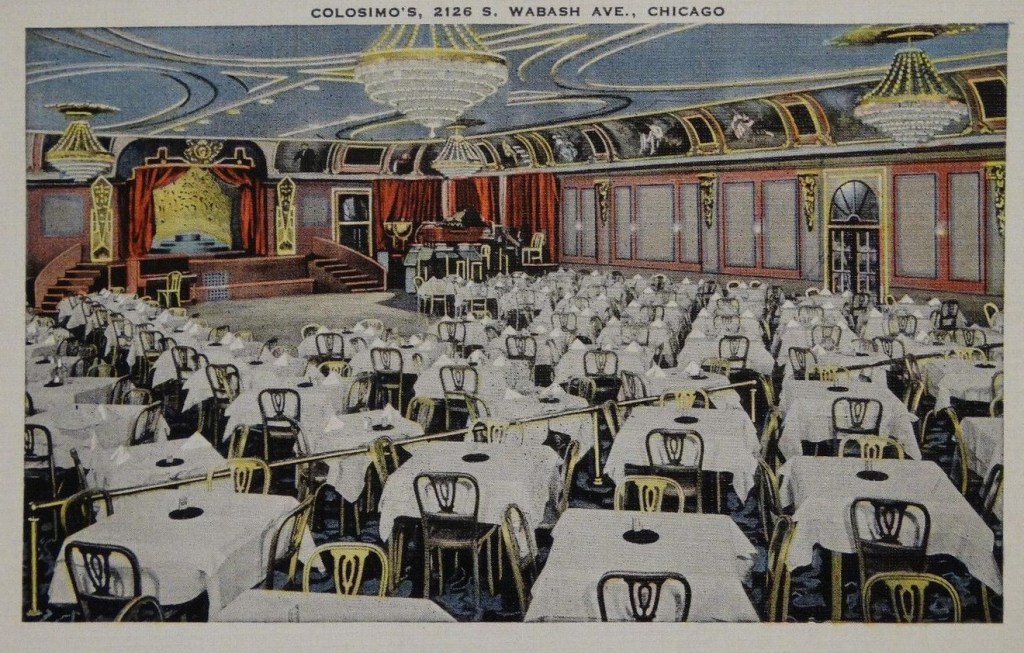
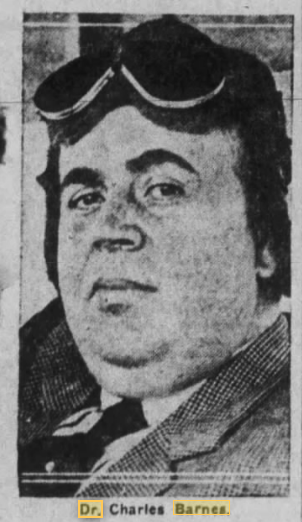
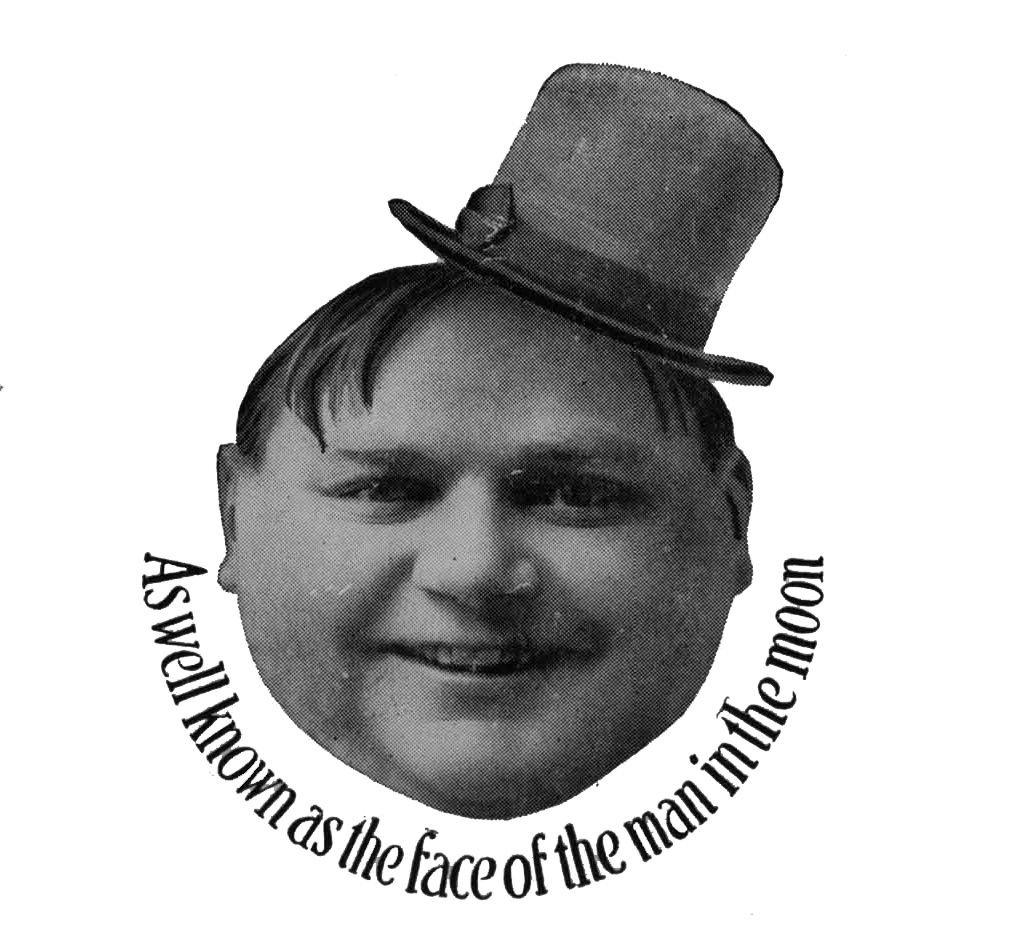


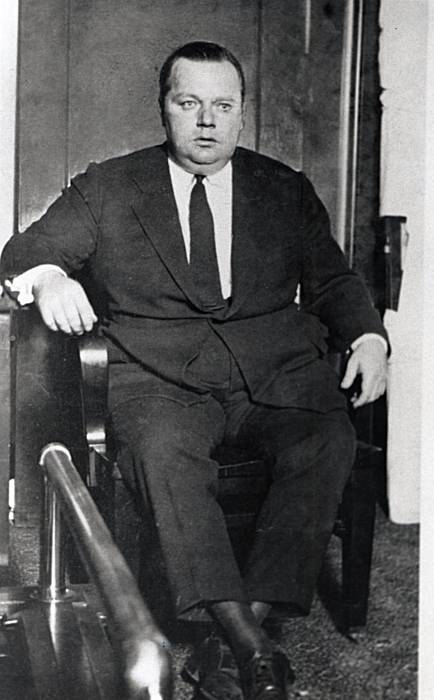

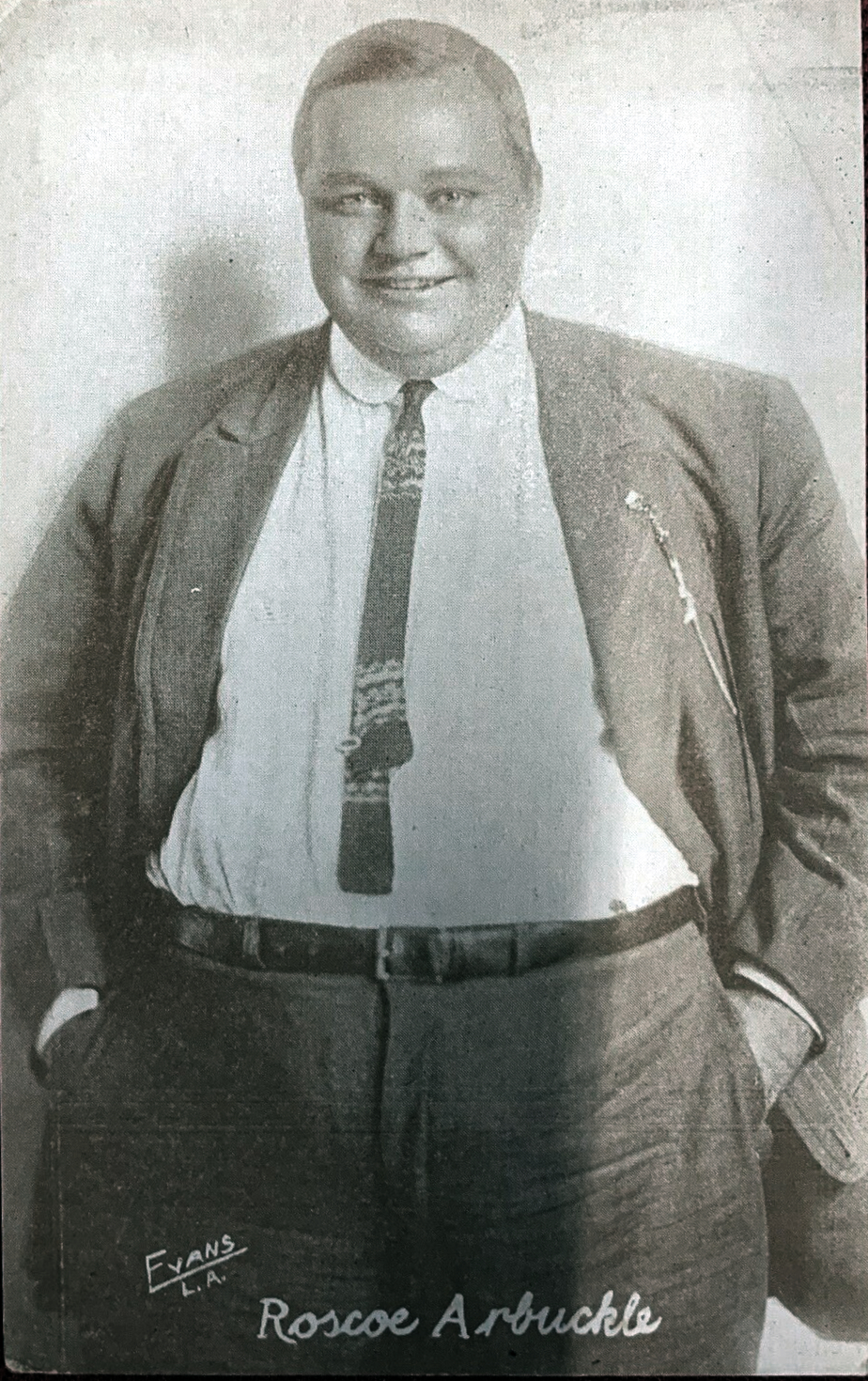
 Spite Work: The Trials of Virginia Rappe and Fatty Arbuckle