The Arbuckle trial transcripts provide a few clues about this bangle as to what it looked like and how it was worn. The prosecutors made little issue of the so-called armlet or arm bracelet. Arbuckle’s lawyers, however, wanted juries to see the bruises on Virginia Rappe’s right bicep attributed to the bracelet and not caused by a hand gripping it tightly, namely Roscoe Arbuckle’s, as he struggled with her in room 1219 of the St. Francis Hotel in San Francisco.
The bracelet in the manuscript of Spite Work is a kind of MacGuffin. But how could such an object inflict a bruise? That is one thing. The other is how did Rappe wear her bracelet in the first place. On Labor Day, September 5, 1921, she wore a long-sleeve silk shirtwaist. A photograph exists of this garment, which shows the sleeves and cuffs, which required cufflinks. So, any bracelet worn on the right arm would have to worn outside the sleeve, which would seem unconventional. If worn underneath, then the object takes on a rather decadent aspect, suggesting Rappe wanted the arm bracelet to teasingly appear after she disrobed, if that was expected of her. She was, after all, a “junior vamp.” (Incidentally, no brassiere was found.)
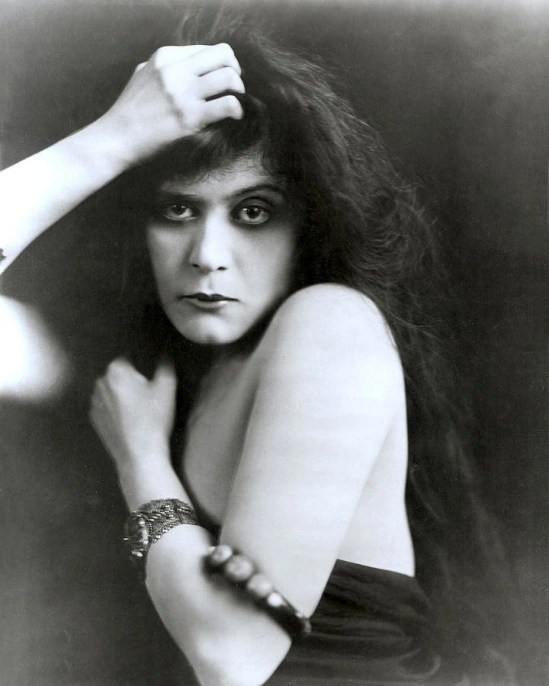
There are two descriptions of where the bracelet was worn. Maude Delmont, Virginia’s companion at Arbuckle’s ill-fated party, described seeing the bruising on the upper right arm where the bracelet had been—“worn across the arm.” Maude, as she is affectionally called in Spite Work, had a rather idiosyncratic line of sight. One of Arbuckle’s lawyers, Frank Dominguez, satirized her ability to see around corners and into Arbuckle’s bedroom. Putting that aside, “across the arm” suggests just above the elbow.
During the second trial, Alice Blake, one of the showgirls who served as a star witness for the People, saw the bracelet worn above the elbow during the course of the early afternoon and when Virginia had presumably still been dressed, which is not a given. So, the mystery still remains as to where she wore her bracelet, inside or outside the sleeve.
The second trial is also the venue in which we have a description of the bracelet. Assistant District Attorney Leo Friedman showed it to Alice Blake. “I call your attention to this round jade or green glass bracelemt, or armlet,” he began, “and ask you if that resembles in shape, size, and appearance the braclet that you saw upon the arm of Miss Rappe?”
So why is this important to the narrative? (1) To dress Rappe as close as possible to how she appeared on Labor Day 1921; (2) to write objectively about the prosecution’s adherence to a struggle between Arbuckle and Rappe; and (3) to stress test the defense hypothesis that Virginia had been bruised by her own bracelet. Arm bracelets, of course, don’t bruise on their own. Pressure would still have to be applied, say, from a fall or some other misadventure, moving a body from one place to another . . . It anticipates the late Johnnie Cochran in regard to “the glove” defense, albeit applied a bracelet, and inspiring this paraphrase:
“If it’s a tight fit, you must acquit.”
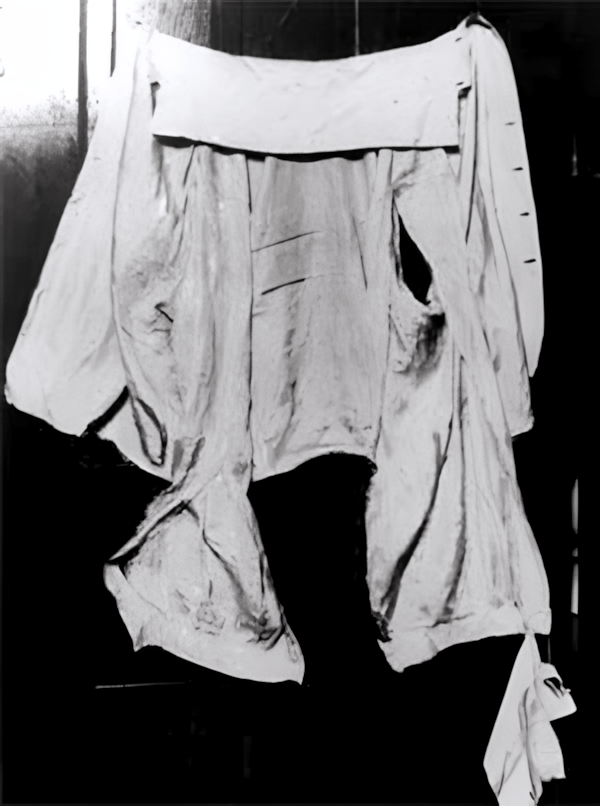
during the second week of September 1921. As a matter of discretion, of course,
newspapers did not run photographs of her panties.
 Spite Work: The Trials of Virginia Rappe and Fatty Arbuckle