On St. Patrick’s Day 1922, eight men and four women—plus two alternates—were sworn in to judge whether Roscoe Arbuckle was guilty or innocent of the manslaughter death of Virginia Rappe. Fifty-one prospective jurors had been interrogated by prosecutors and defense lawyers for biases, either pro or con, as well as evidence of the kind of celebrity fanaticism that neither side would have wanted. It would have been nearly impossible for anyone in the Bay area to have been unaware of the previous two trials though many would protest that they had not been influenced by news coverage.
Rumors of witnesses being paid by the defense circulated in San Francisco and Los Angeles—and Chicago, where Arbuckle’s lawyer, Albert Sabath, located new witnesses who would allege that Rappe had previously suffered from abdominal pains, hysteria, and the birth of an illegitimate child.
As the jury was being chosen, San Francisco’s newspapers reported on witness depositions by individuals such as “Butch” Carroll, the owner of a saloon in Chicago where Rappe had once been a chanteuse. Many of these witnesses weren’t called in court but the depositions made news and were to Arbuckle’s benefit before the jury was sequestered in the Hotel Washington and subjected to censorship of anything related to the case.
On March 16, the last of the witnesses was deposed, Edward J. Byrne, a carpenter. He claimed to have once lived in the same house as Rappe and her grandmother—meaning he was a tenant in the same building. He claimed that in 1907 he witnessed Rappe suffering from abdominal pains while her grandmother attempted to quiet her. He said that Rappe had torn most of her clothes off and screamed at her grandmother to stop when the latter tried to prevent her from doing so.
“Miss Rappe,” he said, “was afraid of surgery and no doctor was summoned.”
Like prospective jurors, defense attorneys needed their witnesses to meet certain criteria, a kind of punch list of talking points that would correlate with what Rappe did in room 1219 of the St. Francis Hotel on Labor Day 1921.
Despite the sometimes numbing nature of these depositions and testimony, which previously the prosecutors had complained were excessive and absurd, the defense trusted that their witnesses would outnumber and drown out the “character” witnesses whom the prosecution had deposed.
Rappe, whether Arbuckle’s victim or not, was on trial now for the third time as much as he was.
To theorists Jacques Derrida and Roland Barthes, photos of individuals have a spectral quality where it’s the photograph that is looking at us from a fixed moment in the past. A photo of Virginia Rappe with two of her friends provides a good example of that quality.
The more prominent of the two is the actress Louise Glaum, who, when The Picture Show published the photo in November 1919, had just made or was making such motion pictures as The Lone Wolf’s Daughter (1919), Sex (1919) and Love (1920). These and other films made Glaum Theda Bara’s rival for the title of Hollywood’s leading vamp.
During this time, too, Glaum, was also seen around Los Angeles in Rappe’s company. That they were friends is known from the reporting of the first Arbuckle trial, when prosecutors tried to get “Miss Glaum“ to testify to Rappe’s health and wellbeing. This required Glaum that come from New York, where she had retired to enjoy her private life and file lawsuits against her former studio.
What she might have said as a rebuttal witness will never be known. But it is not hard to guess. She likely would have told the jury that in all the time she spent with Rappe, she hadn’t seen her drink alcoholic beverages, fall into hysterical fits, tear her clothes off, and the like. Glaum, too, who enjoyed hiking in the Hollywood Hills like Rappe, would have said that Rappe’s physical health was robust.
Being a rebuttal witness, however, would have required subjecting Glaum to cross examination by Gavin McNab or, more likely, Milton Cohen among Arbuckle’s battery of lawyers. This would have exposed her personal life to some degree. Glaum was single, having divorced at an early age. Her nickname was “Weirdy” among the other women in the studio. The lawyers would also probe the depth of her friendship with Rappe. It may have been so casual as to make Glaum out to be a weak witness who really wouldn’t know about Rappe’s wellbeing. Or Rappe may have been closer, like a “lady-in-waiting” in Glaum’s entourage. (Glaum could have known her in Chicago, where Glaum was a stage actress around 1909–11 and Rappe was both a model and aspiring actress herself.) Or Glaum and Rappe may have been—and this is more likely—equal partners in whatever acquaintance they had.
One thing they did have in common were dogs. Glaum had rescued a Boston terrier that she named “Runtie” and Rappe had “Jeff,” her brindle Staffordshire, rescued from director Henry Lehrman’s studio menagerie. In the photo, Rappe’s dog is the center of attention with Rappe flanked by Glaum and the former actress Jean Darnell.
Darnell, too, could have made a good rebuttal witness. She was an actor-turned-gossip-columnist and privy to many Hollywood lives and secrets. Unfortunately for the work of biographers and historians, her own life was kept private. At the time of Rappe’s death, she had already returned to her native Texas as an “exploitation” agent for Goldwyn.
The fingerprints gathered from Room 1219 in the St. Francis Hotel by pioneering criminologist Edward O. Heinrich proved to be among the most contentious evidence presented during the three Arbuckle trials. The defense lawyers challenged this “evidence” on the contention that a hotel chambermaid had thoroughly cleaned Arbuckle’s suite in the St. Francis Hotel so any fingerprints alleged to be those of Arbuckle and Rappe belonged to someone else or were faked.
Heinrich had made his reputation as an expert in handwriting analysis. But his leap into fingerprint analysis, a more complex field, separated him from his fellow forensic “experts”—indeed, the kind that Arbuckle’s defense found to refute the claims that the fingerprints on 1219’s door indicated a struggle between Arbuckle and Rappe.
But let’s return to defense witness Kate Brennan, the 51-year-old chambermaid, whose Irish accent and courtroom demonstrations of how she wiped down the woodwork in room 1219 entertained the courtroom and the reporters during the first trial.
The prosecution dealt with her by putting Heinrich back on the stand. He described finding hairs, hairpins, dust, and, of course, fingerprints in room 1219 that indicated the room had not been cleaned before he began his work on September 16, eleven days after Arbuckle’s ill-fated party.
Brennan’s testimony was seen as theater by Helen Hubbard, the most outspoken of the two jurors who voted to convict, and one reason the first trial ended with a hung jury.
Brennan was brought back again to testify at the second trial in January 1922. This time the prosecution had done “opposition research” on her. They had found that she had been released from the female department of Stockton State Hospital, where she had been a patient since 1909. She had been released from the hospital in 1920 as much “improved” but not “cured.”
Female patients wing of Stockton State Hospital, c. 1920s
The prosecution, however, failed to convince the judge to toss out her testimony on the grounds that she was mentally incompetent. The second trial continued and ended in a hung jury as well, this time 10 to 2 to convict rather than the other way around. What convinced the predominantly male jury that Arbuckle was guilty wasn’t the fingerprint evidence. It was a reading of Arbuckle’s testimony that didn’t agree with earlier statements he made to a Los Angeles Times reporter (in which Arbuckle also made the unguarded admission that he pushed Rappe down on a bed to quiet her).
What wasn’t reported about Brennan was why she had been committed to a mental institution for over a decade. This is an important question because once more it casts light on the credibility of the witnesses the defense called to take the stand. The mental health of Irene Morgan discussed in an earlier blog entry is another case of note. When it was clear that Morgan’s poisoning turned out to be a hoax, the defense didn’t put her on the stand in the later trials. When the prosecution tried to subpoena her in January 1922 for the second trial, she had disappeared.
Kate Brennan, too, disappeared before the third Arbuckle trial and couldn’t be called by either the prosecution or defense. While there was little curiosity about these women afterward, we wanted to know more about them for our book. Brennan may remain the most curious. But there is one intriguing newspaper article from 1904 in the San Francisco Call. It reports that a woman named Kate Brennan had been caught once more desecrating a Catholic church. This Kate Brennan, a former domestic, was known to do this and the pastor refused to press charges because she suffered from “dementia.”
Tomorrow, February 1, marks the hundredth anniversary of the death of the actor-director William Desmond Taylor. His unsolved murder, which happened at the time the second Arbuckle trial was concluding, is seen by film historians as the other major scandal that threatened the motion picture industry and required redemption via the creation of the Hays Office—this time drawing in Mabel Normand’s drug addiction and revelations of Taylor’s secret life that were publicly exposed during the subsequent investigation.
The Arbuckle case and Taylor’s murder were discrete events and shared no major or minor players. Though the proximity in time probably led the public to imagine they were related. During the afternoon of February 1, in San Francisco, another jury began deliberations over whether Roscoe Arbuckle had caused the death of Virginia Rappe, and several hours later, in Los Angeles, Taylor was shot in the stomach by a small caliber weapon.
Both the events of Arbuckle’s infamous Labor Day party of September 5, 1921, and the subsequent cold case of Taylor’s murder have inspired numerous books—and those about Taylor are much better. The first, A Deed of Death: The Story Behind the Unsolved Murder of William Desmond Taylor (1990), is by Robert Giroux, a writer better known as the personal friend and publisher of such American poets as John Berryman, Robert Lowell, Elizabeth Bishop, and novelists such as Donald Barthelme and William Golding.
Another serious book on the Taylor shelf is Murder in Hollywood: Solving a Silent Screen Mystery(2004) by the biographer Charles Higham, which uses much new information, including revelations from the Taylorology.com site and, most importantly, the unpublished autobiography of set designer George Hopkins. We took a special interest in his text for an incident he reports from April 4, 1921. On that day, the Chicago Grand Opera Company opened the opera season at the Los Angeles Philharmonic Auditorium with a command performance of Verdi’s Otello. The opening, too, was also the social event of the spring, with South Olive Street lined with limousines and the cream of Los Angeles—and Hollywood—society out in force dressed top hats and tails, furs and glittering jewels entering the concert hall.
Advertisement in the Los Angeles Evening Record, April 4, 1921 (Newspapers.com)
According to one of Higham’s primary sources, Hopkins’s unpublished autobiography titled “Caught in the Act,” Virginia Rappe was one of the guests in the private loge of Mr. and Mrs. Cecil B. DeMille (p. 80). The others are no less intriguing, among them Paramount Pictures (nee Famous Players-Lasky) producer Jesse Lasky and screenwriter Rupert Hughes. Each paired with their wives though Rappe, apparently, was accompanied by an actor named William Desmond—NOT to be confused with the director William Desmond Taylor, who would have been sitting just a few feet away. (WDT had shown up with his friend and professional associate Hopkins, who was a gay man.)
That Rappe would have been present in such company seems rather bizarre in light of the insulting stories about her character that welled-up following her death. But the evidence suggests that the “best dressed girl in Hollywood” was less an actress and more a young socialite. Realize, too, that she was a “Chicago girl,” which may have counted for something among people we take as motion picture illuminati. Indeed Rappe’s association with this group suggests a much less rigid social order existed among the film colonists than one would find in east coast society.
Rappe was known to have been a good bridge player. So, it is also possible that she was a simply a guest of Mrs. DeMille. Nevertheless, if Rappe’s presence wasn’t a case of mistaken identity on Hopkin’s part, she may have wanted to get back into the movies with something better than the comedy shorts she had done sporadically for her former boyfriend, Henry Lehrman.
A few weeks later, Rappe was allegedly present at a “Blood Moon” party given by another director who might have helped her, Alan Dwan. In May, William Desmond, the actor and presumed opera companion of Rappe, formed his own production company. As for Rappe, she found a new manager in one Al Semnacher, the man who drove her to San Francisco and on to the St. Francis Hotel.
At this writing, we hope to confirm Hopkin’s mention of Rappe attending Otello with newspaper reporting of the celebrities present that evening, particularly the Los Angeles Examiner, a not so easy newspaper to research since extant copies have been cut up into clippings. What limits us, given what newspapers we can search, is that members of the film colony weren’t considered members of polite society. Motion picture executives, directors, actors, and actresses were still parvenu “extras“ in the Philharmonic Auditorium, which might explain, too, Rappe’s access.
The second trial jury was finalized on January 16, 1922 and their names published in the newspapers on the following day. Unlike the first trial’s jury, the new jury was composed of more men, eleven altogether, and one woman. Instead of a thirteenth juror, there were two alternates, one man and one woman.
Gavin McNab, the lead defense attorney, rejected several women on the basis of their eagerness to serve on the Arbuckle jury. Although four women on the first trial voted to acquit Arbuckle of the charge of manslaughter for the death of Virginia Rappe, his thinking had likely changed. After all, the men on the first jury voted to acquit, even the lone male juror who didn’t, Thomas Kilkenny, had for the most part sided with the majority.
We think Kilkenny changed his vote not so much because he believed in Arbuckle’s guilt. When it was clear that his vote didn’t matter, for a hung jury was inevitable, Kilkenny sided with the one woman who consistently cast ballots to convict out of—we think—Irish solidarity and, perhaps, chivalry. After all, the woman who voted to convict, Helen Meany Hubbard, was the daughter of Irish immigrants.
Women serving on juries in California was neither new nor could it be attributed to the passage of the Nineteenth Amendment. California already had suffrage since 1911 and women frequently served on juries. The exceptions, however, were the more “indelicate” cases involving murder and sex. But that exception was also falling by the wayside. Indeed, nine women served on a high-profile murder case in Los Angeles—that of Arthur Burch for the love-triangle murder of J. Belton Kennedy, a wealthy insurance broker—which overlapped the first Arbuckle trial and competed for headlines.
The Burch jury also couldn’t come to a consensus and proved, if anything, that women jurors hardly voted as a bloc. They didn’t for the first Arbuckle trial. Four women voted to acquit, three of whom consistently voted Arbuckle as not guilty. In contrast, the men nearly voted in lockstep save for one and only in the end.
As it turned out, the men on the second trial’s jury, although more “traditional” in makeup, would have its own surprises rather than the expected outcome.
Second trial jury, January 1922 (Underwood & Underwood)
Haley’s pieces are more editorial than strict reportage and here he discusses the role of the woman jurors in the trial and the problem they presented for Arbuckle’s lead attorney, Gavin McNab.
Ultimately, the first Arbuckle trial ended in a hung jury when one woman, Helen Meany Hubbard, refusing to cast a ballot for acquittal. Over and over again she voted to convict Arbuckle of manslaughter in deliberations that dragged from December 2 to December 4, 1921. She might have been alone had not a fellow juror, Thomas Kilkenny, eventually joined her in the vote to convict.
Haley is prescient in regard to the kind of modern juror McNab faced. Mrs. Hubbard, the wife of a lawyer, attributed her decision to the prosecution’s logical presentation of the circumstantial evidence, especially the fingerprints that indicated a struggle between Arbuckle and Rappe. Hubbard, too, found Arbuckle’s “Good Samaritan” testimony to be false. But it was Gavin McNab’s courtroom performance that she found particularly offensive. (For more on Hubbard, we suggest reading Joan Myer’s “Virginia Rappe & the Search for the Missing Juror.”)
Arbuckle Jury Split; Is Locked Up Over Night
Two of Women Jurors Reported Holding Out for Conviction of Comedian Acquittal May come When Court Meets Today Fatty and Friends Worried by Delay—Had Hoped for Speedy Liberty His Wife Breaks Down Prosecutor Arranges to Guard Actor from Violence in Case He Is Freed
By Bart Haley
San Francisco, Dec. 3.—The jury before which Fatty Arbuckle has been on trial for manslaughter is split and temporarily deadlocked.
Two of the five women members were reported this morning to have been holding out for the conviction. After seven hours of deliberation and seven ballots, the foreman reported at 11:10 last night that no agreement had been reached.
The court had remained in special session. The jury was locked up with orders to go to work again today. The court will reconvene at 10 o’clock. Fatty and his counsel and his friends, who had been hoping and laboring for an immediate and spontaneous acquittal, were shocked.
(It will be 1 o’clock in Philadelphia when the court meets today.)
The big comedian, whose troubles, the first real ones of his life, began with the Labor Day gin-and-orange juice party which Virginia Rappe was carried with mortal injuries, was badly shaken for the news from the jury room. For hours he had waited in an agony of anxiety which he could not quite conceal.
The building was invaded by a curious mob. Judge Louderback had informed the jury that he would wait until 11 0’clock. This decision followed the failure of the jury to reach a verdict in two hours of wrangling that preceded the dinner hour. At 11 o’clock there was no sign of life from the jury room. A deputy sheriff was sent to make inquiries. He returned with the news that a verdict had not been reached and that the jury wanted ten minutes of grace to try again. It tried again and failed.
Fatty stood up in the brilliantly lighted courtroom and reached wearily for his hat. Even the anti-Fattys felt a momemt of pity. Mrs. Arbuckle, who was sitting behind her husband, arose, sat down again, opened her handbag, got out her handkerchief and began to cry.
Only Gavin McNab, chief of Fatty’s counsel, appeared unmoved. The other lawyers looked dismal, but resigned.
“I’m not worried,” said Fatty, “it’ll be all right. But I wish they would hurry.”
There were good reasons why hurry seemed desirable. Doubts and wrangling and delays and the dim possibility of a permanent disagreement were not likely to help toward a calf-killing in the land of films or to make the way easy for the return from Elba, which, to Fatty, is almost as important as liberty itself.
A verdict of acquittal is expected today. Arbuckle, his sisters, his wife, his counsel and the friends who were with him when he went unhappily through the jammed corridors on the way to his hotel felt so sure of an acquittal on the first ballot that they were prepared to leave for Los Angeles this afternoon.
District Attorney Brady and his assistants were not in court last night. They left with the manner of men washing their hands of the whole business at the close of their final arguments and after a day of extremely bitter interchanges with the lawyers for the defense.
But Brady has provided a strong guard to protect the tragic funny man from cranks who have been sending him violent and threatening letters.
The ground over which the battle for Fatty’s liberty and rehabilitation has raged furiously and without rest since November 11 was strewn with strange wreckage last night. Mrs. B. Maud Delmont, who was the most conspicuous of the women guests at the fatal Labor Day party, was taken from her hotel last night and placed in jail under a bigamy charge registered by the authorities of Madera County. It was Mrs. Delmont who first accused Arbuckle of being the direct cause of Virginia’s injuries.
Irene Morgan, who was found poisoned in her hotel here on Thursday, returned, still very ill, to Los Angeles this morning. She had been brought into court as a witness for the defense. The police and private detectives, after working for twenty-four hours without sleep in an effort to find a man who was presumed to have poisoned Irene, quit the search in disgust.
They had sought high and low for a vehicle called, in the bright idiom of the police, “the poison taxicab”—a taxicab in which Miss Morgan said she rode just before a mysterious gentleman, “appearing much like one of District Attorney Brady’s detectives,” gave her deadly orange juice and poisoned candy. Physicians who were called in frantic haste to the Clift House [Hotel], where Irene was found, said last night that so far as they could determine, the young woman took a great overdose of headache powders, accidentally or otherwise.
The ante-mortem statement obtained by the physicians when they thought Irene was going to die glistens with the strange poetry of delirium. It is all about love and a noble past and proud ancestors in Sweden and a Duke from Spelice and the dead Virginia.
Mrs. Minnie Neighbours, of Los Angeles, another of the women who gave some of the most helpful evidence for the defense, is waiting here to answer formally to a perjury charge on Monday. District Attorney Brady caused Mrs. Neighbours’ arrest and said that her evidence was wholly false.
Fatty and his counsel have found time from all their other troubles to stand manfully by the refugees. Their doctors treated Miss Morgan. The lawyers will defend Mrs. Neighbours. Mrs. Delmont, who started all the trouble, will seemingly see the last of it. She will be left to shift for herself.
The mill of the trial ground on unhindered by these reports from the outside world or news of stragglers overcome by the wayside. The jury retired at 4:10 after Gavin McNab and Assistant District Attorney U’Ren finished their respective appeals. The courtroom and the corridors were packed and there was a mob in the street. McNab assailed District Attorney Brady by name and the District Attorney assailed McNab.
“No innocent man,” said Mr. U’Ren, “would have kept still as Arbuckle did, until he was driven by the collapse of his counsel’s case to stand in this court and tell a story that is obviously untrue. Through perjury and hypocrisy, he is seeking his freedom.”
McNab again bitterly charged Brady with maintaining a system of organized terrorism in his office. When he was not addressing himself particularly to the women of the jury. McNab made masterly use of the material at his disposal. When he addressed himself to the women, he made it clear, perhaps for the first time, that equal rights of citizenship have created a new dilemma for lawyers.
Should you appeal to the minds or to the emotions of women in the jury box? Mr. McNab appealed proudly to their emotions, to their emotions only, and the experiment—which may become historic—didn’t terminate auspiciously.
Judge Louderback’s charge to the jury sounded almost like a recommendation for conviction. And the first rumors from the jury room indicated that all five women members desired ardently to send Mr. Arbuckle to jail. Stephen Hopkins, a thirteenth juror, who was held as an alternate until the deliberation of the jury began and then released, reflected the other side of the jury’s mind when he said he could see no reason for a conviction.
About the state of mind of the five women of the jury there were from the first differences of opinion as wide as the seas. They were among the first women who ever sat in judgment on a case of the sort which, involving spectacular crimes or spectacular misfortunes of one of their own sex, would normally be decided by the blundering and purely masculine code known in courts as the unwritten law.
The jury had a wide, an almost limitless, latitude for the exercise of its sympathies or its prejudices. Neither the prosecution nor the defense pleaded a clear case. To an impartial eye it was plain that the State’s direct evidence was not sufficient to prove Fatty guilty, in a court or out of it. Neither did Mr. McNab and his associates demonstrate Fatty’s innocence. Only Fatty himself knows what went on in the room from which Virginia Rappe was carried to die.
When, after all the noise and clamor of the closing arguments was over, the lawyers admitted that they had felt, addressing the women of the jury, as if they were talking into a void or appealing to a granite wall. But the jury women toward the last were not merely inscrutable. They were more obviously bored and weary—weary of Fatty and the wrangling of McNab and Brady, of the doctors and the lingo of the clinics, of everybody in the courtroom, of the repeated loud references to gin and orange juice.
When at last the jury left the courtroom at 4 o’clock in the afternoon, Fatty looked after them forlornly and his lawyers crowded about to make cheerful prophecies. Women, they told themselves and their client, were not fools about these things. Women could not be swayed by the befuddling sentimentalism that might cause men to do crazy things in cases like this. Women might be tender-hearted about all the rest of the world, but they were hard-boiled in relation to one another.
So the minutes passed. Fatty’s lawyers watched the clock anxiously and returned to the fear that was rending with them within. McNab, they were sure, had got to the jury. They felt that his address had been very moving. But it was not moving. Upon McNab it fell to initiate the long, long series of experiments which may have to be continued for years before lawyers of the present schools are able to talk effectually to mixed juries.
And upon the site of the Hall of Justice, lawyers of the future may yet erect in gratitude a monument in memory of Fatty’s chief of counsel and inscribe upon it: “On this spot Gavin McNab first demonstrated for posterity the manner in which a jury of the new age should not be addressed.”
McNab was Victorian. He begged the ladies of the jury to have no illusions. Yet he himself seemed full of them. McNab, the winner of a thousand great suits, the wise guide of a political party and mentor of a multitude of young lawyers, floundered when he sought to touch the consciousness of five average women and behaved like a mariner in uncharted waters at night. He began with Bethlehem and ended with “suffer the little children to come unto Me.”
He talked of the millions of children who had laughed at this most unfortunate man and dwelled long and tenderly upon the tradition of an unerring child’s instinct which he recommended as culminating proof of Fatty Arbuckle’s innocence and the cold brutality of the District Attorney’s office. McNab told of the need for a continuous reverence for all women.
At about the same moment, Irene Morgan in a mild delirium was telling them at the Clift Hotel to prepare for Duke of Spelice, who was coming to take her riding, and begging to be told where Virginia Rappe was. Mrs. Neighbours, another Arbuckle witness, was waiting to face a charge of perjury and Mrs. Maud Delmont, the third troubled woman in the case, was being taken to jail.
Fatty’s big car—someone said casually the other day it cost as much as a good-sized church—was waiting outside at the curb. It was not going to hang around the Hall of Justice a moment longer than was absolutely necessary. It was gassed and chauffeured for swift departure from this scene of trouble.
The jury had been out about twenty minutes when one of the Arbuckle counsel, who had passed a door that leads almost directly into the jury room, sat down among his associates and in almost inaudible whisper uttered one word:
“Wrangling!”
Had McNab trusted too greatly to the woman of bright legend, to the woman of books written by sentimental men who make the unwritten law and not enough to the woman who votes? The thought may have occurred to some of the watchers.
It clearly did not occur to Fatty. He was not thinking. The blood was beating in his temples and upon his face fell the look of a man falling endlessly through space. There ensued a period of harrowing suspense until the jury disappeared stolidly to its hotel for dinner.
And the big car turned and rolled slowly down the street, but only to return at 8 o’clock. One salient had been lost. The battle waged for three weeks was not only for the Arbuckle of the present but for the Arbuckle of the future as well. A quick, unhesitating acquittal by the jury had been hoped for by the defense.
After the shock of the first disappointment, Fatty recovered and seemed to feel better. He loafed for a while in the corridor, when he returned, and smoked cigarettes, leaning comfortably against the wall.
“It’ll be all right,” said he. “I’m not a bit worried now, but I wish they’d hurry.”
Roscoe Arbuckle in court, December 1921 (Calisphere)
The following is a passage from our work-in-progress taken from the testimony of the first Arbuckle trial on Tuesday, November 29, 1921. This was a day of rebuttal witnesses following the dramatic testimony of the previous day, in which Roscoe Arbuckle told his version of what happened at his Labor Day party (discussed in a recent entry).
The last rebuttal witness to appear was Katherine Nelson Fox, who was Virginia Rappe’s friend and mentor from about the age of eight until Rappe left Chicago for “movieland” as some reporters put it. Her testimony was needed to refute hysterical episodes from Rappe’s past to which Harry Barker, Rappe’s Chicagoland boyfriend, testified on November 25 (covered here).
Born Antoinette Catherine Nelson in 1877 to a Swedish farm family in Kinbrae, Minnesota, Fox moved from her rural hamlet to Minneapolis and then Chicago. In 1899, while living in the same boarding house, Fox befriended Virginia Rappe and her family, which then consisted of her mother, Mabel Rapp, and her putative grandmother, Virginia Rapp.
Catherine (later changed to Katherine) Fox, early 1900s (Private collection)
In 1900, the Rapp family moved to New York City and Fox didn’t see Virginia again until five years later, when she and her grandmother returned to Chicago’s South Side following the death of Virginia’s mother, Mabel, from tuberculosis in January 1905. By then, the family was in financial need and Fox interceded as a kind of guardian and governess for Rappe. Although it was Mabel, rather than Virginia, who first added the “e” to the family surname, it may have been used infrequently until Fox revived its use for her young protégé.
In 1908, after Fox married Albert M. Fox, a wealthy salesman for the American Window Glass Co, she had the means to do more for Rappe and likely paid for her dance lessons and pushed her into modeling and the theater—indeed, to follow her mother Mabel’s career but without the promiscuity, drug addiction, and disease that led to her short life.
Katherine Fox testified at all three Arbuckle trials and, like Rappe, faced people from her past who she asserted had fabricated stories about her. For example, at the third trial, a Chicago doctor, who claimed to have lived in the same boarding house of 1899, said that Katherine Fox went by “Dot” Nelson and had him treat a teenage Rappe for a bladder disorder in the early 1900s. (Following Arbuckle’s acquittal, the same doctor was later arrested for selling morphine prescriptions in Omaha, Nebraska—more about him later in another entry.)
As with many sections in our book, it is based on an aggregation of many newspaper accounts that we have “curated” into a detailed narrative. This is especially true of the Arbuckle trials, for which there are no extant transcripts known to exist.
N.b. We are preparing a glossary of names for referencing the many names one must bear in mind in such a complicated legal case.
Gavin McNab was surely pleased to hear that his co-counsel Charles Brennan had been successful in preventing one of the Superior Court judges from issuing a warrant for the arrest of defense witness Minnie Neighbors. All Brennan had to do was show Judges Griffin and Shorttail a note McNab had jotted down saying that the District Attorney wasn’t acting in good faith and that the defense should be heard before any warrants were issued. Since these judgeships were elected positions, McNab’s political clout probably carried some weight—as did Brennan’s height and persuasiveness.
Brady, of course, wasn’t going to take no for an answer. Perjury was a felony, and he could issue his own warrant. But now he was denied the imprimatur of the Superior Court and any arrests of a defense witness would be seen as an act of desperation as were Brady’s frequent claims of “bought” and “coached” witnesses.
Still, McNab knew the strengths and weaknesses of his witnesses. Though Arbuckle’s attorney, Milton Cohen, had vetted them, they weren’t angels and McNab knew Brady would be relentless in discrediting them. Brennan had gotten into a shouting match with Brady and now communication between the two sides was no longer collegial.
The witnesses who most concerned McNab were Virginia Rappe’s foster mothers. Her last, “Aunt Kate” Hardebeck, had proved her mettle on the stand again that morning. Her willingness to go from one judge to another to sign a complaint against Mrs. Neighbors revealed her determination to protect Rappe’s reputation. There was little doubt that Hardebeck knew Rappe as well as anybody, having retained a vestige of her role as chaperone to Rappe, even in Henry Lehrman’s house and around Hollywood, where “Aunt Kate” was often in tow.
That afternoon McNab had to contend with another foster mother, one possibly more compelling for swaying a jury than “Aunt Kate”. Mrs. Katherine Fox had come from Chicago and that alone meant she was in court to put up a fight for “her child.” Brady had been clever not to show this card until the second week of the trial—before it was known that Mrs. Fox would be Harry Barker’s rebuttal witness.
Much had changed in Katherine Fox’s life since Virginia Rappe grew up and made her own way in the world. In 1908, while still known as Catherine Nelson, she married Albert Mortimer Fox, a salesman for the American Window Glass Company. Albert Fox was nearly twenty years older than his bride and a man well established in his line of work. He had grown up in the profitable plate glass business where demand from builders was high and growing steadily as taller office buildings were being built. His family owned a glass-rolling mill in Oneida County, New York, as well as other factories, and, after his widowed mother, Kate, was widowed a second time, Albert stood to eventually inherit a considerable fortune.
As the new Mrs. Fox, Catherine began to spell her first name with a “k” like her husband’s mother. She enjoyed an upper middle-class life in Chicago as is evident in a photograph taken shortly after her marriage where she is seen in stylish clothes, furs, and a Pekingese in her arms, perhaps in lieu of children for she and her husband had none save for Virginia Rappe, who still figured in their lives until she moved to Los Angeles.
When Mrs. Fox took the stand at the first Arbuckle trial, she was a widow living in Chicago’s fashionable Hyde Park neighborhood on East 51st Boulevard, across from the arboretum at Washington Park. Her husband Albert had died intestate in November 1917 and she inherited not only his property but a good portion of his mother’s estate in stocks, bonds, and real estate, including five islands in the St. Lawrence River.
Among the real estate holdings, apparently some of the most valuable parcels were burial plots in Maple Grove Cemetery in Kew Gardens, Queens, which her husband believed had been gifted to him. While Mrs. Fox was on a cruise of the Far East and Australia in 1918, her husband’s brother Frank disputed her claim. He died in 1919 and the last surviving brother, Floyd, took his place and the case was appealed all the way to the New York State Supreme Court.
Still in her early forties with auburn hair and a Roman nose, Mrs. Fox was a trim, handsome woman. M. D. Tracy described her as a “pleasing picture in luxurious black furs enhanced by contrast, with an ivory white throat.” Examined by Milton U’Ren, Fox spoke slowly and carefully, describing her first encounter with Virginia Rappe and her perspective on the young woman’s health in childhood and after.
“I had known Miss Rappe since she was six years old,” she began, having met the girl in 1899, when she was actually seven or eight years old. “She was living with her mother and grandmother at an exclusive boarding house.”
Fox continued, describing how the young Rappe was a normal and healthy child in every way who liked to play outside in the neighborhood, play games with her friends, skate, ride her bicycle, and the like. From 1900 to 1905, the Rapp family left Chicago for New York. When they returned, it was just Virginia and her grandmother and, for a time in 1905, Rappe came to live with Fox when she was still single and going by her maiden name of Nelson—although this last detail wasn’t given or reported.
“As a child,” Fox recalled, “Virginia was very active. She was an outdoor girl and fond of all sports.”
“Virginia studied toe-dancing and high-kicking,” she continued. “She took many dancing lessons—a great deal of exercise. She also was a roller-skater.”
From 1908 to 1911, Fox saw Rappe frequently. When her grandmother died in 1911, Rappe went to live with Mrs. Hardebeck. From 1912 to 1913, Fox recalled that Rappe was employed as a model for a woman displaying gowns” through the “Great Lakes states.” Fox knew that Rappe had been a fashion model in New York as well as Chicago—and that she had traveled to London and the Pacific Coast.
“The girl,” said Fox, “was always in perfect health and she drank very little. I have seen her at my own house refuse cocktails that were served at dinner.”
“Did you ever see her in paroxysms of pain?” U’Ren asked. “Did you ever see her tear off her clothing or her garters or stockings?”
Fox answered “no” to these questions, eliciting an image of Virginia Rappe’s early life that hardly resembled the fallen young girl that McNab’s Chicago witnesses described.
“I never saw her take a drink of intoxicants,” Fox added.
“Did you ever dine with her where intoxicants were served?”
“Yes, in my own home. But she never partook of them.”
“Did you ever see her sick or in bed?” U’Ren asked, in reference to a time in 1913 when Rappe lived in Fox’s apartment.
“No, except when she was in bed asleep.” Fox also said that she never saw Miss Rappe hysterical with pain or tearing her clothes.
Rappe had been a “daring motorist since the age of fourteen” and enjoyed “a bit of romance—but it was cut short.”
U’Ren had been slowly, painstakingly building toward this, so much so that Oscar Fernbach quipped that the prosecutor “would need eighteen years,” and the spectators could look forward to “a long and hard winter in court.”
“Do you know Harry B. Barker of Gary, Indiana?
Fox answered “yes.”
“Was he engaged to Virginia Rappe?”
“Yes, he was.”
Fox added, “I knew it because he and Virginia told me so.”
“Was the engagement broken?”
“Yes.”
“She broke it?”
“Miss Rappe did.”
“How do you know she broke the engagement?”
“I was present,” Fox replied. She heard Rappe break off the engagement one evening. “It was at the Bismarck Gardens in Chicago,” Fox recalled, “She said—” but what Rappe said “the world will never know,” observed M. D. Tracy. In his telling, it was “because a hardened district attorney unromantically flung a vigorous fist into the air and announced that such things had nothing to do with the case.” The opposite was true, however. The defense actually made the objection, calling U’Ren’s new line of questions and Mrs. Fox’s answers “collateral testimony” upon which their witness, Barker, couldn’t be impeached.
In response, U’Ren said that such testimony would establish a motive for Barker—that it was spite. Judge Louderback sustained the objection but, as Oscar Fernbach put it, what Fox did say made it look “mighty bad for Barker’s testimony.”
When Katherine Fox was turned over for cross-examination, McNab had only one question for the elegant widow who had made herself out to be Rappe’s guardian angel. He knew almost nothing about her and was waiting for Albert Sabath to find someone in Chicago with more information and that required time. So, in the interim, McNab made a move that he thought would counter Brady’s strategy of tainting the defense witnesses. McNab linked Mrs. Fox to a witness whose bias against Arbuckle was by now well established. “Were you with Maude Bambina Delmont yesterday?” he asked.
“Yes,” Mrs. Fox answered, “I was with her all afternoon.”
“That’s all,” McNab concluded.
Wire service image of Katherine Fox, November 1921 (Newspapers.com)
Bart Haley covered the first Arbuckle trial for Philadelphia’s Evening Public Ledger, one of the few newspapers in the east to assign its own reporter. His pieces delved into the personalities of the men and women who figured in the trial.
The following piece captures the atmosphere of the San Francisco courtroom as the trial was about to go into jury deliberation.
The enmity between the defense lawyers and prosecutors is palpable. So, too, are the indirect ways that the prosecution undermined the performance of Arbuckle’s lead attorney, Gavin McNab, who used his Scottish accent and sarcasm to great effect during all three trials.
District Attorney Matthew Brady’s animosity, however, isn’t only directed at Roscoe Arbuckle. Another reason he pursued justice for Virginia Rappe was to punish the monied interest behind Arbuckle. Hence, the Arbuckle trial can be seen as an exercise in social justice, in step with the progressivism of the era. That is why we find Will Hays and the Production Code as the end result.
The Howard Street Gang rapes, referenced in the article, occurred in 1920 and the trial that followed in early 1921 became a cause célèbre for feminists and Matthew Brady, the newly elected D.A. The trial was noteworthy for the reluctance of the victims to speak out against the men who assaulted them. Their reluctance is what influenced Brady to put two of Arbuckle’s female guests, Zey Prevost and Alice Blake, in protective custody—albeit against their will. As entertainers always looking toward their next gigs, it’s presumed that if they could they would have avoided testifying against “Fatty” and, by proxy. the movie industry.
Regarding Haley, he began as an illustrator for such publications as The Saturday Evening Post. In 1919, together with another writer for the Evening Public Ledger, the humorist Christopher Morley, Haley coauthored the Prohibition Era satire In the Sweet and the Dry(1919). Haley died in 1932 at the age of fifty-one.
Arbuckle’s Fate Hinges on Report on Girl’s Health; Both Sides Anxious as to What Commission of Physicians Will Disclose; Free Gangsters If Fatty Is Cleared, Cries Brady; Comedian’s Case Expected to Be Placed in Jury’s Hands by Tomorrow
By Bart Haley
San Francisco, Dec. 1. – The case of the people of California and the pursuing fates and the Women’s Vigilant Committee of San Francisco against Fatty Arbuckle will be given into the hands of a weary jury of five women and seven men tomorrow.
Before Saturday morning Mr. Arbuckle should know whether he is to be out of the trenches by Christmas or tragically and irretrievably out of what, in the language of the superstitious, is called luck.
It is considered probably that the lawyers will struggle to the bitter end without hurling their leather-bound books at each other. But the air about the counsel tables is heavily weighted with thunders and lightnings that seem to be held in check with increasing difficulty.
Yesterday, for example, Matthew Brady, the District Attorney, uttered the bitterest comment ever heard west of the Rockies from a prosecutor in the midst of a criminal case.
“If this jury acquits Arbuckle,” he said, “I shall at once formally ask the Parole Board to release the Howard street gang. I can see no reason why the Howard streeters should stay in jail if Arbuckle is to go free.”
In San Francisco, where for a whole week the Howard street gang made headlines a foot thick and caused groans in all editorial columns, the afternoon newspapers fled gasping to press hours ahead of schedule time to give this news to the eager people. The gang to which Brady referred is generally supposed to be the toughest in the known world.
About ten of its leaders got fearfully drunk not long ago, dragged two young girls into a shack, assaulted them and turned them half dead into the street. The gang is now in San Quentin Prison, and it was Brady who put it there.
The reaction of Fatty’s lawyers to this pronouncement from the prosecution was suggestive of a cataclysm of nature. They fled into a special conference. When they emerged it was only Gavin McNab who would trust himself to speak at first. He was just in time to read the corrected version of Brady’s statement.
“The first report,” said Brady in print, “does not properly reflect what I said—”
“Aha,” murmured McNab. “He’s taking it back.”
“What I said,” proceeded the District Attorney’s revised communique, “was not that I’d free the Howard street gang if Arbuckle is turned loose. I haven’t power to free anybody. But I can ask for the release of the Howard street gang and I shall do so if there is a failure to convict in this case.
“There are many points of similarity in the crime charged against Arbuckle and that charged against the Howard street gang. Heavy drinking was the primary cause of the trouble in both cases. The Howard streeters came into court without a cent. Arbuckle arrived here with a million-dollar array of counsel.
“I’ve been around this Hall of Justice for seven or eight years and I have been forced by experience and observation to believe that it is a serious crime in this country to be poor. I want to feel that this view is not justified and that is one of the reasons why I want to see Arbuckle convicted. Convicted he will be if I can help it. Moreover, I intend to put a stop to the use of manufactured and perjured evidence in cases of this sort.”
“I shall be glad indeed,” said Mr. McNab in a low and terrible voice, “if Mr. Brady, ‘putting a stop to manufactured and perjured evidence,” begins his admirable work in his own office. He impounded Zey Prevost and Alice Blake, did he not? Yet I was unable to see that that work helped him in the least to manufacture a case against Roscoe Arbuckle.”
“I’ll tell you,” said Mr. Schmulowitz, of Fatty’s counsel, knowingly, “he’s merely trying to get black headlines in the newspapers, which the jury will be able to read at a distance when it goes to the hotel or to lunch.”
Brady, hearing of this, laughed sarcastically.
“They know what I’m trying to do,” said he. “I’m trying to put their little Mr. Arbuckle in a jail and they aren’t so sure that I’m not going to succeed.”
It is hardly fair to say that Brady is trying merely to make headlines. The lights in his office and in the offices of his assistants have been burning until 1 o’clock in the morning since the trial of Arbuckle began and his detectives have been sleeping in their clothes.
[. . .]
No one here is disposed to take “Fatty’s own story without a lot of salt. It is doubtful whether the jury’s mind is not yet wide open. Neither the District Attorney nor the defense has established what is ordinarily known as a “strong case.” The evidence against Fatty is merely circumstantial. Virginia Rappe entered one of the rooms of his suite apparently in normal health. Half an hour or an hour later Arbuckle unlocked the door of the room from the inside and admitted others of his guests, who found the girl in an agony of partial delirium and, as it proved later, fatally injured.
[. . .]
So the cause of the girl’s death is still a matter of doubt which neither the prosecution nor the defense has been able to explain or demonstrate away. In the light of all this the final report of the medical commission which is to appear today may be the deciding factor of the whole case.
Eight hours of oratory will follow the commission’s report, and then the jury will retire. It was agreed before the end of yesterday’s sessions that the defense and the prosecution shall each have four hours for the closing addresses to the jury. Mr. McNab suggested that the case be permitted to go to the jury without argument. He informed the Court that the defense was willing to enter into such an arrangement if the prosecution would agree.
“Doubtless,” said Brady, coldly, with a lift of his eloquent eyebrows toward the jury, “but the prosecution will enter into no such plan.”
“He’ll dislocate that eyebrow of his one of these days,” hissed Mr. Schmulowitz to one of his colleagues, “and then he’ll have to have it set.”
A moment later the emotional stress that prevails among all lawyers engaged in the case of Fatty was oddly revealed. There was a long interval of silence and whispered conferences. Fatty was peaceably rolling his little paper balls and appearing more lightsome than he has appeared since his travail began. Mr. Schmulowitz leaped suddenly to his feet and in a voice of great emotion asked that if it pleased the Court the District Attorney and his assistants be ordered to cease heckling the counsel for the defense.
“Heckling?” murmured Judge Louderback, staring hard at Brady’s table for signs of misbehavior.
“I desire formally to object, if it pleases the Court,” cried Schmulowitz in a voice that was like tragic music, “to the various asides indulged in by the State. I mean that there are words and gestures indulged in by the prosecution which are obviously meant to annoy counsel for the defense, and, what is more, to have an effect upon the mind of the jury.”
Mr. U’Ren, one of Brady’s assistants, rose nobly to his feet to observe in a sleety drawl that surely it was no intention of the defense to deny the right of conference to the people.
The fact is that there was something to be said on the side of Mr. Schmulowitz, but he didn’t say it. Perhaps no one could say it. The causes of his outburst are almost too subtle for analysis. Brady uses his shrugs to enormous effect. And Mr. Friedman, his youngest assistant, has a way of looking up and staring with an expression of awe and wonderment and seeming to be transfixed and diverted immeasurably at whatever lawyer of Fatty’s tried by devious methods to turn a tide of evidence of circumstance to the advantage of the accused.
So he looks at McNab and so he looks at Schmulowitz for half an hour at a time, only to turn now and then to smile at the jury as one who would let it participate in the enjoyment of a spectacle, spectacular and humorous.
Somehow or other the weight of the trouble seems to have passed mysteriously from Fatty to his lawyers. Fatty is cheerful at last. He is almost himself again. The change may be due to the succession of mysterious visitors who have been appearing in court to whisper in his ear—spatted and opulent individuals who sit and listen eagerly for a while and vanish as they appear, almost without a sound.
They come from that country from which for the time being the big comedian is exiled. Things, they think, are looking up. Yes, they represent some of the important movie people, one of them remarked. He added that for all one knew this unfortunate business might prove to be the best thing that ever happened to Arbuckle.
You see, Fatty has been getting a lot of publicity. Now, if that publicity can be turned to good account, if it can be shown that the children’s favorite comedian was a victim of most unhappy circumstances, why, this Fatty will be bigger than he ever was before. So it runs, this word from the world of Fatty’s former triumphs.
“Well,” you remark, to change the subject, “he seems to be standing it pretty well. He is far from being a wisp of himself.”
“No,” says the scout of the promoters whose money is tied up in Arbuckle pictures and Arbuckle contracts and Arbuckle plans. “He is not standing it so well as you might think. He’s nervous and wrought up. You see, he’s crazy to get back to work again. When he gets to work, he’ll be all right.”
Freda Blum’s articles about the personalities of the Arbuckle case first appeared in the San Francisco Evening Bulletin, where she was the film reviewer. Unfortunately, this newspaper isn’t digitized or easily accessible at this writing. But her work was syndicated through the Hearst newswire International News Service and appeared in many newspapers too small to send their own reporters to cover “the trial of the century.”
The following are anecdotes about some of the leading and minor figures of the Arbuckle trial. They included Zey Prevost and Alice Blake, Maude Delmont, Ira Fortlouis, Minta Durfee, and Arbuckle himself.
Blum’s eye for the women in the case, of course, is of special interest to our work. One can see, for example, that Arbuckle’s party guests reveal his preference for brunettes, each echoing something of Mabel Normand. Blum is also able to elicit private thoughts by building a rapport with some of her subjects, as in her interview with the Minta Durfee, where the actress drifts into a reverie about Roscoe’s future that sounds both sincere yet also theatrical.
Regarding Blum’s take on Arbuckle, it stands in contrast to the accounts of other reporters, who almost to a man—pun intended—praised unambiguously Arbuckle’s performance in the witness chair as calm and collected. Blum, however, offers something of a psychological portrait that one can read as either for or against the comedian.
Zey Prevost and Alice Blake
San Francisco, Nov. 26—Zey Prevon-Prevost and Alice Blake, the two star witnesses for the state in the Arbuckle manslaughter trial, will stand side by side forever more in the memory of the jury who heard their testimony yesterday.
The five women jurors will remember the two show girls in all their silken-feathered finery, their pale faces and frightened eyes. The men in the jury box cannot help but remember them in all their trimness of ankle, their shapely shoulders and ivory throats.
For all this was too well displayed, too obvious to let observation pass it by. So true to the type were both of them that they can be detailed together.
Both had abandoned their make-up for the showing.
Both have exquisite skin, like the complexion of white roses in bud.
They have large, dark, beautiful brown eyes and black hair. Their lips are full and red and sensual.
The two were dressed in street suits and winter hats. Both carried large beauty boxes, obviously containing the mascara, paint and powder, should it become vital to them as a last minute impulse. Their skirts were noticeably short. Zey Prevost displayed her well-formed ankles in a pair of dainty black satin slippers with sheer hosiery to match, while Alice Blake saw fit to set her costume off with grey suede oxfords and pearl-pink stockings.
Though the day was dreary and cold the two wore only the merest shadow of protection at the throat. This was, in both cases, but the flimsiest of ecru lace vestees, pinned to the coat at a very low angle and disclosing the soft contours of neck and chest.
Be it said of the women sitting in the jury box that they took no cognizance of the smile with which the girl witnesses answered to this and that. After their first official appraisals the women jurors centered their attention solely on the testimony.
One woman juror though studied the girls intently from beneath her large red hat. She had the puzzled express of doubt about her and openly showed it.
The men were curious about the testimony, too. They were attentive and extremely watchful.
But in more than appearance were the two witnesses sisters. Both were called upon to give lurid, morbid testimony, which during the preliminary hearing they had been allowed to whisper to the judge. When it came time for them to say the word, on which a courtroom hung, each in her turn cast an appealing glance all about the courtroom, sweeping the judge, the spectators, counsel and finally the jury.
They forgot they were show girls who are supposed to laugh while their hearts break.
Like the gentle rainfall just beginning to come down from the clouded heavens outside, the natural modesty of all womanhood fell upon them suddenly.
Each in her turn became ashamed, abashed.
They wanted to cry.
However, it finally came out, from both them, the word that counsel insisted upon.
“I want to go home; I want to go home,” moaned Zey when it was all over. “I want to go home to my mother.”
Even the women of the jury saw and heard it all, unmoved.
But just the same they are never going to forget the spectacle.[1]
Maude Delmont
San Francisco, Nov. 26—Bambina Maude Delmont, “the accuser,” has come to sit with the spectators in the courtroom where Arbuckle, charged by her with the manslaughter of Virginia Rappe, awaits the vote of the world. This is her first public appearance since giving her testimony at the coroner’s inquest preliminary to the trial.
The very air is charged with her presence. She sits almost in line with the witnesses and directly facing them. Her chair is immediately behind that of Mrs. Roscoe Arbuckle.
As every witness takes the stand—doctors and nurses who were in attendance while Mrs. Delmont hovered like a lioness beside the bed of the deceased girl—she listens carefully without show of emotion. She hears her own name mentioned, but gives no sign of sympathy.
Mrs. Delmont is alone and unattended. Yesterday marked her first courtroom appearance.[2]
It was she who swore to the original statement charging Arbuckle with the murder of Virginia Rappe after the party in the St. Francis rooms. And now as the law grinds its course and the trial is well under way, she has come mysteriously and unbidden out of the hazy delirium of the past to listen.
Mrs. Delmont is a tall, athletic woman and pretty with silver gray hair. Her costume yesterday was gold and brown with a spray of holiday berries pinned to the neckpiece of her coat.
All heads looked toward her and whispered.
She suffered a single dramatic incident yesterday.
That moment came when suddenly the eyes of “the accuser” and those of the accused’s wife, Minta Durfee Arbuckle met for an instant and then clashed.[3]
San Francisco, Dec. 3—Almost directly overhead the courtroom where eager throngs await the jury’s decision in the Arbuckle manslaughter case, Bambina Maude Delmont, who signed the warrant for the actor’s arrest, lies on a cot in the city prison.
She has been on a hunger strike about 14 hours. Mrs. Delmont is booked on a bigamy charge pending before R. E. Cornell, justice of the peace of Madera County.
Since the fatal party at the St. Francis hotel on Labor Day, Mrs. Delmont has been so steeped in misery and “bad luck” as she calls it, as to lose all interest in the trial she started.
“I have done my duty that is all. I am still sorry for that poor child that had the life crushed out of her by the big blubbering fat man. I do not care about the outcome of the jury’s decision.”
Mrs. Delmont when taken into custody pleaded illness. She lies now in a pink and white embroidered kimono, tossing on the prison cot, moaning and crying that she is deserted by all.
“Where are Virginia Rappe’s family? Why don’t they come to help me?” she queries.
“Oh, why didn’t they let me tell my own story on the stand. Why didn’t the district attorney let me testify?” Mrs. Delmont mutters in hysteria.
She will be taken to Madera in charge of the officers within the first few days.[4]
Minta Durfee
San Francisco, Nov. 19—What sorrows sees the heart of “Fatty” Arbuckle in the tumultuous days of his trial, is not known to any but Minta Durfee Arbuckle, his wife.
What frightful dreams harass the nights of the comedian, in fitful spasms of sleep, only Minta Durfee Arbuckle knows.
She knows of the stinging bitter thoughts that eat at the mind of the man as he daily sits in court and awaits his fate.
Each hour is intense for her, each morbid and depressing thought of his is hers to battle with and overcome; each terrifying fancy a thing to fight unto the death.
All this she told me today.
As the precious minutes of the trial move swiftly towards the end she dreams of better things.
“I never think of defeat,” she protested to me, with wistful bravado. “I am making plans.”
“What are those plans?” I asked her, conscious of her child-like confidence.
“That I will take Roscoe away from it all here, high up into the mountain air; and that our three dogs shall come along.
“Or, perhaps, that he shall go alone; if he so prefers.
“Or that we shall be on a sea voyage somewhere with the blue waters and the pale skies to help us both forget.”
Mrs. Arbuckle is a mere wisp of a girl, and dainty as Dresden china.
“You know—it may be—well, we might not be able to go at all.”
She turned a searching glance upon me here and I could see how piteously her lips quivered. I thought of a drowning person fighting for life.[5]
Ira Fortlouis
San Francisco, Nov. 25—In all the crowded courtroom and among witnesses, kin and friends of the dead Virginia Rappe, for whose death “Fatty” Arbuckle is being tried, there is none so bewildered, so conscious of being a tool in the hands of Fate, as Ira Fortlouis.
By the merest chance Ira Fortlouis happened to stray into the lobby of the Palace hotel on the morning of September 5. He had in his hands suitcases containing fashionable dress creations for women which he had come west to sell.
Chance led before his eyes the vision of Virginia Rappe, fresh from her morning’s toilette. The jade green dress she wore was very simple yet it became her elegantly. Fortlouis noticed that. He noticed carefully her graceful carriage, her tall slender figure. It forcibly occurred to him that she would make a splendid model on which to display the goods he had on hand. That would help them sell.
Reasoning further, he argued that she probably would be at leisure to accept the work form him; that she appeared to be not too expensively dressed and did not give the impression of being employed. Then he inquired and learned of her name.
Later that morning in Arbuckle’s rooms he told Fred Fischbach of the stunning girl he had seen a few hours before. Fischbach attended to the conversation listlessly. Fortlouis persisted in explaining.
“Her name is Virginia Rappe,” he said.
“Oh, that’s different,” said Fischbach, “I know her. You are quite right. We’ll have her come up here and make a party.”
Such was the prologue written before the final chapter of Virginia Rappe’s life. From such a stray thought did the whole whirlwind evolve.
Fortlouis, with the exception of testifying at the coroner’s inquest, has not, as yet, been sent to the witness chair.[6]
Roscoe Arbuckle
San Francisco, Nov. 29—When Roscoe Arbuckle took the witness platform yesterday and stood, a funny little fat man wildly gesticulating with his chubby hands the events which took place at the fateful party in the St. Francis rooms, the audience, though outwardly suppressing it, was hysterical at heart. Picture yourself a comic toy, on a string, forcing you to laugh at its grotesqueness. Then picture to yourself that toy, a human thing, begging for itself human consideration, and you see Arbuckle on the stand.
His voice is clear and as you listen, it becomes convincing. His forehead lines with wrinkles as he concentrates for a clear understanding of the cross examination. When something puzzles him, and he searches his mind for an answer, he gazes on the floor, looking at his dull leather oxfords for inspiration. His fat fingers constantly play at the single button on his jacket. He is wearing a neat blue suit, a simple black tie on his immaculate white shirt and is freshly shaven. His skin is as pink and rosy as a child’s.
As the long questions are propounded to him, Arbuckle puckers up his lips as if he had a bitter nut meat in his mouth. Then he begins to get nervous and moves about in his chair. First one arm goes over the back of his seat—then he takes it off and fumbles with a pencil and you can see his hands are slightly trembling.
He has trouble fixing his eyes where the scene will not disconcert him. He does not seem to like looking at the jury. He avoids glancing towards his counsel. When he casts his eyes among the spectators it makes him more nervous to find them staring at him, some with their mouths wide open in curiosity. He cannot look into the judge’s face because he would then have to turn his back on the jury.
The defendant knows where his wife is sitting, but dares not rest his eyes there. He has just had a glimpse of her, with her face very pale and her lips silently moving, as if in prayer. The play of expression and emotion on the actor’s face is superb.
Fatty decides finally where he will focus his attention. He shifts his chair and looks into the eye of Leo Friedman, who is conducting the cross examination. Friedman is very small, very blonde and very young.
Roscoe Arbuckle looks him fair and square in the eye. And answers up! Somehow tragedy seems to fall away when the comedian is talking. Every one grasps at straws in his testimony at which to smile. There is a slight titter when the defendant says, “search me” or “a whole lot” or makes common expressions.
Finally, finis. Roscoe Arbuckle is done with his performance. The stupendous scene had been taken and enacted with only court records to show what has been said and done. No celluloid this time. No celluloid will ever show the likes of it or scenario will be the equal of it. It is Fatty’s masterpiece. [7]
Was Arbuckle attracted to dark-haired women like Virginia Rappe? (Private Collection)
[1] “Sordid Details of ‘Fat’ Arbuckle Case: Girls on Stand Tell of Happenings at Disgraceful ‘Picture’ Orgy,” Hammond [Indiana] Times, 22 November 1921, 1.
[2] Actually, Delmont had been attending the trial since the first week.
[3] “Accuser of Arbuckle Trial Sits at Trial for First Time Since Case Is Begun,” San Antonio Evening News, 26 November 1921, 1.
[4] “Maude Delmont, Who Filed Warrant, Is Facing Trial on Bigamy Charge,” Tribune [Coshocton, Ohio], 4 December 1921, 1.
[5] “Fatty Arbuckle’s Sorrows Known Only to Faithful Wife as Trial Drags On,” Pittsburgh Press, 20 November 1921, Additional News Section, 12.
[6] “Idle Inquiry Leads to Death of Rappe Girl,” Oakland Tribune, 27 November 1921, 11.
[7] “Fatty, Testifying, Like Animated Comic Toy on String, Forcing You to Laugh Over Grotesqueness,” San Antonio Evening News, 29 November 1921, 3.
Roscoe Arbuckle’s personal lawyer, Milton Cohen, found a number of witnesses in Los Angeles County who could testify that Virginia Rappe routinely suffered fits of female hysteria. These bore a marked resemblance to how she was found in room 1219 of the St. Francis Hotel on Labor Day 1921. Among those witnesses was Irene Morgan. In March 1920 she had been hired by Henry Lehrman to serve as an in-home nurse, masseuse, and domestic.
Morgan was seen as a rebuttal witness to challenge Rappe’s adoptive aunt, Kate Hardebeck, who asserted that Rappe was in perfect health. The reporter Chandler Sprague billed the young woman as the star witness:
Miss Morgan has been kept “under cover” as much as possible by defense counsel, but it is understood that the district attorney’s office learned a few days ago that she would be a tremendously important cog in the defense machinery.
She is a nurse and masseuse who lived with Virginia Rappe for seven months. She will tell the jury that the dead girl suffered with chronic bladder trouble and that she was on a diet for the ailment. Miss Morgan will say also that Miss Rappe had been warned against drinking liquor and will detail several occasions on which, having disregarded that warning she became hysterical and tore off her clothes in the same fashion as at the Labor Day party in the St. Francis. The entire statement which Miss Morgan is prepared to give is said to be extremely sensational and will include allegations that certain interests have sought to prevent her testifying in Arbuckle’s favor. She will also, it is believed, make charges of brutality against a male associate of Miss Rappe.[1]
Morgan was a former Canadian Army nurse. She spoke with a pronounced lisp. Her face bore the scars of an ambulance accident suffered during the Second Battle of the Marne in 1918. Given her commendable service, she was seen as a reliable witness and took the stand on November 25 as the first of several witnesses who had seen Rappe drink, tear at her clothes, and suffer attacks. Morgan claimed to having seen five such attacks. During one of these, Rappe allegedly ran out of the house naked.
If Morgan played as well for jurors as she did for reporters, the prosecution’s case against Arbuckle was in trouble. The news stories tended to see the former nurse as convincing and the headlines now cast Virginia Rappe in a new and darker light. Even a newspaper sympathetic to Rappe, the Los Angeles Herald ran “BARE RAPPE GIRL’S PAST” in a typeface just a shy of the size used for a declaration of war.
Morgan bore up well under cross-examination and remained in San Francisco should Arbuckle’s lawyers need her to take the stand again. During the last week of November 1921, she befriended another defense witness from Los Angeles, a Miss Pearl Leushay, a former “floor women” in a department store who had also seen Rappe have a fit but never took the stand. Leushay and Morgan likely hit it off because Leushay was a Frenchwoman as well as single, or, at least single in San Francisco, for she was still Mrs. Leotta Pearl Ortega, the estranged wife of an oil field worker and, before that, a young widow, going by Leotta Pearl Wright.
On November 30, Morgan and Leushay went to the Winter Garden, a dance hall and ice rink in the Tenderloin district. There Morgan, who didn’t dance, met a man who had been following the pair in a sea-green automobile.
The next day, Morgan was found by Miss Leushay laying across her bed in an adjoining hotel room. Morgan’s clothes were ripped in the “manner in which Virginia Rappe’s clothing was torn,” according to the San Francisco Examiner on December 2. A stenographer recorded Morgan’s statement (see below) and although seemingly incoherent, bits and pieces of her real backstory emerge. Like other witnesses who saw Rappe’s histrionics, they posed problems for Arbuckle’s defense—especially if the prosecution saw such witnesses as obviously coached and parroting much the same story about the victim.
What goes unreported is that Rappe’s Aunt Kate took the stand and rebutted Morgan’s testimony in kind. Morgan had stood up and blocked Aunt Kate after she left the witness stand and began to stare the other down. But Aunt Kate sidestepped her antagonist. This event may have triggered the incident Morgan was involved in, presumably drugged or poisoned, on November 30. Another trigger, perhaps the real one, was that Morgan may have learned that the District Attorney had secured a rebuttal witness for the next day, a Captain Rayward, a decorated veteran of the Canadian Expeditionary Force during the First World War. Whatever he might say posed the risk of a perjury charge brought against her.
Arbuckle’s lawyers stood by their “star” witness after the event and insinuated that the prosecution was behind Morgan’s “mystery man.” A doctor however determined that she had overdosed on nine aspirins and some kind of opiate.
Morgan was expected to testify again at Arbuckle’s second trial in January 1922. However, when District Attorney Matthew Brady threatened to impeach her, Morgan disappeared, reportedly abroad, to the Netherlands.
A year later Morgan reemerged on the faculty of the College of Applied Science in Los Angeles as a Doctor of Kinesiology. This new institution in January 1923 was founded by Edward Oliver Tilburne, a former minister, actor, lecturer, conman, and snake-oil salesman, self-proclaimed medical doctor, embezzler, and shady real estate broker known by a number of aliases, including “Nevada Ned” before he remade himself into a Christian psychologist. Tilburne was also the author of short story about the Jack-the-Ripper murders that speculated on “Jack” being under the control of a hypnotist.[2]
This is, of course, a tangent for others to follow. For our purposes, Morgan’s reinvention as a practitioner of alternative medicine likely began in part in 1920 when Rappe pursued both a wellness program as well as a diet and exercise regimen for her figure. Here Arbuckle’s lawyers and prosecutors alike saw her fitness program as evidence to support their opposing narratives, on one hand to show that Rappe was prone to spontaneous rupture of the bladder and conversely that she was robust and healthy at the time of the Labor Day party.
Here is the complete statement given to a stenographer yesterday afternoon [1 December 1921] by Miss Irene M. Morgan after she was found in her hotel room suffering from poison which she declares was administered to her in candy by a “mystery” man who had been following her for days:
Miss Graind and I came to the United States. I didn’t want them to know I was Dutch. I am going home in four months. I don’t want anyone to know who I am in the United States. My grandfather’s name is Bornidot. My name is Irene Morgan. My ancestors go back four or five hundred years.
Golondit Bornidot. Don’t tell the Swedish country anything about me. I worked in the United States as a servant. I love one man in the United States. I shall search from country to country, from state to state. He don’t know me, but I know him. When a lady has a title—lived with a man I love. I can’t live with a man in this country. Can I have one drink of moud?
The United States don’t know who I am. I want to go back home and no one will ever find me. Can you speak French-Danish, Spreg Deutsche. (To Doctor [Julien L. Waller]) Talk French, why yes, German, yes. Educated in five languages. I going for a ride today with the Duke from Spelice. He is coming over. Do you know what Miss Rappe said to me? If you tell on me I am going to kill you, Irene.
Mrs. Hardeback say I lie. Where is Mr. Lehrman now? Where is Miss Rappe? I never seen him, or never for a long time. (To doctor) Spreg Deutsche.
You can never learn the language. Please telephone to the Senator I came in on the steamer and my grandfather was here to meet me. My heart.
“When did you first meet this man?’ she was asked.
I don’t know.
Bobbie.
Met the man at dance. I got to go home. He gave me candy. You can’t poison me.
Mrs. Hardeback has lied and lied to me. She called the doctor and she would never let me sit in room. She shot me out and she was afraid I would tell on her.
I was subpoenaed to come to San Francisco. But did not want anyone to know. Did not want my grandfather to know. I am going back to my grandfather. He lived five miles out of Stockholm. My mother was Swedish—my father American. My mother died when I was born. The name of the town I lived in was Guttenberg. I never have been notorious. I have always tried to keep my body and my mind clean. I never have been to a public dance hall until I was in Los Angeles.
“Do you remember going to San Francisco in the Arbuckle case?” she was asked.
Yes, yes, yes. I never met the man. They tried to make me tell a lie on the witness stand. I would not lie. Mrs. Hardeback came up and lied to me and she lied and lied and I got up to hit her in the face. They said, Olga Reed Morgan, sit down, sit down. They took me to San Francisco and made me go through hell and fire.
“Who?” she was asked.
Well, I was subpoenaed in the case and when I got there, there was a man with white hair and brown eyes and he stared at me and then he said he would put it in the paper.
Some people took me down here and at San Francisco every one was so good to me.
We walked and walked and walked a long time. The man did not go with me into the drug store. He said, “I’ll wait outside.” He said, “Take some orange juice and another piece of candy. It will make you feel fine.”
I said, “Give me orange juice. Will it be good for me. I am so dizzy?”
“Did he wait outside the drug store?” she was asked.
Yes, he took me to the hotel, and he said, “I got you now. Go to hell.” I thought he was from the District Attorney’s office. I do not know. I presumed so. He looked like a man who had been around the Hall of Justice and talked to me day after day. I turned my back on him. He had been to my house several times in South Pasadena. The man with gray hair gave me candy. Let me sleep because I want to go home.
The Winter Garden was the new name of the Dreamland Rink shown here. These structures later demolished for the Dreamland/Winterland auditorium. (Calisphere)
[1] Chandler Sprague (Universal Service), “Sensational Testimony from L.A. and Santa Ana Nurses Is Expected at Arbuckle Trial,” [Pomona] Bulletin, 25 November 1921, 1.
[2] See Donald Hartman, Edward Oliver Tilburn (aka N. T. Oliver, Ned Oliver, Nevada Ned, and Edward Tilburne): The Profile of a Con-Artist (N.p.: Themes & Settings in Fiction Press, 2021).
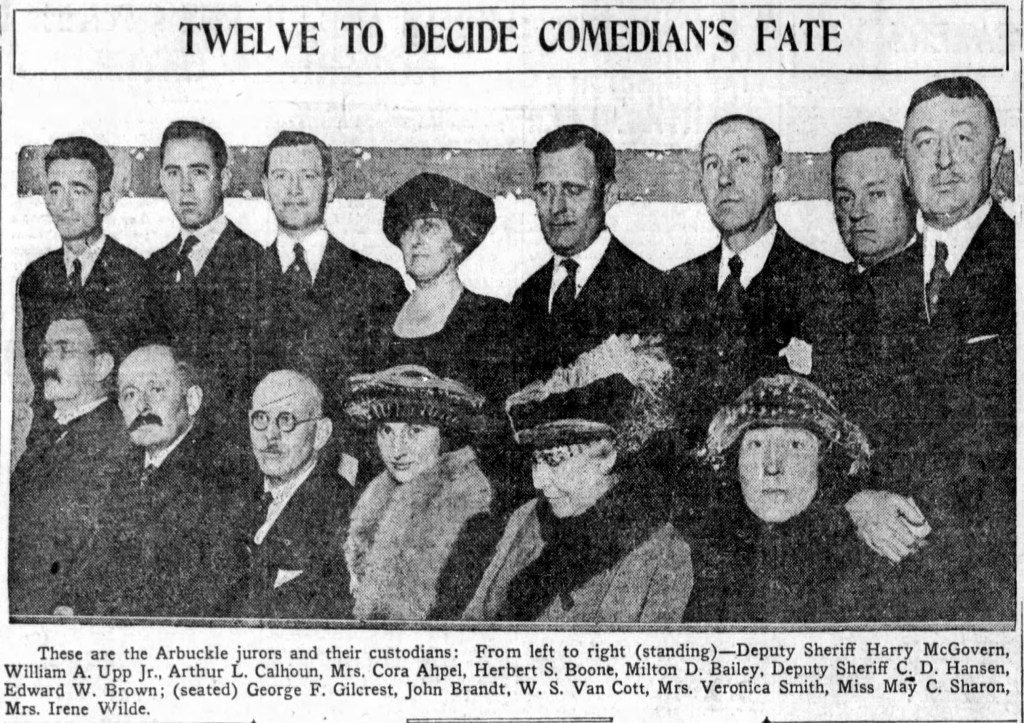


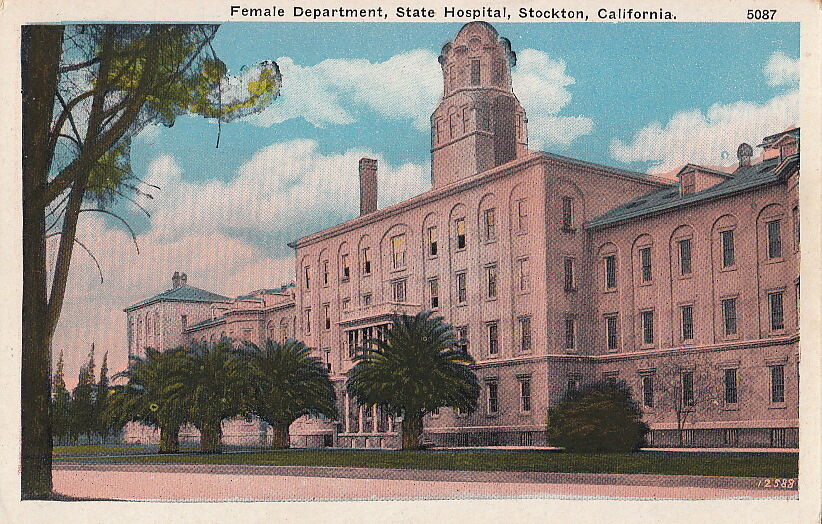
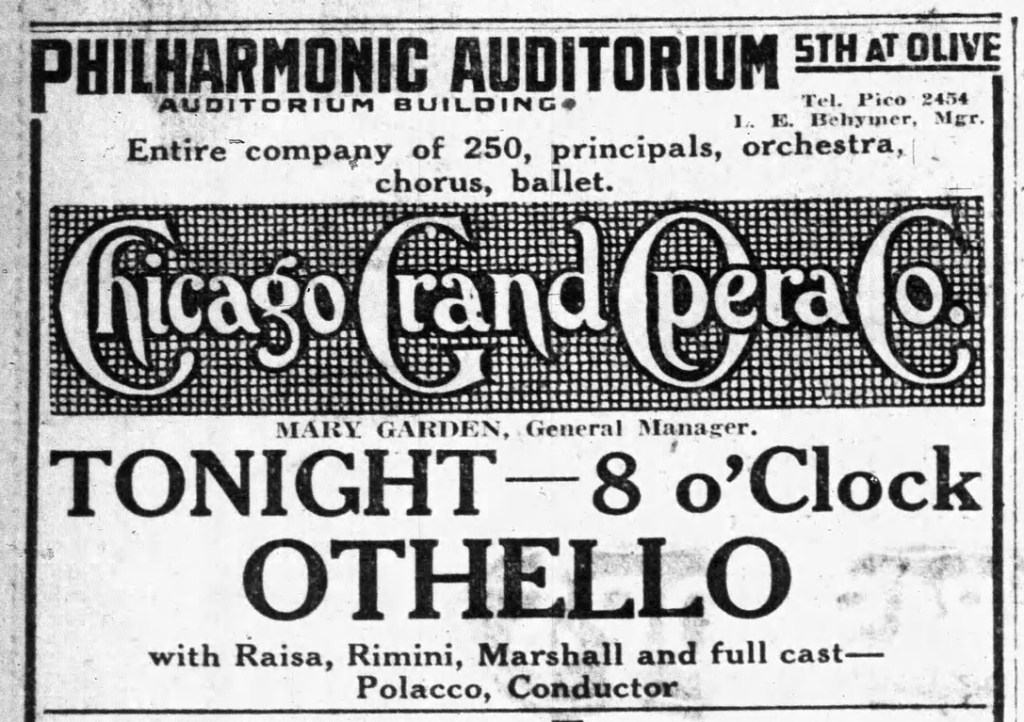


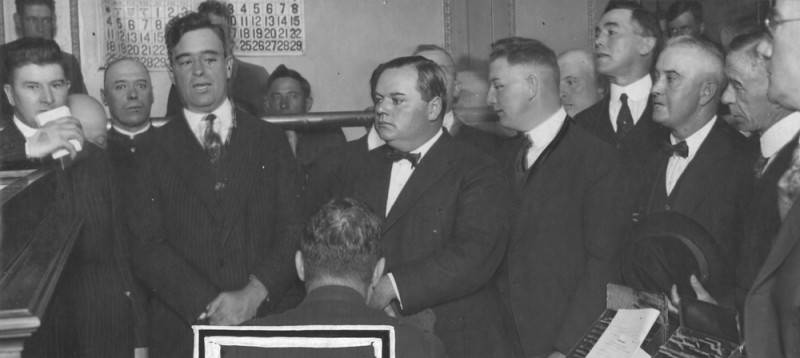


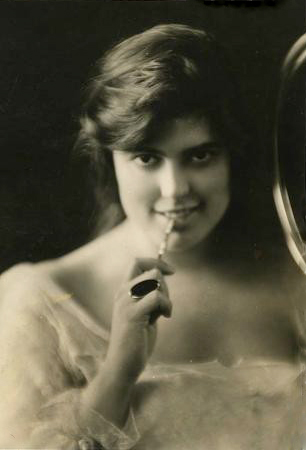


 Spite Work: The Trials of Virginia Rappe and Fatty Arbuckle