Routinely, we search newspaper archives for anything related to Virginia Rappe’s past, a past Roscoe Arbuckle’s lawyers made out to be sordid. They turned up individuals who described knowing her in Chicago when she was younger. These witnesses asserted that the adolescent Rappe had undergone abortions, given birth to illegitimate babies, and contracted the diseases that usually came with a promiscuous lifestyle. These witnesses were intended to counter the character witnesses found by the prosecuting attorneys. Despite Arbuckle’s earlier request to his counsel that Rappe’s past not be used in his defense, it is not known whether he objected as this strategy was played out.
On the flip side, a woman the prosecutors could have called to the witness stand but didn’t was Helen Jackson Banghart, a fifty-one-year-old nurse from Portland, Oregon, who was president of that city’s Mayflower Club and “active in Catholic circle,” according to the OregonDaily Journal. Mrs. Banghart also knew Virginia Rappe when both were in Chicago in earlier days and her memories were of an altogether different tone:
The family spelled their name Rapp in those days and Virginia was known to every one as “Tootie.” She was left an orphan when 5 or 6 years of age and came to live with her grandmother, who resided in a rooming house opposite the boarding house where I lived. The grandmother was subject to mental lapses, so Tootie was a sort of general charge. Miss Catherine Nelson, who lived in the same house that I did, and a personal friend of mine, befriended the child on many occasions.
I remember that she took her downtown one fall and outfitted her from her skin out and from head to foot. The child almost burst with pride over her new red coat and her red hat with black ribbon streamers. Catherine would often hand me 50 cents or a dollar and say, “If Tootie comes over, ask her if she is hungry, and if she is, get her something to eat,” which I always did.
Tootie was an unusually pretty child, agreeable, appreciative of all that was done for her and withal a very ladylike little miss. Her eyes were a deep hazel; at night they were almost brown. When you looked at her you looked again and then you kept on looking.
At the age of 15 years she posed for Harrison Fisher and his picture of her showed her with her little fox terrier. This picture was later reproduced on the cover of the Saturday Evening Post. I moved from that neighborhood about that time and so lost track of her, but have always read with interest concerning her theatrical work.
I must confess that the tears came to my eyes when I read of her tragic end. Her early life was so hard. She scarcely knew a mother and then to think that she should meet death in such a terrible way. It seems that she had more than her share of the seamy side of life.[1]
Rappe’s unusual pet name was corroborated by a pillow of small roses, labeled “Tootie”, that was among the flower arrangements at her funeral.
Typically, for girls in the 1890s, “Tootie” was short for Gertrude. If looked at as a word describing a person’s appearance and conduct, as Nurse Jackson did, toot as slang has among its various meanings “to stand out,” “to be noticed.” (Ironically, another slang meaning that gained more currency in the 1890s and endured meant “to go on a drinking spree.”)
But was Virginia Rappe a model for Harrison Fisher? The one Saturday Evening Post cover, for August 28, 1909, that meets Mrs. Banghart’s criteria is shown below. But capitalist realism artists such as Fisher rarely individualized their models. They share the phenotypes of an idealized everywoman, for they were meant as commodities and not people to be recognized on the street.
You be judge. But this lady is blonde and has blue eyes. She lacks that juvenile vamp quality that Rappe had.
Virginia Rappe and friend, 1909? (Flickr)Rappe and friend baring their teeth, 1907 (Chicago Tribune)
[1] “Miss Rappe’s Early Life Hard, Says Portland Woman,” Oregon Daily Journal, 14 September 1921, 2.
[There are few points during the Arbuckle case that could serve as a set piece. The backstories, sideshows, and the Labor Day party and everything that flowed from it undulated in the press, in the American conscience, and the San Francisco courts for months. Aside from the brief time when Arbuckle and Rappe were alone in Room 1219 where what transpired remains a mystery, there are few logical places in the story where, say, a filmmaker might find a poignant event that encapsulates the whole. If there was such an episode in the case, it might be one that centered on Arbuckle after he left the St. Francis and left Virginia Rappe, alone and dying in room 1227. That event was Arbuckle’s night voyage back to Los Angeles on September 6, 1921. The following text is taken from our manuscript with only minor emendations for clarity.]
Roscoe Arbuckle, when he took the stand at his first trial in November 1921, claimed that he had booked passage aboard the SS Harvard in advance. The assertion was likely made to dissuade anyone from thinking that he had left San Francisco with a less than clear conscience about his Labor Day party and Virginia Rappe. He kept to this story and only diverged once, toward the end of his third trial in April 1922, when he explained that he came to San Francisco two days before the party for pleasure according to an AP wire story. “I had a new car to try,” he said, even though he had had his 1919 purple Pierce-Arrow for over a year. “Later I was going to the golf tournament at Del Monte.”[1] The coincidence that Al Semnacher had wanted to take Virginia Rappe to Del Monte the day before seems to have gone unnoticed until now.
Arbuckle and his entourage were indeed expected aboard the Harvard and delaying his travel during Paramount Week, an important publicity event, would have risked disappointing and insulting those who could cause trouble, among them Paramount chief Adolph Zukor.
The SS Harvard (r) and the SS Yale (l), San Pedro Harbor (Calisphere)
The Harvard, along with its sister ship, the Yale, provided daily passenger service between San Francisco and Los Angeles, and was scheduled to depart for Los Angeles at 4:00 p.m. For this particular voyage, Los Angeles restaurateur, Al Levy, owner of the famed Oyster Bar and Levy’s Cafe, was personally in charge of catering the trip—and Arbuckle, a regular at Levy’s, surely availed himself of what promised to be a sumptuous spread. There were also a number of important film people sailing to Los Angeles for Paramount Week, among them Sanford L. Walter, the San Francisco manager of the Paramount Film Exchange, and, perhaps, other familiar faces who happened to be in San Francisco for the holiday.
There was little chance that Arbuckle could leave town without being noticed. He had to be at pier 7 in time to have his Pierce-Arrow lifted by crane and lowered onto the rear deck of the Harvard, where it attracted attention throughout the voyage. A brief article in the San Francisco Chronicle poked fun at his person, calling him “considerable cargo.”[2]
“Elaborate arrangements,” it was reported, had been “made by Al Levy to provide a mirthful voyage, with “Fatty” as jester”—which suggests Arbuckle was expected along with his entourage. If the arrangements were as much business as travel, perhaps the comedian’s presence aboard the Harvard was the real purpose behind his brief stay in San Francisco, to position him for his on-board appearance.
This is the kind of information that Al Semnacher could have taken note of weeks beforehand and might have shared with Rappe. By this point though, Semnacher himself, was well on his way back to Los Angeles, driving his Stutz and without his two female passengers. Unlike Arbuckle or his companions, Fred Fishback and Lowell Sherman, Semnacher took the time to visit Rappe in Room 1227 on Tuesday morning. He spoke to Maude Delmont—but made no mention of Dr. Rumwell—and departed unworried for the time being. Delmont asked him to tell Rappe’s people—meaning the Hardebecks—that their adopted niece wasn’t coming home any time soon.
Semnacher had also gone to her room to retrieve her damaged garments and cheap jewelry to bring home. His explanation for doing so would become one of the mysteries of the Arbuckle case. Semnacher, also didn’t leave any money for the two women or, at least, not enough worth mentioning.
Doris Deane and Roscoe Arbuckle and their marriage license, May 1925 (Calisphere)
The sailing time from San Francisco to Los Angeles was eighteen hours with no ports of call in between. A troopship during the war, the Harvard had been fully restored into a luxury liner with luxurious staterooms and a new army of stewards, stewardesses, pages, and bellboys to serve her passengers. The brilliantly lit Veranda-Café Ballroom featured an orchestra and all-night dancing. On the port side of the ship, passengers could watch the California coast slip by and, if Arbuckle cared to notice the beautiful scenery lit by the setting sun followed by the twinkling lights on shore, it surely helped him to leave what happened on Labor Day behind. Another thing that helped him to forget was meeting a young woman to whom Fred Fishback had arranged an introduction, another striking dark-haired actress, Doris Deane. Fishback had some advance knowledge that she would be aboard the Harvard in the company of her mother.[3]
If Fishback was informally acting as Arbuckle’s wingman, arranging for him to meet eligible and attractive women, he had come through—perhaps for the second time in twenty-four hours. Arbuckle had a chance to see Deane on boarding and was immediately smitten. He invited both her and her mother to his stateroom after the Harvard unberthed. Later Deane sat with Arbuckle at the captain’s table. When he wasn’t playing “Fatty” for the other guests, he spoke with her with the same enthusiasm that he did with Rappe the day before.
Barely twenty years old, Deane had made her debut as representing the city of Los Angeles at the Pershing Victory Ball in January 1920. She was a skilled dancer and had already appeared in a few films, including Mabel Normand’s forthcoming Head over Heels(1922). Hired by Universal, she starred in the new South Seas romance, The Shark Master(1921), which had opened the first week of September. But she had left Universal and was looking for new prospects. Arbuckle, who was always on the lookout for new leading ladies, could hardly resist the opportunity to woo Miss Deane over to comedy. That evening, according to her, he was charming. He purchased her a box of Melachrino cigarettes—which featured cork or straw tips so as not to stain one’s fingers—and they talked of music, theatre, and books.
Melachrino cigarettes (Etsy)
Uninhibited by the thought of his estranged wife Minta Durfee thousands of miles away in New York City, Arbuckle asked Deane out for Saturday performance of a new stage comedy, The Ruined Lady (for which the young Humphrey Bogart was road manager) at the Majestic Theater. But Arbuckle and Deane didn’t go on their date. Instead, he made an unscheduled appearance at the Grauman’s Million Dollar Theater, which was showing his film Gasoline Gusfor Paramount Week. From that day on, Deane would have to wait before she could safely appear in Arbuckle’s company again.
[1] Associated Press, “Arbuckle, Denying Evil Intent, Lays His Troubles to an Act of Mercy,” Minneapolis Morning Tribune, 6 April 1922, 18.
[2] “Arbuckle on Harvard,” San Francisco Chronicle, 7 September 1921, 18.
[3] Deane herself is the source for her first encounter with Arbuckle. See Yallop.
Alfred Semnacher was called Virginia Rappe’s manager during the Arbuckle case, but it was a hat he wore reluctantly. His testimony, too, came reluctantly. Imagine the frustrated press agent Sidney Falco in Sweet Smell of Success. If a motion picture had been made of the Arbuckle case in the late 1950s or early 1960s, when the Code was giving way and introspective Hollywood films had become a genre, Burt Lancaster would have looked the part of Virginia Rappe’s so-called manager, the “gray man” as one newspaper reporter called him.
Alfred Louis Semnacher was born in Stuttgart, Germany, in 1878 to musical parents. His German father, William Magnus Semnacher, had been living and working in New York City since 1865, where he had been a piano teacher for young women from well-to-do families. In the late 1860s, he founded his own school, the National Institute of Music, which was typically his residence. In the 1870s, he married Alfred’s mother, Louise Walter, who was much younger and likely one of the elder Semnacher’s students.
William Semnacher was a great believer in phrenology, a pseudoscience that advanced the premise that a person’s mental traits, aptitudes, personality, and future could be predicted by the careful measurements of bumps and depressions occurring on their subject’s heads and correlating them with regions of the human brain. Those findings would be compared to various charts—and specially numbered busts of human heads (that are still in production though mostly used as nostalgic pieces by interior decorators these days)—to assess “propensities,” such as causality, cautiousness, combativeness, concentrativeness, secretiveness, and so on. “Sentiments” such as self-esteem and truthfulness, and various intellectual and reflecting “faculties,” were also mapped.
The elder Semnacher had his head read by prominent American phrenologist, Orson Fowler in 1866 and placed so much faith in phrenology that he required that his students receive phrenological readings, among them the concert pianist and ethnomusicologist Natalie Curtis Burlin.
The younger Semnacher married one of his father’s students, a southern belle named Lucille Nowland and they eventually settled in Los Angeles in 1909. There Semnacher served as secretary to the utopian socialist Alfred Dolge, who pioneered social security and profit sharing for the workers at his factory in Dolgeville, NY. By 1919, Semnacher worked for the John Lancaster talent and publicity agency before going out on his own in 1921.
Semnacher was also separated from his wife that year. It wasn’t the first time the couple had separated, having already been divorced and reconciled. But in 1920 he had to endure living alongside her lover as a permanent house guest, a man who eventually usurped Semnacher in the husband’s role. To add to the humiliation, this unhappy arrangement was witnessed by Semnacher’s three sons.
A month before his second and final divorce proceeding, he drove Virginia Rappe and Maude Delmont from Los Angeles to San Francisco—and ultimately to the entrance of the St. Francis Hotel on September 5, 1921 – the focal point of our work-in-progress. Rappe had accepted an invitation from Roscoe Arbuckle to attend an informal Labor Day party there .
In the following deposition, it’s clear that the district attorneys had asked Semnacher to help them establish a timeframe (interpolated in bold below) for what happened to Rappe. Fortunately for them, he was mindful of the time as a businessman and, perhaps, as an impatient man as well.
Al Semnacher, ca. 1919 (Calisphere)
Al Semnacher, 2001 Pinehurst Road, Los Angeles, manager for motion-picture stars, who attended the party given by Roscoe (Fatty) Arbuckle in his apartments at the Hotel St. Francis last Monday afternoon, yesterday, in a deposition before Assistant District Attorney Milton U’Ren, disclosed what he knew of the alleged assault by Arbuckle upon Miss Virginia Rappe. He deposed:
About 11:30 a.m. on the 5th day of September, 1921, Miss Rappe received a telephone message from someone [i.e., Fred Fishback] at the St. Francis Hotel, the person who telephoned saying that Roscoe Arbuckle was going to have a party there and inviting her to come up; that Miss Rappe then said for me to drive her and Mrs. Delmont up there and that I could wait outside and that maybe they would only stay in there a few minutes, if the party did not suit them [my italics]; that I drove them up there to the St. Francis hotel [after 12 noon]; then parked my car and visited with friends until about 2 p.m. when I returned to the hotel and ‘phoned up; that when I did phone up Mr. Fishbeck [sic] told me to come up and join the party.
That when I went upstairs to room 1220; that there were about four tables filled with food; that Arbuckle was sitting at the end of the table in a big chair; that Miss Rappe was sitting on a couch about one foot from him. Miss Rappe was fully dressed. Mrs. Delmont was standing in a doorway between rooms 1220 and 1221. Other persons in the room were Ira Fortlouis, Fred Fishbeck, Miss Alice Blake and a girl named “Zey” [i.e., Zey Pryvon, whose real name is Sadie Reiss] and one or two other girls [i.e., May Taube], also Lowell Sherman. All the men, with the exception of Sherman and Arbuckle, had on their street clothes. All the women, with the exception of Mrs. Delmont, had on their street clothes. I stayed there about a half an hour and then with Miss Blake left for a rehearsal [after 2:30 p.m.].
I then returned to the St. Francis hotel [i.e., he leaves Alice Blake at Taits and returns after 3:15 p.m.]. I then stayed there about a half hour; immediately thereafter I drove to No. 846 Bush street with Ira Fortlouis [my italics] to locate friends [after 3:45 p.m.]. I returned again to the St. Francis hotel [i.e., after 4:30 p.m., which would allow for Rappe’s crisis in room 1219 to take place at or just after 4:00 p.m. The same people were in the room together with two other ladies, one of whom was Miss Jeanne Clark, but the name of the other lady I do not know [i.e., May Taube]. At this particular time [about 4:45 p.m.], though, Miss Rappe was not in the room. About ten or fifteen minutes later two of the girls went to the bathroom of No. 1219, and said the girl, “Miss Rappe,” was very sick [before 5:00 p.m.].
That this statement was made after the girls had returned from the bathroom; that as soon as the girls made that remark we all went in there where Miss Rappe was, and saw her lying on the bed in the room and heard her moaning; that Roscoe Arbuckle was in the room I was in when the girls went into the room where Miss Rappe was lying on the bed; that I did not hear Roscoe Arbuckle say to the girls, “Go in and attend to her”; that when the girls came out and said that Miss Rappe was so ill we all went in the room that Miss Rappe was in; that there was a great deal of confusion there; that it seemed that everybody there seemed to want to wait on her at the same time; that there must have been about a dozen people there.
That then Mrs. Delmont took charge of Miss Rappe and had several of the girls there help her lift Miss Rappe into the bathtub in an endeavor to revive her; that Roscoe Arbuckle was in the room where I was and all the other people were. When the girls returned to the room that Miss Rappe was in and announced that she was sick, Roscoe Arbuckle said, “Get a doctor”; that Roscoe Arbuckle was in the room with all of us where Miss Rappe was lying on the bed and did not do anything for Miss Rappe; that all the men left the room in which Miss Rappe was, leaving the women.
When Mrs. Delmont put Miss Rappe into the bath tub Miss Rappe was unconscious; that then when they took her from the tub they wrapped up her clothes and put her into another bed. When they put her into the bed she began vomiting.
When she began vomiting Roscoe Arbuckle said that another room had better be secured for Miss Rappe. I do not know who phoned for this room. Mr. Boyle, who is connected with the St. Francis hotel, came up and said she could be taken to room 1227. I do not know who it was that carried her out. I went into room 1227 about twenty-five minutes later to see how Miss Rappe was getting along. I then found Mrs. Delmont with her. There was no nurse with her at this time. About two hours later I went to this room again and saw a doctor there. I saw this doctor give Miss Rappe a hypodermic injection of something. I do know the name of this doctor.
That on my second visit to the room to see how she was, she was moaning and did not want anyone to even touch the bed upon which she was laying and was saying, “I am going to die. I am going to die.” She also said she had pains and that her chest hurt her. I remained in the room altogether during these visits about fifteen or thirty minutes. I did hear her mention Roscoe Arbuckle’s name, and she said, “Roscoe hurt me”; that after she was given this opiate, or whatever it was, she slept for a few hours; and when she awoke she recognized me. I told her she was in no condition to go to Los Angeles then, but that she might be well enough to leave for Los Angeles the next morning; and if she was we would leave at 9:30 o’clock. Virginia Rappe said that would be all right.
The last time I saw Virginia Rappe was about 1 o’clock Tuesday afternoon, September 6, 1921. I left San Francisco for Los Angeles at about 1:30 or 2 o’clock p.m., Tuesday, September 6, 1921. It was after she was given this opiate and slept for about two or three hours that I had the talk with her about our returning to Los Angeles. Fishbeck was to return with Miss Rappe, Mrs. Delmont and myself [our italics].
In 1932, Dashiell Hammett, enjoying the success of The Maltese Falcon, which had been made into a vehicle for Bebe Daniels that year—before the later Bogart version– recalled his time as a Pinkerton detective in San Francisco in 1921.The “funniest case I ever worked on,” he told the New York Herald-Tribune, was the detail assigned to protect Arbuckle during first trial in November 1921. “In trying to convict him everybody framed everybody else.”[1]
There are many instances in print and online where this comment is taken to mean, according to a Guardian blogger, “Hammett came to believe that the rotund comedian was being framed for rape and murder by a District Attorney,” and assume that he really had “investigated the famous – and horrible – case of Fatty Arbuckle and Virginia Rappe.”[1]
Hammett was echoing something he had written six years earlier in a collection of brief autobiographical notes that have come to be referred to as “Seven Pages” by Hammett scholars. Hammett, again channeling the voice of Sam Spade or the Continental Op, glibly wrote “That whole thing was a frame-up, arranged by some of the corrupt local newspaper boys. Arbuckle was good copy, so they set him up for a fall.”[2] This pronouncement is often taken to suggest that Hammett knew Arbuckle was innocent and that the press, especially the Hearst chain, had it in for him. Hammett, for this reason, is often quoted as a sage in his biographies and Arbuckle narratives, as an authority even though he was speaking off-the-cuff, sounding smart, which is good enough for some editors.
Hammett’s brief insight was apparently persuasive enough to have inspired a West End play, Fatty (1988), by Scottish playwright Patrick Prior in which Sam Spade was reimagined trying to clear Arbuckle’s “good name,” and more recently a novel, The Devil’s Garden (2009) by Ace Atkins, which expanded the same concept. While such exploitation of a good quip is marginally entertaining, it provides another example of misinformation gaining traction.
One might think that Hammett, as one with personal involvement, could have written a first-rate fiction or nonfiction book about Arbuckle’s Labor Day party and the subsequent trials.. The names of the investigating police detectives alone – Kennedy, Griffin, Reagan, Duffy, Dolan, McGrath – evoke the characters in his pulp stories. Though while Hammett did have familiarity with San Francisco’s detectives, district attorneys, and like denizens of the city’s Hall of Justice it likely was not because he was an insider. Except for his claim there is no other record that Pinkerton’s was involved with the Arbuckle case. The body of Hammett’s knowledge was more likely a construction derived from San Francisco’s newspapers, hearsay, and his imagination. The few sentences included in “Seven Pages” (1926) were as far as he got in telling the story. But the encounter with Arbuckle that he describes has troubled some Hammett biographers for various reasons. Chief among them the date and where Hammett was known to be at that time, which was mostly bedridden with tuberculosis. He claimed he had encountered Arbuckle in the St. Francis Hotel on Monday, January 16, 1922, in the course of gathering evidence for the second trial. Ignoring that Arbuckle was allegedly banned from the hotel, it’s hard to imagine that he would dare to be seen there while he was out on bail. By Hammett’s account, he had quit Pinkertons by that time and was working as a freelance detective for Arbuckle’s lawyers. Hammett biographers and scholars, who otherwise accept his word as truth, see this chance meeting with Arbuckle as “apocryphal.”
For our narrative, however, it is Hammett’s lack of sympathy for Arbuckle that stands out, his intuition that there is something suspicious about the comedian. But what is left to the imagination. In Hammett’s parlance, perhaps the simplest explanation is that a thin man was giving the “stink eye” to a fat man — or, the cynical detective, surviving on disability pay and part-time gumshoe work, regarded the extravagantly-rewarded Arbuckle as a class enemy.
It was the day before the opening of the second absurd attempt to convict Roscoe Arbuckle of something. He came into the lobby. He looked at me and I at him. His eyes were the eyes of a man who expected to be regarded as a monster but was not yet inured to it. I made my gaze as contemptuous as I could. He glared at me, went on the elevator still glaring. It was amusing. I was working for his attorneys at the time.[3]
Hammett’s claim of “frame-up” is more about a systemic problem, the way justice works, the way people behave when their lives and livelihood are on the line. That his sweeping accusation included Arbuckle among the dirty players is hardly a nuanced reading. The master of detective fiction wasn’t taking sides.
Few Arbuckle case accounts discuss Virginia Rappe’s personality. Presumably she wrote letters and postcards to her guardians and friends. But despite becoming a household name in 1921, no one has shared such writings that might reveal something about her character. What little of Rappe there is on screen—all comedies—has been used to disparage her acting abilities. That she never appeared in a dramatic role suggested to some that Rappe was not a serious person. Even as a vamp, she was termed a “junior vamp,” that is, a femme fatale who isn’t all that fatal.
Virginia Rappe in a scene from Over the Rhine (1918), recut as The Isle of Love (1922) (Archive.org)
In writing about Virginia Rappe, we do look for Rappe, frame by frame in some cases, to find the real person. We also look at minute details that would otherwise seem irrelevant.
Much can be learned about a person by her choice of words and the context.
Around noon, on September 5, 1921, Rappe’s manager, Al Semnacher, drove Rappe and Virginia Rappe to the entrance of the St. Francis Hotel. While only Rappe had been invited to Arbuckle’s Labor Day party, the invitation would eventually be extended to her two companions, Semnacher and Delmont. But there is little doubt that Rappe had the privileged status of being the one invited.
During his court appearances, Semnacher testified that he left Rappe and Delmont off in front of the hotel and didn’t wait to see them enter the building. Semnacher, however, included some details, probably given during his grand jury appearance, that suggest Rappe’s interest in attending the party was tenuous, halfhearted. She had an exit strategy in mind that amounted to a graceful excuse to Arbuckle, which, unfortunately, she didn’t exercise.
Rappe asked Semnacher to wait outside. If “the party didn’t suit them”—meaning her and Delmont—she would leave.[1] “I’ll go up there,” she said, according to Semnacher, “and if the party is a bloomer I’ll be back in twenty minutes.”[2]
This quote is consistent with her utterances in the Atlanta Constitution in September and October 1913, when she was modeling the “tango dress.” She and her fellow models thought Atlanta was charming but too southern, gentlemanly, too inhibited, strait-laced. This, of course, calls attention to what she had expected to find. A town with more fun? That was a little more risqué like her native Chicago?
Although a close reading of an archaic slang word like “bloomer” risks overshooting the mark. She could have said “a bust,” a “waste of time”—whether for business or pleasure or both. For an actress who had worked hard to get her figure back after months of dieting and exercise, to spend several hours after a late breakfast watching Arbuckle and his friends eat and drink early in the afternoon might have seemed to be worth little more than a quick hello. To only give him twenty minutes suggests a preconceived notion of the host and of the kind of gatherings he hosted. As it turned out, Arbuckle held her rapt attention.
There is, however, another meaning that Rappe could have intended. A “bloomer” in the early twentieth century also meant a fraud, a prank, or a joke played on someone, as in “to pull a bloomer.” Here, Rappe might have wanted Semnacher ready to leave if Arbuckle’s party didn’t seem to be on the level.
[1] Al Semnacher, “Member of Arbuckle Party in Hotel Makes Full Statement: Al Semnacher, Manager for Film Stars, Gives the District Attorney Deposition,” San Francisco Chronicle, 12 September 1921, 4.
[2] Earnest J. Hopkins (Universal Service), “Film Star Who Makes Many Millions Laugh Gets First Taste of Life Behind Bars,” Shreveport Times, 12 September 1921, 2.
Note: One of the chief witnesses for the prosecution, Sadie Reiss, was a former Sennett Bathing Beauty at Keystone Studios. At Roscoe Arbuckle’s Labor Day party of September 5, 1921, and for a short time afterward she was still known by various manglings of her professional name, e.g., Zey Pryvon, Pyrvon, and Pyvron). Soon after she settled on Zey Prevost despite the surname being used by another former Sennett Bathing Beauty, Marie Prevost (whose lawyers sent a cease-and-desist letter to no avail). Zey Prevost wanted to retract certain damning passages made in her initial statement, on Saturday, September 10, 1921 (one day after Rappe’s death), that described what she saw after Arbuckle opened the connecting door between rooms 1219 and 1220 of the St. Francis Hotel. As told to Assistant District Attorney Milton U’Ren, Captain of Detectives Duncan Matheson, Detective Henry McGrath, and Howard Vernon, a shorthand reporter, Prevost’s described what the authorities wanted to hear: Arbuckle could be tried for murder. After Prevost refused to go before a grand jury to repeat what she had stated, and thinking he had a tampered witness, District Attorney Matthew Brady released the following initial statement to the press. Prevost, unlike his other chief witness, Maude Delmont, was sober at the party and seemingly unattached to any man (or woman) at the time of the event. She was, in effect, its “transparent eyeball”. Prevost, however, as the case proceeded in the courts, undid much of the damage she had inflicted on Arbuckle’s claims of innocence during his ill-fated party. If she had hoped to get something for her seeming “loyalty,” she did not. Her new vaudeville act in the spring of 1922 was short-lived and her career in show business was soon over.(The footnotes below are our own annotations.)
Q: What time did you arrive at the St. Francis?
A: About 1:30, between 1 and 1:30.
Q: Who did you go with?
A: Alone.
Q: How did you happen to go?
A: Alice Blake called me up and said—well, I got a call the day before the party [Sunday, September 4]. I got a call that “Fatty” was in town, to come down, they were going to have a party. I never went down that day. I stayed over with Alice all night that night and left word at the St. Francis to call me at her place.[1] Instead of staying with her all night I went home. She called me the next day and said to come over, they were going to have dinner at Fatty’s place. I said, “I’m kind of tired. I think I’ll stay in bed.”[2]
Finally, I said, “All right, I’ll come down.” I was supposed to go to her [Blake’s] hotel,[3] and I told her, “Wait for me there.” Then she (Alice Blake) told me that she had a rehearsal. She works. She got tired waiting because I live so far out and went on over to the St. Francis. When I got to her hotel, I found out she had gone. Then I went to the St. Francis alone.
(From the time of the Prevost girl’s arrival at Arbuckle’s, she related the following story.)
They were all sitting around eating. They asked me to have something to eat. I said, “No, thanks, I have had my breakfast.”
Q: Who was in the room when you arrived there?
A: Fatty Arbuckle, Virginia Rappe, Lowell Sherman, Mrs. [Maude] Delmont, Mr. [Al] Semnacher and Alice Blake.[4]
Q: Was Mr. Fishbeck [i.e., Fred Fishback] there?
A: Mr. Fishbeck was downstairs and he came right up after. He said, “Hello Zey.” I responded, “Hello.”[5] They asked me to have something to eat. I didn’t eat.
Q: How was Arbuckle dressed when you went into the room?
A: I was surprised myself. We were sitting at the table. Everybody was dressed except Mr. Sherman and him. They both had on bathrobes, slippers, and pajamas.
Zey Prevost in witness chair, September 1921 (Calisphere)
Q: How was Mrs. Delmont dressed?
A: She was dressed in street clothes.
Q: When you went into the room?
A: Yes, sir.
Q: When did she (meaning Mrs. Delmont) change into pajamas?
A: I don’t know anything about that. I don’t remember.
A: They all know I don’t drink because they were kidding me about it.
Q: When did you notice Mrs. Delmont in pajamas?
A: She kept saying, “Oh, it’s warm in here. I feel awfully warm. It is close.” Mr. Sherman then said to her, “Put on a pair of pajamas; that will be all right.”
Q: What time was that?
A: As soon as they cleared the table away—a few minutes after they all fixed a drink and sat around and talked.
Q: Did she go into another room to change her dress for pajamas?
A: She went into the bathroom.
Q: Which bathroom?
A: Off Lowell Sherman’s room. Then she came out and they all started to laugh, and she said, “I feel comfortable now.” She sat down and nothing more was said about it.
Q: Then what happened?
A: There were several people came into the room. The [man, i.e., Semnacher] who left for Los Angeles [our italics]—
Q: Who was he, and what was his name?
A: I have forgotten his name. There was [sic] several people came in there [our italics].[7]
Q: What time did Mr. Semnacher come in?
A: He was in there when I arrived.[8] I was the last one to arrive there.
Q: You are positive it couldn’t have been after 2 o’clock when you arrived?
A: No, because Miss Blake had a rehearsal at 2 and she went over to rehearse.[9]
Q: Who took her over to rehearse?
A: I don’t remember. But I do remember that she said, “I think I’ll come back after rehearsal.” I said, “I may be gone then.” She came right back. She said, “There is no rehearsal. There is nobody over there.”
A: Alice Blake and I went into the other room [i.e. 1221]. You know, I took my purse and was going to put some powder on. We were going into the bathroom of 1221. We were gone just a second, went back into the bathroom and we came back, and Virginia and Roscoe Arbuckle had gone. I said, “Where is Virginia and Roscoe? Lowell Sherman said, “Oh, they are in there.”
Q: Indicating what room?
A: Indicating Roscoe Arbuckle’s room.
Q: How long did they remain in there?
A: A good long while, and I said to Mrs. Delmont, “You better try to call Virginia,” and she called and called, and I said, “Kick on the door,” and I went over and banged three or four times on the door.[11] I said, “Go on kicking. Kick hard; make him open the door for you.” She then kicked three of four times. She rapped. She said, “I just want to speak to Virginia. I just want to talk to her.” She said, “Open the door.” So finally he opened the door.
Q: Who?
A: Roscoe Arbuckle and we went in. She was lying on the bed. Her hair was all down and she was moaning. I said, “What is the matter with you?” She didn’t drink [our italics].[12] I then said, “Maybe she has got gas on her stomach.” Then she started to pull her clothes off.[13]
Q: When you went into the room who did you enter with?
A: With Alice—Alice Blake and I went into the room.
Q: Where was she (Miss Rappe) when you went into the room—what part of the room—on the bed?
A: There were two little beds. She was on the bed near the door.
Q: How was she dressed?
A: She had on a little—she was all dressed. All her clothes were on her. Her hair was all hanging down. I said, “My God, what is the matter with her?”
Q: What did Arbuckle say?
A: Oh, he said, “Get her out of there. She is making too much noise,” or something, and she started to pull the clothes off and scream and holler, and when she was pulling her clothing off I said, “Stop that.” Then Arbuckle came over and started to pull the clothes off her [our italics]. I shoved his hands away. I said, “Don’t do that, Roscoe.” I said, “She is sick.” He said, “Oh, she is putting on.”
Q: Before you started to kick on the door didn’t you hear her scream?
A: No; there were two doors. You couldn’t hear anything. There was one door leading into the sitting room and one into the bedroom. There are two doors right together [our italics].[14]
Q: How did you happen to kick on the door?
A: She was in their such a long time.
Q: You say “a long time”? How long?
A: Over—it seemed like an hour.
Q: When you went in, she was lying on one of the beds. Where was Arbuckle?
A: He opened the door.
Q: Did he follow back with you?
A: He went in. He took off his bathrobe. I said to Alice, “Let’s get her over to the other bed.” We lifted her over to the other bed and gave her some bicarbonate of soda and hot water, and she threw that all up. Her eyes started to roll in her head. I said, “You had better call a doctor.” Then Mrs. Delmont was in the room and they put her in a cold bath. I said then: You had better take her out. She has been in there too long.” I went to the phone to call a doctor, but somebody grabbed it from my hand. They couldn’t afford the notoriety [our italics]. I said: “Get Mr. Boyle or somebody.”
Q: What happened then?
A: Some girl came in and her name was Mae [Taube]. I don’t remember her last name. She said to Roscoe: “You had better get your robe on.” This girl and I recognized each other, as we had met once before. She said to Arbuckle: “Can I speak to you a minute?” And he said: “Yes.” They went into the other room [1220] to speak. She left right after that. In the meantime, they were getting another room for this girl—to put her in [i.e., 1227]. Then I went into the other room [1227] with Alice. She [Rappe] was lying on the bed. I asked her if I could do anything for her. She said, “No.”
Q: She was then conscious?
A: Yes, sir, in the other room she was conscious. Mrs. Delmont was lying on the bed. She was sleeping [our italics].[15] I guess she was exhausted.
Q: Did Arbuckle have pajamas or a bathrobe on when you went into Room 1219—after you kicked the door and he opened the door?
A: He had his bathrobe on. He was fixing it.
Q: Then what did he do?
A: He went into the other room and sat down. Then Mr. Fishbeck came in. He helped us revive her.
Q: What did Arbuckle say in addition to “get this girl out, she is making too much noise?” Did he say anything else regarding her?
A: He just said—I don’t remember what he did say, he said so much.
Q: Did he talk a good deal?”
A: Yes, he did talk a good deal.
Q: And that is all you can remember that he said?
A: Oh, he stood there and stared—was very sore, and I said, “What are you sore for?” He said, “Oh, if she makes one more yell, I will throw her out the window [our italics].”
Q: What was his condition as to being intoxicated or sober?
A: He was intoxicated. He had been drinking.
Q: Did you see him drinking that afternoon?
A: Yes, sir.
Q: How much?
A: I don’t know.
Q: Approximately how many drinks did he take?
A: There was plenty of liquor there.
Q: How much liquor?
A: Enough to make him stewed.
Q: What did you see him drink?
A: He was drinking whisky and White Rock. He asked me to fix a drink. I put some orange juice in it. He said he didn’t want it. He wanted whisky and White Rock.
Q: How was his speech? Coherent—or—?
A: The party was perfectly nice. They never used any vulgar language in the party.
Q: I mean was his speech coherent?
A: He was talking about jumping out of the twelfth-story window [our italics]. He said, “Oh what is in life after all?” Really, it did sound funny. We were all sitting by the window. He said: I will jump out of the window with anybody who wants to jump out.[16]
Q: Did anybody volunteer to go with him?
A: No, nobody. We all looked at him. He said something: If I would jump out of this twelfth-story window, they wouldn’t talk about me today and tomorrow. They would go to see the ball game instead. So, what is life after all?”
Q: Did you see Miss Rappe after she was nude?
A: Yes, sir.
Q: Did you notice her body as to being bruised?
A: She had a bruise on her leg and arm. I said, “What are all those black and blue spots?”
Q: What was said?
A: There was nothing at all said. There was so much excitement about it—trying to get her to come to.
Q: Was Semnacher there when you asked the question?
A: I don’t remember if he was there at all.
Q: Which arm was bruised., her right or her left?
A: I never noticed that. I noticed her leg was bruised.
Q: Which leg?
A: I think the right leg.
Q: Do you remember whether the bruise was near her knee?
A: Yes, sir, around there. It was pretty black. I said: “Look at the bruise, Alice, on her leg and arm.”
Q: Did Alice examine the bruises?
A: Alice lifted her over on the bed. She fell on top of Alice. Just then Mr. Fishbeck came in and I said to him: “Help me get her off Alice.” She couldn’t move. She was unconscious by that time. She did start to yell after that. The pain was so terrible. Her eyes were rolling in her head. She didn’t drink anything [our italics].
Q: She didn’t drink at all?
A: I didn’t see her drink at all. I saw her eating something. I wasn’t there long enough to tell you the truth. They were just eating—
Q: How long were you there altogether before you knocked and kicked on the door?
A: I don’t know when it happened even; I never thought of talking the time.
Q: It was such a lively party that you didn’t take any time at all, is that it?
A: No.
Q: Was Semnacher there all the time you were there?
A: Yes; Semnacher—well, I went down to the Palace hotel with Semnacher to get the clothes of Miss Rappe and Mrs. Delmont.
Q: That was after she was removed from the room [i.e., 1219]?
A: Yes. I went to the Palace hotel to get the clothes.
Q: Prior to that time was he in the room [1220] all the time?
A: Not all the time.
Q: How many times did he leave?
A: About two or three times.
Q: Where did he say he was going?
A: I have forgotten. I don’t know exactly but he came in and said, “What is the matter? What is the matter?[17]
Q: When you went into the room [1219] did you hear any conversation between Miss Rappe and Arbuckle?
A: No, no conversation.
Q: Did she accuse him of anything?
A: You mean after we got into Room 1219?
Q: In Arbuckle’s presence in the room?
A: She was just yelling, “I am dying, I am dying. You hurt me.”
Q: Did she say, “You hurt me?”
A: Yes, sir. “He hurt me, he hurt me. I am dying. I am dying. I am dying.”
Q: Was he present when she said that?
A: They were all present, I think.
Q: Absolutely, that conversation was loud enough for him to hear it?
A: Sure. Alice was right there with me.
Q: You heard it? She screamed this, did she?
A: She screamed it. Absolutely screamed it. That is why he got sore, because she was yelling so.
Q: Where do you live?
A: I don’t want to say where I live. I live with my folks.[18]
Q: You realize this is a very important matter?
A: Yes, sir.
Q: How can we find you?
A: I will not give my mother’s number. Please don’t ask me that.
Captain Matheson: There will be people come to you and tell you to keep your mouth shut.
A: They have already. (Laughs.)
Q: Who spoke to you already about it?
A: I don’t know.
Q: Well, somebody did, didn’t they?
A: No. (Laughs.)
Captain Matheson: Let’s set ourselves right on this matter so we will now exactly where we are at. [To someone U’Ren:] This young lady is going to be a witness.
A: I don’t want my mother implicated in it.
Q: We don’t want people running to you and all that kind of thing to have you change your story. They will.
A: Well, I won’t.
[1] See note 2. Zey means that she left her contact information for the person who invited her in the first place.
[2] She doesn’t identify who called her and invited her for the Sunday gathering, which took place with Mae Taube being the only identifiable and known female guest. This means that Zey already knew Fishback, Sherman, or even Arbuckle himself. Notice, too, that the Labor Day gathering was only to be a kind of late breakfast, i.e., brunch, to use our portmanteau.
[4] Here she excludes the presence of Fred Fishback and Ira Fortlouis.
[5] This would indicate that Fishback undoubtedly knew Prevost beforehand.
[6] There seems to be something missing here. Or Zey is reacting to U’Ren’s nonverbal cue that conveyed incredulity.
[7] Zey’s statement is the only one that mentions this mystery man. The others may have been hotel staff and whoever was catering the food and illegal liquor.
[8] In his statement, Semnacher did not come up until Fishback invited him up at about 2 p.m.. So, his presence beforehand is the anomaly that U’Ren is trying to identify—these were maddening for the prosecution and no less so for anyone writing about this affair.
[9] For the dance revue that entertained diners at Tait’s restaurant and theater on O’Farrell Street. Arbuckle’s entourage had been there the night before.
[10] This assertion puts in doubt Semnacher’s claim of having escorted Blake to the abortive rehearsal.
[11] This is the one time that Zey Prevost mentions that she initiated kicking and knocking on Arbuckle’s room. Delmont claims that only she kicked and pounded on the door.
[12] This is important Typically, Rappe is said to have had gin and orange juice.
[13] This behavior may have another explanation beside hysteria. One of the symptoms of shock are “changes in mental status or behavior, such as anxiousness or agitation.” Indeed, one of the actions taken when a person is going into shock is to loosen restrictive clothing. But what if tearing at one’s clothes is a natural response to the onset of shock. I see Rappe’s clothes tearing as a symptom of dysesthesia or allodynia associated with panic disorder, in which she was unable to endure the touch of her own clothes. It could also be something far more deep set, like self-directed violence of psychological trauma. To be continued . . .
[14] This important detail is routinely left out of accounts. These would be fire-rated wooden or even steel doors
[15] Delmont drank “ten scotches” during the course of the party. She allegedly had a leading role in the immediate response to Rappe’s crisis. But notice in Prevost’s testimony that this is not the case. That Delmont was sleeping next to Rappe was observed by the first doctor who came to see her late in the afternoon
[16] Regard Arbuckle’s “death instinct” in the context of defenestrating Rappe or Delmont in other testimony.
[17] She is going back to after she, Blake, and Delmont had gained entry to room 1219.
The following reprint of an editorial from “the British Communist” appeared in The Young Worker of March–April 1922, the official organ of the Young Workers League, published by the Young Workers League in Chicago. The text reflects the general view of both American and international communist organizations about the connection between the cases of Tom Mooney and Roscoe Arbuckle. The so-called “Frame-up Ring” in San Francisco’s Hall of Justice was likely not an organized shakedown ring as imagined by the Industrial Workers of the World (IWW) and the British Communist but rather a systemic bias that moneyed interests had against organized labor. What is more true is that labor activists had reason to feel betrayed by District Attorney Matthew Brady who had been elected in 1920 as a reform candidate with their support. Labor leaders on the eve of the first Arbuckle trial were expressing their impatience with Brady for his hesitation in reconsidering Mooney’s conviction for having been responsible for the Preparedness Day Bombing of 1916. Although Brady showed boldness, almost recklessness, in prosecuting Arbuckle, he didn’t benefit from it with his communist–labor constituency.
Front cover of The Young Worker March-April 1922 (Archive.org)
Moving pictures are one of the most powerful propaganda forces wielded by the capitalist class. To the millions of people who daily go to the picture shows is doled out the “virtues” of capitalism. The master class does not overlook any opportunity to slander organized labor through the use of pictures. And the philosophy that is disseminated by use of the serene (sugar-coated with humor) is calculated to “appease” the hungry and to feed the unemployed with hope.
Because of their plastic minds, the young are especially apt to derive “instruction” from the pictures. The children and young people of this country attend the picture shows more frequently than do the adults. Hence the propaganda reaches them and to a greater degree. The morals of capitalism, as portrayed by such actors as “Fatty” Arbuckle and the countless number of his type who have not had the misfortune to have committed so slight an error as murder, are set up as examples to the future generation.
Accidents will happen; and once in a generation a cog will slip in the well-regulated machine and we get a glimpse of the true character of these teachers of morality.
But the capitalists will not desert so “valuable” a man as “Fatty”, and they begin to pull the strings to acquit him. Incidentally, the impartiality of our justice-dispensing machinery is revealed in all its hideousness.
It is easier to observe the actions of others. And the following interesting analysis of the Arbuckle Case and justice in the United States gives us a picture of a phase of American Capitalism as seen by our English comrades.
From the British Communist
So Roscoe—“Fatty”—Arbuckle is to come to trial again. Arbuckle was not always a rich man, he was once a “saloon bum,” a down and out hanger-on of pubs. As a chucker-out and as a potboy he once earned a more or less honest living, until he struck lucky on the films, but even in his time of great wealth he retained the manners, and habits of his pub-crawling days. He is, or was, at least, before this action began, a millionaire, and behind him are many of the most important cinema firms of the U.S.A., who have some miles of Arbuckle film which they dare not release till the fat comedian is acquitted.
District Attorney Brady, of California, prosecuting him, exclaimed aloud in court to a reporter:
“Can you tell me how I can join a bomb-throwing organisation? I mean an organisation more violent than the I.W.W. I believe in dynamiting when I see such efforts to pervert justice!”
District Attorney Brady is not a strong man. He is a weak and uncertain man, but he was put into office largely by a Labor vote, to perform one definite duty—to dislocate the whole operation of the “Frame-up” ring of California. This Ring originally worked through Brady’s predecessor, [Charles] Fickert. It used him to jail for life a San Francisco Labor leader, Tom Mooney, on a false charge of dynamiting. It produced forged evidence and suppressed real evidence. Witness after witness was brought forward and torn to pieces, and their places at once cynically taken by other hired agents. Eventually Mooney was condemned to death, but the grossness of the fraud was such that the sentence was changed to imprisonment for life—and he is still in jail.
For capitalist justice in California has gone one step further than it has here. There it is completely corrupt and completely at the direct service of a financial ring who own all the judges, can interfere in the selection of jurors, and have a regular service of false witnesses for use in almost any case. The utter filthiness of this whole gang was bound to provoke a reaction, and when Fickert was found to be having dealings with the Germans an opportunity arose for the election of a substitute—Brady—who was pledged to their destruction.
The Frame-up Ring has now been called in to defend Arbuckle, and it is defeating Brady. It has been called in because Arbuckle is essential to the Californian anti-union forces. He is the biggest propagandist inside the cinema trade for the “open shop” campaign which is now being pressed hard. A strong and partly successful attempt has been made to smash unionism in the film trade (an “open shop” is a non-union shop) and cut wages. The twelve firms involved in this drive are :
Christie Film Co., Thos. H. Ince Productions, Hal E. Roach Studios, Brunton Studios Inc., Buster Keaton Comedies, Lasky-Famous Players Co., Metro Pictures Corp., William Fox Studios, Goldwyn Pictures Corp., Realart Pictures Corp., Universal Film Company.
Fatty Arbuckle, their star scab actor, was also their best asset in this campaign. And then he gets himself arrested for rape and murder. Still, money can do most things. and the Frame-up Ring got busy. First of all Judge Lazarus was made to reduce the charge from one of murder by rape to manslaughter. It will be remembered that Arbuckle carried the girl Virginia Rappe out of the room at a drunken party in his hotel, saying, “I’ve waited for you five years”; that a chambermaid passing by the bedroom door heard the girl’s screams and struggles; that the guests who entered the room later found her naked and in agony, crying, “He hurt me!” while Arbuckle, dressed in the girl’s picture hat, stood by saying. “If she screams again, I’ll throw her out of the window.” Virginia Rappe died of the injuries he had inflicted.
At the trial the Frame-up Ring got hold of one witness after another and “persuaded” them that they had perjured themselves. It went far afield to search out means of throwing mud at the dead girl’s character. It saw to it that Judge Lazarus summed up as heavily as he could against the prosecution, describing the chambermaid as “hysterical,” and laying the greatest stress upon the points put forward by the more-than-shady witnesses for the defence. And the papers were able to announce that Fatty was “morally acquitted” because the jury was 10 to 2 for acquittal [at the end of the first trial in December 1921].
But the California bosses don’t leave such things as juror’s votes to the chances of evidence. The jury was selected in advance, at least in the majority, and its foreman, Fritze, was a well-known agent of the ring. The juror who stood out for conviction, Mrs. Helen Hubbard, now publicly swears that Fritze and others threats of violence and intimidation, also third-degree methods, to force her to agree to acquittal. Fritze used to her the words, “I’ll knock your — —— block off!” Her husband, T. W. Hubbard, was approached by one of the ring (a minor member, Oliva) demanding that he instruct his wife to vote for acquittal. Oliva further said that he (Oliva) would pass the note through to the jury, and that if Hubbard refused he would be ruined.
That is trial by jury in California.
But the Frame-up Ring goes deeper in the mire than that. How did an honest woman, Mrs. Helen Hubbard, find herself on that jury? The Frame-up Ring had “double-crossed” Fatty. It knew he could be bled for more money. and intended that he should have to stand a second trial.
That is United States’ justice. It was that same Frame-up Ring which condemned Tom Mooney to imprisonment for life on an utterly false charge five years ago-and he is still in jail. It is that same system of justice which has now forged a whole case against two Italian-American active trade unionists—Sacco and Vanzetti—and condemned them to death on an equally false charge.
Tom Mooney’s Monthly writes:
“Fatty” Arbuckle and motion pictures are inseparable—the Frameup Ring knows this and it is bent on a rich harvest. It knew in advance just what the verdict would be in the Arbuckle trial. Vincent Riccardi exposed this feature of the Frameup Ring‘s work last year when he showed beyond any doubt the methods of control and the uses to which the Ring put this so-called machinery of justice for its own enrichment. Riccardi showed that it was the sworn policy of the Ring to have disagreements where its victim (the defendant) had not been shaken down for all of his money. If the Ring knew he had more money or opportunities of obtaining it. it would split the Jury by placing upon it those who it knew in advance would vote not to agree on a verdict. Some regular acquitters and some regular convicters—thus does it produce a mistrial and open up another avenue to the pockets of ‘‘Fatty’’ and his rich friends.
Now, should “Fatty” and his rich friends in the scab, open-shop, 100 Per Cent “American” plan, motion picture enterprises come clean with enough coin of the realm between now and the time tor the next trial, he will never be brought to trial; the case will be dismissed} “for lack of sufficient evidence to convict.” If he fails to dig up the “dough” in large sums, the Frameup Ring will hold the club of another trial over his head and make him across with many dollars or the big gates of San Quentin prison will await him. In fact, it would not surprise us to see a. second disagreement It would mean more thousands of dollars in the coffers of the Ring.
Most times we think very little of the pious resolutions and hardly annuals which are passed regularly by Labor Party and Trades Union Congresses. But we do think this time that it would be a crime to fail to make at least a verbal protest. The friends who are defending Sacco and Vanzetti, the friends who are still seeking the release of Mooney, specifically ask for protest by the British workers, believing that over there these will have some effect. We must not refuse them.
As for Fatty, we can do little to express our contempt of him and his defenders. “Union Labor is through with Fatty’s pictures,” says Tom Mooney’s Monthly, from America: we suppose, too, that it will be long before a decent working man, or his wife or kids wastes another ninepence over here on the fat beast.
Roscoe Arbuckle aboard the RMS Aquitania, 1920 (Library of Congress)
On Sunday, September 4, 1921, Roscoe Arbuckle opened the window of room 1221 of the St. Francis Hotel. There he took in virtually the same view of Powell Street he had in late June, when he was last in San Francisco for the Northern California Boosters beauty pageant and ball—as well as to appear with his Pierce-Arrow in the showroom of Don Lee, the coachmaker who had built the motorcar. To a reporter for the San Francisco Examiner, the comedian waxed on how much he loved to look out at San Francisco from this vantage. He could imagine himself living in the city.
On the day before Labor Day, Arbuckle had a guest or guests in his suite, not only for the weekend open house but to watch a Marine sergeant ride a bicycle, with a pretty girl on a trapeze below him, across the roof of the St. Francis Hotel on a high wire stretched between two tall flagpoles. As the stunt was in progress, a young woman sidled up to Arbuckle as he tried to get good look at the daredevils peddle over the light well between the south and middle wings of the hotel building.
Arbuckle’s companion was Mrs. Mae Taube. Both stood at a window and were photographed by a photographer from the San Francisco Examiner from his vantage on the roof of the middle wing. The resulting photograph shows Arbuckle in a white shirt and bowtie, looking up with a bemused expression, supported by his big hands on the stone sill, and hanging halfway out the window.
Taube can also be seen in full but keeping one arm safely inside, holding on to the window sash. With her dark marcelled hair, evening dress, a string of pearls, and a cigarette in hand, she seems unaware of the photographer but quite pleased at being near “Fatty” Arbuckle. This and the way she would carry herself after later being exposed as Arbuckle’s friend suggested she was something more. What comes to mind are press agents or gossip columnists. But Mae Taube was neither. She was certainly in the enviable position of a freelance informer, who passed on stories in their raw form before being turned into titillating fibs and fabrications. Whatever purpose Taube served in the film colony, it gave her unrivaled access for her own use and advancement over the course of her lifetime—and when she deigned to keep silent, the silence spoke too.
Two days after Virginia Rappe’s death, on September 11, the Examiner published the chance photograph of Arbuckle and his still anonymous female person of interest.
* * *
Greg Merritt in his book about the Arbuckle case, Room 1219, describes Mae Taube as the daughter-in-law of the famous evangelist Billy Sunday. She allegedly married Billy Sunday Jr.—who, unlike his father, was an alcoholic and a womanizer—twice, once in Tijuana in 1926 and again in Yuma, Arizona, in 1928. The remarriage only lasted six months and two photographs were used to identify Mae Sunday in newspapers in 1929 when she filed for divorce. The reportage gave Mae Taube’s maiden name as Sanders or Saunders and gave such details about her past as being from New York or Indianapolis, that she was an actress, a former Ziegfeld Follies girl, and at the center of an alienation of feelings between a woman and her motorcycle cop husband. These details all add more chaff to the history of this woman who was, as one movie magazine put in, “Hollywood’s favorite guest and one of its favorite hostesses.”[1]
Two decades later, while teasing Photoplay readers with tattletales about Betty Grable dating George Raft, Adela Rogers St. John described Mae Sunday as “that fabulous friend of stars who probably knows more about Hollywood than any living person.”[2] Incredibly, this was probably the only real secret that St. John divulged in her piece. To most of her readers, the name meant nothing. But Mae Sunday really did know “more” than anyone else and kept it to herself or within a small coterie of friends.
That coterie in September 1921 was hardly insignificant. Yet the background of this “snappy brunette, chic, sunny and winsome,” as one reporter styled her, aroused no curiosity and the press missed that she was the wife of a Sacramento livestock broker—who was serving a prison sentence in San Quentin for vehicular homicide—and counted as close friends Bebe Daniels, Gloria Swanson, and Arbuckle himself.[3]
Arbuckle and Mae Taube photographed in the window of his room in the St. Francis Hotel the day before the ill-fated Labor Day Party (San Francisco Examiner)
* * *
Mae Taube was born Julia Mae Fields on New Year’s Day 1896 in Oolitic, Indiana, a small town named for the oolitic limestone quarries of Lawrence County, which produced much of the stone for first skyscrapers in America’s big cities, including the Empire State Building. Her father was a quarryman who rose from derrick operator to foreman. By the time Mae Fields was twenty, she had already lived in Chicago and Indianapolis, where her path crossed with one Gus Taube.
Gus Taube had a good eye for horse and mule flesh—and pretty young women. Although he was married and had six daughters, he preferred spending his time with other young women as well as drinking and driving—which, with the coming of the automobile age, was becoming a public health threat. While still living Indianapolis in 1912, Taube struck a pedestrian. In November 1913, with a carload of fellow drinkers, he was nearly arrested when a female companion tried to shoot herself. The month before he had almost died of concussion in the hospital after his car met with the Broad Ripple Park streetcar. Fortunately, two doctors quickly rendered aid. The young woman in Taube’s company, however, ran from the scene of the accident only to be apprehended by a policeman.
She gave her name as Mabel Harvey, claimed to be twenty-five years old, and refused to speak further unless in the presence of an attorney. Her reasoning had to do with her not being Taube’s wife and that he had been seen drinking with her. She also lied. The police found her again, when investigating the theft of Taube’s diamond ring in the immediate aftermath of the wreck, and this time she gave her name as “Maude,” her age as eighteen, and that she worked as a hairdresser.
Gus Taube’s San Quentin Prison mugshot, 1919 (Ancestry.com)
Mae Taube likely arrived in California during the First World War years as the wife of Gus Taube, now a mule buyer for the U.S. government. It was a match likely made in Indianapolis and dating back to 1913. According to the 1920 census, in January of that year, Mae lived in Sacramento, California, as a “roomer” in the Capitol Apartments—just not in her husband’s apartment. He was listed too, but at his former residence in Richmond, Indiana, as the head of household for his real wife and their six children. Though at the time Gus Taube was incarcerated.
In November 1918, Taube struck and killed a motorcyclist—and then drove off, parked his car, hailed a taxi, and continued on to a “roadhouse.” Sentenced to five years in San Quentin for leaving the scene of an accident and failing to offer assistance, He was paroled in June 1920 after a year—and faced a lawsuit filed by his victim’s widow, which went nowhere in the courts. Nevertheless, the Sacramento Bee depicted Taube as a paragon of careless driving and cowardice in a scathing editorial.[4]
Mae and Gus Taube also kept an apartment in the Plaza Hotel in San Francisco. Just across Union Square, Mae Taube only had to take a short walk to visit Arbuckle at the St. Francis Hotel, where he arrived on September 3, 1921, along with his friends, the director Fred Fishback and the actor Lowell Sherman.
Mae Taube is barely mentioned in Arbuckle case narratives. In our book, she has an important place. She only half-attended Arbuckle’s Labor Day party on September 5, 1921, much of the time she “hovered” downstairs in the lobby or lounge of the St. Francis. She claimed that she didn’t like the low company the men kept. She was, however, beckoned back up to Arbuckle’s twelfth-floor suite by Fishback during Virginia Rappe’s “crisis” in room 1219.
Taube took charge of the situation and was likely the one heard expressing concern over the notoriety that might befall Arbuckle. She also was the one who suggested that Rappe be moved to a separate room down the hall and out of earshot—a suggestion that Arbuckle took and Taube followed up on by telephoning the front desk.
In the days following Rappe’s death, as detectives rounded up Arbuckle party guests, Mae Taube disappeared. Gus Taube claimed that his wife had gone to Los Angeles. Detectives went to find her at the West Adams Street home of Bebe Daniels. Daniels’s family denied that she knew “Mrs. Taube”—a denial that would be short-lived, for she and Mae Taube (later Sunday) were at the time. and for the rest of their lives, close friends. When, at last, Mae Taube appeared at the San Francisco Hall of Justice, she defended Arbuckle as a gentleman, who would never hurt anyone. As to his being blamed for Rappe’s death because a clearly drunken woman had said so, namely Maude Delmont, Taube only said, “Funny thing—life”—which likely expressed much about her own situation. Afterward, Arbuckle and Taube took the elevator downstairs to the hotel dining room, where they had dinner. Then they danced together in the hotel ballroom.
Although Mae Taube gave a statement to District Attorney Matthew Brady, she was never asked by either the prosecution or the defense to testify at the three Arbuckle trials. Nevertheless, after many weeks of silence, Arbuckle, in late November, invoked her name when, at last, he testified. He claimed that he had not followed Rappe into his bedroom, room 1219, and that he had no idea she was there. He only found her on the floor of the bathroom after preparing to, at last, dress for the day, late in the afternoon, in order to take Mae Taube for a pleasure drive in the Pierce-Arrow. Using this like an alibi, his lawyers, led by Gavin McNab, were finally able to convince a jury to vote for an acquittal in April 1922—and whatever Taube said to Brady inoculated her from giving any testimony that cast doubt on Arbuckle’s dubious recollections that he had only ever treated Rappe like a Good Samaritan.
Mae Taube, like another key witness who never testified, Lowell Sherman, certainly saw another version of the events that transpired on the twelfth floor of the St. Francis Hotel on Labor Day 1921. Why Matthew Brady and his assistants were satisfied with their vanilla statements is a mystery—as is their dogged efforts to convict Arbuckle in three trials. There’s another mystery for us to solve: How did someone like Mae Taube, the wife of a mule buyer with a dubious background and real problem with alcohol, come to know Arbuckle and her other Hollywood friends? Arbuckle had filmed on location in Northern California for such films as The Traveling Salesman (1921). He had visited San Francisco several times prior to September 1921, usually in the summer months. The climate agreed with him and he, a large man who sweated profusely, felt comfortable in cooler air of San Francisco. But, according to Mae Taube herself, she had known Arbuckle for some time in Los Angeles and saw him frequently when she was a guest of Bebe Daniels and her mother. (Arbuckle, too, lived on West Adams Street.)
The answer to Mae Field Taube Saunders Sunday’s access may lie in all those mules that Gus Taube bought and sold. Cornering the market in army mules was a kind of investment scheme among the well-to-do in California. It was part of the plot of the 1920 Madge Kennedy vehicle, Trimmed with Red. Mules, too, were used by film crews much the same way armies did, to move equipment, supplies, and even the actors and actresses into remote areas for exterior shoots. A Modern Musketeer (1917), with Douglas Fairbanks, required forty mules for this purpose.
Mae Sunday, ca. 1929 (Newspapers.com)
[1] “Gossip of the Studios,” The New Movie Magazine, July 1930, 107.
[2] Adela Rogers St. John, “What You Don’t Know about the Betty Grable-George Raft Romance,” Photoplay, April 1943, 26.
[3] Evelyn Wells, “Girl Describes Wild Booze Party/Gives Impressions of Arbuckle,” San Francisco Call, 17 September 1921, 2.
[4] “More Prison Sentences Might Remedy This Evil,” Sacramento Bee, 6 January 1920, 18; “Infamous and Cowardly Acts of Inhumanity,” Sacramento Bee, 20 January 1921, 20.
In the late summer and autumn of 1913, Virginia Rappe was a member of a traveling fashion show variously called the “Promenade des Toilettes” or the “Tableaux des Vivantes”—literally “living pictures” or “models.” When the show opened at an Omaha’s Brandeis department store in September, Rappe had become a celebrity for a single dress, designed by Callot Souers of Paris, that caught the attention of the press.
“Most interest was centered around Miss Virginia Rappe, the beautiful New York girl,” a fashion reporter began.
Miss Rappe is one of the most beautiful young models who has appeared here. She has large limpid, dark eyes, with long black lashes and a wealth of black hair. Her face is well known over the entire country, as she has quite a reputation as a “movie star” with the Kinemacolor company of New York. She is also the original “Vin-Fiz” girl whose pictures in its advertisements have become so well known. Miss Rappe, as a movie star, has had many thrilling experiences and her greatest delight is motor racing. For this she wears a tight, mask-like cap, tight sweater and pantalettes made in one piece effect.[1]
According to the store’s manager at the time—recalling Rappe after her death— “women gasped as she appeared on stage.”[2] According to the Omaha Daily News, her gown was “of such a vivid yellow that it almost starts to turn green. The deep slash up the front is cut away to expose harem trousers in chiffon of the same vivid shade. To carry out the tango effect, Miss Rappe assumed a tango pose for the photographer and in promenading before the spectators gave some tango steps to the tune of the orchestra.”[3]
Helen Patterson (l) and Virginia Rappe (r) wearing her tango skirt in the Atlanta Constitution, 13 October 1913 (Newspapers.com)
The brief mentions about Kinemacolor, Vin-Fiz—and Rappe’s racing couture hint at the progress she had already made as fashion model, that she could market herself, and that she was what we call an “influencer” now. They also frame her in the cultural landscape of the time – a kind of recognition that has been largely overwritten
Kinemacolor was a British company that pioneered a patented method of color film technology and established a theater franchise in which to present its films. In March 1913, the company launched a series of fashion documentaries that originally promised to show a selected “novelty” by Parisienne designers through its theaters around the world. These evolved into the Kinemacolor Fashion Weeklies, which were filmed in the company’s New York studio. Thus, it could be said that Rappe had made her film debut as a model first before her arrival in Hollywood.
Vin-Fiz put Rappe’s face and figure on billboards to sell grape soda. Vin-Fiz was manufactured by Armour & Company, the meatpacking giant. The Chicago-based firm’s first attempt to gain a foothold in the beverage industry is now a footnote in the history of diversification. But Vin-Fiz’s first big advertising campaign was responsible for the first transcontinental flight, when the yachtsman and motorcycle racer, Calbraith Perry Rodgers attempted to win a $10,000 prize put up by William Randolph Hearst for the first flyer who could traverse the country in less than thirty days. While Rodgers failed to win the prize—he took too long, from September to November 1911—the lower wing of his Wright model B biplane, the “Vin Fiz Flyer,” was a billboard that thousands, perhaps millions of Americans saw during his historic flight and the exhibitions that followed. It was during one of the latter, in April 1912, that Rodgers crashed and died.
Rodgers had never been a spokesperson for Vin-Fiz in the modern sense. Armour, however, did contribute to that as well when the company engaged an advertising firm to create an image, a “Vin-Fiz girl,” who exemplified its product and the model for her was Virginia Rappe—not the journalist and aviatrix Harriet Quimby who has sometimes been identified as such. The Vin-Fiz billboard campaign of 1912 was in the planning stages before Rodgers’ death and was successful enough to be featured in the June 1913 issue of The Poster, an advertising trade magazine.
Rappe, Quimby, or composite? (Private collection)
Neither Rappe nor Quimby—who was strikingly beautiful herself—are mentioned by name, but the young woman chosen to be the Vin-Fiz Airship Girl was obviously a professional model who looked the part of an aviator and and evinced the attributes of a female pilot: “health, courage, vigor and staying qualities.” After looking at hundreds of drawings and illustrations, the design team was ready to give up when “we found the girl.” She was, according to the team leader, not “the imaginary creation of the artist, but a fine, healthy beautiful young woman in real life. We dressed her in an up-to-date correct air ship costume from head to toe. She was then in her element, for she is an athletic, refined, outdoor woman, that woman which today is the popular woman, the one admired by all. Her face beamed and her eyes just glistened, and in this feeling of happiness and joy she posed for a hundred of the most remarkable photographs ever taken, each one a perfect pose, each one exhilarating, buoyant and full of life and animation [. . .] and in a purple suit.”[4]
For a time, the American landscape, especially in the Midwest, featured large white and purple billboards along roads and railroad tracks used by passenger trains. Each bore a photograph of nine-foot-high Rappe enjoying a refreshing glass of Vin-Fiz—which, according to contemporary accounts, was an acquired taste.
The girl in the purple flight suit was either a coincidence or a deliberate reference to Quimby, who, in August 1911, became the first woman to earn an aviator’s license. Soon after her accomplishment, photographs appeared of her wearing her custom-made plum-colored satin flight suit, which she wore again in April 1912, when she became the first woman to fly the English Channel—on the same day that the sinking of the RMS Titanic occurred—forcing a tactful delay in the publicity she received a month later.
Harriet Quimby and her Bleriot monoplane (Smithsonian)
Her flight was neither underwritten by Armour nor was her Bleriot monoplane lettered with “The Ideal Grape Drink.” When she spoke to the press, Vin-Fiz was never mentioned. In her last interview, with the caricaturist Kate Carew for the New-York Tribune, published at the end of May, Quimby discussed her flight suit at length, right down to its insulation.[5] Neither woman brought up Vin-Fiz or its logo. Quimby did, however, describe the idol she wore for good luck. A few weeks later, on July 1, she and a passenger fell to their deaths in Boston Harbor during an airshow.
And what became of Vin Fiz? The soda never caught on and quickly disappeared from store shelves. The Vin Fiz Flyer, on the other hand, was acquired and restored by the Smithsonian Museum and is on display at the National Air and Space Museum in Washington, DC.
Vin-Fiz blotter card (Private collection)
[1] “Society Turns out in Force for Style Show at Brandeis,” Daily Bee [Omaha], 16 September 1913, 9.
[2] “Rappe Girl Once Protegee B. L. Danforth,” Argus News-Leader [Sioux City], 22 September 1921, 11.
[4] A. de Montluzin, “The Origin of the Vin-Fiz Air-Ship Girl,” The Poster 3, no. 10 (June 1913), 18–19.
[5] “Kate Carew Flashes—in Mind—Through Air with Harriet Quimby,” New-York Tribune, 26 May 1912, II:1. Quimby described her flight suit as “plum,” whereas other accounts called it dark blue, a variation due to the way satin appears in sunlight. When asked about who underwrote her flights, she didn’t “explain whether her aviating is done under public or private enterprise.” Although her biographers assert that she was immediately signed by Armour to replace Rodgers, she shunned such exploitation and famously refused to race other women pilots. Had she lived and seen the Vin-Fiz character, she might have sued Armour. In fact, Quimby remained a journalist and even cast herself as a futurist, imagining that one day airplanes would carry up to 1,000 passengers and that two-seater aircraft would be as accessible to everyday Americans as the automobile. Much as the real Rappe has rendered many Arbuckle narratives problematic, so too those about Quimby, especially books written for young readers that celebrate her life and accomplishments. These hardly require any connection to Vin-Fiz, just correction, including one for her appearance—Quimby was a blonde, not brunette—and for the flight suit that Vin-Fiz more likely infringed and was a darker shade of purple.
(Occasionally, we will provide primary source texts that are related to the Arbuckle case. “Love Confessions of a Fat Man,” an interview with Roscoe Arbuckle conducted by Adela Rogers St. John was published during the second week of September and when Arbuckle was booked for the murder of Virginia Rappe. This is from the work-in-progress and serves as a transition from the second part, Los Angeles, to the third part, San Francisco.)
Intermission
It is very hard either to murder or to be murdered by a fat man.
Roscoe Arbuckle
Roscoe Arbuckle was still in production on location from Chicago to Burbank to Los Angeles for his boxcar-bound adventure titled Freight Prepaid (1922) in July and August. At some point in his busy schedule, he sat down with the journalist Adela Rogers St. Johns for a feature interview. “Love Confession of a Fat Man,” published in the September 1921 issue of Photoplay had been timed to appear during Paramount Week, the second week of September, when Arbuckle’s latest comedy, Gasoline Gus (1921) would be released. Lila Lee was his leading lady in that film as well as in Freight Prepaid, which included a scene in which he and Lee would get married before a minister.[1] Marriage, too, had been a theme of another recent production, Should a Man Marry?, which he retitled This Is So Sudden (unreleased). Crazy to Marry (1921) would release at the end of August, premiering at Grauman’s Million Dollar Theater. Such an interview would certainly make good press, in promoting Arbuckle’s trilogy of marriage-themed movies and feeding speculation about his reported marital prospects, but also distract his audience from some recent unwanted attention.
A cloud of opprobrium had gathered over the moral and monetary excesses of movie moguls and the film colony. Four years earlier in March 1917, following a dinner given in Arbuckle’s honor—for having signed his first $1 million contract—at Boston’s Copley Plaza Hotel, Adolph Zukor. Jesse Lasky, Hiram Abrams, and other Paramount executives quit the hotel for the Mishawum Manor, an elegant roadhouse and brothel in the suburb of Woburn, Massachusetts. There, from midnight on, Zukor and his associates ate fried chicken, drank champagne, and bedded the Manor’s pretty young prostitutes. Soon after, the late night frolic was exposed when the husbands of some of the women complained to the Boston DA Nathan Tufts. A meeting between Tufts and the moguls was called and $100,000 in hush money was settled on. The story stayed hushed until July 1921 when a scandal erupted around Tufts over the payoff, a case that ultimately reached the Supreme Court of Massachusetts. Because Zukor and others, with their names and money, fed the prejudices of anti-Semitic readers, who believed such wealthy Jewish men were little more than white slavers, the story was heavily reported in American newspapers in July and August and usually referenced the Arbuckle dinner. At the time, Famous Players-Lasky issued press releases to declare that the comedian had not attended the afterparty event and had no part in the debauch that followed.
Though until that moment Arbuckle had been the avatar of “good clean” comedies for Paramount, he didn’t help himself in Chicago during the third week of July, while filming exteriors for Freight Prepaid. Initial accounts reported that Arbuckle, on July 20, had “engaged” Joe Greenberg, a young bellboy at the Congress Hotel, “to do some work for him but they could not agree on the wage. Words, as is the movie custom, were followed by blows. The bell boy got the worst of it.”[2] Arbuckle had struck Greenberg in the eye and the latter reported the assault to the police. The comedian was charged with disorderly conduct and posted bond for $50 but forfeited it when he failed to appear in court.
Louella Parsons, in her August 8 column, described the altercation as involving a waiter rather than a bellboy. A month later, as incidents from Arbuckle’s past surfaced in the press following the death of Virginia Rappe, the waiter variation was reported in detail. Arbuckle and a small party that included his director for Fast Freight, James Cruze, were having lunch in the Congress Hotel while a waiter named Joe Greenberg served sandwiches. “For the delectation of all, ‘Fatty’ took a club sandwich and flattened it on his [the waiter’s] head.[3] Greenberg responded by saying, “Mr. Arbuckle, you’re the funniest man I ever saw!” Arbuckle, perhaps detecting sarcasm, tossed the sandwich at Greenberg and missed. Then, finally, the comedian tossed a platter of creamed chicken in the waiter’s face. Greenberg, dripping creamed chicken, returned with two Chicago police officers who took Arbuckle to the Clark Street Station.
The Mishawum Manor incident and Arbuckle’s reckless Jekyll-and-Hyde behavior at the Congress Hotel should have been defused by St. Johns’ interview. It was an opportunity to show that he was mature and thoughtful rather than an obese man-child, urbane rather than banal, and the like, anything to come out from under the shadow of his “Fatty” persona. Perhaps most importantly, Arbuckle would emerge decidedly straight. Although he wasn’t a known homosexual, his interview seems intended to create an image of an eligible bachelor for the fawning public, much the way gay actors in that era would allow the studios’ publicity departments to remake their public images to suit broad public tastes.
Unlike the Dorothy Wallace rumor, for which he may have been the source himself, in Photoplay he could telegraph his current or future availability to the right woman. St. Johns too, let Arbuckle’s slough off the persona of “Fatty” a little more. This had been going on for a long time, indeed from childhood when he was the victim of body shaming. In a 1917 interview, the author noted Arbuckle’s body language, that when Arbuckle sat down, “he achieved the apparently impossible
by crossing one leg over the other knee. And every time he got up and sat down, he did it again. Each time I saw the performance beginning I secretly bet with myself that he couldn’t make it, but I always lost. It was an acrobatic triumph. But it was also a side-light on his character. For if there is one thing Roscoe Arbuckle has made up his mind about it is that he won’t be the ordinary fat man. He won’t sit like a fat man. He won’t dress like a fat man. And, above all, he won’t depend on his diameter and phenomenal circumference to make people laugh. When he is out of the movies, he looks like a modern Beau Brummel under a magnifying glass.[4]
Arbuckle was no less body conscious than a Hollywood actress, than Virginia Rappe. But that wasn’t the real point of his “Love Confessions.” He seemed to be imparting that he wasn’t “Fatty” but rather an actor no less a sex object than, say, Lowell Sherman, one of his new friends, and other debonairs of the silent era. The message that Arbuckle and St. Johns conveyed was this: How could any woman in her right mind say no to such a gentle man and gentleman? Especially one single again. There was no mention of a wife, of Minta Durfee.
St. Johns was an insider so likely respected the distance between married performers who are professionally distinct from each other, which kept Durfee out of the picture. But in the public mind, to do so only confirmed what people read in the popular movie magazine Photoplay, in its Questions & Answers column in May and in November issues that Arbuckle “is divorced from Minta Durfee.”[5]
How much of the “Love Confessions” is Arbuckle’s and how much is invented by St. Johns isn’t difficult to discern. If one compares it to other interviews he had given in the past, Arbuckle appears to have been a candid and cooperative subject, in contrast to the silence forced on him by his lawyers just a few weeks later when Virginia Rappe was dead and he stood accused of her murder. Having gone to press, the interview couldn’t be pulled. Surely Photoplay’s publisher, James Quirk, apprehended how Arbuckle’s making himself out to be a lady killer looked in print and with his estranged wife, Minta Durfee, on her way to be at her husband’s side. And St. Johns had to mention the same purple bathrobe, silk pajamas, and impressive bedroom slippers that Arbuckle wore for his interview and wore when he greeted Virginia Rappe in room 1220 of the St. Francis Hotel. The interview, too, takes place during one of Arbuckle’s big catered lunches.
Despite Arbuckle’s careless disregard for himself and the poor timing of this admiring profile, St. Johns became one of Arbuckle’s staunchest defenders—and the most acerbic character assassins of Virginia Rappe. Her memoirs, written a half century later, still suggest a certain malice for the dead woman as though it were her fault that Arbuckle’s openness and candor and the way it had been so lovingly framed, tiptoeing around Minta Durfee, whom St. Johns knew, had been spoiled. “Virginia Rappe,” she wrote, “got some alcohol in her system, stripped off her clothes, and plunged Fatty and Hollywood into our first major scandal.”[6]
“Nobody loves a fat man except a temperamental woman.” Thus spake Roscoe in deep and solemn tones—have you ever noticed how much funnier Roscoe is when he’s solemn than he is when he’s funny?—and girded himself about with the folds of a purple velvet dressing gown. One foot, encased in a large but sightly bath slipper (my, how intimate this story is beginning to sound!) actually tapped the floor in emphasis and encouragement.
“Consequently, since women are getting more temperamental every day, I predict—I prophesy—that the fat man is about to have his day. He will be sought, chased, even mobbed, because there will not be enough of him to go round—not individually, but as an institution.
“Like the shrinking violet have we languished for lo, these many years, but we are about to come into our own and maybe a little bit of the other fellow’s. I feel that I was born at the auspicious moment for a fat man.”
Having satisfactorily outlined his policy, Fatty leaned back in his chair and encompassed me with that isn’t-it-a-grand-old-world smile of his.
We were lunching together in his bedroom. I shall never be able to estimate just what percentage of effect they had on me—those pongee pajamas. Of course, I had seen men in pajamas before. If you read the ads in the magazines you can’t help but see men in and out of most anything. But I’d never interviewed in them before.
And I love pongee pajamas. I suppose it is only fair to my husband to state that the bedroom was a set—on stage three, at the Lasky studio. That the pajamas and the dressing gown and even the bath slippers were only his costume for a scene and that we were almost aggressively chaperoned by seventeen stage carpenters, thirteen electricians, a few stray cameramen, and a troop of studio cats.
And Oscar. The colored gentleman that “tends to” Mr. Arbuckle.
Nevertheless, those pongee pajamas were exceedingly—intrigante, if you understand French.
That is to say, one really can’t talk to a man in his pajamas without feeling more or less—well, sympathetic and well-acquainted, so I may have taken too lenient a view of his view for a confessor.
“Woman?” asked Roscoe, when I delicately broached the subject of my visit. “Woman! Lovely woman—in our hours of ease uncertain, coy and hard to please! Somebody certainly wrote that. Well, well, I appreciate the compliment you pay me. I am not an expert on the ladies. I have watched a lot of these he-vamps talk themselves into a love affair—and then talk themselves out. But personally, I am not an expert.
“The only thing a man never regrets saying about a woman is nothing.”
I couldn’t tell him the real reason that I had suddenly decided to be a mother confessor to him and gather all his ideas about women. It was at once too flattering and too unflattering.
Because—by jove, he may be right when he says the fat man is just beginning to come into his own—because Roscoe in the role of a matinee idol had dawned upon my startled senses only two days before. Up to that time I regarded him merely as a comedian. Then I overheard a couple of school girls—of the cut-his-picture-out-and-sleep-with-it-under-the pillow age—discussing motion picture males. After admitting that Wally Reid was undoubtedly the handsomest man in the world and that they were in love with Tommie Meighan—one girl said, “But I just adore Roscoe Arbuckle. Isn’t he sweet? And mother says it’s the wisest thing now to pick out a good-natured man. Everything is so expensive.”
I roared internally. Later I repeated this to a friend of mine—a clever, red-headed young female with as much temperament as a World Series southpaw.
I hope Mr. Arbuckle will understand and forgive me when I say I added something facetious about anybody loving a fat man. You’ve probably heard that yourself.
My red-headed friend gave me a most unfriendly stare. “I’m sure I don’t see anything funny in that,” she said, in a voice that would have opened a can. “I think Roscoe Arbuckle is one of the loveliest men on the screen. Just think how—how restful, and simple, it would be, to be in love with a man like that. He’s the kindest man, too. always doing something for somebody.”
So I began to give Roscoe some consideration. I began thinking of his screen love affairs—they’re the only ones I’m allowed to think of—the charming, obliging, devoted, good-natured creature he had made of his funny, fat lovers. And I trotted around to ask him what he actually thought about it all.
“Where did you get the notion I knew anything about women?” he asked, as Oscar appeared with a large tray of varied viands.
“Well, everybody must have some ideas about everything,” I said.
“Oh, not necessarily,” said Fatty, examining the contents of the tray. “Look at Congress.”
“Haven’t you any ideas about women,” I asked, looking him firmly in the eye.
He grinned. “Some,” he admitted. “Oh, yes, several.”
“Then go on and tell me.”
“Maybe the women won’t like ‘em,” he murmured, stirring the gravy around his roast beef sandwich.
“Are you afraid of women?” I asked lightly. “You bet I am. You just bet I am. So is everybody else that wears pants on the outside in this land of the free and home of the brave. Women are the free and we are the brave. The 19th amendment is only the hors d’oeuvre to the amendments they will pass now they have found out they can. I expect pretty soon the only reason they allow us around will be to prevent race suicide. Doggone, I sure like ‘em but I sure fear ‘em. “Now I want you to understand that anything I may say in the heat of oratory is speculation pure and simple. I don’t know any more about women than an Armenian knows about pate de fois gras.[8] Women alone are sufficiently mysterious to me to make me feel like Watson without the needle—and as for wives, they are a separate race of human.
“I admit I’m wrong before I start, so please don’t let anybody argue with me.
“As I was saying, I am convinced that the fat man as a lover is going to be the best seller on the market for the next few years. He is coming into his kingdom at last. He may never bring as high prices or display as fancy goods as these he-vamps and cavemen and Don Juans, but as a good, reliable, all the year around line of goods, he’s going to have it on them all.
“Temperamental women haven’t enough padding on their own nerves, so they’re going to choose a fellow that they think has enough for both of them.
“Women are getting more temperamental every day. The audiences are bigger, that’s all.
“A woman today has got to have a good natured-husband. Statistics show that there have been more love murders, marriage murders and suicide love pacts in the last few years than ever before in the history of the world.
“It is very hard either to murder or to be murdered by a fat man.
“When you think of the things a woman wants to do nowadays and the things she does not want you to do—the percentage is surprisingly low, seeing there aren’t fat men enough to go around. Women want to smoke cigarettes, bob their hair, drink wood alcohol, have men friends, spend their own and everybody else’s money, cut their skirts off just above the knees, run their own and your business, drive automobiles, go to conventions, elect mayors and presidents and be as independent as the Kaiser thought he was. The only thing she can’t get along without is her lipstick. She’s just got to have a good-natured husband. You can see that for yourself.
“And one that can be a father to her children, because she’s going to be pretty busy and she may not have much time to [be a wife].[9]
“Now a fat man can certainly stand more emotional excitement than most men. It has farther to go before it hits any vulnerable point. Scenes, thrills, bills, and various other manifestations of the genus temperamentus feminus rebound from him with alacrity.
“In fact, it’s all rather good for him. And temperamentalism is not good for most men. It frays their nerves and upsets their digestion and disrupts their business.
“A fat man has no nerves, no digestion and no business. At least, if he has they need fraying, upsetting and disrupting.
“Some people think fat men may be handsome. I shouldn’t like to be quoted on that point.
“But anyway, with all she’s got to look after, woman today cannot be bothered with all the grief and agony and care that comes from having a handsome husband running about. He takes too much looking after. A husband—an ordinary husband, requires as much looking after as a child. A handsome husband is like having twins. So she prefers somebody that, when she tucks him in at night and says, “Don’t stay awake, dearie, I may be late,” won’t sneak out and go sleep-walking around the adjoining roofs. Fat men love to sleep. It’s safe to leave ‘em.
“Nothing is so humiliating to an efficient woman these days as an unfaithful husband. Fat men are inclined to be faithful. It’s often a form of laziness, you know. Woman used to be proud of having a Greek God of her own. But competition is so keen since the war she’d rather accept a good, fat guarantee of fidelity and engrave on her crest the motto ‘Beauty is only skin deep.’
“A smart woman wants a husband that will be a husband and stay a husband without too much protest.
“A fat man is a sentimental idiot as a general thing, filled with old-fashioned ideas about home, honor and marriages made in heaven. And since marriage is a secondary consideration to the woman of today who has equal rights with a man, she will pass up the spinal thrills for untroubled domesticity.
“Ever hear the old line about ‘Love is of man’s life a thing apart, ‘tis woman’s whole existence’?
“Bunk. Absolute bunk. Love isn’t the entire existence of the female of the species in this year A.D.
“But a fat man doesn’t mind that so much. He likes to be let alone a good deal. He can stand a modern wife who has as many interests as he has outside the home. It makes her lot easier to live with if she has something to think about and pick on besides him.
“A fat man is usually brave. He’s had to be. It takes a brave man to marry the modern woman. She knows so much. It takes a brave man to marry at all. You walk into the church because some girl wants you to, and the first thing you know you’re all messed up with posterity and responsible for the sins of your grandchildren.
“However, I believe in marriage. Life cannot be all sunshine.
“But I’m not sure as to love. Marriage would be safer without love.
“If you fall in love, nothing does you any good. It’s fatal. I don ‘t care if you know as much about women as Lew Cody says he does, if you really fall for one of them you’re gone; take your choice between chloroform and the river.
“Why, if you don’t care so awfully much about a girl you show some sense. Instead of treating her nice and jumping around like a trick duck, you can ignore her. Treat her with superb indifference. Display your best traits. But not for her.
“Of course, any man ought to be capable of falling mildly in love with every pretty woman he sees. But be reasonable. Love a little and a little while. Find a happy medium.
“My only requirements for a woman are that she be smart, well-dressed and have a lot of pep. I can get along without the blonde curls if they’re apt to get tangled in her fan belt. She ought to be a good fellow. Never pick on a fellow because he’s a man’s man. If he’s got to wander around when they go out together and smoke and talk, it’s an innocent diversion. There are a lot worse.
“She doesn’t have to be pretty. I can look at the scenery most anywhere from the Hudson to the Golden Gate. And I can contemplate strings of pearls in any jewelry window. If she’s smiling and well dressed, she’s decorative enough for me.
“Every man starts life with a preconceived notion about women. And love and matrimony. Every man, and nine out of ten are cut off the same piece.
“A man’s ideal is most of the things most men want to come home to—slippers, drawn curtains, a bright fire, peace, praise, comfort, and a good, hot dinner. He may take his romance with a dash of bitters, but he wants his matrimonial dreams padded so the sharp corners won’t cut.
“Pretty soon he adjusts that viewpoint. Or some woman adjusts it for him.
“Now a fat man soon finds he needs somebody with a little more pep. He and a girl that’s so full of pep she acts like a dynamo will strike a good average. He needs a stimulant, not a sedative. Whereas most men actually crave a bromide for a wife instead of a riot.
“I wouldn’t marry the most beautiful woman in the world if she asked me. A beautiful wife is like a diamond necklace, nice to have but a lot of bother to take care of.
“You want a woman with pride in herself, who will keep pace with you. A fat man isn’t exacting about details. He doesn’t care whether his wife gets up to breakfast with him or not. I’d rather she didn’t. I don’t want to see anybody at breakfast. I want to be let alone, with my eggs and my paper. I’ll bet you more quarrels start at the breakfast table than any other time.
“If she’ll be up for dinner, bright and fresh and ready to cheer me on, I’ll be satisfied. I like intelligent conversation. Not too highbrow—talking to some women is like trying to fly across the Atlantic in an aeroplane. Ten to one you won’t make it, and if you do you wish you hadn’t.
“The Turkish men are the most particular in the world—they can afford to be. And they prefer fat women.
“That’s why I believe the American women, who are the most particular in the world, are coming to appreciate the advantages of fat men.
“Haven’t you noticed what pretty girls I cop in the pictures?”
He began to shake all over with a big, jolly laugh.
“But you know, I have very high ideals about women. I understand—the best side of them sometimes. I like nice girls.”
I just looked at him. “But you don’t deserve any penance,” I said. “You could confess all that on the porch of the Hollywood Hotel and not be gossiped about. I’ll have to absolve you right away.”
“That,” said he, with a complacent smile, “is because I’m fat.
[1] Edwin Schallert, “Sad Smile Is Comedy’s Style: Lila Lee Uses Hers to Win Gallant Arbuckle,” Los Angeles Times, 31 July 1921, III:1.
[2] “Fatty Blacks a Boy’s Eye,” Boston Post, 21 July 1921, 11.

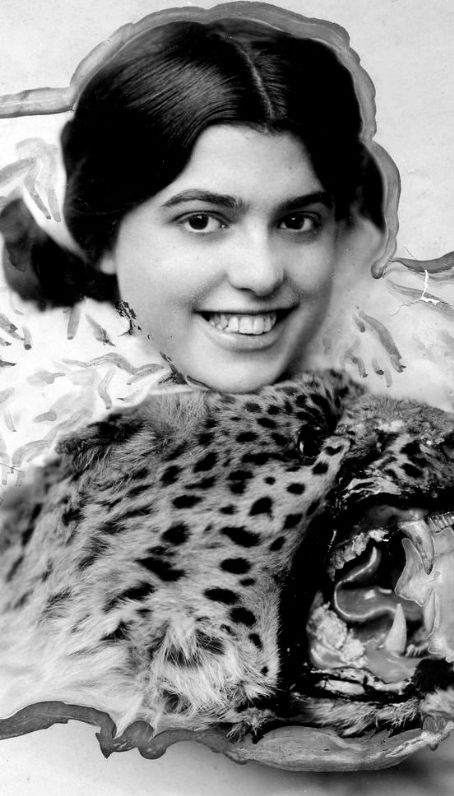

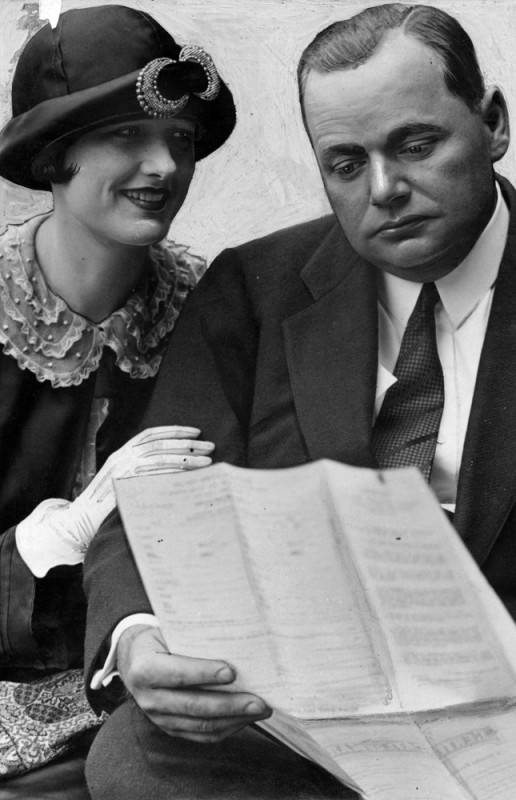

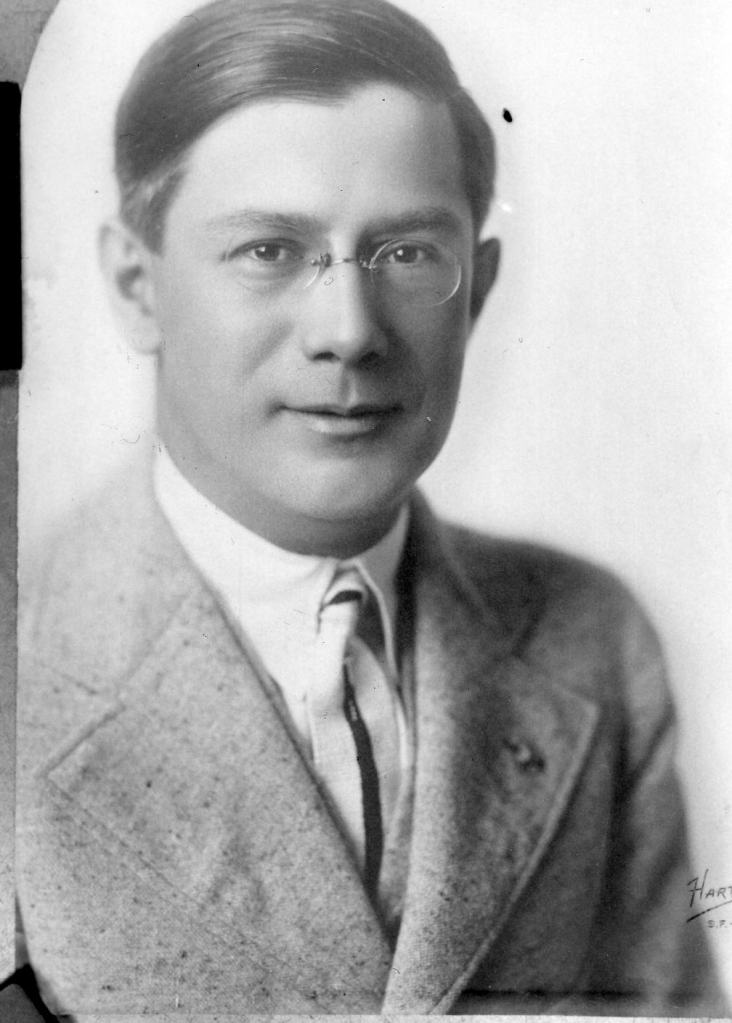
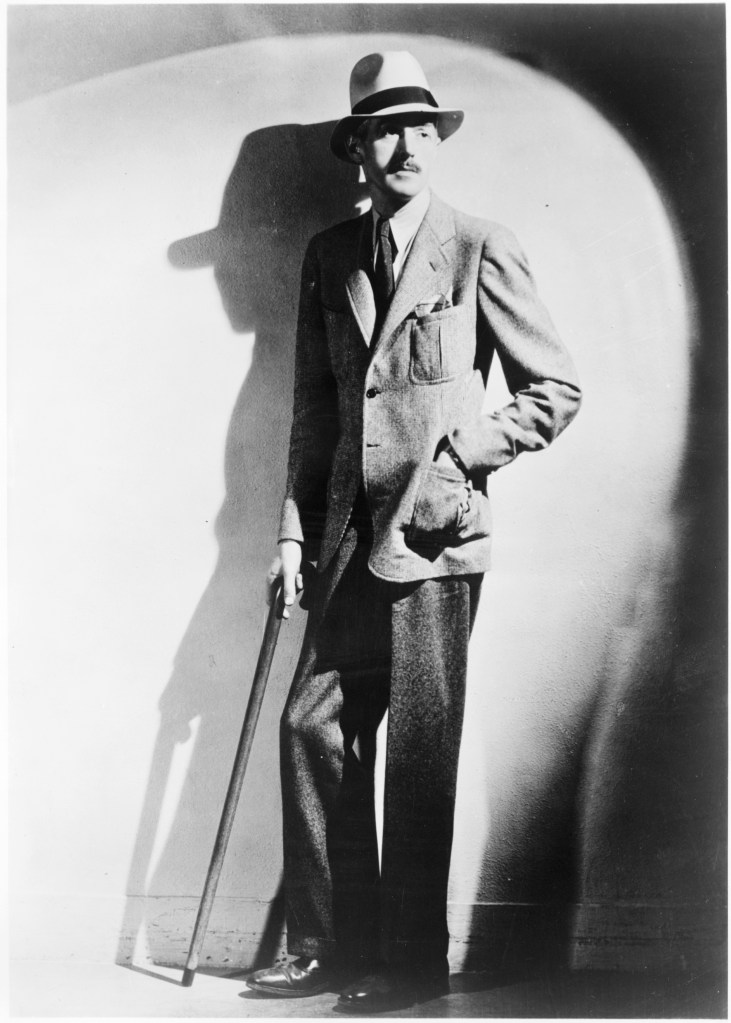
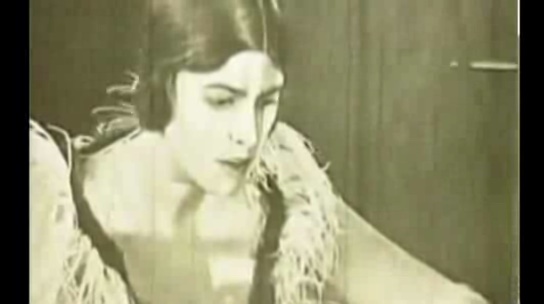
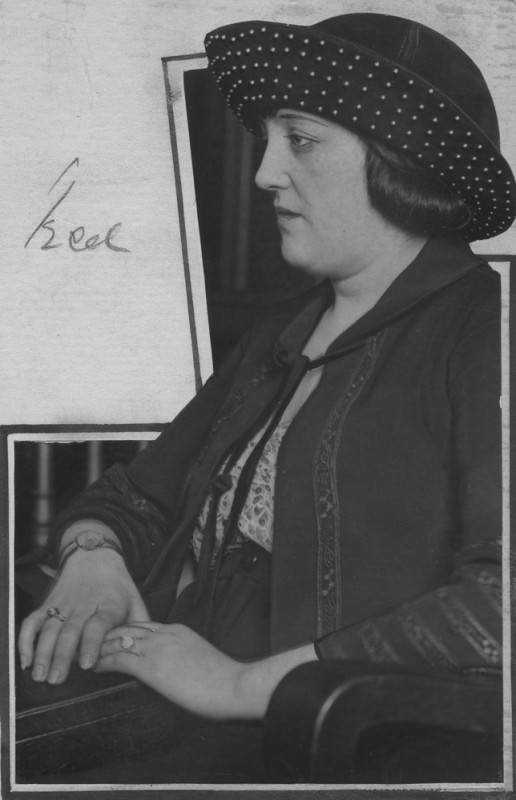

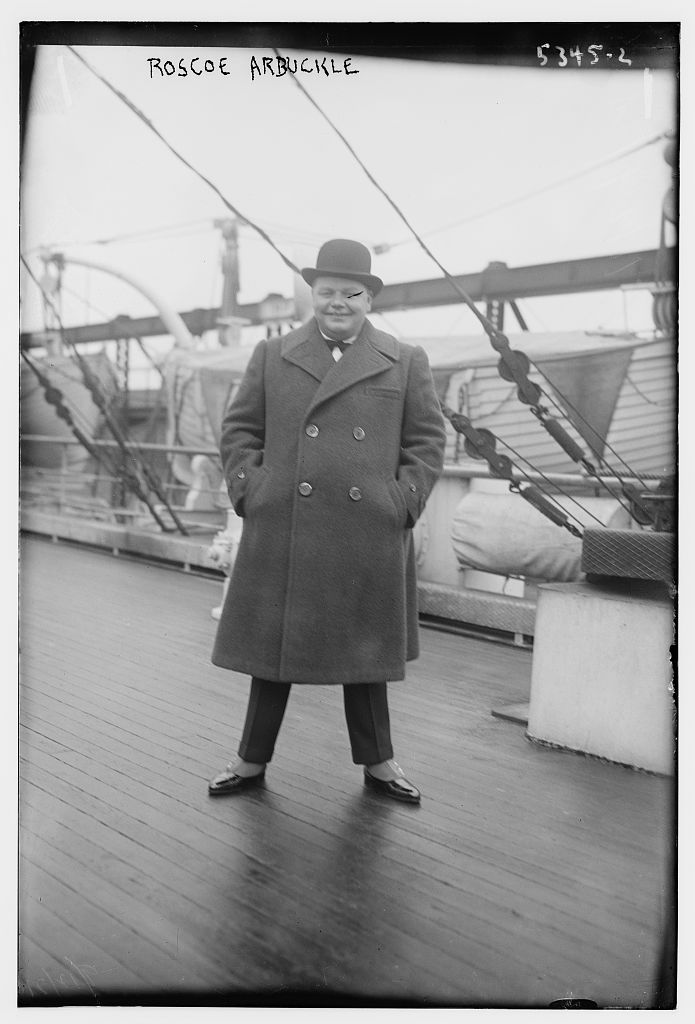


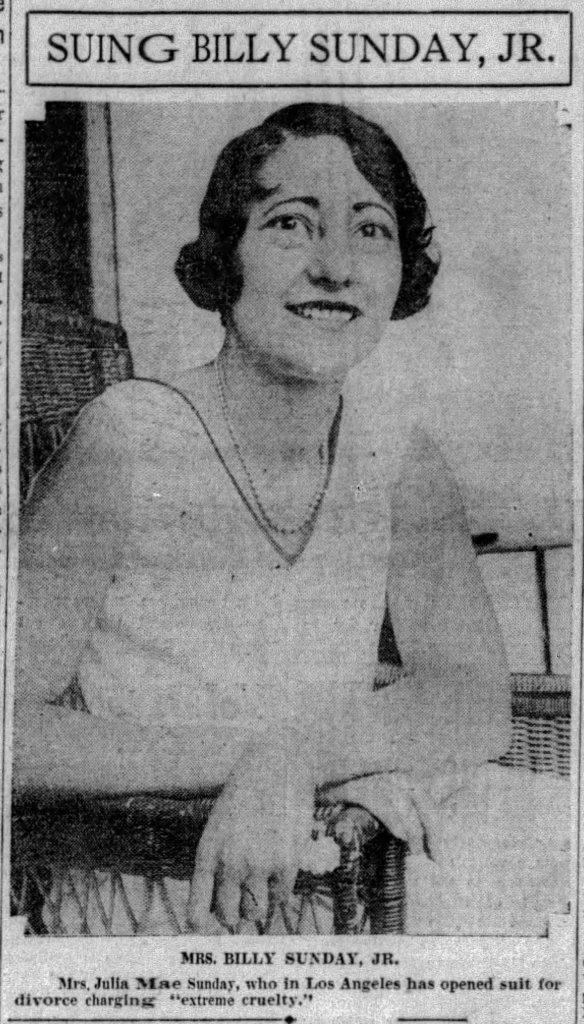
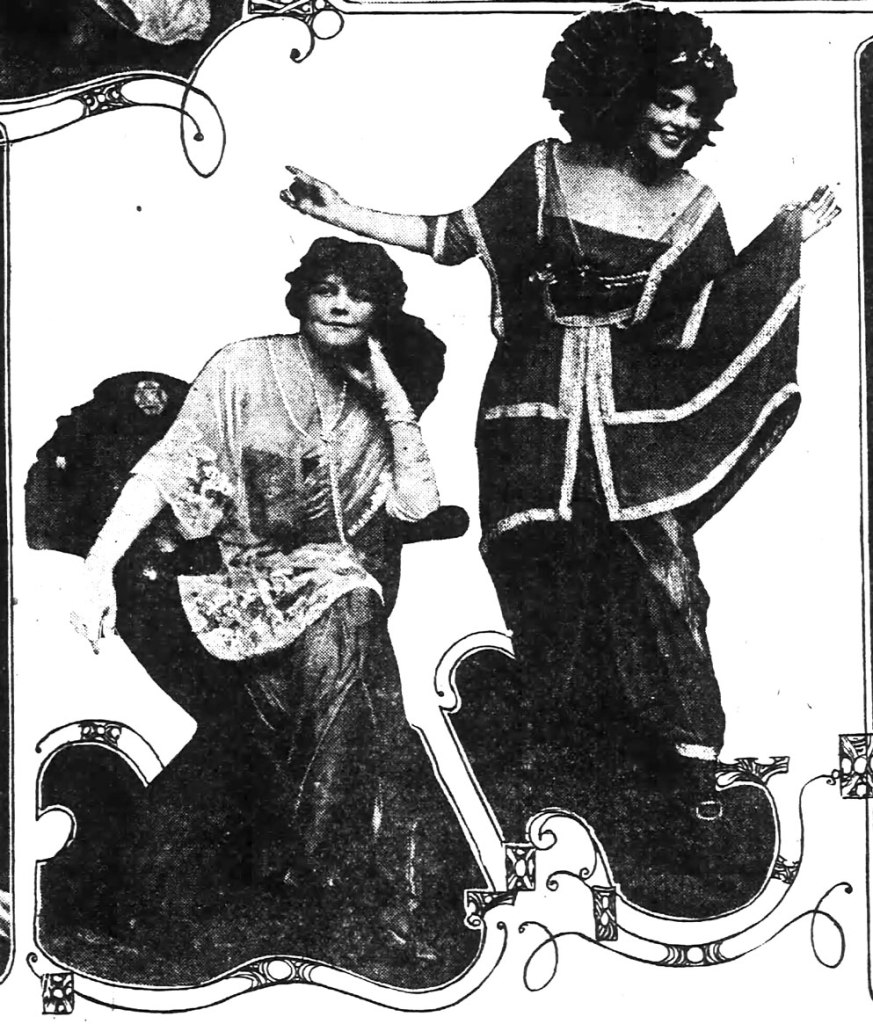


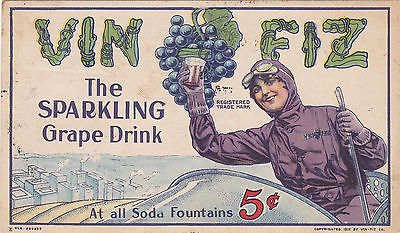
 Spite Work: The Trials of Virginia Rappe and Fatty Arbuckle