In defending the indefensible, so to speak, a plausible explanation had to be invented for Roscoe “Fatty” Arbuckle’s wearing silk pajamas and a purple bathrobe as he greeted female guests in his suite at the St. Francis Hotel on Labor Day 1921. After all, two assistant district attorneys, in their closing arguments for convicting Arbuckle of manslaughter in the death of Virginia Rappe, had made a special point of making the comedian out to be so debauched, so louche, in still wearing his pajamas after emerging from room 1219 with the fatally injured actress lying on a bed saturated with his perspiration. And for those with less than a longer memory, the journalist Adela Rogers St. John in “Love Confession of a Fat Man,” a feature interview published in the September 1921 issue of Photoplay, devoted some ink to the same or similar pajamas that Arbuckle wore in her presence at the same time of day.
We were lunching together in his bedroom. I shall never be able to estimate just what percentage of effect they had on me—those pongee pajamas. Of course, I had seen men in pajamas before. If you read the ads in the magazines you can’t help but see men in and out of most anything. But I’d never interviewed in them before. And I love pongee pajamas. I suppose it is only fair to my husband to state that the bedroom was a set—on stage three, at the Lasky studio. That the pajamas and the dressing gown and even the bath slippers were only his costume for a scene and that we were almost aggressively chaperoned by seventeen stage carpenters, thirteen electricians, a few stray cameramen, and a troop of studio cats. And Oscar. The colored gentleman that “tends to” Mr. Arbuckle.
Nevertheless, those pongee pajamas were exceedingly—intrigante, if you understand French. That is to say, one really can’t talk to a man in his pajamas without feeling more or less—well, sympathetic and well-acquainted, so I may have taken too lenient a view of his view for a confessor.[1]
The interview is strange in that Arbuckle is not single but rather married. And the interview is conducted in a bedroom. That is even stranger, for it required that Mrs. St. John make up an excuse for the pajamas by saying that the comedian had just been working in front of the camera, which, of course, invites the question: Did Arbuckle’s contract provide for a bedroom rather than a dressing room attached to the set? In any event, he did wear such a costume in Leap Year, the last Arbuckle vehicle to be filmed in the late summer of 1921. He would not make another comedy until a decade later.
That said, the same excuse could not be made for the Labor Day debauch. It took another motion picture magazine piece to explain away the pajamas and bathrobe, this time attributed to the wife who goes unmentioned in the love confessions, Minta Durfee, assisted by Paramount’s publicity department and Arbuckle’s lawyers.
“Not long before the trip to San Francisco, Mr. Arbuckle was accidentally burned with muriatic acid,” Minta disclosed in Movie Weekly in late December 1921, three weeks after the end of the first trial and as many weeks before the start of the second.[2] The injury required that Arbuckle wear thick cotton dressing, which naturally, conflicted with his vanity.
He always had his clothing made rather tightly fitting in order to keep him from looking any fatter than he is, and tight clothing over the burn was anything but comfortable. Whenever he could, he wore loose clothing, and that was why he was dressed in pajamas on the day of the party.[3]
This excuse, or rather alibi, was then put to good use at the second trial. During the cross-examination of two prosecution witnesses, Zey Prevost and Alice Blake, Arbuckle’s chief counsel Gavin McNab made a special point of asking each one if Arbuckle had asked them if he did not request their pardon for being dressed the way he was during the early afternoon of September 5.
Q. Miss Blake, did Mr. Arbuckle make any explanation to you about his reason for receiving young ladies in his room in his dressing gown and pajamas? A. Why, I believe he did mention it, he said something about a burn or something.
Q. What? A. He said something about a burn.
Q. Did he apologize to all of you young ladies and say that the reason that he had to receive you in that way was that he had had a serious accident. A. Yes, sir.
Q. And that he could not be comfortable otherwise than this gown? A. Yes, sir.[4]
Assistant District Attorney Leo Friedman objected on the ground that “this is a collateral matter” and hearsay—and he likely knew better. And there would be no doubt after the long and contentious testimony of Zey Prevost, whose memory failed to the point at which the prosecution wanted to the court to declare her a hostile witness. As Friedman’s colleague, Milton U’Ren pointed out, “She had been under other influences since the last trial.”[5]
When it was Zey’s turn to vouch for Arbuckle’s excuse, Friedman objected once more “on the right of counsel to broach brand new matters in a leading and suggestive manner.”[6] And argument took place over several pages before Zey could answer as desired that Arbuckle made apologies, “that he was sitting in some acid, or something, in a machine [i.e., an automobile], and burned himself, and that he was more comfortable in his pajamas and bathrobe, than he was in his clothes.”[7] What followed, however, was another line of questions that is why we want to close read what Friedman called “a hullaballoo over nothing.”
Q. Miss Prevost, you have had no conversations with counsel for the defense since the district attorney first saw you in the other case, or with any of the defense counsel up to this time, have you? A. No, sir.
[. . .]
Q. You are not under the influence or duress of anybody? A. No, sir.[8]
Of course, while the prosecution could no longer keep Misses Blake and Prevost incommunicado as they had done before the first trial—because they could not be trusted—they had surely been tailed by police detectives and that both women had made contact with Arbuckle’s lawyers and knew what to say so as not to perjure themselves and to no longer be effective witnesses for the prosecution of the comedian.
[1] Adela Rogers St. John, “Love Confessions of a Fat Man,” Photo Play, September 1921, 22.
[2] The excuse seemed to resonate with another—and quite plausible one—for the carbuncle he suffered for months in 1916–’17. Rather than having it treated, he let if fester and relied on morphine injections—and very likely heroin—to dull the pain. The comedian was negotiating and ultimately signing a contract with Paramount Pictures and he could ill afford to be hors de combat—out of action. By the time he arrived in New Yor City in March 1917 for a series of dinners marking his million-dollar deal with Paramount, Arbuckle was on crutches and could barely walk without assistance.
[3] Minta Durfee, “The True Story about My Husband,” Movie Weekly, December 24, 1921.
[4]People vs. Arbuckle, Second Trial, “Testimony of Alice Blake,” p. 882.
Though the following profile of Roscoe Arbuckle’s wife, Minta Durfee, reads like a “puff piece,” it was “propaganda” published just prior to the first of his trials, arranged by his lawyers and written by Alma Reed, a journalist whose career later took her to Mexico where she would champion the works of several artists including José Clemente Orozco.
Durfee’s role in the trial was staged, as historian Joan Myers said so poignantly a decade ago, but some of the thoughts Minta shared in this interview sound genuine, for instance when she mentioned that her husband was incapable of attempted rape because, in her mind, he was impotent. An astute reader might have concluded that Arbuckle had simply become bored with her as his popularity skyrocketed. Less obvious to the reader would have been why Minta stood by her estranged husband. The most significant reason is that the case against Arbuckle posed a mortal threat to the handsome stipend she received from him, so she swallowed any embarrassment and went to work shoring up his image as a good-natured (and harmless) husband. She was also enjoying the attention—pleased to be back in the limelight after years of being forgotten by the movie-going public.
Arbuckle Happy with His Wife; Awaits Trial
By Alma Reed
“I guess I’m the right girl for him, after all!”
There was a note of good-natured significance in her voice, and an expression of kindly, maternal understanding in her brown eyes, when Minta Durfee Arbuckle ventured this statement yesterday afternoon as she sat in evident domestic felicity beside her husband in their apartments at the Plaza Hotel.
And something of the old smile that won Roscoe Arbuckle world-wide fame in the silent drama flickered across his face as he held her hand and said tersely: “I’ve found that out, all right!”
This mutual admission of the success of their reconciliation after a month’s trial cannot fail to impress the most disinterested observer as the truth. For, in spite of the sinister possibilities that loom before him, in spite of the hideous accusation that attaches to his name, the corpulent screen star is frankly happy in the devotion of his pretty, talented wife.
Sincerity of Purpose
And Mrs. Arbuckle, with all the tact that a clever woman has at her command in an emergency which endangers the vital interests of her life, is resuming her duties, after five years of separation, with a sincerity of purpose and a genuine pride in her ability to meet the difficult situation.
Throughout the public frenzy surrounding her husband’s preliminary hearing there were many who, a bit reluctantly, perhaps, admired the splendid poise of Minta Durfee Arbuckle. Her dignified demeanor was a matter of popular comment at every session of the court. The same dignity, common sense and real charm of personality are standing her in good stead now, as with rare generalship she directs the uncertain affairs of the Arbuckle household.
It was between almost continuous demands made upon her time by phone messages and the greeting of visitors that Mrs. Arbuckle explained the past and expressed her hope for the future.
Arbuckle, seated in a small group of old friends, reminisced over various steps of his career. But he followed her every word, and throwing off the “incommunicado” mask imposed upon him by his attorneys since his arrest, made free and frequent comments, as she said:
I came here because I know Roscoe. Before our separation I was with him constantly for nine years. We worked in the same shows. We never had a meal apart. We were together practically every minute of that time. I know that he is incapable of doing the terrible thing that they have charged him with. I know that a great injustice is being done him, and that he is being placed in a false light before the public.
Grew Up Together
When we were married, I was only 17 and he was scarcely 21. We practically grew up together. Our one difference was just as much my fault as it was his. I had a point of view that insisted upon quiet manners and certain amount of conventionality. I had been raised that way, and the thing annoyed me was that Roscoe always acted like a big boy. When we were in the company of friends Roscoe preferred to go off and sing tenor in a quartet with the boys instead of politely remaining with the ladies. Perhaps he would take a notion to beat the drums, or do something else as foolish, for all the world like an overgrown baby. He was very bashful and I liked the social observances of life. Sometimes when we were in a restaurant he would say, “I’ll put your coat on outside. If I do it here the waiters will think I’m in love with you!” Now, of course, all that seems very silly now, and small reason why tow people who really were in love should separate. But I was much younger then and allowed the trifles of life to assume to much importance.
But Arbuckle refused to let his wife take the blame for their marital difficulties. Rushing gallantly to her defense, he declared:
It was my fault. I should have had more sense and should have realized my position. I never seemed to grow up, and I believed that I could always go on acting natural even after I became a public character. A man must finish with the “kid stuff” sometime, and I was wrong in wanting to sing in public and beat the drums, and do every sort of crazy thing that humiliated my wife. I suppose I never took myself seriously enough, and I didn’t seem changed inside, somehow, from the days when I was just a big, fat “cut-up” youngster in vaudeville.
Good Wife Best
Now I realize that the best thing is the world a man can have is a good wife—one who is proper and dignified and wants you to succeed and have the world think the best of you. A man may see the funny side when other women act boisterously or dress freakishly. But it’s a different story when his own wife does it. And the thing that a man should be most grateful for is having a wife whom he can respect and whom the world must respect.
That Mrs. Arbuckle is preeminently such a wife is the consensus of opinion among all those who have met her. Her husband’s opinion of her is borne out of her expression of her aims and interests. Of her personal tastes and ideals, she said:
I have always had one ambition, that is to improve my mind. My father always impressed my sister and myself with the truth that education is the best substitute for youth. “When you being to lose your looks,” he would say to us, “you can still be very charming women if you have used your time and your talents properly.” I have two hobbies—reading, and outdoor exercise. I love good books as I love few things in life. I study continuously, and the more I study the greater my desire to learn. My reading is of a great help to us now, when we stay indoors, as we do day after day, waiting for the trial. Roscoe is always begging me to tell him some of the stories I have read, and it gives me great pleasure to be able to interest him with all sorts of strange tales. The time I spent in our home in Los Angeles was wonderful, in spite of all the trouble. I love the garden. It is one of the most beautiful I have ever seen, all carried out in Japanese style. It is like a dream come true, for nine years ago, when Roscoe and I went to the Orient with the Ferris Hartman Company, we visited the tea houses and lovely gardens of Tokio. We promised ourselves then that when we could afford it we would have a Japanese garden all of our very own.
But, while that’s all very beautiful, the best thing is, of course, that we are together again, even if it required some terrible trouble to bring about. Perhaps we’ll have to start life all over again in a little stucco bungalow. I’ll be perfectly contented there, but I mean to have a little red lacquered bridge and an old stone lantern and a tiny lily pond somewhere in the back yard.
During the preliminary hearing, I once heard a man who was a baseball fan say about Mrs. Arbuckle:
You can’t help admiring that little woman for the plucky way she is keeping her foot on base!
And regardless of the issue of the legal proceedings which will determine the future status of Roscoe Arbuckle, it must be generally conceded that his wife is very firmly keeping her foot on base, with credit to herself and helpfulness to the man whose name she bears.
Arbuckle prepares to spin a jazz record while Minta reads him a story?
The following begins another part in our biblical-length book with the appropriately apocryphal title of The Apocrypha of Maude: September 1921.
To Selma
I do not believe that Virginia Rappe was a conscious factor in any maneuver directed against Mr. Arbuckle. If there were a deliberate plot against him, I do not think that she knew anything about it. She was in Los Angeles, financially hard up, out of work and unable to get help from her friends.
Minta Durfee
When he spoke before a grand jury and testified for the first time in a courtroom, Al Semnacher casually said he had met Maude Delmont no more than three or four times since 1917.[1] Yet, when they encountered each other outside the Hollywood Pig ‘n Whistle restaurant, they were far better acquainted. He had her telephone number. Delmont knew of his youngest son by name. She spoke of little Gordon Semnacher as though she babysat for him.
Delmont had long since ceased running her salon business on Captiva. With the end of the summer season in 1919, as “Madam Delmont,” she ran a help-wanted ad in the Los Angeles Times, a business offer for an “EXPERIENCED BEAUTY PARLOUR operator” who knew “the hairdressing business and all its branches.” This “grand opportunity for the right person” meant Delmont wanted another woman to assume her lease adjacent to the Avalon Casino Ballroom. As it came out later, unpaid rent and other bills forced her creditors to seize her luggage until her debts were paid.
By the spring of 1920, Delmont lived in East Los Angeles at 725 S. Bernal Avenue. She had moved into a rented house with her younger sister Lucile, a practical nurse and divorcée.[2] The census that year lists Delmont’s occupation as a “corsetier.” But so was her neighbor, suggesting some mutual cottage industry.
A year later Delmont found a new job as an advertising and subscription collector for the Labor Journal, a Fresno-based periodical for agricultural employers and workers in the San Joaquin Valley. In this new line of work, she met her third husband, who also worked for the Labor Journal, Cassius Clay Woods, named for the abolitionist Cassius Clay—still an admired figure in the late nineteenth century.
Called a “publicity man” in newspaper accounts, Woods had been selling advertising for publishers since 1912, when he lived in Bakersfield. Like Delmont, he had territories covering the rural towns of the San Joaquin Valley, including Kern, Madera—where the couple were married—as well as Fresno and Selma. One thing the newlyweds had in common was drinking, but their marriage became a part-time affair, like their work, and they drifted apart.
For much of the spring and summer of 1921, Maude Delmont had no fixed address. She either stayed with friends in the Fresno area or with an aunt at the Windsor Apartments at 970 Orange Street in Los Angeles. She lived like a traveling saleswoman. She dressed well and occasionally supplemented her income as a gown model. To get such work at thirty-nine was unusual and more so because Delmont was an alcoholic, albeit one who could comport herself and could pretend to be “sober.”
Drinking wasn’t a pastime Delmont shared with Al Semnacher, and the real nature of their acquaintance was never disclosed. She might have been a business associate of sorts, seeking work as an extra or providing Semnacher with leads to undiscovered new, pretty faces on the sidewalks of Hollywood, an extra set of eyes at lunch counters, at train and bus stations, wherever a young, obviously out-of-town woman needed someone to show her the ropes, the same ones Delmont climbed when she arrived so long ago. We only know that Delmont made a good, quick friend for a friend in need.
Of course, Virginia Rappe was hardly an ingenue. She knew the ropes and got farther up than Maude Delmont ever did. But propriety required that Semnacher provide a chaperone in order for her to make the Labor Day trip and the gregarious “beauty specialist” fit the role.
In courtrooms, Al Semnacher and Maude Delmont told much the same story of how their chance trip came to be on or about August 31, the day Helen Hansen refused to go despite Rappe’s entreaties. Delmont had finished her breakfast in the Pig ‘n Whistle’s at 224 S. Broadway, next to City Hall. A respectable establishment, the Pig ‘n Whistle was where so many women shoppers from the nearby department stores brought their children for its ice cream, confections, and pastries.
From the window, Delmont easily recognized Semnacher and his ten-year-old son Gordon. They were in Semnacher’s Stutz Model H touring sedan, which was easy to spot as was he, wearing his houndstooth Gatsby cap and a tie knotted with a four-in-hand and pinned with an ankh symbol. She went outside to talk to him.[3] They were both on familiar terms, but much of their real conversation was lost in their signed statements.
“What are you doing?” Semnacher asked.
Delmont said she wanted to go to Fresno for the weekend, which included visiting and staying with a friend in the nearby town of Selma. She wanted to hitch a ride with someone going north, friendly people who might make for a “pleasure trip.” Semnacher offered her a ride without any quid pro quo.
“Why, I think I can drive you Saturday,” he said, meaning September 3.
The peculiar requisite for “friendly people” should have sounded suspicious to detectives and district attorneys, for the term meant people who could be trusted, complicit. Semnacher obliged.
He telephoned Delmont the next day, September 1, to tell her the trip was on with two of his clients joining.
“Certainly not,” she responded, “but bring your baby,” meaning Gordon Semnacher.
“I will if he will come,” Semnacher said.
“Who are your girlfriends,” asked Delmont, “anyone I know?”
Semnacher told her she didn’t. He “represented” them, leaving it to be understood that they were actresses.
“Are they good fellows?” Delmont inquired, using another loaded meaning: were they willing to play along, play the “game” if one was in mind. “Good fellows” also meant would the pair have no objections to an older woman in their company.
Semnacher promised both women were “the sweetest and best fellows I ever knew—perfect little ladies, and you will like both of them very much.”
Delmont agreed to the arrangements. Later in the day he telephoned again and informed her that his “baby did not want to come.” This may have come as a disappointment. But it also meant that All Semnacher wouldn’t be under any time constraints to get the boy back to his estranged wife and her boyfriend.
Outside of some mountain scenery along the way and the simple joys of picnics, barbecues, and square dances, fair booths, and rides, Fresno and nearby Selma would seem to offer little in the way of diversion. For casts and crews driving out of Los Angeles to film on location in the Sierra Nevadas and other points north, Fresno was a layover, where the entourage filled their gas tanks and had a decent breakfast.
Semnacher pulled up outside Rappe’s home at 504 N. Wilton Place early on Saturday morning, September 3, just before sunrise. Her adoptive aunt, Kate Hardebeck, expressed no concern about the absence of Helen Hansen or that her “niece” might go somewhere alone with a married man regardless of his status as her agent. But Rappe was also Aunt Kate’s employer, the “lady of the house.” So, looking the other way was part of the job. But Rappe reassured Aunt Kate that only a weekend in Selma was planned, so, no worries. And another woman would be joining them before they left Los Angeles.
What didn’t look right was the sight of Rappe packing her bags. “She, for some reason or other took an unusually large supply of clothing,” Hardebeck recalled, “a whole suitcase full.”
“Tootie” was taking far more clothes than needed for a little outing to the Fresno area, as Rappe told her. There this other woman, a Mrs. Delmont, had a home where they would stay overnight on Saturday and Sunday and return some time on Labor Day.
For the long drive, Rappe had pulled on her black boots, silk breeches, as well as the rest of her “riding habit”—which was then in fashion for active young women. Before she skipped down the sidewalk and down steps to Semnacher’s car, Aunt Kate followed with two picnic baskets. These contained thermos bottles of coffee and tea, sandwiches, and other delicacies. When these and the rest of her luggage were stowed, Rappe threw her dog “Jeff” and Aunt Kate kisses good-bye.
Minutes later, in another part of Los Angeles, Semnacher pulled up in front of Delmont’s apartment house around 7:20 in the morning “with Miss Rappe,” as she recalled. After introductions were made, the three boarded the Stutz, with the two women sitting side by side in the back seat as a matter of propriety.
There Rappe and Delmont got to know each better, their voices a little raised to hear each other above the chattering of the motor and the wind through the open sides. At some point, to be a “good fellow” herself, Delmont offered the flask she kept in her purse.
Rappe politely refused.
Semnacher’s inland route north took the recently completed California Highway 4, the precursor of U.S. Route 99 and present-day Interstate 5. By the late summer of 1921, the entire way was concrete-paved and designed for the top speeds of trucks and automobiles or 40 to 50 MPH, respectively. Compared to the slower and longer winding coastal route, Highway 4 was now the preferred way to get to San Francisco in a day.
Highway 4 burrowed through the Newhall Tunnel and then up into the mountains past old Fort Tejon and then on to the oil fields and farmland of Kern County before riding along the Castaic-Tejon Ridge then twisting down to the first major town, Bakersfield. The rest of the way to Fresno traversed the so-called “Garden of the Sun” of California’s prime, irrigated farmland, the San Joaquin Valley, where, to either side of the road, were miles and miles of croplands, producing raisins, grapes, peaches, figs, nuts, olives, oranges, and other crops. The distance between Selma and Los Angeles is a little over 200 miles or almost halfway to San Francisco. The traffic would have been light in the morning, with occasional trucks and horse-drawn wagons, which Semnacher could easily pass in his Stutz, which shared the same engine with the two-seater Bearcat. Even though the first rains of the dry California summer had recently fallen, the weekend weather was expected to be fair with temperatures in the upper 70s.
What was there to do in Selma? On Saturday evenings, the town’s band gave concerts in the park. Tonight’s rather eclectic program included the region’s anthem, the “Raisin King” march, the vocal trio from Verdi’s Attila, a “yodel” song, a scared melody, and the “National Anthem.”
Delmont, however, had a friend in Selma proper, Mrs. Anna L. Portnell. At forty, she was a society woman by Fresno County standards and a member of the Woman’s Relief Corps, a charitable organization for war veterans. She and her husband Jesse lived at 2336 Chandler Street and were negotiating for the purchase of a thirty-acre ranch outside of town. Perhaps much to Rappe’s delight, Mrs. Portnell was also a bridge player.
If Mrs. Portnell expected Delmont and her companions to arrive on Saturday, September 3, or if their visit took her by surprise, it went unreported. We only know what happened from her point of view she took the stand in Arbuckle’s defense in January. Mrs. Portnell recalled taking her visitors sight-seeing around Selma and nearby Kingsburg in her car. During this excursion, Rappe had a crisis.
“Please stop the car if you do not want me to die,” she begged. Then she got out and doubled up. Mrs. Portnell saw Rappe drink “a quantity of dark colored liquid from a gin bottle, claiming it was an herb tea.”
Mrs. Portnell kept the bottle and offered it as evidence, having kept this strange souvenir of Rappe’s visit for nearly five months. Delmont, however, recalled a different Saturday evening.
“Why, Virginia danced for an hour without stopping at my friend’s in Selma, where we spent the night on the way up,” she said in the San Francisco Call. “When the hour was over, she was as fresh as when we started.”
The next day, on Sunday morning, September 4, Semnacher and his companions departed Selma for the drive to San Francisco. He testified on more than one occasion that the trip to Selma had been the only destination and he, Rappe, and Delmont intended to return to Los Angeles. Rappe, however, suggested that they drive on to San Francisco.
Semnacher gave no reason why and various theories began to fill this void. But later, much later, after the first two Arbuckle trials, Delmont, in an interview with the Kansas City Post, said Rappe, on the spur of the moment, thought it would be splendid idea if she could visit her friend Sidi Spreckels in San Francisco. She was a young widow now and had just returned from France with their four-year-old daughter Gertrude to fight for her share of her late husband Jack’s estate. But that wasn’t the only reason that Rappe might want to give comfort to an old girlfriend. Sidi had been under a cloud that loomed over her well before Jack Spreckels died last July. When the couple had their falling out in 1920, Sidi got herself involved with an old acquaintance from her days as a cabaret artiste.
His name was William “Diamond Bill” Barrett, a notorious “soldier of fortune” known for cheating a string of jewelry stores and gullible young women. His most recent exploit, eloping with a Philadelphia heiress, Alice Gordon Drexel, however, didn’t result in any largesse. Her parents refused to underwrite their living together in Paris and forced him to foot the bills. Desperately in need of cash, he went to London and found Sidi in a troubled marriage with an absent husband.
Sidi either fell for his charms or agreed to his latest grift during their brief affair, which she said was purely social. On Barrett’s advice, she entrusted jewels to him worth $125,000 (or $2 million adjusted for inflation). He promised to have the lot appraised and insured—which may have been some sweet revenge on Jack Spreckels, for Sidi gave Barrett her engagement ring and a pearl necklace made by Tiffany’s of London, which she purchased on a line of credit extended to her father-in-law, John Spreckels Sr.
For a time, Barrett lived off selling pieces to pawn shops and second-hand jewelers, one of which tried to sell the pearl necklace back to Tiffany’s. This alerted Scotland Yard and its detectives returned the necklace and a few other pieces to Sidi. Subsequently, Barrett fled to Mexico. As for the only other wronged party, if one excludes Sidi’s late husband, Tiffany’s requested the balance due on the pearl necklace, said to be $80,000. Jack either didn’t or refused to pay for the bauble and, after his death, a suit was filed against his widow to recover the money.
With her legal woes and mounting debts, Sidi was still in the newspapers a year later, not only because she wore very stylish widow’s weeds, but to put her furs, including her precious Russian sables, up for public auction to pay her creditors and keep her penthouse in the Palace Hotel. Although such an event might have attracted Rappe—some of her designs were likely in Sidi’s closet—she could hardly afford to place a bid.
According to Delmont, Rappe dearly wanted to surprise her friend with a telephone call at least. Semnacher acquiesced to the impulsive request. But this this was a special favor. He had to drive an extra 200 miles north. He had to pay for the gasoline and any unforeseen repairs, such as blown tire. He had to travel from Oakland to San Francisco by ferry and arrive late at night—and he was either expected or had offered to cover their expenses. But it wasn’t an inconvenience as to time.
The threesome intended to stay for just one night and then leave San Francisco during the afternoon of Labor Day, returning to Los Angeles via the coastal road (later called California SR 1) through Monterey and on to Del Monte to spend the night—where one of Rappe’s friends was staying, possibly two. Vacationing at Carmel-on-the Sea was only a stone’s throw and vacationing there over the Labor Day holiday and into the following week were Grace Darmond and her lover, Jean Acker, still married to Rudolph Valentino. If Rappe knew of their itinerary, in one great arc, taking her across a broad swath of California, she may have had it mind to see three girlfriends, not one: first Sidi, then Grace and Jean.
Before leaving Selma, Rappe dropped a postcard into a mailbox addressed to Aunt Kate on Sunday morning. It read “having a lovely time” and the change of plans.
“Never having tried to curb Virginia and always trying to make things comfortable for her,” Aunt Kate said, recalling the postcard, “I didn’t feel alarmed and didn’t think it so unusual that she had decided to go to San Francisco.”
What was always difficult to reconcile about Zukor in his lifelong quest for greatness was his intractable moral authority, which he evidently identified with the genteel, and his lust for power, which was anything but genteel.
—Neal Gabler, An Empire of Their Own: How the Jews Invented Hollywood
When I see myself on film, I can’t laugh from the heart. There is always too much that’s disturbing [. . .]
—Roscoe Arbuckle, “Fatty über sich selbst,” Kino-Journal, 1923
In the wake of Arbuckle’s acquittal for having caused the death of Virginia Rappe on April 12, 1922, the press began to quote Zukor and Arbuckle’s manager, Joseph Schenck, that the three Arbuckle films that had been withdrawn when the scandal erupted in September 1921 would soon be released to American theaters. In the case of the New Garrick Theater in Los Angeles, posters were ready to go up overnight.
But within days, that decision was reversed. A permanent ban was announced by Will H. Hays, the new chairman of the Motion Picture Producers and Distributors of America. It was done at the behest of Zukor, according to Hays’ autobiography, and it was a business decision that Zukor made without much resistance from his partner Jesse Lasky and other stakeholders in the comedian. To abandon three completed films ready for release at a time when Arbuckle films were earning millions at the box office sounds counterintuitive, but as it will become clear, Zukor was no fool.
One of these films, Gasoline Gus, was to usher in Paramount Week on September 4, a week of major new releases that began at the start of the Labor Day weekend. Zukor, as president of the studio, counted on actors and actresses, especially those in California and New York City, to make themselves available for personal appearances.
Arbuckle, possibly feeling he had earned a reprieve from the publicity campaign, didn’t appear at Grauman’s Million Dollar Theater in downtown Los Angeles for the world premiere of Gasoline Gus. Instead, he hosted two private partiesin his San Francisco hotel suite. The first was on Sunday, September 4, a more sedate affair, and the next day, Labor Day, September 5, an all-day affair that promised food, alcoholic beverages, and young showgirls from San Francisco’s demimonde.
Arbuckle had arrived in San Francisco on September 3 and, given his testimony from his first and third manslaughter trials, he had a purpose in mind. The first was to test out a new car on a long-distance journey. But his famous Pierce-Arrow was hardly new. He had taken delivery of it a year earlier. He changed his story. He was in San Francisco to meet up with a catered dinner cruise aboard the SS Harvard on its voyage to Los Angeles, a cruise that was loosely tied to Paramount Week. Arbuckle claimed he purchased his tickets soon after he took his rooms at the St. Francis Hotel. But in a cross-examination, he had yet another itinerary. Arbuckle wanted to drive on from San Francisco on September 6 to attend the California State Golf Championship, which began that week in Del Monte.
Had Virginia Rappe not fallen ill at his Labor Day party, she would have been in Del Monte a day ahead of him. But Arbuckle did sail on the SS Harvard along with his automobile prominently parked on the promenade deck. He made no public appearances in Los Angeles during the rest of the week. However he did make it to Grauman’s theater by Friday night, September 9, for an emergency meeting in Sid Grauman’s office. The news had broken that morning that Rappe had died and there was a need to meet with his lawyer and the other men who attended the ill-fated party to decide how to approach the matter.
The Arbuckle case soon began to make headlines and Gasoline Gus was withdrawn as were Freight Prepaid and Leap Year, which still had working titles and release dates in the future. All three were longer, romantic comedies and, for Arbuckle, a departure from his energetic “Fatty” character. There would still be a fat man, still be some physical comedy. But now the comedy was built on gags related to a philandering man and his pursuit of young women. Naturally, he would eventually marry the girl. This had been a common theme of his comedies from 1920, after he parted ways with Buster Keaton.
Meanwhile, the September 1921 issue of Photoplay hit the stands. One of the feature articles took on a whole new meaning. Adela Rogers St. John and Arbuckle collaborated on an interview, “Love Confessions of a Fat Man,” a publicity piece to display his intelligence and sophistication which we featured in an earlier blog post). The photograph that went with this piece, which was published in depicted Arbuckle with his hair combed over, looking up, as though into a woman’s eyes, as though he might present her with an engagement ring. Another photograph, that was published in trade magazines aimed at motion picture distributors and theater owners, showed Arbuckle surrounded by young women, not as a clownish innocent but as a ladies’ man.
Roscoe Arbuckle’s rakish image in “Love Confessions of a Fat Man” (Lantern)Arbuckle in his element? (Lantern)
We looked at this new, carefully crafted, image that was folded into the real person accused of murder at an “orgy” in the St. Francis Hotel, whose indiscretions threatened an entire industry. The sudden change of Arbuckle’s public persona from light to dark is the one obvious reason for Adolph Zukor to withdraw his motion pictures and disassociate Arbuckle from Paramount entirely. Though the comedian had been handed an unprecedented apology from the jurors for what the prosecutors had done to his reputation, the gesture was wasted on Zukor.
This brings us back to Will Hays. Zukor and his peers felt it was necessary that Hays be seen as an authority to be feared. Hays was to police the content of movies as well as the personal lives of actors. That he was essentially an employee of Adolph Zukor didn’t mean that he was subservient. Zukor delegated responsibility and Hays provided the proper image and insight to not only manage the morality of Hollywood but promote its image among the various women’s clubs and religious communities across the country. He was a church deacon from Indiana and , as such, he was the antidote for any blatant (or latent) antisemitism that might be felt toward the men who ran the studios.
The timing of Arbuckle’s trials couldn’t have been worse. Hollywood scandals in one form or another had been mounting and concerns were growing among politicians and investors that it was an industry getting out of hand. The need for a powerful spokesperson had become obvious. So when Hays was hired, he needed to set an example and Arbuckle served that purpose. Hays knew that a large contingent of American pastors and clubwomen weren’t happy with the acquittal. They had to be appeased—but it wasn’t to honor the memory of Virginia Rappe. Though she was the victim, she was also seen as a symbol of Hollywood’s immorality. The prosecutors didn’t succeed in their effort to present her as a sympathetic and innocent victim. As one doctor said, she had the sexual organs of a “married woman”—a euphemism meaning she wasn’t a virgin.
In Arbuckle’s eyes, Rappe was the antithesis to the roles played by his recent co-stars, like Lila Lee and Mary Thurman. Rappe, like the other women at the Labor Day party, was attainable, consumable, and off-screen, where making eyes, honeymoons, flirting, and a little spooning wasn’t consummation, but rather coitus. Rappe may not have realized that her status changed the moment she walked into the Arbuckle suite. She was undoubtedly there to get back on-screen. But off-, she was a creature of other possibilities not limited to talking and dancing with her host, possibilities the other young women at the party were expected to service. Rappe also had to know she had as good a chance as any of being Arbuckle’s girlfriend, with all its rewards, even being the next Mrs. Arbuckle, since his publicity as this eligible bachelor might need to be grounded in fact one day.
While his career may have required that he stick with the body-shaming moniker “Fatty,” Arbuckle had contemplated losing weight. He was also no longer directing his own films. His past specialty, the frenetic succession of dazzling, often acrobatic, sight gags, appealed to all ages. But audiences were becoming more sophisticated and wanted to see longer films, five to six reels, and the sweet, naïve, fat boy character was aging well enough, the boy had to grow up and Arbuckle knew it. Scripts and direction were being handed specialists, like the seasoned director James Cruze, whose work on the latest Arbuckle vehicles was intended to keep the comedian a close second to Charlie Chaplin, whose latest film, The Kid (1921), was the bar to meet, and ahead of Keaton, Harold Lloyd, and other rivals.
Then there was the growing perception that Arbuckle’s work in 1921 suffered from uneven quality. This had to trouble Paramount’s executives, all the way up to Adolph Zukor in his Manhattan skyscraper. In speculating what Arbuckle and Rappe might have talked about if they talked shop during the early afternoon of September 5, she had to be aware of the comedian’s immediate situation. She had a good source of information: her manager, Al Semnacher, who drove her to San Francisco. He was a veteran press agent and knew Arbuckle was getting panned on a regular basis. The Dollar a Year Man (1921) was called a “dismal effort,” “hokum,” “weak humor,” and so on in Motion Picture News for weeks in the spring. Theater owners said it fell short of fans’ expectations. Ticket sales were off. The Traveling Salesman (1921), which didn’t have the slapstick and chase scenes, made up for this lapse. But Arbuckle, in Crazy to Marry (1921), according to Wid’sDaily in early August, opined that he “seemed to be getting away from the sort of stories necessary to make his five-reel comedy offerings go over the way they should.” There wasn’t “sufficient genuine comedy” to make the laughs consistent or frequent enough. Such an overview cast a pall on everything. It didn’t bode well for the future, when his contract came up for review.
Arbuckle’s next film, had the Labor Day party not ended the way it did, was to have been Thirty Days, after a popular 1915 Broadway play. This was Jesse Lasky’s project, to be directed by Cruze. Arbuckle would have played a character in keeping with the new image, this composite of on- and off-screen—a wealthy, young society lion. But, in Thirty Days, his philandering becomes the central plot driver. The thirty days was a probation period requested by his fiancé, to be played by Wanda Hawley, in which Arbuckle’s character would work alongside her in a settlement house. The role might have opened opportunities for dramatic roles. Unfortunately, his ongoing trials forced Lasky to cast Wallace Reid, a true dramatic lead with an athletic build. Reid managed to play the comedic role but without Arbuckle’s deft touch. Thirty Days (1922) would be his last film, but not because it was panned. Reid had a morphine addiction that resulted in his death in January 1923—yet another problem for Paramount to contend with.
That same month, songwriter and theater owner Arthur Hammerstein offered a million dollars for the last three completed Arbuckle films—Gasoline Gus, Freight Prepaid, and Leap Year—but Zukor refused. Gasoline Gus had proved itself during its aborted run in late August/early September 1921 and for a brief run in April 1922. In the January 1922 issue of Paramount Pep, a special west coast representative M. H. Lewis reported screening Freight Prepaid. He called it Arbuckle’s “best picture since Brewster’s Millions.” But he cautioned that this would be the case “under ordinary circumstances.” He noted it would be a “knockout” in event of an acquittal. A film about Arbuckle and Lila Lee as newlyweds on a boxcar honeymoon was, to the Paramount stringer, a “great comedy” and “absolutely clean [. . .] Mr. Lasky deserves great credit for uniform high-quality present and future releases.”
Despite the glowing endorsement from inside Paramount, Freight Prepaid (1922) was only released in 1923 in France, Germany, and other European countries. The titles, unlike the intended American releases, almost always included the inescapable “Fatty.” A handful of other Arbuckle vehicles, both released or unreleased, were also exported. So, if Americans traveling in Europe during the Roaring Twenties weren’t discomfited by, say, the German, they could have seen Gasoline Gus as Der Benzinkönig. But comedy aside, part of the experience of seeing these films was what Hays and Zukor didn’t want: to feed a kind of morbid fascination in a man’s downfall. Hays was there for the moral argument and Zukor the law of diminishing returns, for a large proportion of Arbuckle’s audience would walk away once they had enough of his train wreck.
To the Weimar film journalist Egon Jacobsohn, writing in his aptly titled magazine Filmhölle (Film Hell) after the second trial’s hung jury of ten to two for conviction in February 1922, the lust murder dynamic of Arbuckle’s case was a given. Rappe was perceived as the victim of a rape (“Notzucht”), a sex killer (“Lustmörder”) by the lack of proof itself that by the same token made him an innocent bystander, a victim of circumstances.
“Fatty is already finished,” Jacobsohn observed from Berlin. “American motion picture audiences are shouting we don’t want to have to watch a murderer! Every comedy in which Fatty appears lies unexploited, like garbage. Even if he is acquitted, if his innocence is proven: Fatty, the beloved movie star, is dead, remains dead!” Zukor didn’t need this prophetic pronouncement from abroad. He could be on the same page of Filmhölle—which he could read in the original—the moment Arbuckle turned himself into police. Other stakeholders held out hope and a lot of money was spent to defend the comedian.
French and German posters for the export version of Fast Freight (1922), which didn’t need a train wreck scene but it did need a scarlet lady.
Nothing would shake Zukor from sitting on Arbuckle’s films. Even the classic Keystone shorts with Mabel Normand, which still got laughs in 10-cent movie houses, were pulled from distribution after a few trial runs. In December 1922, Hays lifted the ban to at least allow Arbuckle the opportunity to work behind the camera rather than in front of it. But the films remained in their cans.
So, was this a marketing decision on Zukor’s part? Milton U’Ren grandstanded repeatedly during jury selection that Arbuckle was washed up in November 1921. Since assistant district attorneys aren’t film critics but rather the “bad cops” of their high-toned district attorneys—we had to consider whether U’Ren had evidence of his claim, that Arbuckle’s popularity was declining. Was he just predisposing the jury to view Arbuckle as a decadent entitled has-been? U’Ren’s animus toward Arbuckle probably began the night Arbuckle turned himself into police. Arbuckle was evasive in answering his questions and finally assented to his lawyer’s request that he say nothing more. U’Ren visibly scoffed during Arbuckle’s courtroom testimony.
Adolph Zukor trusted his instincts for making financial decisions but he also had accountants who could reassure him he was doing the right thing. Arbuckle’s salary was in the stratosphere and though he had earned his employers exponentially more he had the potential for trouble. He had a drinking problem and was a womanizer. He was also rumored to have a drug addiction.
Zukor, going by his balance sheets, knew that if the law in San Francisco didn’t catch up with Arbuckle’s indiscretions, the law of diminishing returns could. As gifted as Arbuckle was, would a character actor with limited range survive as a leading man in feature films? Would he be able to keep up with audience tastes? Zukor wasn’t ignorant of the risks Arbuckle posed and he wasn’t sentimental about the salad days of the past.
Although Arbuckle wasn’t directly involved in the 1917 Mishawum Manor scandal. It was, to use a contemporary phrase, a “girl-and-wine” afterparty that followed a formal dinner given in a Boston hotel in honor of Arbuckle. He had just joined Paramount. Zukor and his top brass spent the night in a brothel and the underage girls who entertained the men talked. This led to hush money, a corrupt prosecutor, a trial, and years later, just weeks before the Labor Day party, it finally surfaced in the press. Zukor, a man who had been meticulous about his public reputation for propriety, was embarrassed by the attention he was getting. The Mishawum scandal sent a message of caution to everyone at Paramount. Everyone save Arbuckle. So when he flaunted his entitlement as one of Paramount’s moneymakers by hosting an afternoon party with booze and showgirls, just weeks after Zukor’s public shaming, he crossed a line.
Virginia Rappe just wanted her hospital bills paid. There was pathos in that. Would a little kindness and what was probably a $75 hospital bill have saved Arbuckle’s career? By the time of the trials, all the world had discovered that Arbuckle still had a wife, Minta Durfee. Durfee would stand by him throughout the trials and until the Hays ban at which point she promptly returned to New York City. Durfee didn’t leave him because they had another falling out or because he could no longer be the highly-paid star he had been. She was under no delusions about the state of their relationship, though she continued to defend Arbuckle for attention in her dotage. As for Arbuckle, upon Durfee’s departure, he picked up where he left off with Doris Deane, the young actress he had met aboard the Harvard twenty-four hours after he had been seen tête-à-tête with Rappe.
Just prior to the Labor Day party, Zukor and Paramount had agreed to a multimillion dollar multiyear contract with Arbuckle and cancelling it after Arbuckle had been acquitted would pose legal problems. Yet Zukor, who had felt squeezed by Arbuckle’s lawyers during the contract negotiations, had had enough. He needed to cut his losses and protect the Paramount brand. Hays was well aware of this contract and 10,000 others with companies and individuals who had a stake in making good on the banned motion pictures. He mentioned this sacrifice when he made the ban public one week after Arbuckle was acquitted.
Will Hays’ press release of April 19, 1922 (Margaret Herrick Library)
Paramount, the biggest studio at the time, had scores of actors and actresses under contract and all posed an existential threat to his company. What better way to get their attention than to erase one of them off the books with a mysterious, indefinable, legally defensible blackballing—where the economic rationale could be concealed behind the moralistic kabuki of Will Hays. And was there a moral or sentimental one on the part of Zukor that made it difficult for him to square Arbuckle? Perhaps. Zukor had a daughter. She was the mogul’s favorite.
P.S. Zukor’s problem with Arbuckle does have its book. But the problem isn’t quite the one imagined in Andy Edmond’s 1991 tell-all, Frame Up! That book is unsourced and what is quoted in her text has a lot of fairy dust and special sauce that makes it yet another “good read,” which it is. There is a lot about Zukor’s motivations, a lot of his wires and letters, but without sources—sources that we have to think are factoids at best—Edmonds is a dead end for us, a bad influence like many good reads on the Arbuckle shelf.
The following is a working draft of the epilogue to our work-in-progress, a medley of fates that came together and parted ways with the end of the Arbuckle trials in 1922.
Fatty suffered enough while he was alive. I guess that was what he had in mind.
Lew Cody to Hubbard Keavy, 1933
What has become of Fatty Arbuckle?
King Alphonse XIII of Spain to Douglas Fairbanks and Mary Pickford, 1924
Hundreds of people were directly affected by Virginia Rappe’s abbreviated time on earth over a century ago and by the Arbuckle trials.[*] Several of the fates are poignant enough to make one reconsider what happened before and after Labor Day 1921. Others are remain little more than postscripts due to the limited amount of investigation into the personal lives of Rappe, Arbuckle, and their friends, and the real Labor Day party itself, rather than the fictions that have been handed down.
Let’s start with Dr. Charles Barnes, whom Minta Durfee commended before she left Omaha en route to San Francisco to be by her estranged husband’s side. In August 1925, Dr. Barnes was arrested in the company of Andrew Durant, an actor and female impersonator. Police believed that he was “the head of an immense dope ring” that supplied morphine to scores of addicts. His bond was set at $10,000—the maximum—and ultimately faced thirty-one counts of violating the Narcotics Act, for which he could receive five years for each, 155 years in prison.
Incredibly, while under indictment for the narcotics violations in federal court, Barnes was arrested again in January 1927 and charged with first degree murder for the death of a Sunday school teacher with the unfortunate name of Wealthy Timpe Nelson. According to newspaper accounts, she was married on her deathbed as she bled out from a botched abortion for which her fiancé paid Dr. Barnes $125. But Dr. Barnes would serve no time for any of his crimes. A diabetic, he died, at the age of 46, on May 20, 1927, after a short illness attributed to his preexisting condition.
Two more defense witnesses who figured in the third trial also found themselves in trouble. Virginia Warren returned to Chicago and continued to work as a midwife and nurse, leading what appeared to be an unremarkable life until she was arrested and convicted in 1941 for assisting in an abortion. Mrs. Warren, 74 at the time, was given probation due to her age.
A year later, in 1942, Helen Whitehurst, served a five-month jail sentence for embezzling money intended for her two nephews as well as creditors from the estate of the late Paul Hershman, the Armour chemist and her boarder, for which she was the administratrix.
Mrs. Whitehurst also figured as a rebuttal defense witness in the 1931 murder trial of gangster Leo V. “Buster” Brothers for the assassination of Jake Lingle, a Chicago Tribune crime reporter believed to be on the payroll of the Chicago Outfit headed by Al Capone. Despite the apparent risk of crossing Capone, Whitehurst testified that she had seen another man, not the accused, escape from the crime scene. But under cross-examination, her credibility unraveled when it was revealed she had once approached Patrick Roche, the police detective who led the investigation into Lingle’s murder, and demanded that he investigate the death by fire of her “cousin,” whom she believed had been murdered for his estate of $300,000. Roche didn’t believe her story and refused her request.
Of the prosecution witnesses, only Grace Halston is known to have had later trouble with the law. She was accused of bigamy in August 1922. Authorities had accepted her word that her first husband was dead and she had a letter, sent from Norway by her former mother-in-law, stating as much. Although the charges were dropped, Lieutenant Halston was very much alive so Grace had to get a real divorce in order to remarry her second husband a second time.
Dr. Barnes’ antagonist at the Arbuckle trial, Catherine Fox, returned to Chicago. She didn’t win her late husband’s stake for a cemetery tract in Queens. But she apparently settled for a handsome sum and lived until 1964, when she died at the age of eighty-six.
There’s no record of Mrs. Fox ever speaking of the trial in public again. Nor did Rappe’s other “musketeers.”
In the years after the third trial, Winifred Burkholder lived in Pasadena, California. Although that city’s directory listed her as a housekeeper, she was once again referred to as a resident of New York and a designer of gowns in the social page of the San Anselmo Herald on the occasion of a “bridge tea” in 1926, when she was feted as a guest of Jeanette Rubel and Helen Wintermute, who managed a popular resort at Stinson Beach.
In the following year, Burkholder’s son George was killed while wiring a fuse box in the Southern California Edison plant in Long Beach, this just two weeks after his marriage. Winifred herself died in 1955.
After the trial, Kate Hardebeck moved with her husband Joseph to 5519½ Virginia Avenue in Hollywood. In May 1923, after an evening of entertaining guests, “Uncle Joe” locked himself in the bathroom and shot himself in the head and in the abdomen with a .32 caliber automatic pistol. Although he left no note, Hollywood police believed he had staged the party as his farewell and attributed his suicide to financial difficulties and failing health.
Following her husband’s death, Aunt Kate lived in Los Angeles for the next two decades, making her living as a seamstress. She died in 1944—and if she had kept anything that belonged to Virginia Rappe—fashion drawings, letters, clothes, photographs, etc.—they were lost.
On March 9, 1923, Al Semnacher suffered a fatal heart attack. Although he was said to have managed several movie stars, the only name that reporters could connect him with was Virginia Rappe. A small-town newspaper in Pennsylvania, however, headlined news of his death as “Movie Industry Loses a Great Man.”
His friend and the other traveling companion to Selma and San Francisco, Maude Delmont, remained in Chicago until Saturday, March 25, 1922, when she boarded a train to Cleveland, in order “to visit friends and to get a rest.”
Delmont had been in a Chicago hospital for a week, during the course of the third Arbuckle trial. There she met with Frank Peska, the Illinois Assistant State Attorney, who represented District Attorney of San Francisco Matthew Brady.
Before boarding her train, she spoke to a reporter for the Chicago Tribune:
Every one of the depositions trying to blacken Virginia Rappe’s character was false. A great opportunity was lost in making a wonderful example of Arbuckle’s case. It’s not the first time he had done a thing like this, either. It makes me boil to see these attempts to defame Virginia’s character and none whatever of Arbuckle’s past brought up.
With that, Delmont was never heard from again. She may have reverted to her maiden name and, according to the census of 1950, a Maude B. Scott—born in New Mexico, sixty-seven years old, and divorced—lived in Riverside, a suburb of Los Angeles.
The lawyer who intimated in court that Al Semnacher and Maude Delmont were extortionists, Frank Dominguez, continued to practice law in Los Angeles. After the death of his wife, however, in 1924, his health precipitously declined and he died a year later. If Roscoe Arbuckle really told him the truth about what happened at the party—the planned pleasure drive with Mrs. Taube, finding Virginia Rappe on the bathroom floor of room 1219, and so on—Dominguez never shared his opinion. Nor did he publicly admit that counseling Arbuckle to remain silent at that first meeting with Assistant District Attorney Milton U’Ren was a mistake.
As to the lawyer who succeeded him, Gavin McNab went on to represent another motion picture comedian, Charlie Chaplin, in his contentious divorce from actress Lita Grey, his leading lady in The Kid (1921). A few months after the divorce was final, McNab died in his office in December 1927.
Nat Schmulowitz, having been promoted to senior partner by the time of McNab’s death, took over the firm and had a long and distinguished career. His death in 1966 left Judge Leo Friedman as the last surviving principal in the Arbuckle case. Others, such as Isadore Golden, Milton U’Ren, Milton Cohen, and Charles Brennan had passed away in prior decades.
The trials made the news again in 1927, when the San Francisco Bar Association conducted an investigation into the money that Mrs. Emma Duffy was paid for the room and board of Zey Prevost and Alice Blake for seventy-five days. She insisted she only received $200 of the $250 that District Attorney Matthew Brady had promised. Brady had billed the city $844 and his adversaries saw possible embezzlement but political blood. Disbarment would have ended his career. But Brady produced evidence that Mrs. Duffy had indeed been paid $250 and that the difference covered meals downtown and movie and theater tickets. Known affectionately by the people of San Francisco as “Uncle Matt,” Brady remained in office for two more decades until he was defeated in his 1943 reelection bid by Edmund Gerald “Pat” Brown in his second attempt to unseat the long-serving district attorney. Brady died in 1954 at the age of seventy-six.
These men took any secrets of the Arbuckle case to their grave—including Albert Sabath, who certainly had taken no pleasure in coaxing his friend Harry Barker to testify “against” Virginia Rappe. As to Barker, he relocated to Los Angeles and lived a quiet life and died sometime in the early 1970s.
Although Mae Taube (nee Saunders) was sometimes referred to as an actress from New York, there is no evidence of that. By 1923, she had left Gus Taube and relocated to Los Angeles where she rose to become a prominent socialite in the film colony and a “friend” to many actors. Taube was what Virginia Rappe strived to become and may have been a rival for Arbuckle’s attention.
In 1927, Taube undertook a reinvention, at the time going by her maiden name Saunders, she married Billy Sunday Jr. in Tijuana. In an era when bigamy seemed to be somewhat commonplace, the younger Sunday was no exception and he had to back up and divorce his first wife, actress Millicent Wood-Sunday, before going back to the altar a second time with Mae in April 1928 in Yuma, Arizona. Billy Jr. was wealthy, having made a fortune in Southern California real estate. He was also an alcoholic and a womanizer, and an embarrassment to his evangelist father. The legitimized couple, however, only lasted a year.
As Mae Sunday, she remained a close companion of Bebe Daniels and Gloria Swanson—and “famous” for her pink picture hat and being “Hollywood’s favorite guest” as well as hostess. Her name appeared in movie gossip magazines and columns during the 1930s and ’40. Following her divorce from Billy Sunday Jr., she was able to afford ta spacious Spanish Mission mansion at 509 N. Hillcrest Road in Beverley Hills for over a decade. There she lived with her boyfriends, including the Hollywood lawyer Wallace Davis and the restaurateur and oil millionaire David A. Harris.
As noted earlier in this book, Mae Sunday was considered a source of Hollywood gossip and a gatekeeper to its secrets. Her value as an advisor to Arbuckle as the crisis in room 1219 unfolded was incalculable. But Mrs. Sunday is rarely mentioned in Hollywood memoirs. No investigative reporter, author, or film historian is known to have interviewed her about the party or her friendship with Arbuckle despite her prominence in Hollywood society during both the Silent Era and the Golden Age of Hollywood.
Sometime after 1947 Mae Sunday downsized to an apartment in the Piazza del Sol at 8439 W. Sunset Boulevard, married Harris, and retreated into private life that lasted nearly four decades. She passed away in Palm Springs in 1984 at the age of eighty-eight.
Another Labor Day guest, Zey Prevost, also married and retreated into private life though in quite different circumstances. At first, she attempted to capitalize on being the irascible star witness for the state. Two weeks after Arbuckle’s acquittal, Variety reported that she had made an application with Harry Weber, a New York booking agent, for a vaudeville tour with the wife of Wally Schang, the catcher for the New York Yankees. The announcement of the pairing was more likely a trial balloon than a reality however. Marie Schang wasn’t a showgirl and Prevost’s waning celebrity status wasn’t much of a draw. Around 1930, she married an oil field “roughneck” and became Mrs. Dale Manning, a housewife in Long Beach.
Unlike Prevost, Alice Blake was able to resume her career as a café entertainer and continued at that until January 1940, when she was killed in a car accident. She was forty-four at the time and a passenger in a car driven by her companion, the stage and radio singer Henry Starr, who worked with her at the El Cerrito nightclub. Starr was speeding and lost control of the car on Eastshore Highway at Ashby Avenue in Berkeley and hit a light pole. Described as a “Negro entertainer,” Starr was initially charged with negligent homicide, though the charge was likely dropped.
Blake’s companion at the Labor Day party, Lowell Sherman, lived a charmed life compared the other revelers at the party. His motion picture career was only disrupted briefly and he continued to be cast as the rake throughout the Silent Era and into the early years of sound.
During the last two years of his life, Sherman directed six films, including Becky Sharp (1934), an early technicolor film. He died of pneumonia in December 1934.
As for Arbuckle’s other companion for the Labor Day holiday, Fred Fishback, the remainder of his career was bittersweet. Working under the name “Fred Hibbard,” Fishback directed a number of comedy shorts for Educational Films, including several featuring Lloyd Hamilton, Virginia Rappe’s one-time leading man. In late 1923, at the height of this “second life,” Fishback, who neither drank nor smoked, was diagnosed with oral cancer. Although he underwent immediate surgery, the cancer returned and his condition worsened during the spring of 1924. Seeking a miracle, He read a profile in the Los Angeles Record about a woman, Mae Sheridan, who had cured the fight promoter Al Lippe with a “poultice” for which she charged nothing. Without delay, Fishback took a train to New York City in May 1924 and met Lippe, who informed Fishback that the healer lived in Los Angeles.
Too weak and sick to return home, Fishback paid to have Mrs. Sheridan brought to New York. There she treated him with a drug that had allegedly been used by her family for over 200 years. While Al Lippe had recovered and continued to manage boxers into the 1930s, Fishback’s condition worsened. Unable to talk or direct by October, he died at home in early January 1925.
As for Fishback’s friend, Ira Fortlouis, the Zelig-like outsider who assumed some of the blame for getting Virginia Rappe invited to the Labor Day party, he continued to sell clothes up and down the Pacific coast, while living in hotel rooms and boarding houses. He married for a second time two months after the last Arbuckle trial but eventually that marriage also failed.
Fortlouis was jailed by the City of San Bernardino in 1939 for an old speeding violation, an occupational hazard for a travelling salesman. In late May 1941, he was again on the road and had to check into Sacred Heart Hospital in Medford, Oregon for a medical emergency. There he was diagnosed with advanced cardiorenal disease and died on June 8, 1941, at the age of fifty-four while still in the employ of the Phil Walters Coat Company. His brother-in-law signed his death certificate.
Henry Lehrman, who played no real part in the Arbuckle trials beyond his sound and fury, must have regretted losing Virginia Rappe in the two years that followed his marriage to Jocelyn Leigh. As the former Ziegfeld Follies dancer dreamed of becoming a movie star began to fade in 1922 and ‘23, she became a liability while Lehrman himself continued to have trouble with creditors, cash flow, and finding opportunities to direct. To obtain her generous alimony and a $2,000 Chrysler from him, she went to great lengths to embarrass Lehrman in public and private, threatening a scandal such that he would do anything to be rid of her. They were divorced in December 1924.
For the next two decades, Lehrman saw his career dwindle to nothing as he failed to impress such studios as Warner Brothers and Fox. He was one of the few directors who couldn’t make the transition to sound. Perhaps feeling sorry for the veteran comedy director Darryl F. Zanuck at 20th Century-Fox kept Lehrman on, albeit barely tolerated, letting him evaluate story treatments and write memos that were often ignored. By 1941, Lehrman declared bankruptcy for the last time and, in 1945, was a victim of a wave of studio layoffs following the end of the Second World War.
In comparison, Roscoe Arbuckle had it better. He was initially allowed to return to movie-making by Will H. Hays in December 1922. Hays saw it as a kind of an early Christmas present. But soon after the protests began again. Despite editorials extolling the virtues of the jury system—that Arbuckle had been acquitted by his peers—such voices were drowned out. American clubwomen, clergy, and organizations such as the Women’s Club of Hollywood, the National Committee for Better Films and the National Federation of Women’s Clubs—even lobbied to keep the ban on Arbuckle’s movies in place and that he never again appear as an actor. This extreme retribution wasn’t out of character for the heavy-handed moralism of the era. In 1921 the Black Sox scandal had resulted in lifetime bans for eight baseball players and in 1920 the national ban on alcohol sales and consumption became law.
With a sharper eye on the business end than Hays, Adolph Zukor and Jesse Lasky shelved the three unreleased Arbuckle feature-length films as well as his previous work. This came after Zukor refused a generous offer from the songwriter and impresario Arthur Hammerstein to buy all three for $1,000,000 and present them in his theaters, even in cities that were the most antagonistic to the comedian’s comeback.
Because Arbuckle had been blacklisted as a film comedian in the United States—other talented, rotund actors filled those roles, such as Kewpie Morgan and Oliver “Babe” Hardy. Famous Players-Lasky promoted Walter Hiers as its logical successor to Arbuckle. But Hiers demurred. As he pointed out, he had come up the ranks in polite comedy and children would be better off enjoying “legitimate farce” over “slapstick and hokum.”
Meanwhile, as the Arbuckle ban became an issue again in the winter–spring of 1923, The Isle of Love, the chaotic recut of Over the Rhine, starring Rudolph Valentino and now-uncredited Rappe was released in theaters. If one recognized her, if one was reminded of what happened to her on Labor Day 1921, it would remain a personal impression, private. But the way to deal with the Arbuckle problem, too, was for his name to disappear.
In April 1923, Hays took back Arbuckle’s permission to appear in movies and was praised by the activists who wanted him punished. The film ban would remain in place, but Arbuckle was permitted to work behind the scenes. Although it wasn’t a stipulation, to prevent further public outcry he would remainuncredited.
In January 1925 Minta Durfee agreed to divorce Arbuckle on the grounds of desertion—dating back to September 1917 when he had, in her filing, “given her the air.” At the time Durfee saved face by saying there was no “other woman” though Arbuckle would marry Doris Deane in May that same year. She also said that the Rappe “tragedy” had nothing to do with the divorce—only that Arbuckle had failed to provide her with support.
Durfee was nearly broke and interest in a possible return to the stage didn’t pan out. Pilgrim Pictures still had five “Mrs. Roscoe Arbuckle” shorts and few distributors—and no one was going to back her in any more motion pictures. Save for a summer variety show in Atlantic City, Durfee had no other takers.
Meanwhile, Arbuckle managed to cope with his money troubles with support from his longtime producer, Joseph Schenck, who had purchased the West Adams mansion, rented it to Lou Anger, who, in turn, made Arbuckle his permanent guest. Side work had been assigned to Arbuckle whenever he could do it—he was drinking again. And he had made a temporary foray into stage comedy, beginning in Chicago. But the “three-a-day” vaudeville circuit was a lot of work for less money. And people noticed that he wasn’t as funny as he used to be and the women’s clubs protested his appearances, wanting to ban him from the stage as well.
While Arbuckle enjoyed the company of a pretty young woman, Doris Deane, like many in Hollywood the relationship had a quid pro quo. For Deane—and perhaps for Rappe earlier—Arbuckle provided access to the center of power in Hollywood, access to men like Buster Keaton, who had stuck with Arbuckle through his troubles and had been best man at their wedding. Keaton gave Deane a small role in his movie Seven Chances. She also managed to get a few supporting roles in the shorts that Arbuckle directed for his nephew Al St. John though that was the extent of her movie career.
In 1924, Arbuckle directed St. John in a comedy and had a brief stint directing Keaton in Sherlock Jr. though a clash of egos ended that particular collaboration and the film is credited to Keaton alone. An ironic twist is that this film was rumored to have been inspired by Edward O. Heinrich, the forensic criminologist hired by Matthew Brady to examine Room 1219 for evidence of an assault. Heinrich himself investigated as many as 2,000 cases throughout his career and died in September 1953 not only with his career intact but deserving of the title many gave him: “America’s Sherlock Holmes.”
The oft-repeated anecdote that Keaton suggested Arbuckle direct films under the name Will B. Good was almost certainly a joke among friends. Instead Arbuckle began using the more prosaic “William Goodrich,” based on his father’s first and middle names.
Arbuckle made his directorial leap from two-reelers to a feature film in 1926 when he directed Marion Davies as a Dutch girl in The Red Mill. Unfortunately, this light, romantic comedy, in which Miss Davies could display one of her talents, figure skating, failed at the box office.
Though William Randolph Hearst, as the producer, and Miss Davies both blamed Arbuckle for the film’s flopping, he continued to direct, including a comedy for Paramount, Special Delivery (1927), starring newcomer Eddie Cantor, and fans might have spotted him in occasional uncredited cameos. He also made a triumphant return to Paris in the spring of 1928, and he moved back into the Hollywood Hotel, where he had first noticed Virginia Rappe.
Arbuckle, Lou Anger, and other investors opened the Plantation Café in Culver City in 1928 and it became a popular roadhouse and supper club that, according to its original prospectus, “embodied all of the features of the old Southern regime.” There Arbuckle was often the master of ceremonies, dressed to the nines or in overalls and derby—even in blackface—mingling with the crowd.
The Plantation promised plenty of “whoopie” The clientele naturally included Arbuckle’s milieu. They came all the way out to the end of Washington Boulevard to drink and be entertained by big bands, banjo players, toe dancers, the Plantation’s All-Star Revue, and the likes of Al Jolson, who performed songs from The Jazz Singer, which had been made the year. In 1929, however, Culver City, which was a growing suburb of bungalows and young families, had had enough of the film colony and the trouble it attracted, the gangsters, the fights, and the illicit serving of alcoholic beverages. Arbuckle and Anger sold their interest in September and purchased the old Eads Castle Inn on La Brea Avenue and renamed it “Roscoe’s,” with a decidedly more family-friendly atmosphere.
Despite his troubles, Arbuckle retained his stature among his friends in the movie colony and appeared to be happy and jovial in group photographs—and no one was fooled by the name William Goodrich. He spread bonhomie among almost everyone who mattered in his life. And there were no hard feelings about how he had triggered the creation of the Hays Office. That unpleasant business and inconvenience had blown over and the stifling Production Code was yet to come.
But there was another side to Arbuckle according to Doris Deane, who described “vicious, cruel, morose, and nagging” behavior in the divorce complaint she filed in August 1928. At a beach party, she claimed Arbuckle threw a woman to the dance floor and caressed her. As the woman called for help, Deane rushed to her defense. Thereupon, Arbuckle landed a punch on her nose.
“I wish I had knocked your brains out,” he was heard saying to Deane afterward. She said Arbuckle continued to argue and insult her and drove recklessly on the way home. Her complaint also cited numerous instances of his being intoxicated. The tone of news reports about the charges indicate that this behavior wouldn’t have been much of a surprise to readers.
Nearly four years passed before Arbuckle’s second divorce was decreed and he could marry a new girlfriend. Addie McPhail, another brunette, actress, and vocalist still married to her accompanist, songwriter Lindsay McPhail. Her divorce took time, complicated by the need to find a state that would overlook the residency requirement. Thus, Arbuckle’s third marriage began in June 1932 in Erie, Pennsylvania, while Arbuckle toured the east, performing shows in sold-out appearances that many believed foreshadowed his return to motion pictures. They were right. His ban wasn’t a legal decree but a business decision enforced by the Hollywood cartel and the times had changed.
With McPhail, Arbuckle proved he had the charisma, the success, and the energy to satisfy a considerably younger woman, said to be twenty-four. McPhail also seemed to be evidence that he wasn’t the cad projected by his past with Doris Deane, Minta Durfee, or even Virginia Rappe. He was well-liked and had steadily rebuilt his reputation despite his ban from acting. By 1932 “William Goodrich” had directed over forty films. In May of that year, Columbia began negotiating with Arbuckle’s new producer Leo Morrison and manager Joseph Rivkin for a possible return to the screen. In June it was Educational Pictures and finally Warner Brothers signed him to do six two-reelers at its Vitaphone Studios in Brooklyn. The first, Hey Pop! (1932), was ready for the Christmas holiday. Three more followed in the first half of 1933.
Traveling periodically to New York City by rail, with his wife, her maid, and a line of Pullman trunks, Arbuckle spent two or three weeks at Vitagraph’s plant in Astoria filming. He made public appearances, did radio spots, and enjoyed Manhattan’s night life. His schedule was punishing and he had to work hard. Warner Brothers was taking a risk in rehabilitating Arbuckle—and he needed the money.
Physicians who listened to Arbuckle’s broad chest warned him that heart disease was a certainty. At forty-six, he was noticeably less physical. However, at a relatively trim 240 pounds, he could still get up and down off the ground, throw a punch, run after mules, and reprise many of the antics of his country bumpkin character with the too-small derby and oversized pants.
Those who saw him on the set thought he was a little nervous and tentative. But after a few takes, the old slapstick gags and “hokum” seemed to translate well enough in sound and anyone seeing these old films now might think he could have joined the ranks of W. C. Fields, Laurel & Hardy, the Marx Brothers, and the Three Stooges. (Shemp Howard, the original “third stooge,” was one of Arbuckle’s costars). The only thing wrong was the comedian’s voice. There was nothing special about it. In some scenes, he sounded jaded and in others he came off as a bully. The innocence was gone.
In June 1933, Addie and Roscoe Arbuckle returned to New York to film the last of the six shorts, Tomalio (1933), which pitted his character against a stereotypical Mexican general. That he hadn’t felt good for the past two weeks wasn’t apparent on screen.
Arbuckle was also in New York to ink a contract for the first “Fatty” Arbuckle feature-length talkie, a remake of Brewster’s Millions. After a hot day at work, he returned to his room at the Park Central Hotel in midtown, bathed, and dressed in formal attire. Then he and his wife went out to dinner at the Tavern on W. 48th Street to celebrate a belated first anniversary. After eating, Arbuckle and Addie went to the apartment of the Tavern’s owner, William Lahiff, where a party was given in their honor. Among the guests were lightweight champion Johnny Dundee, actor Johnnie Walker—who was directing Mr. Broadway (1933) with Ed Sullivan in his first film, and his manager Joseph Rivkin.
That evening, Arbuckle smoked cigarette after cigarette and drank freely for Prohibition was in the process of being repealed and no one cared anymore. He waxed on his new contract and was obviously enjoying the moment. He played backgammon. He boasted of his tickets for the heavyweight rematch between Jack Sharkey Primo Carnera on Friday night at Madison Square Gardens. He leaned over at one point and told Rivkin, “This is the happiest day of my life” though he was known for exaggerated pronouncements.
But he also complained of feeling tired. Toward midnight, the Arbuckles returned to Park Central. Then they undressed and, well, who knows what they did at the end of this auspicious day. But they slept in adjoining rooms.
Just after 2:00 in the morning, McPhail woke and went to the bathroom for a glass of water. Then, hearing only silence, she called out, “How are you? Are you sleeping all right?”
When he didn’t answer, she called the desk for a physician.
Much like what happened in the St. Francis Hotel, McPhail’s memory for details changed over time. In another account, she said she woke on hearing him groan in pain. In another, he had just gone into the bedroom and when she called to him a few minutes later, got no answer.
When the hotel doctor failed to revive Arbuckle, other physicians were summoned. They determined that Arbuckle had died in his sleep of a fatal heart attack—angina pectoris according to the death certificate—soon after the couple retired for the night.
The next day, his body lay in state at the Campbell Funeral Church at Broadway and 66th Street on Saturday, July 1. Thousands were said to have marched past.
That Arbuckle didn’t suffer was interpreted by some as a karmic sign of his innocence. That he was struck down in the last stretch of his redemption was also seen as a cruel irony.
Despite Lou Anger’s advice to the contrary, Arbuckle had been no less careless with his money at the end than he had been in his heyday. His will, in a Los Angeles bank, stipulated that Joseph Schenck would inherit a $100,000 upon his death. That money didn’t exist, but it was the thought that counted.
* * *
As for Virginia Rappe? The grass grew on her grave in Hollywood Forever Cemetery, while her remains were joined by those of her contemporaries as they died young and old over time. Conspicuously missing was Roscoe “Fatty” Arbuckle. His ashes had been scattered over the Pacific Ocean. Aside from Henry Lehrman, who would be buried by her side, following his death in 1946, Rudolph Valentino, her early co-star and whom H. L. Mencken once described as “catnip to women,” would also be buried nearby after his untimely death in 1926.
Valentino died of peritonitis as well, following an operation for gastric ulcers. And like Rappe, he had died too young to plan ahead. He was buried in a crypt originally intended for another man, much as her grave was intended for someone else. Henry Lehrman, to his credit, had done the right thing. He provided one of a pair cemetery plots, that he had purchased to share with a future wife, to be used instead for the eternal rest of Virginia Rappe and there he joined her twenty years later.
The honorary pallbearers for Arbuckle’s casket included Bert Lahr, in the middle position. (Newspapers.com)
[*] pp. 000–000: Newspapers.com, California Digital Newspaper Collection, Lantern (Media History Digital Library of the Wisconsin Center for Film and Theater Research), and Ancestry.com.
[This entry is from our research, to trace how various individuals found their way into the Arbuckle case and how they fared afterward. Some end in tragedy. Some in ellipses, like Maude Delmont. But Irene Wilde was exceptional.]
Irene Wilde (1884–1964) was one of five women on the jury of the third Arbuckle trial jury (March–April 1922). She was a poet and writer, albeit described a “newspaperwoman” by the San Francisco Call. But this was an exaggeration not of her choosing, for Wilde had won the Call‘s a runner-up prize for “Jingle of the Month” (December 1921) and was awarded for best “Molly O Poem” the following month (January 1922). The latter contest asked for paeans to Molly O, the title character in a recent film starring Mabel Normand. Normand, of course, had been Arbuckle’s costar at Keystone Studio—and the clever Mrs. Wilde brought a touch of erudition to her verse with the use of the very Irish “mavoureen” [darling].
Another exaggeration, one, that wasn’t disclosed during the trial, was that she claimed her husband, Richard Wilde, was a relative of Oscar Wilde, albeit born in California and humbly employed as a timekeeper by the Pullman Car Company.[1] But Irene had her own accomplishments. Raised on a farm in North Carolina, she attended the Baptist College for Women (i.e., Meredith College) in Raleigh and the University of Chicago. During her student years, she took joy in seeing her name in print and published many of her first poems in newspapers as Maude Irene Haire. Eventually, she made her way west, teaching high school English in Goldfield, Nevada, before arriving in Berkeley in 1918, where she married her husband, her first and his third.
Unlike the businessmen and housewives who may have felt their lives had been interrupted by their jury assignments, Wilde probably saw her month off from walking the floor as a sales clerk in an art supply store as a boon to her writing. Not only did she write poems but authored a droll insider account for the Call about the vicissitudes of being a juror.[2] This she had ready for publication the day after the jury acquitted Arbuckle for the death of Virginia Rappe on April 12.
“We felt that there was absolutely no case against Arbuckle,” Wilde said to reporters. “It was nothing but conjecture and surmise. The facts were all on the other side.”[3]
Wilde, too, signed the jury’s unprecedented statement in which they wished Arbuckle success and urged the American public to see him “entirely innocent and free from all blame.”
Source: San Francisco Examiner, 17 March 1922
The twelve men and women left it implicit that they saw Virginia Rappe as culpable for, as one of Arbuckle’s lawyers put it, for being “the pitcher that went to the well too often”—and having lived a dissolute life with a diseased bladder that happened to burst after the comedian unwittingly followed Rappe into his bedroom.
However the national coverage of the scandal and the fact that a woman died were enough to convince Paramount mogul Adolph Zukor that the public would never again see Arbuckle films as family fare—so he discreetly directed Will Hays to keep the ban on Arbuckle pictures in place. The actor soon put his beloved Pierce-Arrow “palace” car up for sale to pay his legal costs. The wife who “stood by her husband” during the trial, Minta Durfee, left him to return to her single life across the country in New York City. And Irene Wilde? She was perhaps best situated and equipped to write a tell-all book about the third Arbuckle trial. She could have indicated why the comedian’s version of events trumped everything that the prosecution did to contradict him. But books that dished about sordid trials and scandals were not yet in vogue. Instead, Wilde kept her trial stories to herself and relocated to Los Angeles in 1923, and eventually found permanent employment as a high school librarian.
She published two books of verse, won twenty-six poetry contests, and had one poem in Poetry: The Magazine of Verse.She was called a “modern Sappho” by the Los Angeles Times and nominated to be the poet laureate of California by the League of American Penwomen and her many supporters in Southern California. (The women of the Chaparral Poetry Society named one of their chapters for her.)
Source: Los Angeles Times, 7 June 1936
Wilde also published a novel in her lifetime, The Red Turban (Liveright, 1943). According to its jacket copy, the story revealed “an enlightening and stimulating contrast between the ideals of and poetry of the East, and the speed of the flashing, brilliant life of the moving picture colony in California.”
[1] “Rites for Poet Irene Wilde Set,” Los Angeles Times, 3 September 1964, III:3.
[2] See Irene Wilde, “Trials of a Trial Jury,” San Francisco Call, 13 April 1922, 2.
[3] “Arbuckle Jurors Explain Action—Unanimous from Start, They Assert,” San Francisco Chronicle, 13 April 1922, 2.
To our knowledge, the Arbuckle trials saw no courtroom artists as we have come to know their work, which often captures some compelling moment in a jury trial of public interest. During the second Arbuckle trial, however, the San Francisco Call enlisted the well-known American engraver and Western artist Fred Grayson Sayre to draw Roscoe Arbuckle and others. The Chronicle followed with several vignettes by an in-house sketch artist.
The defendant Rosce Arbuckle surrounded (clockwise) by profiles of his attorney, Gavin McNab; the prosecutor, San Francisco District Attorney Matthew Brady; his sister-in-law, Marie Durfee; and his wife, the motion picture actress Minta Durfee, San Francisco Call, January 12, 1922, p. 2 (Newspapers.com)
From left to right beginning with the top row: Marie Durfee and her sister, Minta, Arbuckle’s wife; prospective jurors (only one woman sat on the second trial’s jury); an unidentified courtroom attaché, Assistant District Attorney Milton U’Ren, and Judge Harold Louderback, San Francisco Chronicle, January 14, 1922, p. 13 (Newspapers.com).
We have been toying with incorporating certain contextualized documents in the book as interpolations or as parts of a conventional appendix. This piece, now in public domain, is inserted between the end of the first Arbuckle trial and the beginning of the second.
In late December 1921, both Minta Durfee and Roscoe Arbuckle “penned” exculpatory pieces for Movie Weekly on December 24 and December 31, respectively. Both were couched as frank and open justifications of the Labor Day party and its aftermath for the moviegoing public—but still vetted by Arbuckle’s lawyers as well as his manager, Lou Anger, who answered to Joseph Schenck, Arbuckle’s producer and the deep pocket for his costly defense.
Arbuckle’s was a public recap of his testimony of November 28, when he took the stand at his first trial. He restated that he had been “morally acquitted” and that “organized propaganda” had made impossible for him to secure an impartial jury and a fair trial. But Movie Weekly was no less a propaganda organ to serve in Arbuckle’s defense in the weeks before the second trial began and before the jury was sequestered and their newspapers excised of any content related to the Arbuckle case. A similar propaganda campaign occurred in October, when news of Rappe’s adolescent past, promiscuity, and pregnancies appeared in the nation’s newspapers.
Minta Durfee, intriguingly, disowned any intentional defaming of Rappe’s character below in what was her confession for being Arbuckle’s estranged wife. After the first trial ended in a hung jury, she said that the humbling experience renewed her faith in God, that He works in mysterious ways and that the setback temporary. One of those mysteries was her marriage, that she had now been reunited with “Mr. Arbuckle” so as to stand by him against an unjust charge.
Durfee admitted that the couple lived separate lives for five years but in terms of something little more than a marital spat, “nerves,” rather than Arbuckle’s seeing her as sexually unfulfilling and a hindrance to the “movie star” lifestyle that his first contract with Paramount afforded.
Undoubtedly, even readers in 1921 and ’22, weren’t fooled, certainly not the jaded ones among the film colony. That Durfee implied that she saw her husband unclothed surely drew knowing smiles if not peals of laughter. She was practically saying her marriage was a sham from the beginning—or complicated or something else, something that did require her to pretend to be a saint—and a wife—to “service” her husband.
Nevertheless, to sound this naïve must have taken real nerve on her part. That Durfee was really disconcerted that some saw her presence in San Francisco as public relations, as no more than a theater engagement, an “added attraction” like her “Mrs Roscoe ‘Fatty’ Arbuckle” comedies that had already come and gone before Arbuckle and Rappe films were pulled. But Durfee was self-aware enough to know how weird it looked for her to sit and practically spoon in court with a man who had kept her thousands of miles away in Manhattan, to say nothing about his five years of living an unmarried man’s life that ended with having to publicly admit that he was only in San Francisco to drive Mrs. Mae. (Notice that Durfee studiously avoids any mention of Mae Taube.)
Those who smiled and laughed, of course, also understood that Durfee was expected to do what she had to do and eat whatever peck of dirt was necessary to profess her love and faith in Arbuckle, to temporarily leave her doorman building on Riverside Drive, her chauffeur-driven motorcar, her golf clubs, and the like. She wasn’t just there for Arbuckle but for her own movies in which she was billed “Mrs. Roscoe Arbuckle. She was also in San Francisco and Los Angeles for powerful men already luring away Postmaster General Will Hays for a new office to oversee the motion picture industry.
The other thing she had to do for the industry rather than herself—although there is a hint of jealousy here—was the mischaracterize Virginia Rappe. Unlike the stand Durfee took in her dotage, that Rappe was a whore on the Keystone lot, she couldn’t make things up in Movie Weekly in 1921. Rappe was known in Hollywood and she had a coterie of friends who thought highly of her—even if she was the kind of woman, as opposed to the quiet, mousy, overdressed Minta Durfee, who made the party a party when things got boring.
But Durfee displays a certain magnanimity in exonerating Rappe from being part of “a conscious factor in any maneuver” against Arbuckle, suggesting that he had been entrapped in some kind of blackmail plot. But later in the piece, she only sees Rappe’s crisis as a purely accidental opportunity—a hypothesis that ended when Arbuckle’s first lead counsel, Frank Dominguez was threatened with a defamation suit and subsequently resigned from Arbuckle’s “million-dollar defense.”
Regarding the lawyer’s fees, Minta Durfee’s claim that Arbuckle would be paying them is the egregious falsehood, especially coming on the heels below of saying he was foolish with his money.
As surely as God is above me, and I believe in Him very sincerely, I know that Roscoe Arbuckle did not do the thing for which he has been made to face trial.
My reasons are as powerful as they are simple. He has told me what happened and what did not happen in that hotel room, and I believe him. And I know, after thirteen years of married life, that he is not that kind of a man. He simply could not do such a thing.
I first heard of his trouble when I walked into a hotel parlor and saw a newspaper with the name “Arbuckle” in great headlines. It was a terrible shock. My first thought was that he had been killed in some motion picture stunt. Then the fear came that perhaps there had been an automobile accident—perhaps he had killed someone with his car, but I knew that he is such a splendid driver that that could hardly have happened.
Then I learned what really was the matter, and my first thought was to get to him as quickly as I could. I knew that he could not be guilty, but I wanted to hear the from his own lips the true story of the affair, and I wanted to be with him in his trouble. It was for that reason and no other that I traveled three thousand miles to San Francisco, and it is because I believe implicitly and firmly that what he has told me is the absolute truth, confirming my own trust in him, that I have been with him ever since. The moment that I learned he was in trouble, I knew there was only one place in the world for me, and that was with my husband, for he is my husband, although differences of temperament—and nothing more, except perhaps a little stubborn pride on both sides—have kept us apart for five years. When this affair happened, the little things over which we had disagreed seemed utterly unimportant.
Perhaps I have old-fashioned beliefs about marriage, but it always seemed to me that a real wife must be as much sweetheart, friend, pal, and even mother, as wife. I’m not pretending to be a saint, and I like a good time as well as anybody, but being a wife has always appealed to me as a life’s work.
When we like anyone, we Durfees, we like them for a long long time. My faith in Roscoe Arbuckle is too great to be shaken by any attacks upon him, even if they were supported by real proof.
It hurt me when the rumor spread that I had come to him because I was looking for notoriety or because I had been paid to do it, as was intimated in some places. I am his wife, and my place was with him. I believe that even if we had been divorced I would have come, just the same. I could not have seen the man I know to be the victim of unjust accusations, face his trouble and not have me with him.
As for the party itself, knowing Roscoe Arbuckle as I do, I can very easily understand his share in it. Mr. Arbuckle is just a big, easy-going, good-natured boy. I can understand just how he found himself the host that afternoon, without ever intending to invite anybody there. As a matter of fact, he did not invite any of the guests. The party was not his suggestion. Other people got the crowd together, and simply used his rooms.
Mr. Arbuckle has told me that so far as the liquor that was there is concerned, he actually does not know where it came from or how it got there.
Perhaps the best proof of that is that with all the bills he has had to pay, he has never paid one cent for the liquor that was served—and in these days, no one gets liquor without paying for it.
I can picture him that afternoon as the involuntary host at a party not of his invitation or suggestions; perhaps enjoying it, for although he scarcely ever starts a party himself, he likes company and enjoys being with people. Certainly no one can blame him, if the party became noisy and too lively. As a matter of fact, he has told me that he did complain of the actions of certain members of the party and told them that they were going too far. Perhaps that very thing aroused a spirit of revenge that was responsible for the charges made against him.
As for Virginia Rappe, the minute I saw her name in connection with the case it made me more sure than ever that my husband was being made the victim of circumstances. I do not want to say anything against her; in fact, both Mr. Arbuckle and myself urged from the very beginning that nothing be brought into the case that would tend to besmirch her character if it could possibly be kept out. We were not responsible for published statements attacking her. That was done by other persons, evidently fearing that we would try such measures and wishing to forestall us. They were very much mistaken. Nothing has been farther from our thoughts.
I knew Virginia Rappe as long as Mr. Arbuckle did. Henry Lehrmann [sic], her manager, was also my director at one time. I knew the girl, not only from personal acquaintance but from acquaintance with many of her friends. I do not believe that Virginia Rappe was a conscious factor in any maneuver directed against Mr. Arbuckle. If there were a deliberate plot against him, I do not think that she knew anything about it. She was in Los Angeles, financially hard up, out of work and unable to get help from her friends. She came to San Francisco, I believe, merely on a pleasure trip. She went to that party, not because Mr. Arbuckle invited her, but because she was asked to meet Ira Fortlouis, a gown designer and salesman, who had seen her and thought she would make a good model. That we know from the words of Fred Fishback, who told us that Mr. Fortlouis had seen Miss Rappe, had admired her possibilities as a model, and finding that she was in San Francisco, asked to meet her.
If Miss Rappe had not died, I believe that nothing would ever have been heard of the affair, because there would have been nothing to talk about. There are hundreds and hundreds of just such impromptu parties all the time. People drink and dance and have a good time, and no one is the worse for it. I believe that the whole trouble started when someone who thought that Mr. Arbuckle would be an “easy mark” and perhaps was further moved by anger against him for some reason, seized on Miss Rappe’s death as the reason for wild statements and unfounded charges. It is difficult to discuss that point without making direct accusations, and that I prefer not to do, but it seems perfectly evident to me that this motive was back of the whole thing.
Ever since he was a boy—and he practically grew up with our family— Mr. Arbuckle has been careless with money. He never considered expense. Money simply meant the means of getting what he wanted, of enjoying himself, of helping other people. Incidentally, helping other people is the way a great deal of his money has gone. He has been most generous with me, even since our separation. He has supported relatives. He has always been ready to help anyone who needed it. He has half a dozen pensioners about whom nobody but his own people know. Even during his trial, when he knew that the tremendous expenses he was under and the loss of the salary he had always had were making him actually a poor man, I have known him to give $5 bills to beggars who stopped him on the street.
And speaking of expenses, I want to say that Mr. Arbuckle and no one else has been paying the costs of his trial and all the rest of it. It has been said that the motion picture interests were behind him. They were not. Every cent has come out of his own pocket or out of mine. As a matter of fact, so far from receiving support from the picture interests, Mr. Arbuckle has been out of a job since the day after he was arrested—out of work for the first time since he began his motion picture work. He did not know it until after I came to him. I learned it just before I left New York; learned that as soon as the news reached the East, he fter him for what they could get, to put it bluntly.
I know of many cases: men who have persuaded him to give them money, girls with whom he was friendly who have actually made him a joke because it was so easy to get money away from him. Everyone thought of him as an easy- going fellow, ready to accept people at their own valuation, and not at all difficult to manage. I can see just how a clever and unprincipled man or woman who was looking for an easy victim would select him.
Moreover, Mr. Arbuckle has been not only financially successful but prominent in his work. There is something about success and prominence, particularly in the theatrical world, that makes men and women targets for the malice of others. As soon as an actor becomes known in his profession, it seems to inspire lies and slander and scandal about him, started by those strange people who believe that the theatre and good morals cannot go together, and helped along by people who should know better, but who seem to take a delight in repeating unproved gossip, and the more scandalous gossip, the better.
I was not surprised, then, when the moment the news of his trouble became known, the newspapers were filled with the most malicious attacks on him. It hurt me terribly, of course, as it hurt him, but it is one of the penalties of being well-known; there is always someone waiting for the chance to do just that thing.
Mr. Arbuckle and I want just two things: first, of course, that he be cleared of these charges, and then that the public we love so much will take him back into favor, not because of any material interests, but because it will mean that the public recognizes that he is the innocent victim of a malicious attack rather than the terrible creature he has been painted. He wants, particularly, to have the women and children of the theatre- going public know his innocence and receive him again as they have always received him. He always has the children in mind when he makes a picture; he never does a scene that could offend or that would be harmful for a child to see. In all the many pictures he has made, he has never appeared in a scene that has been censored.
A great deal was said when the trial began about there being women on the jury. Some people expressed surprise that our attorneys did not try to get a jury entirely of men. They thought, I suppose, that women would be unwelcome because of the traditional stand of a woman in judging a case involving such charges as are brought in this case.
Absolutely the contrary was true. We did not try to keep women off the jury. We all hoped that women would be drawn, and Mr. Arbuckle and I were delighted when the final selection left five good sensible women in the jury box. Both of us have great faith in a woman’s intuition, and we were perfectly confident that the women would give us a fair deal.
And speaking of women, I do want the women of the country to know that in spite of all the insinuations and ugly stories that have been circulated since this thing began, Roscoe Arbuckle is the most modest of men. Certainly I should know. I have been his wife for thirteen years. For eight of those years we were hardly out of each other’s sight, and in all those eight years I never remember a single action or a single word that, by the farthest stretch of the imagination, could be called even immodest, to say nothing of vulgar or lewd. He is minutely careful about his dress. Even in our own home, he is as particular with the members of his own family as he is with strangers. It is an actual fact that in all the years I have been his wife, I have never seen him when he was not clothed.
A great deal has been made of the fact that on the afternoon of this party, Mr. Arbuckle was wearing pajamas and a dressing gown. On the face of it, without any explanation, it sounds odd—that a man should receive guests, including women and some women who were strangers to him, in such a costume. As a matter of fact, the explanation clears up everything. Not long before the trip to San Francisco, Mr. Arbuckle was accidentally burned with muriatic acid. It was a serious burn and very painful, and he had to wear a thick cotton dressing. He always had his clothing made rather tightly fitting in order to keep him from looking any fatter than he is, and tight clothing over the burn was anything but comfortable. Whenever he could, he wore loose clothing, and that was why he was dressed in pajamas on the day of the party. Remember, he did not suggest the party; it simply moved in on him, as they say, and the whole thing happened so unexpectedly that he let his costume go. And I wish the people who have criticised his attire could see the pajamas and the dressing gown. The pajamas were of the thickest silk he could buy, as heavy as the heaviest linen. The dressing gown was of thick brocade, lined with heavy silk, and it was long enough to reach to his ankles and double-brested. Actually, although his costume was informal, he was much more thoroughly covered than any man on the tennis court or the beach. In line with his modesty regarding dress, I want people to understand Mr. Arbuckle’s personal modesty, particularly with women. As a matter of fact, he prefers to be with men. He likes nothing better than to get a crowd of men together and sing and laugh and enjoy themselves like a crowd of college boys. All his life, Mr. Arbuckle has been embarrassed by his size. He has believed that women could not like a fat man, and for that reason he has hesitated even more than might be natural about developing friendships among women. He is not the type of man who caresses a woman. If he likes a girl, he will tease her or make her presents or generally be nice to her, but he will never think of putting his hands on her. In fact, he carries it so far that it is almost an obsession.
Knowing that trait of character, I cannot imagine him doing what it has been said he did. I have known all about his affairs, and I know that he never forced his acquaintance on a woman. If she were friendly, and he liked her, he could be good friends, but he has always been so conscious of that traditional “nobody loves a fat man” idea, that it has influenced him in his friendships.
For eight years I was constantly with Mr. Arbuckle, and in all that time I never heard him use vile language or tell disgusting stories or do anything of that sort. He likes a good time, but he likes a clean good time. He likes machinery, and loves to tinker with the cars. He is fond of dogs, and likes nothing better than to take a day off and wash our three dogs. He and the big St. Bernard have wonderful times. Mr. Arbuckle gets into his bathing suit, and puts a tub in the garage, and he and the dog are perfectly happy there for half a day.
In the eight years that followed our marriage, I came to know my husband in every particular. Few married couples are together as much as we were in those years. We met at Long Beach, where he was principal comedian in a musical comedy company and I was in the chorus. We were married in 1908, and for the next eight years we were hardly out of one another’s sight. Not very long after our marriage, we went to Los Angeles, where motion pictures were just beginning to become a great industry. We found work at the same studio, doing comedy pictures.
Every morning we rode to the studio together. All day long we worked in the same studio and the same picture. In a year and [a] half I played with Mr. Arbuckle in forty-seven pictures.[†]
If either of us went anywhere in the evening, the other always went along. I was brought up in the belief—they call it old-fashioned now—that a wife’s place was to suit herself to her husband’s wishes, and to go where he wanted to go. In fact, I so thoroughly fitted myself into Mr. Arbuckle’s life, that I almost lost my own interests. He does not care for reading, and I am very fond of it. I love books, and I love to find my own problems solved in them. However, he did not care particularly for reading, so I let my books go. It was the same with other things. His interests became mine, absolutely. Perhaps we made a mistake by being so much together. It is the safest thing for married couples to take an occasional vacation from each other.
I know that now, but you couldn’t make me believe it then. We had our careers. Roscoe was on the way to becoming a star, and I was doing well with my work. We were both busy, and busy people are often nervous and irritable. Two busy people in a family frequently clash, not because of any dislike, but simply because they get on each other’s nerves, and neither one, because of the continual strain of work, has the time to acquire sufficient calmness to meet the other’s needs.
Roscoe has no great faults; that I know. But he is human and like other men, he has his minor difficulties. He has always been inclined to be stubborn in spite of his easy-going nature. It sounds like an impossibility, but every wife will know that it can be true.
Well, if he can be stubborn, so can I. Probably our separation was as much my fault as it was his. We began to clash a little, probably over some very unimportant thing. He wouldn’t admit that he was wrong, and neither would I. He is like a boy; he wants to be coaxed; and as for myself, I cannot force myself on anyone, least of all a man, if I have the slightest feeling that I may not be welcome.
So, we simply got on one another’s nerves, and it never got properly straightened out, until this thing happened, and all our little disagreements were swept out of sight.
Even during the years that we were separated, we were friends. We corresponded frequently; Mr. Arbuckle often called me up over the long distance telephone when I was in New York and he was in Los Angeles; and whenever he was in New York, he came to see me. That doesn’t sound much like being enemies, does it?
All during the trial, I have sat in the courtroom and prayed over and over a little prayer that Mr. Arbuckle would be cleared and that the real truth would become known. I dislike to make direct charges concerning anyone, but I can simply say that the circumstantial evidence that was brought out against Mr. Arbuckle sounded to me very weak indeed, and as for direct accusations, I do not believe them. It seems perfectly clear to me that every circumstance developed in the case can be explained as effectively in Mr. Arbuckle’s favor as against him, and as for anything further, it must be remembered that Mrs. Delmont, who first made the charges and who was really the only one to accuse Mr. Arbuckle directly, was not put on the stand by the prosecution. Surely they would have insisted upon her testimony, unless they did not believe her story after all, or unless they feared that we could discredit her.
I know that Roscoe Arbuckle is innocent, and that he will be acquitted, but I hope that the case will go so that he is clearly acquitted on the facts and not simply by legal technicalities. As much as he wants his freedom from these charges, and as much as I want it, it will mean little if he is still under a cloud. He has been deeply hurt in many ways during this affair. He has seen fair-weather friends fall away from him, and he has learned the value of his true friends.
Roscoe Arbuckle looks on every man, woman and child who has ever enjoyed him in the films as his friend, and those friends he wants to keep.
Minta Durfee, Roscoe Arbuckle, and her sister Marie Durfee arriving for second trial, San Francisco, January 1922 (Calisphere)
When Roscoe Arbuckle made his ill-fated journey from Los Angeles to San Francisco in the first days of September 1921, he left his mansion at 649 West Adams Boulevard in the care of Catherine Fitzgerald. She had her own room in Arbuckle’s home and her job title was secretary and housekeeper. Arbuckle, however, at least according to the 1920 census, also employed two Japanese servants, “Jack” Kakuchi and a young woman, Shino Shizaishi. Housekeeping duties would have usually fallen on them given their status. Another member of the comedian’s household staff was a Word War I veteran who Arbuckle had hired as his gardener in late August 1921, just days before his departure for San Francisco. Since many former soldiers suffered during the postwar recession, providing a man who had served his country with work was considered a noble deed.
During the Arbuckle case in September, October, and November, Miss Fitzgerald’s name appeared from time to time.
In the days following the Labor Day weekend, federal prohibition officials in Los Angeles questioned her about Arbuckle’s personal liquor supply in 649’s wine cellar. She had allegedly had the key to the basement door and was asked to relinquish it. But, as it turned out, Arbuckle had stocked his cellar before passage of the Volstead Act, the eighteenth amendment to the Constitution, better known as Prohibition. So the agents had to look elsewhere for the source of the liquor consumed during the Labor Day party, at which the actress Virginia Rappe was fatally injured in Arbuckle’s bedroom in the St. Francis Hotel.
One thing Rappe had in common with Catherine Fitzgerald was that they were the same age, born a month apart in 1891. Fitzgerald, too, with her dark hair light-colored eyes, would not have looked out of place with the other brunettes at Arbuckle’s Labor Day party. Like Rappe, she too had come from humble beginnings.
In Fitzgerald’s case, life began on Louisville’s West Side, a largely African American enclave then as now. Her father worked in a plow factory and, according to the 1910 census, his eldest daughter still lived at home. But she was remembered in Louisville for working the cigar stands in the better hotels before she relocated to Los Angeles after the war. By 1919–’20 she was an extra in the comedies Arbuckle made with Buster Keaton—and befriended Arbuckle’s leading in his 1921 comedies, Lila Lee.
Catherine Fitzgerald (also Katherine) interests us because she was more than housekeeper and secretary. She may have been Arbuckle’s occasional escort to Hollywood events, such as “Photoplay Magazine Night,” where she was a standout at Arbuckle’s table. She was even rumored to be engaged to him—even though he was still married to the actress Minta Durfee.
That Minta Durfee objected Fitzgerald’s presence in Arbuckle’s home surfaced after the former returned to Los Angeles following the preliminary investigation during the last two weeks of September. Fitzgerald was either dismissed or she moved out of Arbuckle’s house on her own to avoid Durfee or make for the wrong impression. She stayed with Lila Lee for a few days and then returned to Louisville only to resurface in Los Angeles in November.
Newspaper photograph of Catherine Fitzgerald at the wheel of one of Arbuckle’s
automobiles, September 1921. Note wedding band. (Newspapers.com)
Over the weekend, just before November 28, 1921, when Arbuckle took the stand in his own defense (see Arbuckle’s Testimony), District Attorney Matthew Brady released a list of rebuttal witnesses to the press. Included among them was Catherine Fitzgerald. Rumor had it that she would testify in regard to the nature of Arbuckle’s parties—or bacchanales, debauches, orgies, and the like, to use the period expressions. Rumor also had it that she had been subpoenaed in order to intimidate Arbuckle from taking the stand. But he did anyway and she was, in the end, not called. Our research thus far reveals that she was newsworthy once more in 1922—for income tax evasion.[1]
Would she have made an effective witness against Arbuckle. Likely not given what she said before she disappeared from Los Angeles so as not to be “home” when Minta Durfee arrived to take up her role as Arbuckle’s wife—this despite the innocence of her position as purely “staff.”
Katherine Fitzgerald, long-time friend and beautiful young housekeeper for “Fatty” Arbuckle, is not engaged to marry him. She made it extremely plain today that she was an employee, “just the same as the maids or the cook.” But she does not hesitate to declare that she admires him, and will do everything she can to “help him out of this mess.” As to any deep affection between them: “Why, it’s too ridiculous for words,” said the pretty girl at the Arbuckle mansion on West Adams Street.[2]
Of Arbuckle and Durfee, Fitzgerald said they were the best of friends and that he saw her when he was in New York City last. When asked about the parties at West Adams, she said that they were, without exception, moderate and reserved. “Roscoe is just a big, good-natured boy,” she said, with a slight catch in her voice. “Really, you know, he’s never grown up and I don’t think he ever will.”
[1] Arbuckle’s Housekeeper Charged in Income Tax,” Louisville Courier-Journal, 25 November 1922, 2.
[2] “’Just a Big Boy,’ Housekeeper Says,” Oakland Tribune, 13 September 1921, 3.
Our unconventional narrative leads in with the life or legend of Virginia Rappe. It leads out with an epilogue that follows some of the figures from the Arbuckle trial and the so-called “Rappe curse.”
Practically all members of the jury declared that the most important piece of evidence in their minds was the testimony of Dr. Charles Barnes of Omaha, defense surprise witness, who impeached the testimony of one of the state’s principal witnesses, Mrs. Fox, and declared that he had treated Miss Rappe for the same sort of trouble which the defense claimed was the cause of her death.
A century ago this week, Minta Durfee made the decision to part ways with Roscoe Arbuckle. Like the vaudeville actress that she was at heart, she could see that her role in “standing by” her estranged husband for eight months was over. Despite Adolph Zukor’s promise to release two new Arbuckle films as well as Gasoline Gus (1921), he and other stakeholders in Arbuckle agreed with Will H. Hays, the Chairman of the Motion Picture Producers and Distributors of America, that the ban on Arbuckle’s films should continue for the present.
Arbuckle was also prevented from going back to work on new films. If Durfee hoped to ride on his coattails again in making her own comeback, those hopes had been dashed. She decided to return to her apartment on Riverside Drive and Arbuckle remained behind in Los Angeles to settle his debts. He put his West Adams Street mansion on the market and looked for someone to buy his beloved Pierce-Arrow “palace car” that he drove to San Francisco and his ill-fated Labor Day party at the St. Francis Hotel.
On her return to New York City, Durfee got off the train in Omaha to spend a couple of days with a special friend, made during the course of the third Arbuckle trial, Dr. Charles Edwin Barnes. His rebuttal testimony on April 10, challenged the assertion of Katherine Fox, Virginia Rappe’s guardian and mentor, that Rappe had been healthy and suffered from no illnesses (see also Katherine Nelson Fox . . .). Dr. Barnes took the stand and said that he had treated Rappe for cystitis in Chicago during the summer of 1909 and that Mrs. Fox herself had brought Rappe to him.
Barnes, too, also embarrassed Fox, letting on that he had known her for years, ever since 1898 when they lived across the hall from each other in his mother’s boarding house. Since the press had long taken sides with the defense, this revelation somehow made Fox’s assertions of Rappe’s robust health false. Barnes even addressed Fox in the courtroom by her maiden name of “Dot” Nelson in such a way that even put her status as a widow in doubt.
Mrs. Fox, who sat through Barnes’ testimony, shook her head at his claims of having treated Rappe and even performing surgery on her. The prosecution challenged Dr. Barnes’ notes and records. But ultimately, in surrebuttal Fox was compelled to admit that she knew Dr. Barnes in 1898, something she denied during her cross-examination. This, too, the press saw as another reason to question her entire testimony, even though she wasn’t aware that he went on to attend medical school.
Soon after her final appearance on the stand, the final arguments were made for and against Arbuckle’s guilt. Then the case went to the jury in the late afternoon of April 12. They made their decision to acquit in minutes and returned to the courtroom with a ready statement that could have been written by Arbuckle’s manager Lou Anger or his studio bosses, Joseph Schenck or Adolph Zukor, insisting that a great injustice done to the comedian and that his career be restored.
Newspaper reporters were quick to see that Dr. Barnes had scored a “direct hit” on the prosecution’s case. For us, however, it is another indication that the victim—the woman—was on trial no less than the famous motion picture comedian.
The defense scored in the third trial of Roscoe “Fatty” Arbuckle today when it placed Dr. Charles E. Barnes of Omaha, formerly of Chicago, on the witness stand to rebut the testimony previously given by Mrs. Catherine [sic] Fox of Chicago. At the conclusion of Dr. Barnes testimony and several other witnesses from Southern California the defense announced it had completed its case. The state asked time to check up by telegraph certain portions of Dr. Barnes’ testimony, and the court [i.e., Judge Louderbeck] granted until 10 o’clock tomorrow morning for the prosecution get this information. The court announced, however, that if the state was not ready to proceed at that time he would order the case closed and arguments started.
Dr. Barnes testified that for three months—from June through August—in 1909 he had treated Miss Rappe for an abscess and a chronic ailment and that it was Mrs. Catherine Fox, whom he pointed out in the court room as Miss Dot Nelson, who had introduced him to Miss Rappe and who had brought the girl to his office for treatment.
Mrs. Fox has testified that during the year 1909 she had seen Virginia every day and that at no time was the girl under the care of a physician.
“When did you first meet Dot Nelsen [sic]?” the doctor was asked.
“The latter part of 1908, at the boarding house run by my mother,” Dr. Barnes replied. “Dot Nelson lived in a room across the hall from my room at the time and I saw her every day. The last time I saw her was in August 1909,” the witness continued.[2]
“Do you see any change in the person you recognize as Dot Nelson,” Assistant District Attorney Leo Friedman asked the witness.
“None whatever, I could never mistake her. She has changed but very little,” the witness replied.
Shortly after he met Miss Rappe in a social way, at the States restaurant, said the physician, he treated her for acute gastritis. Then in June, 1909, he declared, she visited him with Miss Nelson, because of her health. An examination revealed an abscess and a condition which necessitated an operation. The operation, Dr. Barnes said, was performed by himself and a Dr. Wicks.[3] He found the organ, which was mentioned so prominently in this case [i.e., the bladder], in a diseased condition, and continued his treatments for over a period of three months.
Five prescriptions, which the physician said he had written for Miss Rappe, were introduced in the evidence. The prosecution tried in vain to confuse the doctor regarding the dates, but the witness always corrected his cross-questioner and at times caused the spectators to laugh at his answers.
The court, however, took the pleasure of the laughing away from the spectators by announcing he would clear the room if it was repeated.[4]
Although some newspapers reported the “chronic ailment” as cystitis, what little testimony that survives in reportage doesn’t have Dr. Barnes using this exact term.[5] In any case, he had exposed Mrs. Fox as an “imposter” and liar. Marjorie Driscoll of the San Francisco Chronicle, who had covered the three trials for months, wrote effusively—and, perhaps, relieved that Barnes had finally put an end to the Arbuckle case so that she and her colleagues could move on.
Dr. Charles M. [sic] Barnes was literally and figuratively the biggest gun fired by the defense. He was a double-barreled weapon, for his testimony not only tended to show that Virginia Rappe had at one time suffered precisely from the ailment claimed for her by the defense, but the load from the other barrel landed squarely on Mrs, Catherine Fox, state witness to Miss Rappe’s excellent health.
Dr. Barnes identifies Mrs. Fox in open court as the “Dot Nelson” who had visited his office in company with Virginia Rappe in the summer of 1909, when she was treating Miss Rappe for serious illness. Mrs. Fox had previously admitted having born the nickname of “Dot” in the days before her marriage, when she was Miss Nelson.
Mrs. Fox sat in the front row and radiated silent but vigorous denials as Dr. Barnes testified. If looks could slay, Dr. Barnes would have crumpled on the spot.
Dr. Barnes produced his prescription book containing duplicates of prescriptions he said he furnished Miss Rappe. The state drew some consolation from his admission that there no dates in the book, but he insisted that it covered the period in question, declaring that he remembered many cases therein referred to.
Whereas Mrs. Fox previously testified that she never knew Dr. Barnes, Dr. Barnes yesterday said that for two years between 1899 and 1900 he and Mrs. Fox, then Miss Nelson, not only lived in the same boarding house, kept by his mother, but occupied rooms across the hall from one another. He also said that he had seen her on other occasions since that time, and described a meeting in a Chicago café, denied by Mrs. Fox.
A ray of light for the state appeared during the cross-examination when Dr. Barnes said that he considered Miss Rappe cured of her illness at the time his treatments ceased. The prosecution failed, however, to shake his testimony involving Mrs. Fox.[6]
Dr. Barnes held such a privileged place in the outcome of the third Arbuckle trial that he and his wife were invited by Minta Durfee to accompany her and husband back to Los Angeles in the Pierce-Arrow.
So, who was Barnes? He was an incompetent surgeon and a quack. But so were many doctors during the early twentieth century who provided what they believed to be what we now call “alternative medicine.”
According to the Directory of Deceased American Physicians, Barnes was born in Madison, Wisconsin, in 1881. While on the stand during the third Arbuckle trial, Barnes disclosed that he had lived in the same boarding house as Katherine Fox, but there is no census data for either of them until 1910.
A graduate of the Chicago College of Physicians and Surgeons (1903), Barnes was trained as an allopath. His career had few highlights until much later, but he did have a curious connection to the art model community of Chicago to which Rappe belonged.
In September 1905, the Physical Culture Society of Chicago appointed him as one of three physician judges for a beauty contest in which he decided on which woman would be “the model,” displaying the most beautiful “symmetry of form.”
In 1907, Dr. Barnes married the daughter of a physician, Laura Reese. The couple had no children and lived on West Garfield Boulevard, on Chicago’s South Side, before moving to the Saratoga Hotel in 1908.
Dr. Barnes practiced medicine in Chicago at least until the summer of 1909—when he had crossed paths again with Katherine Fox and with Virginia Rappe for the first time. But Mrs. Fox had been married to Albert Fox a wealthy window glass salesman and heir to a glass-making firm in upstate New York, for six years, and had likely long since moved from the boarding house of Dr. Barnes’ mother.[7]
That same year saw Dr. Barnes declare bankruptcy. In the autumn, he relocated to Crete, Nebraska. There he took over another physician’s practice and opened the “Barnes Hospital.” Dr. Barnes also practiced in Mountain Grove, Missouri (1909) and Rock Island, Illinois (1911). While there, he found himself in court for the first time in a replevin suit over a lost bulldog that he refused to return to its original owner.
In late 1916, Dr. Barnes opened a new practice in Omaha, Nebraska. Not only did this give him access to more patients and billings, but he could now avoid accusations of malpractice, especially when he performed surgeries. In Omaha, Dr. Barnes ran advertisements for treatments of chronic diseases that required less heroic measures, such as hay fever, asthma, constipation, lumbago, pimples, “cancer cured without a knife,” and the like. He claimed he could cure what other doctors could not and advertised long lists of diseases that one might find on bottles of patent medicines. Ironically, none of his advertisements mentioned cystitis.
in the late 1910s, Barnes’ career suffered a few setbacks though none as severe as what some of his patients suffered while under his care. In 1919, he attacked his office girl and threatened to dissect her because she refused to comb her hair. She sued him for $15,000. He also had to deal with unsatisfied patients who also took him to court. Then, in 1921, his advertisements no longer ran in Omaha newspapers.
In early April 1922, he took the stand as a surprise witness at the third Arbuckle trial. His photograph, in which he is wearing what look like medical lamp goggles, appeared in the Omaha newspapers and he became a local celebrity.
The doctor who saved Arbuckle’s career? Source: Newspapers.com
Unlike other witnesses who claimed to have treated Rappe during her youth, Dr. Barnes wasn’t still living in Chicago, where such witnesses came forward or were recruited by the lawyer Albert Sabath (see Inexpert witness shopping Chicago style . . .). Although Sabath likely sought such a star rebuttal witness, that Barnes didn’t appear until the third trial suggests that he had come forward himself. The late date is telling because Dr. Barnes might have neutralized Mrs. Fox during the second trial, which nearly convicted Arbuckle except for one juror voting in his favor. One could almost imagine Barnes writing Minta Durfee. It might explain why they became friends.
Dr. Barnes moved on after his brief taste of fame. In 1923, he advertised his latest offering, “Electronic Diagnosis and Treatment,” for which he trained under Dr. Albert Abrams, the inventor of such devices as the “Oscilloclast” and the “Radioclast.” That Dr. Barnes proudly mentioned this association shows his nerve or recklessness since Dr. Abrams was already known as quack and had been under investigation for years.
In 1925, Dr. Barnes and his wife separated. Then his career suffered as he turned to more desperate ways to earn income. Three years after his testimony clinched Arbuckle’s acquittal, he himself was arrested under circumstances no less bizarre than the comedian for whom he bore a resemblance.
Dr. Charles E. Barnes, wealthy Omaha physician, charged with being the head of an immense dope ring, was released under $10,000 bond, the maximum provided by law, after he waived preliminary hearing before U.S. Commissioner Mary Mullen here today.
Andrew Durant, an actor and female impersonator, and D. H. Armstrong, also arrested with Barnes, are being held for investigation.
Dr. Barnes is charged with having sold Fred Mapes, under indictment for embezzling from the Becker Asphaltum company of which he was general manager, a quantity of morphine yesterday. Mapes gave the doctor a marked $10 bill in payment for the drugs and police charged the money was found in Barnes’ possession.
Miss Josephine Nepodal, eighteen-year-old office assistant of Dr. Barnes, is held under technical arrest also. She has given the police valuable information in the case.[1]
In February 1926, Dr. Barnes was charged on 31 counts of violating the Narcotics Act, for which he could receive five years for each, or a total of 155 years in prison.
Incredibly, and while still under indictment for the narcotics violations, Barnes was arrested in January 1927, on first degree murder for the death of a Sunday school teacher and farmer’s daughter, with the unfortunate name of Wealthy Timpe Nelson, who was married on her deathbed as she bled out from a botched abortion for which her fiancé paid Dr. Barnes $125.[2]
Barnes’ lawyer tried to get the charge reduced to manslaughter—and as he awaited trial, his wife sued for divorce. Dr. Barnes served no time for his crimes. A diabetic, he died, at the age of 46, on May 20, 1927, after a short illness attributed to his own preexisting condition. Mrs. Barnes arranged for his funeral in Chicago, where he is buried in Mt. Hope Cemetery.
[1] “Release Barnes on Bond,” Lincoln Star-Journal, 4 August 1925, 13.
[2] “Dr. Barnes Bound Over in His Case,” Lincoln State Journal, 24 January 1927, 1.
[1] Qtd. in “Arbuckle Freed of Manslaughter,” Omaha Daily, 13 April 1922, 2.
[2] Realize that this woman was married to Albert Fox at the time. There is no mention of him here.
[3] Most likely Seth Wicks, who, like Barnes, graduated from the College of Physicians and Surgeons in 1903. He could hardly vouch for Barnes’ allegations since he died in 1920.
[4] Associated Press, “Arbuckle Defense Closes Case with Doctor’s Evidence,” El Paso Times, 11 April 1922, 2.
[5] A typical example is found in “Doctor Tells of Treating Miss V. Rappe,” Oxnard [California] Daily Courier, 10 April 1922, 1.
[6] Marjorie C. Driscoll, “Defense Ends Testimony in Arbuckle Case,” San Francisco Chronicle, 10 April 1922, 7.
[7] We haven’t been able to identify her as yet to corroborate his testimony.
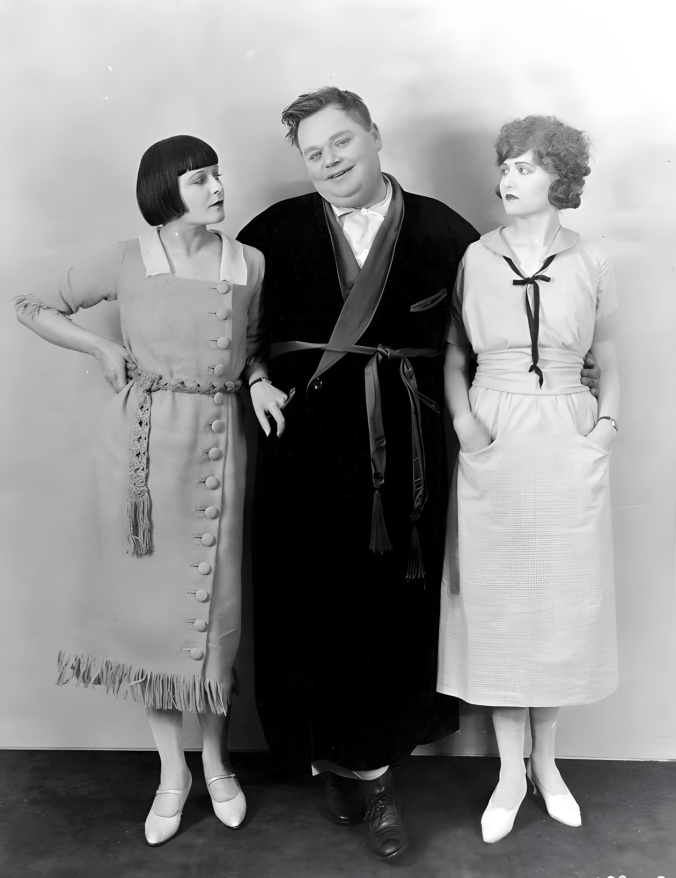
 Arbuckle prepares to spin a jazz record while Minta reads him a story?

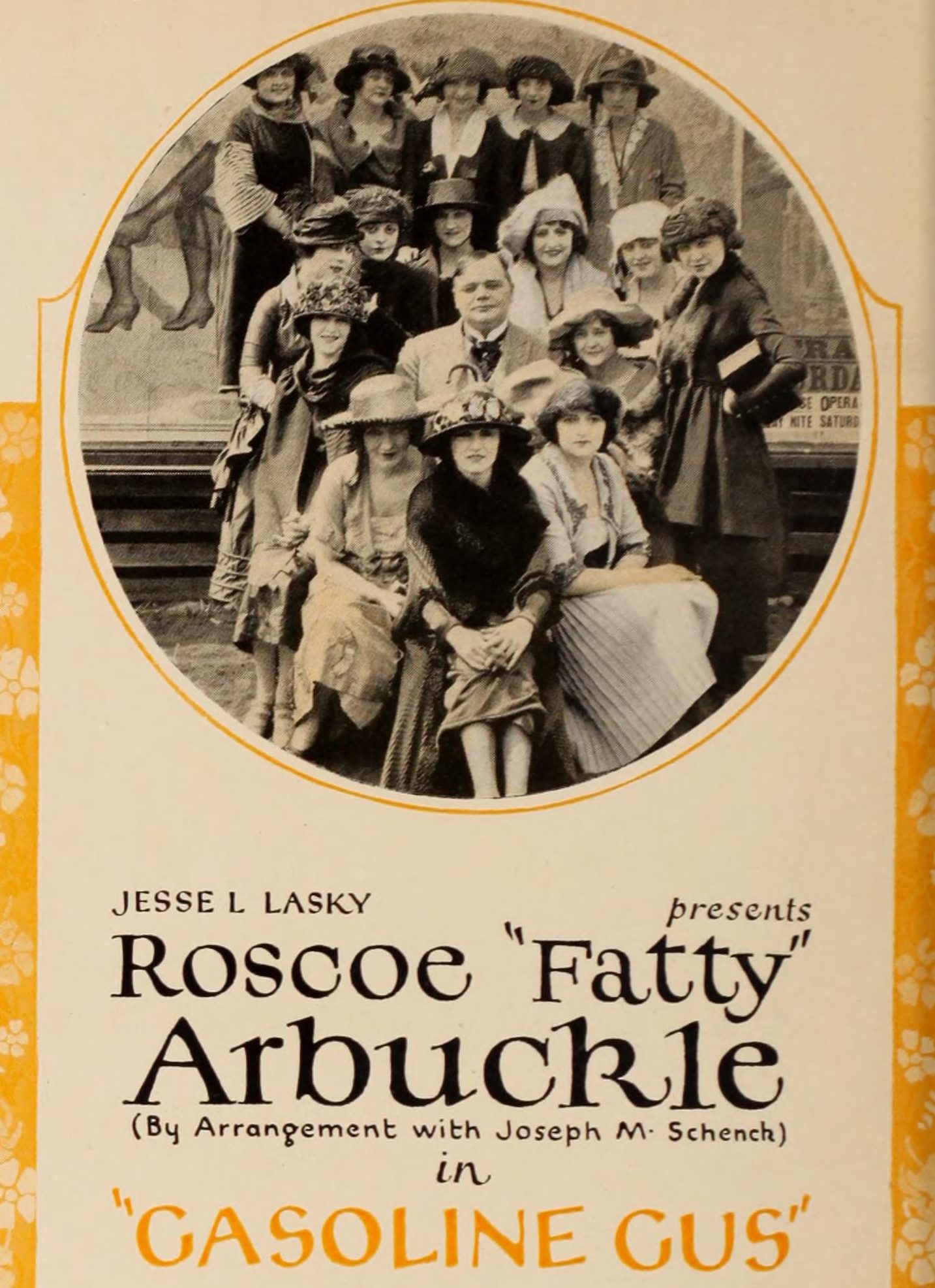


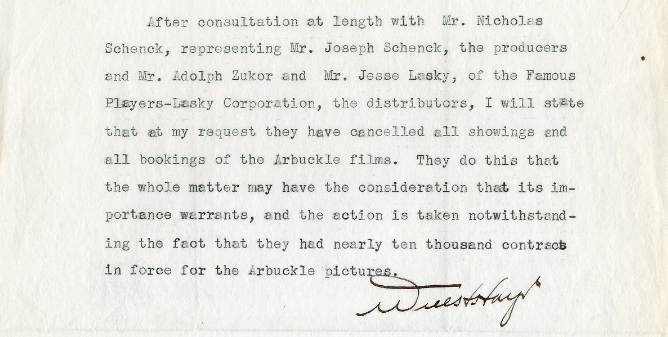

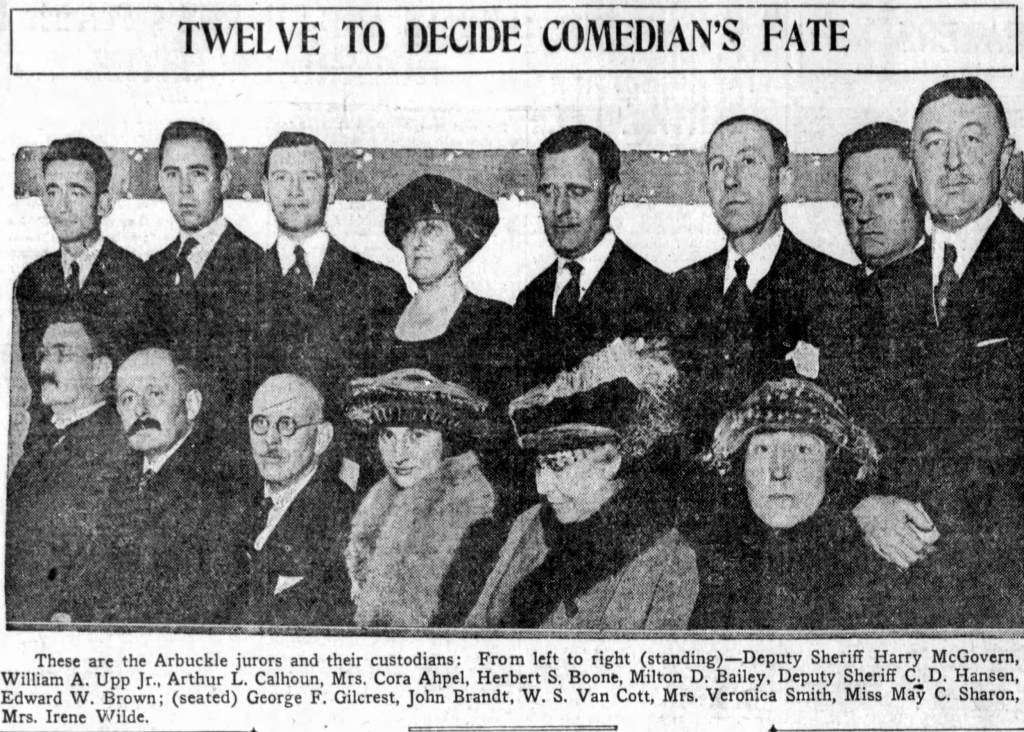


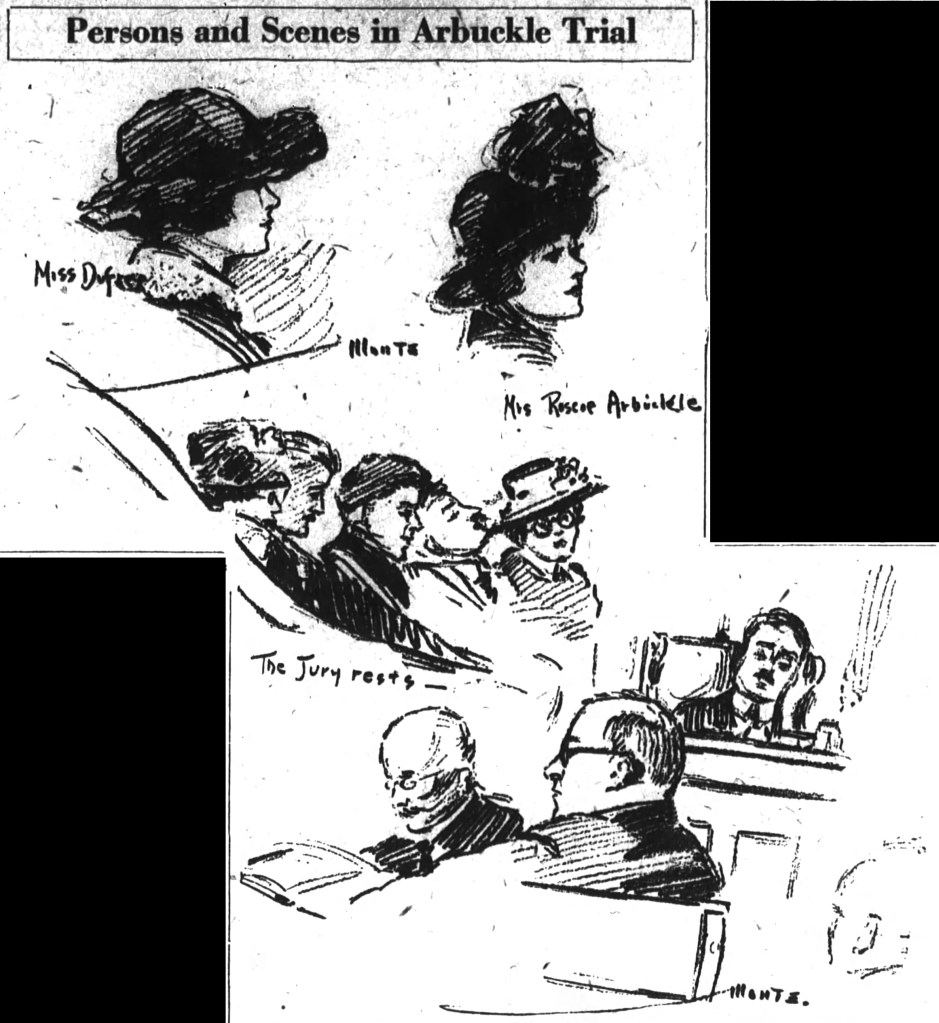


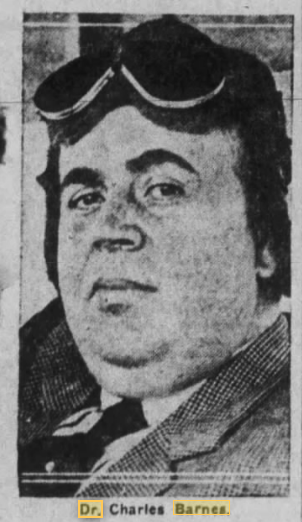
 Spite Work: The Trials of Virginia Rappe and Fatty Arbuckle