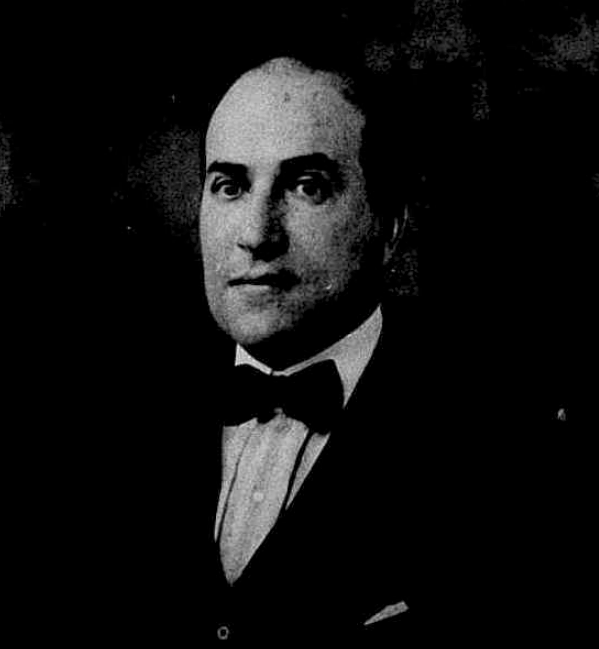
Slipped between the pages of the Arbuckle trial transcripts are some folded sheets of papers. One letter caught my eye. The letter writer seemed like a very serios fellow given his strong opinions on the Arbuckle case. Miley B. Wesson (1881–1981) was a pioneering urologist, especially new field of urologic roentgenology in the treatment of cancer during the 1920s and ’30s. He also received a Carnegie Hero award in 1932 for saving a woman’s life during an operation. She had grabbed hold of a copper wire attached to an X-ray machine with current of 30,000 volts. Dr. Wesson managed to knock it out of her hands. He not only electrocuted himself. He stood up and finished the operation. By then he was already an author of many articles on urology, including rupture of the human bladder. Indeed, Dr. Wesson would have made a perfect medical expert for the Arbuckle trials, namely for Nat Schmulowitz, the defense lawyer who specialized in examining and cross-examining the physicians who took the stand—and the recipient of Dr. Wesson’s letter of December 3, 1953.

Dr. Wesson was hardly ambiguous about which side he took. “Your understanding of the medical side of the case is most interesting,” he wrote. This is true. Even the prosecutor, Assistant District Attorney Milton T. U’Ren, whose sarcasm in the transcripts is hard not to miss, admitted that Schmulowitz had virtually become a medical expert himself in defending Arbuckle. And Wesson’s next sentence could almost have been directed at U’Ren himself, who, in kind, became something of an expert in dactylology, given how much faith he had in H. O. Heinrich in identifying the Arbuckle’s fingerprints superimposed over those of Virginia Rappe, suggesting that she had struggled with him as she tried to leave his bedroom in the St. Francis Hotel through hall door.
“The criminologist, Heinrich, I believe,” Wesson continued, “was a big faker. I have been interested in two cases in which he testified at great length and was 100% wrong in all ways.”
So much for the “American Sherlock.” I have written Heinrich’s biographer. Perhaps she can shed some light on this controversial man. My book, of course, sees him as a very serious man—and one would think that Dr. Wesson, too, is a very serious fellow.
What caused me to take pause—and, perhaps, Nat Schmulowitz over seventy years ago—was the paragraph that follows his remarks about Heinrich. I have read a lot of nineteenth-century medical literature on ruptures of the human bladder, especially in the rare instances when a woman suffered this injury that in the past always resulted in peritonitis and death. The cases that stood out were those caused by falling over a footboard or the edge of a washtub. Arbuckle’s bedroom in the St. Francis, room 1219, had such rocks and hard places, made of brass rails and cast iron, respectively.
What follows suggests that Wesson was intimate with the physicians who not only treated Rappe (Arthur Beardslee and Rumwell), but conducted her autopsy (Dr. William Ophuls). I can almost see them getting together, no longer beholden to a criminal trial and the rules of evidence. But Wesson gets two names wrong. Rappe was never diagnosed with the clap.
Mel Rummell [sic] gave me his notes of the case, and I discussed it with Drs. Ophuls and Beardsley [sic]. I have reported this case on two occasions without mentioning any names. The girl had a urethral discharge, and the doctors jumped at the conclusion that she had gonorrhea. She was catheterize when first seen, and her bladder contained 6 ounces of urine. For that reason the doctors and pathologists were amazed when they found that there was a hole in the bladder. It was a pinpoint opening in the dome of the bladder which had been sealed by a tag of omentum. Dr. Ophuls said that he caught the partially filled bladder in his hands and squeezed it as you would a rubber bulb, and the tag separated form the bladder, and there was a pinpoint stream of urine ejected.
The omentum refers to a fold of peritoneum, that tissue that protects the internal organs, which is attached to the bladder. Presumably, the pathologist, Dr. Ophuls, had already removed the bladder and a piece or “tag” of this tissue. Dr. Wesson makes it sound rather playful as to what happened next, as if Dr. Ophuls was squirting the dead woman’s pee from a defective water balloon.
Dr. Ophuls never described such conduct on the stand. The pinhole, in testimony, was a tear that allowed Rappe’s urine gush inside the peritoneum, where it caused the massive infection that killed her.
The urine, according to the physician who catheterized her, Dr. Beardslee, was described as “scant.”
Of course, Milton U’Ren—the irony of that name!—could have “encouraged” Drs. Ophuls and Beardslee to be cooperative state’s witnesses in ways we will never know. (Rumwell testified for the defense.) I do consider U’Ren’s highhandedness in my book. But both physicians agreed that a very real insult to Miss Rappe’s bladder had taken place. Dr. Wesson doesn’t get into that. He goes on to blame the tumblers the St. Francis Hotel provided in keeping with Prohibition and in lieu of glassware for cocktails—and Rappe herself.
The girl had drunk 3 pint glasses of equal parts of gin and orange juice without going to the bathroom. She was thought to have fallen on the side of the tub. A sudden jar will rupture a bladder. A slow steady pressure will not. This woman had lived an active sexual life for many years. For that reason it was stupid to talk about Fatty Arbuckle hurting her with intercourse. She came to San Francisco with her gigolo. He left a bill of about $150.00 for flowers, and she bought him a pair of cuff links which were not paid for. They were bad people.
Dr. Wesson, a urologist, should not be unfamiliar with the undulating motion of coitus and the effort of a man, Arbuckle, who suffered from episodes of ED. Had he been a veterinarian, he would know that many a cow and ewe suffer ruptured bladders due to the animal exertions of their partners. Something like this, purely a misadventure, between humans—albeit very rare—is what animated Mr. U’Ren and the other prosecutors.
The “bad people” he means here, in addition to Rappe, include Al Semnacher, a booking and talent agent, who could be seen as a pimp if he had steered one of his actresses into a situation where she needed to “close her eyes” and think of anything-but-Central-Casting. The flowers and cufflinks refer to another man, Rappe’s boyfriend, the comedy director Henry Lehrman. It is true that Lehrman didn’t pay for the many tiger lilies that served as a drape over her coffin and grave. As for the cufflinks that were gifted to Lehrman, Rappe paid for those with her own money.
I have to wonder if Dr. Wesson wanted to write about the Arbuckle case. He had traveled to Los Angeles to ask people about Arbuckle. There someone told him that Arbuckle had been “ruined by this trial and ended as barker in a midway in one of the nearby towns,” which is in keeping with other legends (such as the one Randall Jarrell invented for his famous poem “The Player Piano,” in which Jarrell imagines Arbuckle having once “drove the El Molino bus” up and down Pasadena.) Schmulowitz’s annotations are “Not true” in regard to the comedian’s sideshow career and “True” in regard to his being ruined. Yet how does this explain the 1923 Mercer belonging to Jay Leno that once belonged to Arbuckle?
I wonder if Schmulowitz considered Dr. Wesson just another crank, the kind who will never make that uphill climb of the learning curve that is the Arbuckle case. Inideed, a postscript suggests something personal about his animus toward Rappe. Wesson had lost a bitter alimony suit between him and the first Mrs. Wesson. Despite documenting his wife’s drinking, he still had to pay her.
P.S. Fatty Arbuckle and Bill Hart were probably two of the cleanest movie actors ever in Hollywood, and both ruined by mercenary lying women.
[1] Ms. Diller was a gracious contributor to my biography of the poet Weldon Kees, Vanished Act (University of Nebraska Press, 2003).


 Spite Work: The Trials of Virginia Rappe and Fatty Arbuckle