The following passage from our work-in-progress. Here we end our discussion of Virginia Rappe’s mother, Mabel Rapp and segue from her involvement with a wealthy young Chicago black sheep and check forger to her untimely death. Like other parts of the book, here we correct the mistakes made by other authors and disprove the myth that Mabel’s daughter, Virginia Rappe, appended the lowercase e to Rapp.
Such a revelation hasn’t been picked up yet by Wikipedia. We would rather someone else take the honor. FamilySearch.com is a valid source. You must search for “Rappi.”
The passage below also corrects her daughter’s middle name. It wasn’t “Caroline.” That can be corroborated by the 1910 Census.
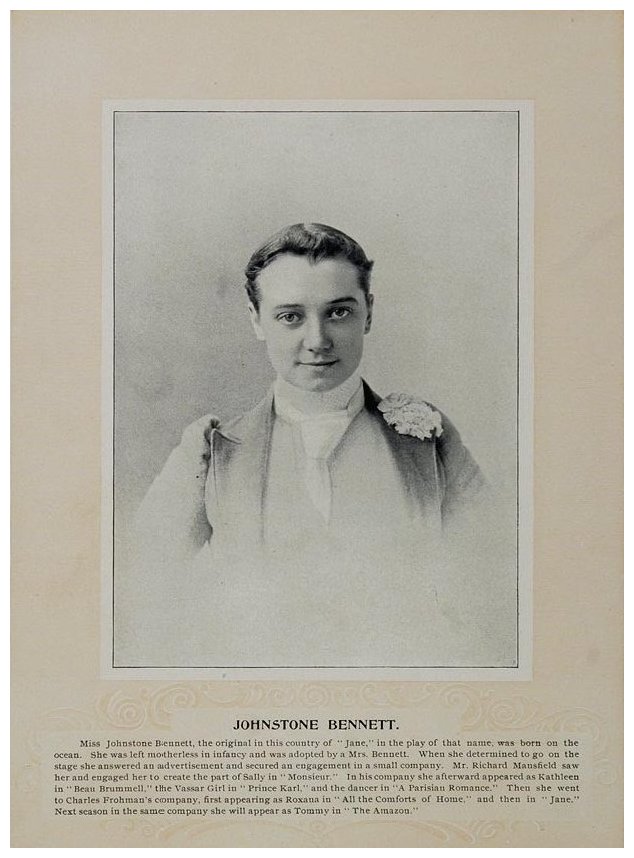
While this may seem pedantic, such facts have a deleterious effect on the factoids told by others. Ultimately, we present a victimology and a revisionary history of the Arbuckle trials. Incidentally, we are still conducting research for certain voids. This includes finding an image of Mabel Rapp (and even a very young Virginia Rappe} from the 1890s. We know that Mabel resembled the actress Johnstone Bennett, who also died of a similar form of tuberculosis in 1906.
(1894) The Marie Burroughs Art Portfolio of Stage Celebrities, Chicago: A. N. Marquis & Company
Frank Parker and members of his gang, some of whom belonged to other wealthy Chicago families, were eventually released from jail for lack of evidence. Augustus Parker was reunited with his errant son who took up residence at the Auditorium Hotel and regained his listing in the Chicago Blue Book of 1900. During the last two years of his life, the elder Parker saw his investment of money, love, and tolerance pay off as his son joined the family firm and began to work his way back to Chicago from the Omaha office. Frank Parker lived in a succession of boarding houses, married in 1914, and died at the age of 49 in January 1918.
Mabel Rapp’s life—and that of the daughter seemingly absent from her life—also changed with her separation from Parker. But where he had the means to reform himself back in Chicago, Mabel had far fewer. She relocated to New York City to start a new life with her daughter in tow. There was likely little choice given the notoriety she had attracted in Chicago and the possibility of fame in the other city’s vaudeville circuit. The syndicated columnist Marjorie Wilson, during the weeks after Virginia Rappe’s death, interviewed individuals who knew of Mabel in New York in the early 1900s. They claimed that Mabel reinvented herself in the dance halls and theaters around Times Square as a performer who
dazzled admirers with her vivacity, her coquetry, her physical perfection, as she had done in Chicago. She sparkled in the chorus of Lillian Russell’s comic opera company. [. . .] She had little time for mothering the baby Virginia. The two lived at boarding houses and hotels and some of the time in a little flat on the outskirts of Greenwich Village. The baby called her “Mabel.”
Although Wilson refers to Virginia as “a baby,” she was old enough to attend grade school. And her “sister” Mabel was surely not the only one raising or supporting her “kid sister.” The woman who served as grandmother or mother to Virginia, depending on the time, place, and context, was certainly on hand.
Mabel Rapp had also added the extra syllable to her name with an acute French accent. But her reinvention as Mabel Rappé proved short lived and likely worse than maudlin as Wilson continues.
Probably it was to forget the mistake she had made, the place she had lost socially, that Mabel Rapp became a queen of night life in the cafes, drowning bitterness, sorrow, disillusion in waves of sensation, craving the excitement of gay music, the admiration and caresses of men, the tinkling of wine glasses, dulling the pangs of the misery of the past in the superficial pleasure of the moment.
Life in New York was good for a time. Mabel, her “mother,” and her “little sister” lived at 247 W. 50th and, later at 359, just off 8th Avenue in the heart of Hell’s Kitchen not far from the “Tenderloin District,” a neighborhood known for its gambling dens, burlesque halls, and poolrooms—and “creep joints,” the lowest kind of brothel, where patrons were robbed. Mabel, however, more likely provided for her family as she always had seeking out male admirers as a chorus girl in various Broadway productions according to Variety, whose informant, in 1921, also recalled an anecdote about Virginia Rappe. At the time, the automobile was “just coming into vogue” and Mabel and her kid “sister” were often seen being chauffeured to and from their apartment building, chased by street urchins teasing Virginia and calling her “Gasoline Zealine.”
Mabel had made a new life for herself and her family in New York City while her health gradually declined. She coughed. She spit up blood. On December 21, 1904, her condition had worsened to such an extent that she was taken to old St. Luke’s Hospital, near the cathedral of St. John the Divine on Amsterdam Avenue. She lingered over the Christmas holiday and died on January 7, 1905, in the early hours of the morning, attended by a Dr. Capito.
Mabel’s Rapp’s death certificate reveals she died of chronic pulmonary tuberculous and tuberculous adenitis, that is, scrofula. Once called the “king’s evil,” for it was once believed that if the English monarch touched the sufferer’s throat, the disease would cease to spread in its grotesque fashion. Thus, Mabel’s final moments would hardly resemble anything like the romantic notions of consumption found in, say, a popular novel of her day, Camille. Mabel’s fine neck and pretty face were likely disfigured by swellings and ulcers. She would have been unable to swallow.
Her death certificate is the only document that recorded her embellished name at the time. The informant also spelled the deceased woman’s father as Henry Rappé. The informant also knew the maiden name of the first, the real Virginia Rapp, Mabel’s mother. Of course, the woman who succeeded her, who cared for Mabel’s daughter and maintained the charades of mother, daughter, sister could have provided such details that make this document one of the few that seems honest. So, too, could the thirteen-year-old Virginia Z. Rappé.
There was a funeral in Chicago but no obituary in the newspapers. There were likely a few friends present but no family beyond the two who accompanied Mabel’s body back home, the woman who called herself Virginia Rapp and the adolescent Virginia Rappe. As for Mabel’s brother, Earle Rapp had grown up into a respectable young stock broker in the Chicago Exchange with an office in the Rookery building. He had a wife and a baby daughter. His child had been born in wedlock—and a man of his position relied on the trust placed in him. He could hardly risk being associated with his sister’s notoriety—or risk that of his niece seventeen years later.
There are a plethora of revelations that will be uncovered in the work-in-progress, but this one we felt should be shared before we see her name rendered incorrectly again.
We begin with Andy Edmonds’ Frame Up! The Untold Story of Roscoe Arbuckle (1991). Edmonds cites an interview given by one Caroline Rapp, identified as Rappe’s grandmother, in the Chicago Examiner. But upon investigation, no such interview turns up. More likely, Edmonds is referring to an interview given by Chicago midwife, abortionist, and paid witness for Roscoe Arbuckle during his manslaughter trials, namely Josephine Rafferty Roth.
Mrs. Rafferty Roth began peddling the story of Rappe’s origins—almost all of it a fable—just days after her death on September 9, 1921. Edmonds probably digested the interview during her research and later misremembered the source in her finished book —spinning one fable into another.
Virginia (the elder) and Zelliene V. Rappe as listed in the 1910 U.S. Census (Ancestry.com)
The first name of her Rappe’s grandmother —and her surrogate grandmother too— was Virginia. So, in keeping with naming conventions, Virginia was the middle name given to the younger Rappe, in honor of the grandmother and for being the first granddaughter. But what was the full name?
Greg Merritt, in Room 1219 (2013), set the precedent with his revelation that “Virginia Caroline Rapp” was on her birth certificate. However no birth certificate or other document with that name from the 1890s has surfaced. That said, various writers have picked this name up and used it. It is also found in Rappe’s Wikipedia entry.
Rappe’s real name, as it turns out, was more exotic, and worthy of being a stage name in its own right. Her mother, Mabel Rapp, had her daughter christened as Zelliene Virginia, possibly adapted from and pronounced like Celine. The name is documented, too, in Rappe’s entry in the 1910 census and further corroborated with the variant “Zealine” by Rappé in September 1921. (Mabel also touched up her name as well, going by Mabel Rappé for her billing as a Broadway chorus girl.)
Variety, and a handful of newspapers that published the same story, relied on an unnamed informant who knew that Rappe lived with her grandmother and mother on W. 50th Street in Hell’s Kitchen, just off 8th Avenue, between 1900 and 1905. This person also knew that Rappe was nicknamed “Gasoline Zealine” by the neighborhood children—for Mabel Rapp had access to an automobile and her daughter—whom she called her kid sister—had the rare privilege of getting to ride in these new machines during the first years of the new century.
The unusual (and probably often misspelled) name, however, likely didn’t sit well with Rappe. She discarded it, first in favor of the stage names, Zola and Zaza, which she used during her brief sojourn into the theater and vaudeville, and later in favor of the name we know her by today which she adopted when she became a fashion model in 1912.
. . . is no less a work-in-progress for Spite Work. Photographs of the various personages in the case of Virginia Rappe and Roscoe Arbuckle are not easily had and require vigilance to locate, especially now as we prepare a manuscript for potential publishers. That said, we still hope to find the impossible, such as any of the illustration art for which Rappe modeled.
An even rarer image we have yet to obtain is that of Rappe’s mother, Mabel Rapp.
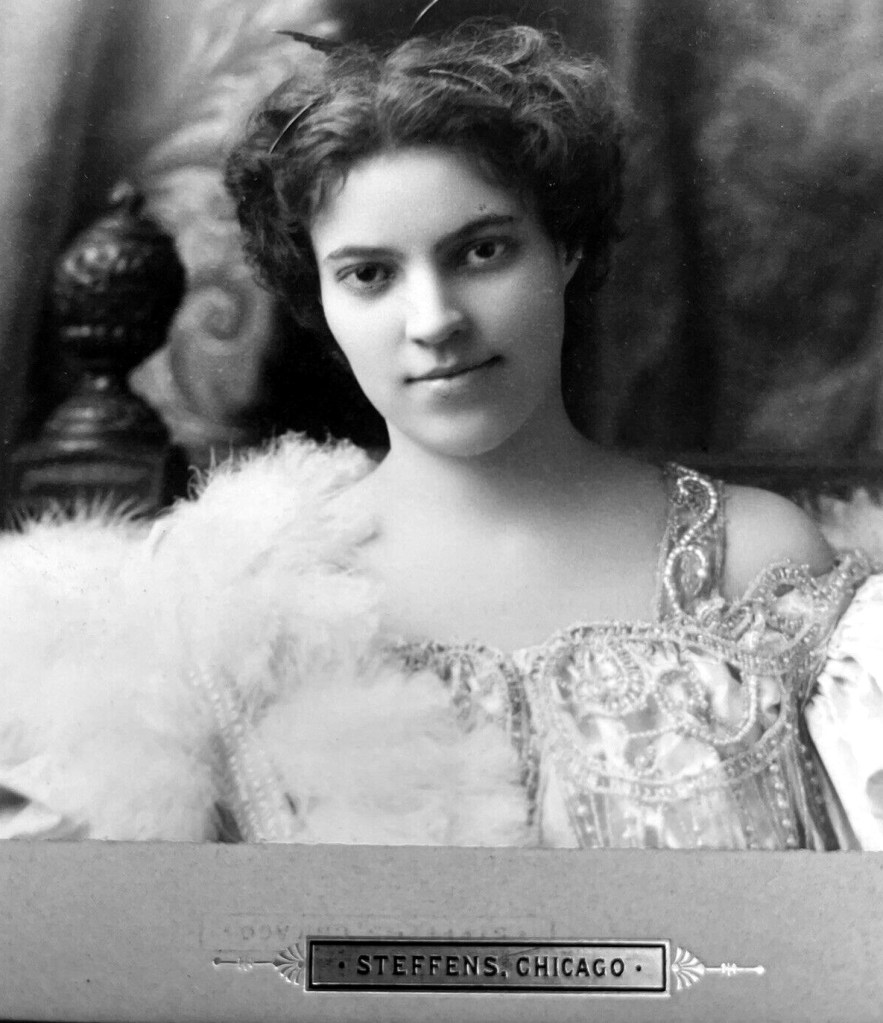
We know that she posed for the Chicago photographer Matthew “Commodore” Steffens during the 1890s, around the time of the Columbian Exposition of 1893. He used cabinet cards with her photo, which he displayed in his studio window, as samples of his talent—and her beauty.
A few possibilities have come to light, including images from the same period taken at other studios. But the detective work has to be conclusive. We only share these because Mabel (and her daughter) could have some resemblance or fit the context.
Mabel Rapp? We only know that she did similar poses for the same studio.
An unidentified “mother and child” in a cabinet card looking at other cabinet cards.
Also rare are photos of the minor and peripheral figures in the Arbuckle case. Minnie Neighbors, a witness for the defense, is an example. Mrs. Neighbors testified that she cared for Rappe after finding her doubled up in pain on a bathroom floor at Wheeler Hot Springs just weeks before the events of Labor Day 1921. Eventually, Neighbors was charged with perjury. We provide a fairly detailed
account of her sideshow in our book.
Minnie Neighbors. This news photo wasn’t used. Here she is too young and her matronly appearance, intended for a jury, just isn’t “there.” Now in Authors Collection.
Although the San Francisco District Attorney wanted Arbuckle charged with murder for the death of Virginia Rappe, he had to be satisfied with manslaughter. The judge who decided on the lesser charge was San Francisco Police Judge Sylvain Lazarus.
The photograph below is from the mid-1920s, when Judge Lazarus was seen as a real “character” for lightening the mood in his courtroom. He certainly did so in the preliminary investigation into Rappe’s death, which took place in late September 1921. The transcripts of this proceeding are the
only ones to survive. In January 1922, during the second Arbuckle trial, Lazarus had a phonograph installed in his court room. Perhaps some of the spectators could hear from afar “Hail! Hail! The Gang’s All Here” and other recordings that complemented the judge’s docket.
Sylvain Lazarus, a judge and master-of-ceremonies in one person.
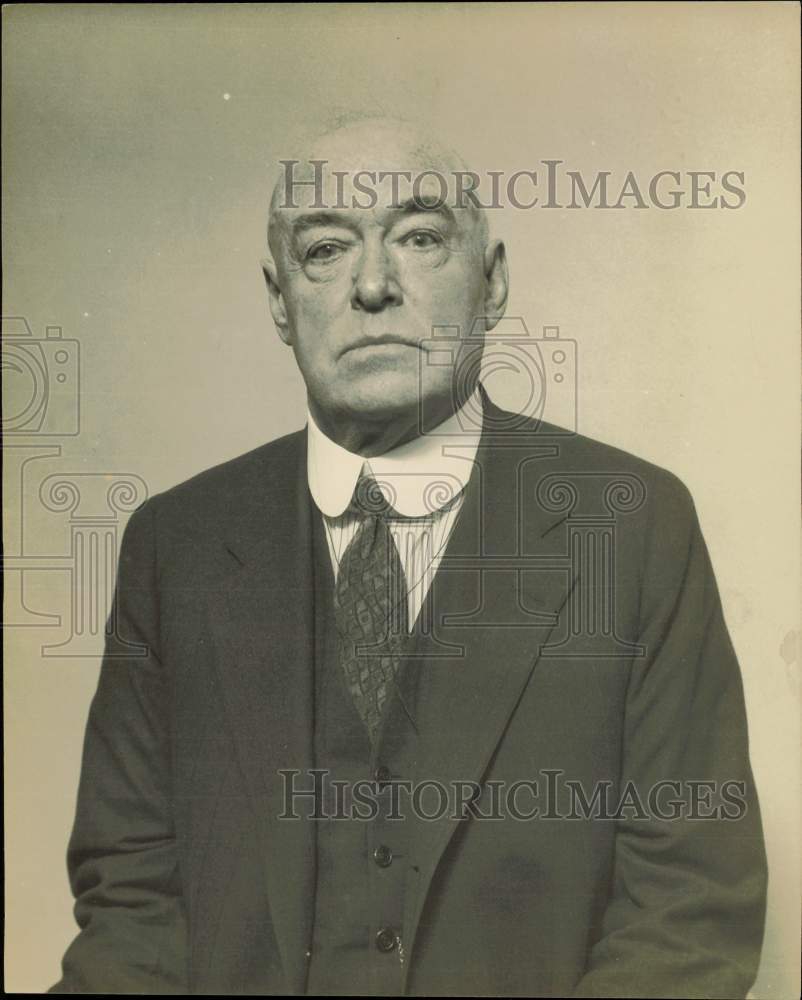
Our most recent acquisition is the image below, Gavin McNab, Arbuckle’s lead counsel during the three trials. It betrays his height, dignity, and rather menacing presence that he used to his advantage when facing the comedian’s prosecutors, who were both a head shorter if not more.
The glowering Gavin McNab, who pulled Fatty out of the fire.
If any of our readers have photographs to share, we will be both receptive and grateful.
. . . is no less a work-in-progress for Spite Work. Procuring rare contemporary photographs of the various personages in the case of Virginia Rappe and Roscoe Arbuckle requires constant vigilance, especially now as we prepare a manuscript for potential publishers. That said, we still hope to find the impossible, such as illustration art for which Rappe modeled.
We also search for rarer images of Rappe’s mother, Mabel Rapp.
We know that she posed for the Chicago photographer Matthew “Commodore” Steffens during the 1890s, especially around the time of the Columbian Exposition of 1893. He used her cabinet cards, which he displayed in his studio window, as samples of his talent—and her beauty.
A few possibilities have come to light, including images from the same period taken at other studios. But the detective work has to be conclusive. We only share these because Mabel (and her daughter) could have some resemblance or fit the context.
Mabel Rapp? We only know that she, too, will be an anonymous Chicago beauty in a similar pose and found with a Steffens stamp.Rappesque? An unidentified “mother and child” looking at other cabinet cards.
More recent acquisitions are rare too, especially for minor and peripheral figures in the Arbuckle case. But news photos always have the identity and caption supplied on the reverse. The only doubt is whether to use them or another.
Minnie Neighbors, a witness for the defense. She claimed to have discovered Rappe in a way curiously not unlike Arbuckle did in his trial testimony. Mrs. Neighbors testified that she cared for Rappe after finding her doubled up in pain on a bathroom floor at Wheeler Hot Springs just weeks before the events of Labor Day 1921. Eventually, Neighbors found herself arrested for perjury. We provide a fairly detailed account of her sideshow in our book.
Minnie Neighbors. This news photo wasn’t used. Here she is too young and her matronly appearance, intended for a jury, just isn’t “there.”
Although the San Francisco District Attorney wanted Arbuckle charged with murder for the death of Virginia Rappe, he had to be satisfied with manslaughter. The judge who decided on the lesser charge was San Francisco Police Judge Sylvain Lazarus.
The photograph below is from the mid-1920s, when Judge Lazarus was seen as a real “character” for his way of injecting comedy into his courtroom. He certainly did so in the preliminary investigation into Rappe’s death, which took place in late September 1921. The transcripts of this proceeding are the only ones to survive. Although Lazarus had yet to install a photograph in his court room, he did so in January 1922, while the second Arbuckle trial was in session. Perhaps some of its spectators could hear from afar “Hail! Hail! The Gang’s All Here” and other recordings that complemented the judge’s docket.
Sylvain Lazarus, a judge and master-of-ceremonies in one person.
This is a relatively new image of Arbuckle’s lead counsel Gavin McNab during the three trials. This one betrays his height, dignity, and rather menacing demeanor when facing the comedian’s prosecutors, who were both a head shorter if not more.
The glowering Gavin McNab, who pulled Fatty out of the fire.
If any of our readers have photographs to share, we are both receptive and grateful.
We have left as much doubt in the wake of writing Spite Work as there was in the beginning. This is true of Virginia Rappe’s roots. We hoped to discover evidence in her family history of how her life had been influenced by her forbears–forcing us to consider abusive relationships, the death of a parent, and, even possibly, incest given the mother–daughter–sister paradox described below.
In the soon-to-be-released monograph-length version of our research, speculations of this sort have largely been avoided. But we did have to dive into the wreck, as it were, of her family to make some sense of who she was. So, relying on databases that became available in the 2010s, the same ones that Greg Merritt used to posit the date of Rappe’s birth of 7 July 1891 (i.e., Cook County records made available by FamilySearch.com, a genealogical service provided by the Church of Jesus Christ of Latter-day Saints.), we agree with him, that Rappe was older than the age that is usually associated with her.[1] She was 30, not 26, when she left Los Angeles for San Francisco and the fated Labor Day party in September 1921.
The record of her birth indicates her mother was named Mabel Rapp, age 15. The document also indicates that Virginia’s birthplace was a private hospital operated by a professional midwife, one who advertised her services in Chicago’s newspapers and seems not to have gotten in trouble for performing abortions. Though midwives of that era were known to assist girls in trouble.
From there we began to look at any extant record and newspaper sources related to Mabel’s world and her family, before she evolved into a South Side “tough girl” in Gay Nineties Chicago.
The first piece of the puzzle was an application for a “permit to wed,” i.e., a marriage license, issued on December 26, 1891.[2] The husband, Oluf C. Madison, 32, and bride, Mabel Rapp, 18. Was this a gentleman doing the right thing and agreeing to make an “honest woman” of Mabel? Was this the elusive father of Virginia Rappe? Other “Mabel Rapps” existed at the time—but none who quite pulled us away from thinking this was an event in her life.
In any event, Madison or, more likely, Madsen, wasn’t the person Virginia Rappe considered her father. She either believed or was told to say she had been born in 1894, the result of a love affair that took place when her mother met a man at the 1893 Columbian World Fair in Chicago. She believed she was born the following year and might have celebrated her birthday on a day other than July 7. During the Arbuckle trials, the father was variously described as some wealthy personage, from an English lord to a person who was somewhere listed in the Chicago Blue Book. Such stories would have lessened the onus of being illegitimate and provided cover for any unconventional family dynamics, even possibly incest which was being posited by sociologist Richard Dugdale and other Social Darwinists as a cause of low morals and weak intellect. But Virginia Rappe hardly belonged to the Jukes Family. Nevertheless, Mabel was very unconventional. She passed herself off as an older sibling to Virginia, which freed her to enjoy a reputation as the “Queen of the Night” and the “Queen of Chinatown” in the demimonde of Chicago’s South Side.
As often happened when records were spotty, family lore confused the truth. As described in court by the neighbors who served as foster mothers to Virginia, the woman who was regarded as her grandmother/mother/aunt at various times wasn’t actually related to her. As for the identity of her birth mother, these neighbors testified that Rappe only knew of Mabel as her older sister.
This white lie was a common ruse to cover for illegitimate children, especially resulting from rape. Parents of the rape victim would simply claim the grandchild as their own. A daughter borne of incestuous rape could, in effect, be the sister of her mother if they shared the same father, the niece if the father were a brother. The former scenario may not apply to Virginia Rappe. It is a thought experiment at this writing. But this situation was not that unusual in the 1890s.
We could have stopped there and left Mabel Rapp and her daughter. We could have been satisfied with a family tree that began and ended with them.[3] But not all the limbs had disappeared from the family tree and our intuition told us that something unusual had caused the disintegration of the family.
There is an entry for a Mabel Rapp in Chicago in the 1880 census.[4] There are two entries for Virginia Rappe in the U.S. Census: 1910 and 1920. The 1910 entry was likely filled out by the person indicated as the head of household, the putative grandmother. As for her, she entered herself as a forty-nine-year-old widow named Virginia Rappe![5] She entered who we know as Virginia Rappe as a daughter but using the name Zelliene V. Rappe, aged 16.[6]
So out of the blue there were now two Virginia Rappes. And the younger one going by a rather unique appellation. We will discuss that in another note. For the present, however, the V surely stood for Virginia. As for the extra e and syllable added to the family name, that had been done by Mabel Rappe after she relocated to New York City. She had become known in Chicago for passing bad checks and being an accomplice of a longtime boyfriend, Frank A. Parker, the leader of a forgery ring and the black sheep son of a wealthy Chicago stockbroker. Her death certificate listed her as Mabel Rappé. In keeping with this decision, her daughter and “mother” assumed the name as well and kept it after her death in 1905.
The 1910 census form included a question for female correspondents regarding their number of live births. Virginia Rappe the Elder listed three. She also indicated that she was born in Kentucky and that her father and mother came from West Virginia and Tennessee, respectively. Zelliene, who is listed as sixteen years old, was born in Illinois in, approximately 1894. Her mother’s birthplace was listed as Kentucky and her father New York.
The only census entry that was authored by Virginia Rappe the Younger was the next one, the 1920 census.[7] This entry lists her as a boarder in the Los Angeles home of the comedy director Henry Lehrman. Her vocation is motion picture actress and, like many women in that profession, she has subtracted from her real age for Uncle Sam. She lists herself as 22, making for an approximate birth year of 1898. Her mother’s birthplace becomes Virginia rather than Kentucky. But her father’s birthplace remains New York.
Now we turn to the death certificates of Virginia’s mother and grandmother, which make for puzzle pieces that don’t fit well.
Mabel Rappé, as she styled herself in her final years, died in a New York City hospital on January 7 1905. Her death certificate is handwritten and one can easily see an accented é but it was transcribed later as a lowercase i. For that reason, New York City health department records have her listed as Rappi. Thus, Mabel Rapp’s father is recorded as Henry Rappi of New York, New York, and her mother as Virginia McPheadridge of St. Louis, Missouri. (Mabel Rapp’s age is indicated as 23 and her birth year as 1882. That made her a closer “sister” to her daughter, of course, but also meant a nine-year-old mother or bride in 1891!) The 1911 death certificate for Virginia Rappe the Elder, however, is at odds with this information.[8] This document was informed by the Younger, who listed the birth year of her putative grandmother to be 1851 and her age to be 60—hardly close to the 45 years of age that the deceased gave as her age in 1910 census. Virginia the Younger also indicated that the deceased was born in Virginia. The death certificate lists Virginia the Elder’s father as John Gallagher. That may lead to other truths. But for now, we will focus on a limb or two of the family tree of Virginia Rappe.
Whoever was the informant for Mabel Rapp’s death certificate pointed us in the right direction. One Henry H. Rapp and a Miss Virginia McPheetridge (sic) were married on 26 May 1864 in St. Louis, Missouri.[9] The bride’s name was spelled out phonetically by the minister who conducted a ceremony that required the payment of a five-cent federal stamp tax levied to prosecute the ongoing Civil War. Furthermore, 1850 and 1860 census data revealed that the Virginia McPhetridge—the preferred spelling of the family—came from Virginia and that her grandfather was a veteran of the Revolutionary War.[10]
Entry for the marriage of Henry Rapp and Virginia McPhetridge (FamilySearch)
The Rapps seemed to have been living a normal life in Chicago, where Henry Rapp had been a railroad freight agent listed in Chicago business directories at least since 1862—a vocation that, incidentally, kept him from being drafted. When we scoured the 1870 census for this couple, only Henry Rapp appears in the population schedule for that year, with an approximate age of 28, and born in Indiana—a curious mistake since other records consistently indicate New York.[11]
The 1870 census included little else about him. He owned $10,000 in real estate. He appeared to be a bachelor living in a boarding house in the 2nd Ward, within walking distance of the railroad yards. Despite his real estate holdings, he remained a renter and the business directories up until 1880 continue to list him as a hotel and boarding house resident, moving from such establishments as the Howard House, the Bishop Court Hotel, and the Burdick House. He also moved from one freight office to another (the Rock Island, the Diamond Line, the B&O), where he was known as “Hank.”
What happened to his wife? Did they have children?
The answer begins in the 1880 census, which lists Mabel and an Earle Rapp as the residents of a Chicago boarding house on Michigan Avenue. At first glance, they seem to be orphaned. The nine-year-old Mabel is listed as the “head” of household, perhaps only because she answered the door when the enumerator arrived. When asked where she was born, however, for herself and her five-year-old brother, she answered “Maine.”
There were also other residents of the boarding house, which was located at 256 Michigan. Flanked by townhouses and hotels, the large, private house had been subdivided. A woman named Helen Rapp was listed as a resident of the same building, right after the landlady. She was 27, married, and a boarder. She was born in New York.[12]
Entries for Helen, Mabel, and Earle Rapp in the 1880 census (FamilySearch)
Helen Rapp proved to be a dead end as far as census data goes. But that isn’t the case for Earle Griffith Rapp.[13] The younger brother’s life was well-documented and his records began in 1891, when he was listed in a Chicago business directory as a bookbinder. And the most valuable record concerning him was his 1898 marriage license.[14] There we find that his parents and those of Mabel Rapp correlate. His father is identified as Henry H. Rapp. His mother is identified as Virginia McPheatridy. Although the latter’s surname is garbled or phonetically spelled, it is the same woman who married Henry Rapp in 1864.
His age in the 1900 census indicates he was born in Kentucky in 1871. His father’s birthplace is New York, his mother’s Kentucky.[15] These two data points for Earle Rapp are repeated in the 1910 census.[16] His birthplace, interestingly, was always given as Kentucky. His death certificate, however, throws a little dust in our eyes.[17] The informants, Earle Rapp’s adult daughters—Virginia Rappe’s cousins—confirm his earlier official information except his mother’s maiden name which is given as Virginia Griffith, which explains his middle name.
A Chicago directory entry for Henry Rapp, mid-1870s (Ancestry.com)
Now let’s return to the pater familias, Henry Rapp. Despite the lack of census data after 1870, evidence of his residence in Chicago can be found in brief notices in Chicago newspapers of a lawsuit, a promotion, and his long railroad career. There is no evidence that he himself lived in Kentucky, but rather lived a prosperous middle-class life in Chicago, where he died on 7 January 1901, at the age of 63.[18] His death certificate indicates he was born in New York in 1838 and that he was widowed. This and an obituary in the Chicago Tribune show that was buried in Chicago’s Rosehill Cemetery in what became a family plot, for Earle Rapp is buried there as well. (The obituary also provided his middle name: Hoisington, a surname that surely belonged to his mother and one fairly common in Vermont and well into western New York in nineteenth-century census data.[19])
So, how and when did Henry Rapp become a widower? For now, like the identity of his granddaughter’s biological father, that detail remains unsolved. We could find nothing to indicate what happened to Virginia McPhetridge Rapp. Perhaps she died before 1880. Perhaps she abandoned her family. As for the mother and grandmother in the 1911 death certificate and the 1910 census, her data reveals that her husband preceded her in death—and that she is in Rosehill, too. But she wasn’t buried near Henry and Earle Rapp. Nor is Mabel Rapp interred in that family’s plot. Indeed, Rosehill’s administration doesn’t have any plot numbers for the family Rappe.
Then there is Helen Rapp. A sister-in-law to Henry Rapp? Helen and Virginia Rappe the Elder are close in age if the age of 27 in 1880 is correct. That would have made her 57 in 1910. If they are two separate people, that could mean that Helen Rapp is the first of two or more foster mothers for Mabel, Earle, and, eventually, Virginia. The three children in the 1910 census. Presumably, only two should have the same father.
Earle Rapp lived in Chicago. He was a respectable stock broker in 1899 when his sister’s name appeared in newspapers across the country as the moll in a ring of check forgers. That must have been embarrassing—but it wouldn’t compare to the shock he must have felt when he opened the Chicago Tribune in September 1921 and saw his niece’s death had become the center of a national scandal. He apparently watched her notoriety and that of “Fatty” Arbuckle rise to a fever pitch and said nothing to draw attention to himself.
[1] “Illinois, Cook County Birth Registers, 1871-1915,” database, FamilySearch (https://familysearch.org/ark:/61903/1:1:N7WC-FZB: 10 March 2018), Rapp, 07 Jul 1891; citing p.254 no.12677, Chicago, Cook, Illinois, Cook County Courthouse, Chicago; FHL microfilm 1,287,737.
[2] “Marriage Licenses,” Chicago Tribune, 27 December 1891, 8.
[3] Unfortunately, there are no records for the 1890 census. The vast majority of the population schedules were destroyed in a fire in the basement of the U.S. Department of Commerce building in Washington, D.C. in 1921.
[4] “United States Census, 1880,” database with images, FamilySearch (https://www.familysearch.org/ark:/61903/1:1:MXNX-BJ5: 13 January 2022), Mabel Rapp, Chicago, Cook, Illinois, United States; citing enumeration district, sheet, NARA microfilm publication T9 (Washington, D.C.: National Archives and Records Administration, n.d.), FHL microfilm.
[5] “United States Census, 1910,” database with images, FamilySearch (https://www.familysearch.org/ark:/61903/1:1:MKZ5-PZV: accessed 13 June 2023), Virginia Rappe, Chicago, Cook, Illinois, United States; citing enumeration district (ED) ED 1199, sheet, family, NARA microfilm publication T624 (Washington D.C.: National Archives and Records Administration, 1982), roll ; FHL microfilm.
[6] “United States Census, 1910,” database with images, FamilySearch (https://www.familysearch.org/ark:/61903/1:1:MKZ5-PZK: accessed 13 June 2023), Zelliene V Rappe in household of Virginia Rappe, Chicago, Cook, Illinois, United States; citing enumeration district (ED) ED 1199, sheet, family, NARA microfilm publication T624 (Washington D.C.: National Archives and Records Administration, 1982), roll ; FHL microfilm.
[8] “Illinois, Cook County Deaths, 1871-1998,” database, FamilySearch (https://familysearch.org/ark:/61903/1:1:Q2M7-FWC2: 8 March 2018), Virginia Rappe, 22 Nov 1911; citing Chicago, Cook, Illinois, United States, source reference 28968, record number, Cook County Courthouse, Chicago; FHL microfilm 1,287,615.
[9] “Missouri, County Marriage, Naturalization, and Court Records, 1800-1991,” database with images, FamilySearch (https://www.familysearch.org/ark:/61903/1:1:6D5W-3NKY: 21 May 2022), Henry H Rapp, 26 May 1864; citing Marriage, St. Louis, Missouri, United States, Missouri State Archives, Jefferson City; FHL microfilm 004003319.
[10] “United States Census, 1850,” database with images, FamilySearch (https://www.familysearch.org/ark:/61903/1:1:MDZP-BST: 22 December 2020), Virginia McPhetridge in household of Cammel McPhetridge, St. Louis, St. Louis, Missouri, United States; citing family, NARA microfilm publication (Washington, D.C.: National Archives and Records Administration, n.d.).
[12] “United States Census, 1880,” database with images, FamilySearch (https://www.familysearch.org/ark:/61903/1:1:MXNX-BJJ: 13 January 2022), Helen Rapp in household of Francis Wood, Chicago, Cook, Illinois, United States; citing enumeration district, sheet, NARA microfilm publication T9 (Washington, D.C.: National Archives and Records Administration, n.d.), FHL microfilm.
[13] “United States Census, 1880,” database with images, FamilySearch (https://www.familysearch.org/ark:/61903/1:1:MXNX-BJR: 13 January 2022), Earle Rapp in household of Mabel Rapp, Chicago, Cook, Illinois, United States; citing enumeration district, sheet, NARA microfilm publication T9 (Washington, D.C.: National Archives and Records Administration, n.d.), FHL microfilm.
[16] “United States Census, 1910,” database with images, FamilySearch (https://www.familysearch.org/ark:/61903/1:1:MK83-3YD: accessed 15 June 2023), Earl G Rapp, Chicago, Cook, Illinois, United States; citing enumeration district (ED) ED 1257, sheet, family, NARA microfilm publication T624 (Washington D.C.: National Archives and Records Administration, 1982), roll ; FHL microfilm.
[18] “Illinois, Cook County Deaths, 1871-1998,” database, FamilySearch (https://familysearch.org/ark:/61903/1:1:Q2MQ-46GR: 8 March 2018), Henry H Rapp, 07 Jan 1901; citing Chicago, Cook, Illinois, United States, source reference 16278, record number, Cook County Courthouse, Chicago; FHL microfilm 1,239,664.
[19] “RAPP—Henry [obituary],” Chicago Tribune, 10 January 1901, 5.



 Minnie Neighbors. This news photo wasn’t used. Here she is too young and her matronly appearance, intended for a jury, just isn’t “there.” Now in Authors Collection.
Although the San Francisco District Attorney wanted Arbuckle charged with murder for the death of Virginia Rappe, he had to be satisfied with manslaughter. The judge who decided on the lesser charge was San Francisco Police Judge Sylvain Lazarus.
The photograph below is from the mid-1920s, when Judge Lazarus was seen as a real “character” for lightening the mood in his courtroom. He certainly did so in the preliminary investigation into Rappe’s death, which took place in late September 1921. The transcripts of this proceeding are the
only ones to survive. In January 1922, during the second Arbuckle trial, Lazarus had a phonograph installed in his court room. Perhaps some of the spectators could hear from afar “
Minnie Neighbors. This news photo wasn’t used. Here she is too young and her matronly appearance, intended for a jury, just isn’t “there.” Now in Authors Collection.
Although the San Francisco District Attorney wanted Arbuckle charged with murder for the death of Virginia Rappe, he had to be satisfied with manslaughter. The judge who decided on the lesser charge was San Francisco Police Judge Sylvain Lazarus.
The photograph below is from the mid-1920s, when Judge Lazarus was seen as a real “character” for lightening the mood in his courtroom. He certainly did so in the preliminary investigation into Rappe’s death, which took place in late September 1921. The transcripts of this proceeding are the
only ones to survive. In January 1922, during the second Arbuckle trial, Lazarus had a phonograph installed in his court room. Perhaps some of the spectators could hear from afar “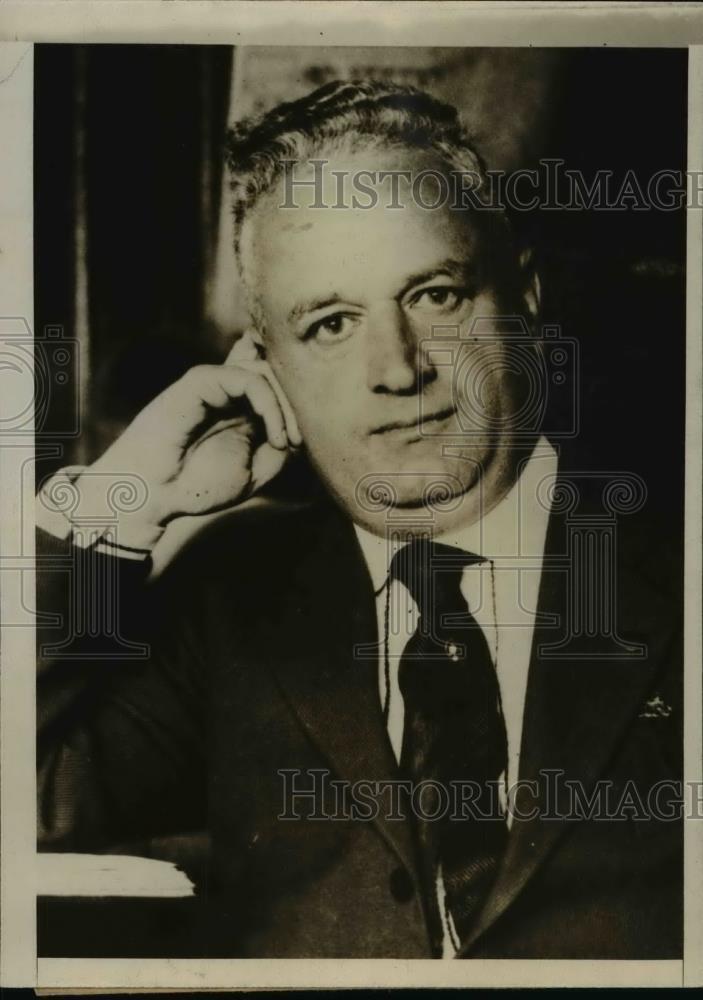 Sylvain Lazarus, a judge and master-of-ceremonies in one person.
Our most recent acquisition is the image below, Gavin McNab, Arbuckle’s lead counsel during the three trials. It betrays his height, dignity, and rather menacing presence that he used to his advantage when facing the comedian’s prosecutors, who were both a head shorter if not more.
Sylvain Lazarus, a judge and master-of-ceremonies in one person.
Our most recent acquisition is the image below, Gavin McNab, Arbuckle’s lead counsel during the three trials. It betrays his height, dignity, and rather menacing presence that he used to his advantage when facing the comedian’s prosecutors, who were both a head shorter if not more.



 Spite Work: The Trials of Virginia Rappe and Fatty Arbuckle