A passage from the epilogue in which we introduce one last “character”

Our epilogue follows the lives and fates of the various “players” in the Arbuckle case. There are a few happy endings. Zey Prevost got married and lived an uneventful life. But most are rather tragic. Alice Blake died in a car wreck. Al Semnacher’s career was effectively over and he died of a heart attack a year after the trial. He was followed by Rappe’s “Uncle Joe” Hardebeck, who locked himself in his bathroom and shot himself. Maude Delmont lived as a recluse in Southern California under her maiden name. And so on.

There is almost an Arbuckle curse. But most of the epilogue is a survey of Arbuckle’s life after he was acquitted and it begins with this novel way of looking at the abortive attempt to reinstate the comedian and an “exposé” that was very much believable in regard to Arbuckle’s conduct.

Most books about the Arbuckle case—and those that devote chapters to it, like William J. Mann’s Tinseltown—seem to treat the resistance to Arbuckle’ return with disdain, as if they were nothing but “church ladies” to use Mann’s term for a very diverse group of women. Such writers assume that the majority of Americans wanted to see Arbuckle on screen again. What is more evident is that they didn’t care. They didn’t miss him. And one has to consider, in all fairness, that letting Arbuckle out of his box required real denial.


On December 20, 1922, Will H. Hays, while in Los Angeles, issued a statement in the Yuletide spirit. He intended to pardon the comedian, reinstate him as a film actor, and eventually lift the ban on his films. Arbuckle welcomed the news and expressed his gratitude. Naturally, he felt he deserved such Christian charity and, as yet, no one had noticed that for all those weeks and months since September 1921, no one observed him “darken the door” of any congregation. He had long ago maintained the separation of church and stage.

The blowback from clergymen was swift. They felt Hays should have consulted them. The Women’s Club of Hollywood, the National Committee for Better Films and the National Federation of Women’s Clubs demanded that Hays to take his Christmas gift back. The Rev. Dr. Wilbur Crafts surely knew of this outrage. But his voice was silenced by his untimely death “after a shockingly brief illness,” according to one Washington newspaper mourning his loss to the cause of the suppression of immorality.

The mayor of Los Angeles, who understood the lingering “disgust” for the debauchery revealed in People vs. Arbuckle, telegrammed Hays as he distanced himself from the controversy, en route to his home in Sullivan, Indiana. By the time he arrived, he had stacks of such wires from other mayors and every kind of prominent citizen. He now had to deal with the fact that Arbuckle’s innocence was never wholly accepted in Hollywood and his preexisting reputation never went away, even in the film colony, many of whom saw the comedian as liability.

Indeed, Hays proved to be remarkably tone-deaf to the real situation, made all the more real by the inopportune federal indictment in Los Angeles of one Ed Roberts a few days before Hays arrived on December 13, waxing with bonhomie and compassion for such artists as Wallace Reid and Roscoe Arbuckle.

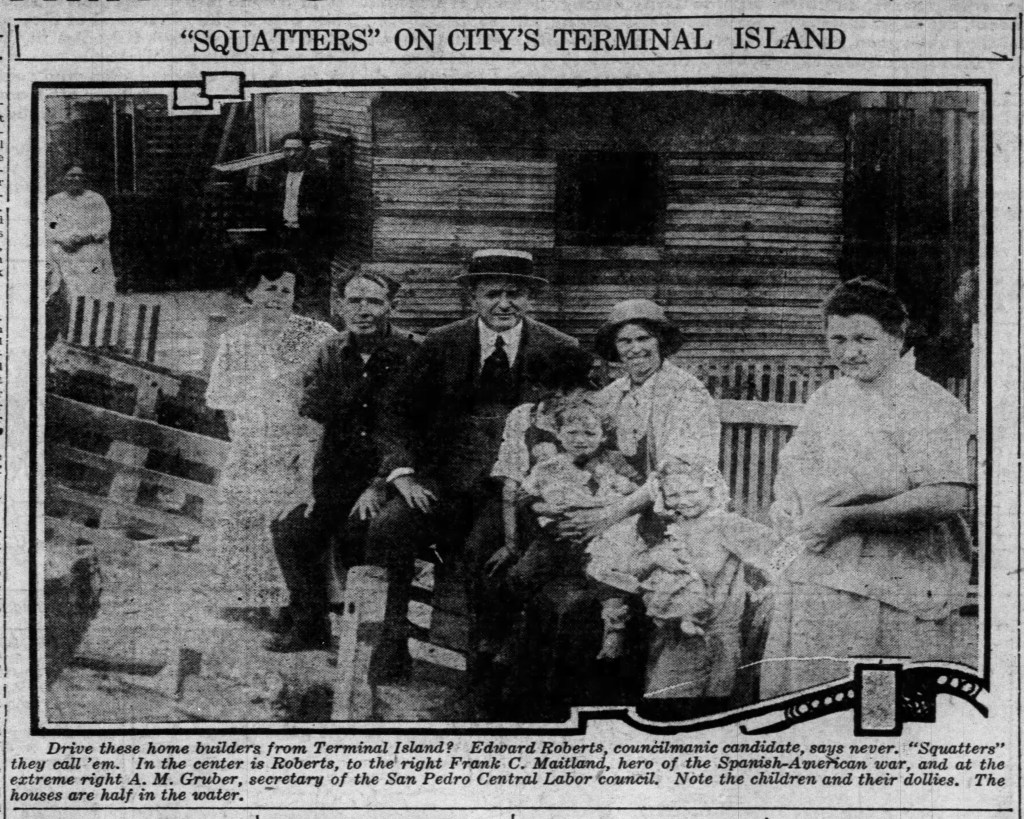
Roberts, who managed such two film magazines, it and the Motion Picture Magazine of Joy, was also a spokesperson for the Affiliated Motion Picture Interests. This organization, which included the late William Desmond Taylor on its board, represented not only producers but rank-and-file actors, workers, and other employees of the motion picture industry and flourished until it ceded its mission—to disassociate its members from the industry’s black sheep—to Hays and the Motion Picture Producers and Distributors of America. Roberts was also a political activist in Los Angeles. He headed the Tenants Protective Association and sought the arrest of landlords whom he considered “rent-profiteers” and backed a citywide rent strike. He also organized the resistance to evict the so-called “squatter” families on Terminal Island and ran an unsuccessful campaign for city council on platform against blue laws and censorship. In other words, he wasn’t afraid of being controversial or contradictory.

Before the third Arbuckle trial began in March and before Hays took the reins of the MPPDA, Roberts put the finishing touches on The Sins of Hollywood, an eighty-page pamphlet published anonymously in May. In his introduction, piquantly dated April 1, 1922, Roberts stated, “Eight months before the crash that culminated in the Arbuckle cataclysm, they knew the kind of parties Roscoe was giving—and some of them were glad to participate in them—”

In October 1921, weeks before the first Arbuckle trial, Matthew Brady had come to Los Angeles on a fact-finding mission to learn first-hand about such gatherings. That he may have spoken to Roberts or those who could vouch for his veracity is unknown. But ultimately Brady agreed with Gavin McNab not to resort to such character defamation and thus tied a hand behind the prosecution’s back.

Copies of The Sins of Hollywood were scarce and it never saw anything like a national distribution. Even so, a deputy U.S. attorney in Los Angeles branded the book as “scurrilous” and the city’s chief post office inspector promised to ban the book from the mails as well as find and prosecute the author. In any event, someone with influence, someone in the motion picture industry, saw the book, saw that it sent the wrong message with Will Hays in place, and complained—perhaps all the way up to Hays himself.

Roberts was hardly graphic. But he was a good writer and knew how to be shamelessly suggestive in describing the party and sex subculture of Hollywood. His real offense was that he made it very easy to guess the names of the actors and actresses whose names he barely disguised along with their transgressions. “Jack” was Mack Sennett. “Molly” was Mabel Normand. The 1916 love triangle between her, Sennett, and Mae Busch and the “battle royale” between the two actresses wasn’t hard to miss. “Walter,” the dope fiend, was Wallace Reid. “Adolpho” was obviously Rudolph Valentino and “Rostrand” was Roscoe Arbuckle.

Recall that Virginia Rappe said, before she took the elevator up to twelfth floor of the St. Francis Hotel, that she hoped Arbuckle’s party wasn’t a “bloomer”—a disappointment. Did she expect something like the following entertainment, the arousal, the bad taste? “Not so long ago a certain popular young actress returned from a trip,” Roberts began.

She had been away for ten days. Her friends felt that their ought to be a special welcome awaiting her. Rostrand, a famous comedian; decided to stage another of his unusual affairs. He rented ten rooms on the top floor of a large exclusive hotel and only guests who had the proper invitations were admitted.

After all of the guests—male and female—were seated, a female dog was led out into the middle of the largest room. Then a male dog was brought in. A dignified man in clerical garb stepped forward and with all due solemnity performed a marriage ceremony for the dogs.

It was a decided hit. The guests laughed and applauded heartily and the comedian was called a genius. Which fact pleased him immensely. But the “best” was yet to come.

The dogs were unleashed. There before the assembled and unblushing young girls and their male escorts was enacted an unspeakable scene. Even truth cannot justify the publication of such details. (p. 74)

In late July, Hays traveled to Los Angeles and couldn’t avoid The Sins of Hollywood, with its lurid red Mephistopheles and his camera on a startled flapper and her beau. A respected Los Angeles minister handed him a copy at the behest of the author. Hays was appalled but he didn’t change his message before an enormous crowd that filled the new Hollywood Bowl. Hays had cover for the motion picture industry and declared, “The one bad influence in Hollywood is talk. And for the life of me I cannot see the horrors of Hollywood.”

In mid-December, Ed Roberts was finally identified as the author and indicted by a federal grand jury for having distributed over 10,000 copies of The Sins of Hollywood. For Hays, who only wanted to play Santa Clause for Arbuckle, an overzealous federal prosecutor had, perhaps, presented him with a very inopportune gift, ill-timed given the Arbuckle pardon. Indeed, the ministers and clubwomen who swore by Roberts would want Hays to act more like a moral policeman.

In the end, two of the latter put up the bail of $5,000—and Roberts said that he could name names and substantiate every one of his salacious claims, such that federal investigators wanted his cooperation in busting a dope ring. With the new year, Robert’ trial was postponed and eventually disappeared from the federal docket.

Notice that the girl is depicted in her undergarments (i.e., a teddy). (Internet Archive)

Although Ed Roberts had no real shot at a seat on the LA City Council, the Los Angeles Record endorsed his candidacy and published this photograph in May 1921. (Newspapers.com)

100 Years Ago Today: “Fatty” Arbuckle arraigned, pleads “not guilty”, October 13, 1921

On the day the United States outlawed the home brewing of beer and the New York Giants won the 1921 World Series over the New York Yankees, the Arbuckle case saw another milestone.

In the company of his lawyers, Milton Cohen and Charles Brennan, Roscoe Arbuckle entered San Francisco’s Hall of Justice and appeared before Superior Court Judge Harold Louderback.[1] There he was formally arraigned for manslaughter in the death of Virginia Rappe. When asked how he intended to plea, Arbuckle, in a loud voice, shouted “My plea is not guilty.”

Despite insisting on a trial date of October 31, District Attorney Matthew Brady allowed the defense time to prepare for trial and a new date of November 7 was set—despite that date falling in the same week as Election Day and Armistice Day.

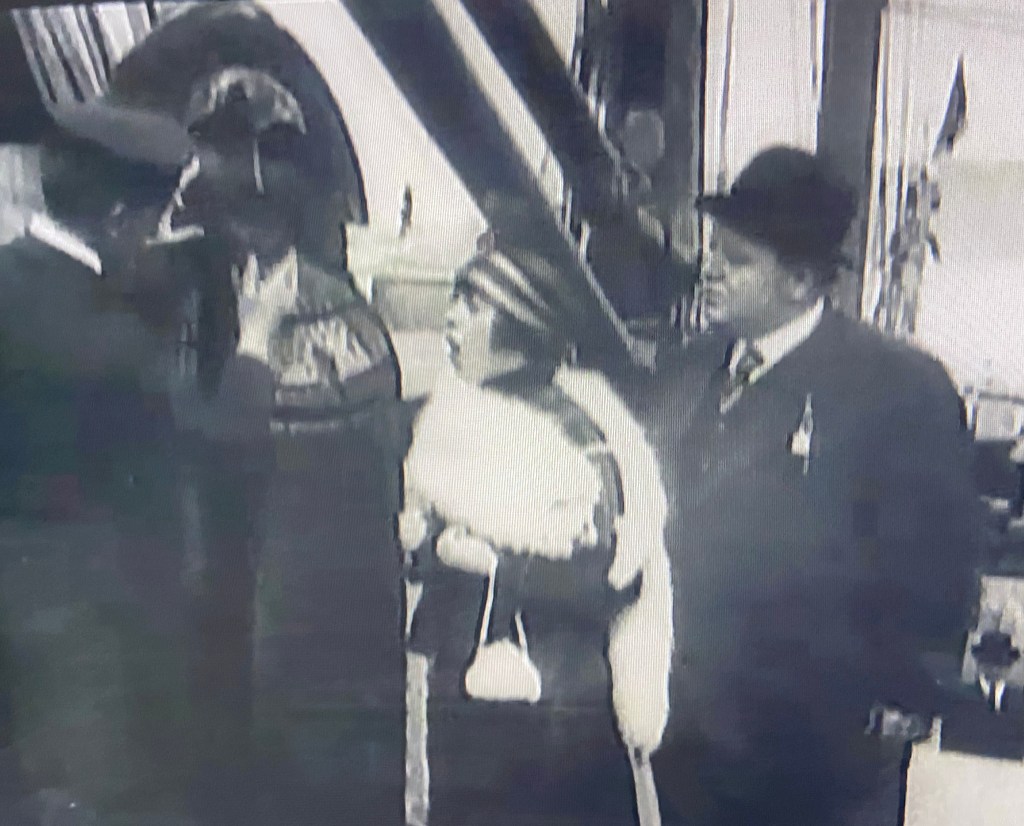
Still from a Keystone travelogue featuring Roscoe Arbuckle and Mabel Normand touring the Panama–Pacific Exposition in San Francisco, April 1915. A good portion of the footage is devoted to the Australian convict transport Success. This rather morbid and ironic exhibit, given what was to come, provided the couple with many opportunities for sight gags they performed with the ship’s flogging rack, shackles, irons, and the like. Here an officer introduces Arbuckle and Normand to an Iron Maiden. Arbuckle later gives the Iron Maiden a kiss. (Library of Congress)

[1] Gavin McNab had not yet been announced as Arbuckle’s new chief counsel.

Intermezzo: Enter Minta

[The following is an extract from our work-in-progress—one in a series of short features or en·tr’actes that allow the authors and readers to take pause. Almost all Arbuckle case narratives share DNA from Minta Durfee’s sometimes cynical memories, which are largely responsible for how the story has long been framed.]

Minta Durfee made a career out of being Mrs. Roscoe “Fatty” Arbuckle. It was a saleable commodity for her, and if you don’t believe me check her contracts filed at the [Academy’s] Herrick Library. She was lying relentlessly and grandiosely, of course . . .

Joan Myers [1]

Minta said she was asked often about having sex with a fat man. She said “I wasn’t going to answer a question like that. Besides I knew Roscoe wasn’t capable of anything beyond simple petting.”

Timothy Dean Lefler [2]

Toward the end of her long life—long for a Silent Era actor—Minta Durfee shared a memory of her former husband Roscoe Arbuckle and his frequent costar, the comedienne Mabel Normand. “They were such water dogs,” Durfee recalled, “they loved the water, they did everything under the sun in the water.”[3]

Durfee’s memory was a happy one, of the house Arbuckle rented on Venice Beach in 1915 and ’16. The weather was often warm, even at night, so they slept on a screened in porch and woke to breakfast served by a Japanese servant, hired with the modest but adequate income each made at Keystone Studios.

On Sundays in the summer, Normand was a frequent guest. She was an excellent swimmer as was Arbuckle, whom she nicknamed “Big Otto,” after a zoo elephant in nearby Lincoln Park. While Durfee watched from shore—she didn’t like to swim—Normand and Arbuckle swam from the front of the house south toward the Venice Pier. The pair’s long swims became a routine for a time and sometimes included a third member, a dolphin, that swam alongside Normand. As much a fearless person in real life as she was on camera, Normand would put her arm around the animal’s back and let it pull her along.

Durfee wasn’t always alone on the beach waiting, the odd woman out. Sometimes a crowd formed, from anonymous onlookers to friends who came to see Normand, Arbuckle, and the tame dolphin “perform,” before they emerged from the water dripping wet, toweling themselves off. Durfee’s embroidered memory captured this innocent moment in the lives of these two actors who died young. Another who died young, Virginia Rappe, was denied such innocent anecdotes but hardly the emobroidery.

“I knew her well,” Durfee said.

Mabel Normand and Roscoe Arbuckle, Catalina I., 1914 (Private collection)

Minta Durfee may have known what Virginia Rappe faced behind the closed door of room 1219. In a series of taped interviews for Robert Young Jr.’s “bio-bibliography” of Roscoe Arbuckle, Durfee described intimate details about what it was like sleeping with her husband far removed from the screened-in porch on Venice Beach.[4] In March 1917, not long after Arbuckle had been feted in Boston after signing his contract with Paramount Pictures and Famous Players-Lasky, he and Durfee returned to New York and the Cumberland Hotel at 54th and Broadway. During the early morning after their first night there, Arbuckle tried to have intercourse with Durfee. The way it is described suggests that such intimate relations may have been performed in the bathroom, perhaps in the shower, perhaps over the bathroom sink for support. Arbuckle, however, failed to maintain an erection. Frustrated, he wrapped a towel around his waist and began to tear the room apart. “His color was almost purple,” Minta recalled in 1958, “and he went through the dresser drawers and emptied them. Threw everything in the air—drawers which didn’t come out so easily he yanked out completely and threw them around the room.” Despite her best attempts to calm him down and reassure him, Durfee watched in terror. Arbuckle had been drinking. He was addicted to his painkillers—morphine and heroin—and he had been partying for days. He had been traveling for weeks. He had also changed toward her.

“To hell with you,” Durfee remembered her husband saying as he rampaged tearfully about their hotel room. “To hell with the apartment, to hell with my clothes, to hell with everybody in the world! I’m a star! I was told I’m a star and I shouldn’t be tied down! I shouldn’t have a wife because they always do this to you!”

When Durfee attempted to call the desk for the hotel doctor, Arbuckle screamed, “Don’t you dare touch that! I’ll do all the telephoning that’s going to be done in this little place.” With that Arbuckle yanked the telephone off the wall.

“Nothing I said had any effect. Every once in a while he would stand in the middle of the room like a little child and jump up and down with rage as sweat poured off him. ‘I won’t have it! I won’t have it!’ he yelled. ‘I’m a star! I’m not supposed to be married! I can’t be hampered by a wife!’ I never heard a man cry so hard in my life. It was terrible.”

Hotel Cumberland, Broadway and 54th Street, New York City (NYPL)

After her husband left Keystone for Paramount, Durfee’s film career suffered a hiatus. Although she enjoyed financial rewards of being married to one of the most popular movie stars in the world, she had to stand by and watch as her husband was transformed into a virtual bachelor and she was forgotten. She also had to give up her role as the maternal influence that Arbuckle depended on until his vast wealth convinced him he no longer needed it. She was jealous of the power his new manager, Lou Anger, had over him. That Arbuckle had parroted Anger’s views on stardom on that fateful morning in the Cumberland Hotel may have been the most grating thing of all to Durfee along with Arbuckle’s growing coterie of male friends, many of whom she saw, rather unselfconsciously, as parasites.

Durfee accepted what was essentially a quasi-salary to be Arbuckle’s faithful wife, should he need to reference her as such. This was also hush money, since her silence and cooperation in the arrangement were necessary. With this arrangement, Arbuckle was given existential elbowroom, a freedom to roam.

The perquisites for being invisible and the silent woman included a luxurious apartment on Riverside Drive with her mother and sister. Although a native of Southern California, Durfee acclimated to her life as a Manhattan socialite and returned to making movies in 1920. She still had Mabel Normand as a nearby friend. Normand had grown up on Staten Island started her career as an artist model and actress in Manhattan, and now divided her time between the West and East coasts.

It was through Normand that Durfee learned of Arbuckle’s troubles in San Francisco when Normand tried to reach Durfee by telephone and got Durfee’s sister Marie instead. The latter promptly wired Durfee, who was vacationing with their mother on Martha’s Vineyard. Durfee was on the green of an ocean-side golf course when she received the telegram and undoubtedly understood the likely impact on her own lifestyle and tenuous career.

When reporters located her, Durfee was back in the spotlight for the first time in years and played her role as Mrs. Arbuckle in a way far different from that of being in her husband’s shadow at Keystone. She relished the attention and assumed a kind of maternal authority over her long wayward husband, making it known that she and Arbuckle’s mother-in-law would depart for San Francisco without delay.

“I have not been reading the newspapers,” Durfee told a reporter while packing a suitcase in their apartment at W. 97th Street and Riverside Drive. But she certainly knew more than she let on. Sticking to the faithful wife script, Durfee continued. “Roscoe Arbuckle is just a big, lovable pleasure loving, over grown boy, whose success and prosperity have been a little too much for him, but he is not guilty of the hideous charge made against him in San Francisco.”

Durfee had nothing to say about Rappe, at least nothing that was or could be printed. She also didn’t let on that she had been in communication—not with Arbuckle himself—but with his lawyers, Milton Cohen and Frank Dominguez, and, perhaps, with Lou Anger and others about shoring up Arbuckle’s deteriorating public image. This wouldn’t be a passive role for her. Whether at her suggestion or another’s, Durfee pledged to gather information on Rappe’s earlier life during the layover in Chicago.

“I felt intuitively that my husband was not guilty of murder—anyone who knows him will tell you that,” Durfee continued, still in her apartment living room. “Why, already I’ve received many letters and telegrams from friends in the theatrical world, each expressing that he could not be guilty of the impossible charges.”

There was only one point where Durfee didn’t censor herself, recalling the low company Arbuckle kept, which was, apparently, a sore point with her. “My husband has hundreds—thousands of friends. Some of the messages I’ve received came from gangsters and ‘roughnecks,’ who worked with him in pictures, but most of them were well-known actors and actresses.” Of these, only Mabel Normand was mentioned by name.

When asked about her living so far from Arbuckle, Durfee attributed it to their having married young. “Five years ago,” Durfee said of their estrangement, “we agreed to disagree.”

Minta Durfee and Roscoe Arbuckle tête-à-tête in September 1921 (San Francisco Library)

Before dismissing the press, Minta Durfee also commended Arbuckle for the recent gift of a new town car and the generous monthly allowance he gave her, which freed her from having to find work. That’s not to suggest she was content not working. In 1920 and ’21, she appeared in five two-reelers for Rialto Productions with their now ironic titles—Wives’ Union; He, She and It; When You Are Dry; Whose Wife?; and That Quiet Night—shot in nearby Providence, Rhode Island. Prominently billed in trade magazines as the “Minta Durfee Series,” the comedies were advertised with “Mrs. Roscoe Arbuckle.” Meanwhile, gossip columnists, who rarely mentioned her being Mrs. Arbuckle over the previous three years, began refreshing the public’s memory of her status in early 1921. One of the more waggish made light of their living arrangement as “fashionable.”

On Wednesday evening, September 14, Durfee and her mother boarded the New York Central’s Twentieth Century Limited, at Grand Central Station. Mabel Normand was there to see them off and seconded Durfee’s assertion that Arbuckle was innocent. The next morning, Durfee stepped off the train in Gary, Indiana, where she and her mother were whisked away by “detectives” and driven into Chicago. These men were likely private investigators working for Albert Sabath, a Chicago attorney who had been engaged by Milton Cohen and who was a close friend of Rappe’s former boyfriend, Harry Barker. Durfee spent the next ten hours “interviewing acquaintances” and “calling on friends of Miss Rappe.” How Durfee found these friends is a mystery. But she likely had help from Sabath, who knew a lot about Rappe through Barker.

Durfee made good use of her Chicago layover. But it has received scant attention in Arbuckle case narratives even though it suggests that she took an active role “to clear Roscoe’s name,” actively defaming Rappe rather than just passively being there for Arbuckle as his suffering wife. She had reason to topple Rappe from the pedestal of victimhood. Not only was the monthly income that supported her, her mother, and her sister threatened, so was her career. That Arbuckle’s films were being pulled from theaters all over the country had to have shaken Durfee. His fall could certainly take her down. Some theaters were showing her new comedies and still billing her as “Mrs. Roscoe Arbuckle.” Durfee knew that the public’s imagination would draw a triangle between Arbuckle, Virginia Rappe, and herself.

Durfee spoke to reporters again in Chicago, just before she boarded the Union Pacific’s Overland Limited to San Francisco. “Our marriage wasn’t wrecked,” she said, using words that likely had been peppered at her by the press, “only warped. Eight years of togetherness is bound to put a blight on any union, no matter how ideal to begin with. We never really were angry with each other—we just each got on the other fellow’s nerves.”—yet another vague canned expression.

To some, Durfee’s explanation of her marriage rang hollow. “It took a booze party and a murder charge to get Mrs. Arbuckle, staged as ‘Minta Durfee,’ to realize that she ought to be near her husband,” wrote one small-town editorialist. “Mrs. Arbuckle has set an example which all boozily inclined movie people ought to follow. Let the old man drink and skylark as much as he likes till he gets in trouble, then go to his assistance when he is arrested. No press agent could possibly offer such a good chance for notoriety as this.”

Reno depot (Private collection)

Minta Durfee received a telegram when her train arrived late into Reno, a layover that had a certain poignancy given Nevada’s liberal divorce laws and the recent case of Mary Pickford. (Her botched divorce from the actor Owen Moore to marry Douglas Fairbanks almost resulted in “America’s Sweetheart” facing a charge of bigamy.) The telegram likely alerted her not to speak about the Arbuckle case and to get off the train one stop early, as she had on the Chicago leg of her journey. As the Overland crossed the state line between Nevada and California, Durfee and her mother locked themselves in their state room to avoid the reporters that boarded at Roseville, California, one stop before Sacramento.

The Durfee party was subsequently intercepted by Milton Cohen and Arbuckle’s San Francisco-based attorney, Charles Brennan, so as to prevent reporters from having any access to their client’s wife. Instead, they drove her and her mother into San Francisco in the backseat of Arbuckle’s Pierce-Arrow. This allowed Cohen and Brennan to discuss Durfee’s role in the narrative, groom her for the sake of public relations, and debrief her of what she had learned about Rappe while in Chicago.

Early Sunday morning, September 18, Durfee arrived in San Francisco. Before being reunited with her husband—whom she had not seen since the autumn of 1919, she issued a prepared statement. Once more she spoke of her husband’s innocence and asked that he get a “square deal” in court.


[1] Qtd. in Andre Soares, “Fatty Arbuckle Virginia Rappe Trial: Researcher Joan Myers Discusses Scandal,” Alt Film Guide, 2009, https://www.altfg.com/film/fatty-arbuckle-virginia-rappe/.

[2] Facebook message with author, 22 January 2021.

[3] This passage is based on Minta Durfee to Don Schneider and Stephen Normand, Excerpts of an Interview with Minta Durfee,” 21 July 1974, https://www.angelfire.com/mn/hp/minta1.html; Robert Young Jr., Roscoe “Fatty” Arbuckle: A Bio-Bibliography (Greenwich, CT: Greenwood Press, 1994); Betty Harper Fussell, Mabel: Hollywood’s First Don’t Care Girl (Ticknor & Fields, 1982), 135; “Mrs. Arbuckle Defends Actor,” San Francisco Chronicle, 14 September 1921, 1, 6; “Arbuckle’s Wife Gathers Evidence for Him in Chicago,” San Francisco Examiner, 16 September 1921, 1. “Good Press Agent Stunt,” Hanford (California) Sentinel, 17 September 1921, 2, and other corroborative sources.

[4] See Robert Young Jr., Roscoe “Fatty” Arbuckle: A Bio-Bibliography (Westport, CT: Greenwood, 1994), 55.

The voyage out

[There are few points during the Arbuckle case that could serve as a set piece. The backstories, sideshows, and the Labor Day party and everything that flowed from it undulated in the press, in the American conscience, and the San Francisco courts for months. Aside from the brief time when Arbuckle and Rappe were alone in Room 1219 where what transpired remains a mystery, there are few logical places in the story where, say, a filmmaker might find a poignant event that encapsulates the whole. If there was such an episode in the case, it might be one that centered on Arbuckle after he left the St. Francis and left Virginia Rappe, alone and dying in room 1227. That event was Arbuckle’s night voyage back to Los Angeles on September 6, 1921. The following text is taken from our manuscript with only minor emendations for clarity.]

Roscoe Arbuckle, when he took the stand at his first trial in November 1921, claimed that he had booked passage aboard the SS Harvard in advance. The assertion was likely made to dissuade anyone from thinking that he had left San Francisco with a less than clear conscience about his Labor Day party and Virginia Rappe. He kept to this story and only diverged once, toward the end of his third trial in April 1922, when he explained that he came to San Francisco two days before the party for pleasure according to an AP wire story. “I had a new car to try,” he said, even though he had had his 1919 purple Pierce-Arrow for over a year. “Later I was going to the golf tournament at Del Monte.”[1] The coincidence that Al Semnacher had wanted to take Virginia Rappe to Del Monte the day before seems to have gone unnoticed until now.

Arbuckle and his entourage were indeed expected aboard the Harvard and delaying his travel during Paramount Week, an important publicity event, would have risked disappointing and insulting those who could cause trouble, among them Paramount chief Adolph Zukor.

The SS Harvard (r) and the SS Yale (l), San Pedro Harbor (Calisphere)

The Harvard, along with its sister ship, the Yale, provided daily passenger service between San Francisco and Los Angeles, and was scheduled to depart for Los Angeles at 4:00 p.m. For this particular voyage, Los Angeles restaurateur, Al Levy, owner of the famed Oyster Bar and Levy’s Cafe, was personally in charge of catering the trip—and Arbuckle, a regular at Levy’s, surely availed himself of what promised to be a sumptuous spread. There were also a number of important film people sailing to Los Angeles for Paramount Week, among them Sanford L. Walter, the San Francisco manager of the Paramount Film Exchange, and, perhaps, other familiar faces who happened to be in San Francisco for the holiday.

There was little chance that Arbuckle could leave town without being noticed. He had to be at pier 7 in time to have his Pierce-Arrow lifted by crane and lowered onto the rear deck of the Harvard, where it attracted attention throughout the voyage. A brief article in the San Francisco Chronicle poked fun at his person, calling him “considerable cargo.”[2]

“Elaborate arrangements,” it was reported, had been “made by Al Levy to provide a mirthful voyage, with “Fatty” as jester”—which suggests Arbuckle was expected along with his entourage. If the arrangements were as much business as travel, perhaps the comedian’s presence aboard the Harvard was the real purpose behind his brief stay in San Francisco, to position him for his on-board appearance.

This is the kind of information that Al Semnacher could have taken note of weeks beforehand and might have shared with Rappe. By this point though, Semnacher himself, was well on his way back to Los Angeles, driving his Stutz and without his two female passengers. Unlike Arbuckle or his companions, Fred Fishback and Lowell Sherman, Semnacher took the time to visit Rappe in Room 1227 on Tuesday morning. He spoke to Maude Delmont—but made no mention of Dr. Rumwell—and departed unworried for the time being. Delmont asked him to tell Rappe’s people—meaning the Hardebecks—that their adopted niece wasn’t coming home any time soon.

Semnacher had also gone to her room to retrieve her damaged garments and cheap jewelry to bring home. His explanation for doing so would become one of the mysteries of the Arbuckle case. Semnacher, also didn’t leave any money for the two women or, at least, not enough worth mentioning.

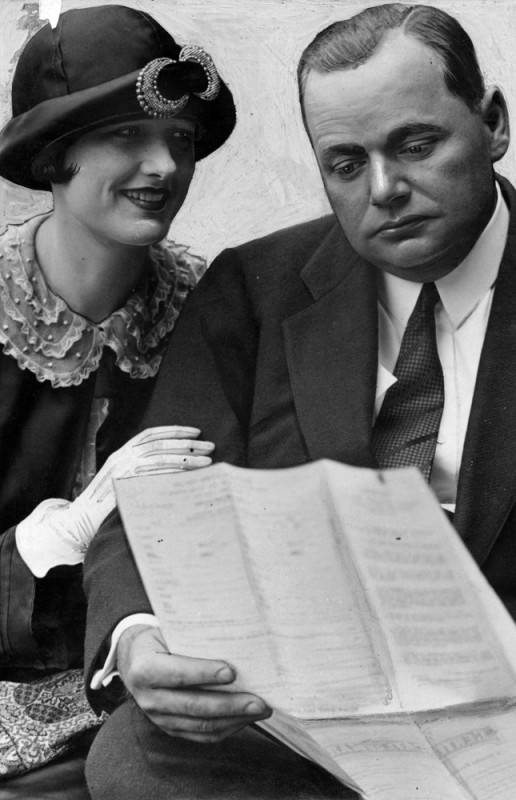
Doris Deane and Roscoe Arbuckle and their marriage license, May 1925 (Calisphere)

The sailing time from San Francisco to Los Angeles was eighteen hours with no ports of call in between. A troopship during the war, the Harvard had been fully restored into a luxury liner with luxurious staterooms and a new army of stewards, stewardesses, pages, and bellboys to serve her passengers. The brilliantly lit Veranda-Café Ballroom featured an orchestra and all-night dancing. On the port side of the ship, passengers could watch the California coast slip by and, if Arbuckle cared to notice the beautiful scenery lit by the setting sun followed by the twinkling lights on shore, it surely helped him to leave what happened on Labor Day behind. Another thing that helped him to forget was meeting a young woman to whom Fred Fishback had arranged an introduction, another striking dark-haired actress, Doris Deane. Fishback had some advance knowledge that she would be aboard the Harvard in the company of her mother.[3]

If Fishback was informally acting as Arbuckle’s wingman, arranging for him to meet eligible and attractive women, he had come through—perhaps for the second time in twenty-four hours. Arbuckle had a chance to see Deane on boarding and was immediately smitten. He invited both her and her mother to his stateroom after the Harvard unberthed. Later Deane sat with Arbuckle at the captain’s table. When he wasn’t playing “Fatty” for the other guests, he spoke with her with the same enthusiasm that he did with Rappe the day before.

Barely twenty years old, Deane had made her debut as representing the city of Los Angeles at the Pershing Victory Ball in January 1920. She was a skilled dancer and had already appeared in a few films, including Mabel Normand’s forthcoming Head over Heels (1922). Hired by Universal, she starred in the new South Seas romance, The Shark Master (1921), which had opened the first week of September. But she had left Universal and was looking for new prospects. Arbuckle, who was always on the lookout for new leading ladies, could hardly resist the opportunity to woo Miss Deane over to comedy. That evening, according to her, he was charming. He purchased her a box of Melachrino cigarettes—which featured cork or straw tips so as not to stain one’s fingers—and they talked of music, theatre, and books.

Melachrino cigarettes (Etsy)

Uninhibited by the thought of his estranged wife Minta Durfee thousands of miles away in New York City, Arbuckle asked Deane out for Saturday performance of a new stage comedy, The Ruined Lady (for which the young Humphrey Bogart was road manager) at the Majestic Theater. But Arbuckle and Deane didn’t go on their date. Instead, he made an unscheduled appearance at the Grauman’s Million Dollar Theater, which was showing his film Gasoline Gus for Paramount Week. From that day on, Deane would have to wait before she could safely appear in Arbuckle’s company again.


[1] Associated Press, “Arbuckle, Denying Evil Intent, Lays His Troubles to an Act of Mercy,” Minneapolis Morning Tribune, 6 April 1922, 18.

[2] “Arbuckle on Harvard,” San Francisco Chronicle, 7 September 1921, 18.

[3] Deane herself is the source for her first encounter with Arbuckle. See Yallop.