“Bad People”: Did an eminent San Francisco physician have a book in mind?

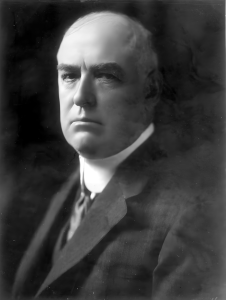
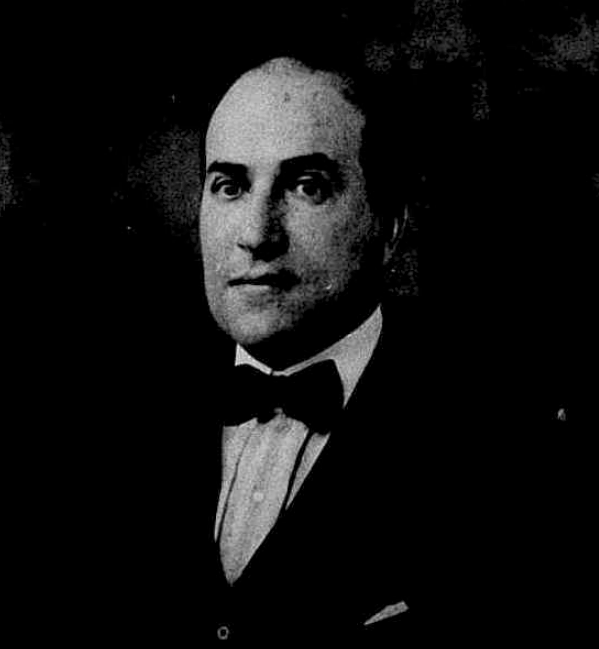
Slipped between the pages of the Arbuckle trial transcripts are some folded sheets of papers. One letter caught my eye. The letter writer seemed like a very serios fellow given his strong opinions on the Arbuckle case. Miley B. Wesson (1881–1981) was a pioneering urologist, especially new field of urologic roentgenology in the treatment of cancer during the 1920s and ’30s. He also received a Carnegie Hero award in 1932 for saving a woman’s life during an operation. She had grabbed hold of a copper wire attached to an X-ray machine with current of 30,000 volts. Dr. Wesson managed to knock it out of her hands. He not only electrocuted himself. He stood up and finished the operation. By then he was already an author of many articles on urology, including rupture of the human bladder. Indeed, Dr. Wesson would have made a perfect medical expert for the Arbuckle trials, namely for Nat Schmulowitz, the defense lawyer who specialized in examining and cross-examining the physicians who took the stand—and the recipient of Dr. Wesson’s letter of December 3, 1953.

Nat Schmulowitz and friend, Phyllis Diller[1] (Courtesy of the San Francisco Library)

Dr. Wesson was hardly ambiguous about which side he took. “Your understanding of the medical side of the case is most interesting,” he wrote. This is true. Even the prosecutor, Assistant District Attorney Milton T. U’Ren, whose sarcasm in the transcripts is hard not to miss, admitted that Schmulowitz had virtually become a medical expert himself in defending Arbuckle. And Wesson’s next sentence could almost have been directed at U’Ren himself, who, in kind, became something of an expert in dactylology, given how much faith he had in H. O. Heinrich in identifying the Arbuckle’s fingerprints superimposed over those of Virginia Rappe, suggesting that she had struggled with him as she tried to leave his bedroom in the St. Francis Hotel through hall door.

“The criminologist, Heinrich, I believe,” Wesson continued, “was a big faker. I have been interested in two cases in which he testified at great length and was 100% wrong in all ways.”

So much for the “American Sherlock.” I have written Heinrich’s biographer. Perhaps she can shed some light on this controversial man. My book, of course, sees him as a very serious man—and one would think that Dr. Wesson, too, is a very serious fellow.

What caused me to take pause—and, perhaps, Nat Schmulowitz over seventy years ago—was the paragraph that follows his remarks about Heinrich. I have read a lot of nineteenth-century medical literature on ruptures of the human bladder, especially in the rare instances when a woman suffered this injury that in the past always resulted in peritonitis and death. The cases that stood out were those caused by falling over a footboard or the edge of a washtub. Arbuckle’s bedroom in the St. Francis, room 1219, had such rocks and hard places, made of brass rails and cast iron, respectively.

What follows suggests that Wesson was intimate with the physicians who not only treated Rappe (Arthur Beardslee and Rumwell), but conducted her autopsy (Dr. William Ophuls). I can almost see them getting together, no longer beholden to a criminal trial and the rules of evidence. But Wesson gets two names wrong. Rappe was never diagnosed with the clap.

Mel Rummell [sic] gave me his notes of the case, and I discussed it with Drs. Ophuls and Beardsley [sic]. I have reported this case on two occasions without mentioning any names. The girl had a urethral discharge, and the doctors jumped at the conclusion that she had gonorrhea. She was catheterize when first seen, and her bladder contained 6 ounces of urine. For that reason the doctors and pathologists were amazed when they found that there was a hole in the bladder. It was a pinpoint opening in the dome of the bladder which had been sealed by a tag of omentum. Dr. Ophuls said that he caught the partially filled bladder in his hands and squeezed it as you would a rubber bulb, and the tag separated form the bladder, and there was a pinpoint stream of urine ejected.

The omentum refers to a fold of peritoneum, that tissue that protects the internal organs, which is attached to the bladder. Presumably, the pathologist, Dr. Ophuls, had already removed the bladder and a piece or “tag” of this tissue. Dr. Wesson makes it sound rather playful as to what happened next, as if Dr. Ophuls was squirting the dead woman’s pee from a defective water balloon.

Dr. Ophuls never described such conduct on the stand. The pinhole, in testimony, was a tear that allowed Rappe’s urine gush inside the peritoneum, where it caused the massive infection that killed her.

The urine, according to the physician who catheterized her, Dr. Beardslee, was described as “scant.”

Of course, Milton U’Ren—the irony of that name!—could have “encouraged” Drs. Ophuls and Beardslee to be cooperative state’s witnesses in ways we will never know. (Rumwell testified for the defense.) I do consider U’Ren’s highhandedness in my book. But both physicians agreed that a very real insult to Miss Rappe’s bladder had taken place. Dr. Wesson doesn’t get into that. He goes on to blame the tumblers the St. Francis Hotel provided in keeping with Prohibition and in lieu of glassware for cocktails—and Rappe herself.

The girl had drunk 3 pint glasses of equal parts of gin and orange juice without going to the bathroom. She was thought to have fallen on the side of the tub. A sudden jar will rupture a bladder. A slow steady pressure will not. This woman had lived an active sexual life for many years. For that reason it was stupid to talk about Fatty Arbuckle hurting her with intercourse. She came to San Francisco with her gigolo. He left a bill of about $150.00 for flowers, and she bought him a pair of cuff links which were not paid for. They were bad people.

Dr. Wesson, a urologist, should not be unfamiliar with the undulating motion of coitus and the effort of a man, Arbuckle, who suffered from episodes of ED. Had he been a veterinarian, he would know that many a cow and ewe suffer ruptured bladders due to the animal exertions of their partners. Something like this, purely a misadventure, between humans—albeit very rare—is what animated Mr. U’Ren and the other prosecutors.

The “bad people” he means here, in addition to Rappe, include Al Semnacher, a booking and talent agent, who could be seen as a pimp if he had steered one of his actresses into a situation where she needed to “close her eyes” and think of anything-but-Central-Casting. The flowers and cufflinks refer to another man, Rappe’s boyfriend, the comedy director Henry Lehrman. It is true that Lehrman didn’t pay for the many tiger lilies that served as a drape over her coffin and grave. As for the cufflinks that were gifted to Lehrman, Rappe paid for those with her own money.

I have to wonder if Dr. Wesson wanted to write about the Arbuckle case. He had traveled to Los Angeles to ask people about Arbuckle. There someone told him that Arbuckle had been “ruined by this trial and ended as barker in a midway in one of the nearby towns,” which is in keeping with other legends (such as the one Randall Jarrell invented for his famous poem “The Player Piano,” in which Jarrell imagines Arbuckle having once “drove the El Molino bus” up and down Pasadena.) Schmulowitz’s annotations are “Not true” in regard to the comedian’s sideshow career and “True” in regard to his being ruined. Yet how does this explain the 1923 Mercer belonging to Jay Leno that once belonged to Arbuckle? 

I wonder if Schmulowitz considered Dr. Wesson just another crank, the kind who will never make that uphill climb of the learning curve that is the Arbuckle case. Inideed, a postscript suggests something personal about his animus toward Rappe. Wesson had lost a bitter alimony suit between him and the first Mrs. Wesson. Despite documenting his wife’s drinking, he still had to pay her.

P.S. Fatty Arbuckle and Bill Hart were probably two of the cleanest movie actors ever in Hollywood, and both ruined by mercenary lying women.


[1] Ms. Diller was a gracious contributor to my biography of the poet Weldon Kees, Vanished Act (University of Nebraska Press, 2003).

George Glennon, the muted witness

Roscoe Arbuckle’s first trial for manslaughter was to begin on Monday, November 7, 1921. But the following day was Election Day and Armistice Day would be celebrated later in the week. So, Judge Harold Louderback of the Superior Court of San Francisco County announced that he would delay the opening of the trial one week.

This gave the prosecution and defense breathing space to consolidate their strategies. Assistant District Attorney Isadore Golden had been dispatched to Chicago to get the testimony of Mrs. Katherine Fox. She had been Rappe’s mentor and virtual foster mother since 1905. Mrs. Fox had been responsible for coaxing Rappe to become a teenage art model, dancer, and stage performer. Undoubtedly, Mrs. Fox also directed Golden to other associates who might contradict the testimony of the three Chicago witnesses deposed by Arbuckle’s lawyers, Alfred Sabath and Charles Brennan.

The Chicago witnesses for the defense, especially the nurse/midwife/provider of adoption services, Josephine Rafferty Roth, would help convince a jury that Rappe’s bladder and sex organs had been ravaged by unwanted pregnancies, bouts of cystitis, and the invasive procedures the treatment of those conditions involved in the early twentieth century.

Arbuckle’s lead attorney Gavin McNab, however, had an even stronger card to play in house detective George Glennon. Glennon had initially been interviewed and dismissed by the District Attorney’s office only to be later chosen as a witness for the defense.

His testimony might have been enough to sway a jury to acquit Arbuckle of the manslaughter charge. But what he had to say was largely squelched by prosecution objections on the basis of hearsay.

Despite not being able to deliver on Arbuckle’s behalf, Glennon may have been rewarded for his willingness, having made the curious career move from hotel dick to movie theater manager, a job he held until Prohibition ended and he went back to his preferred profession of bartending.

The following draft passage is where we introduce him into our account of Labor Day, September 5, with the working title of “The Life of the Party.”


Around midnight, Virginia Rappe received a visit from George Francis Glennon, the stout, middle-aged house detective at the, St. Francis Hotel. As a defense witness during the first Arbuckle trial, Glennon said that Maude Delmont and Dr. Beardslee were in room 1227 when he arrived. Despite the late hour, he wanted to speak to Rappe.

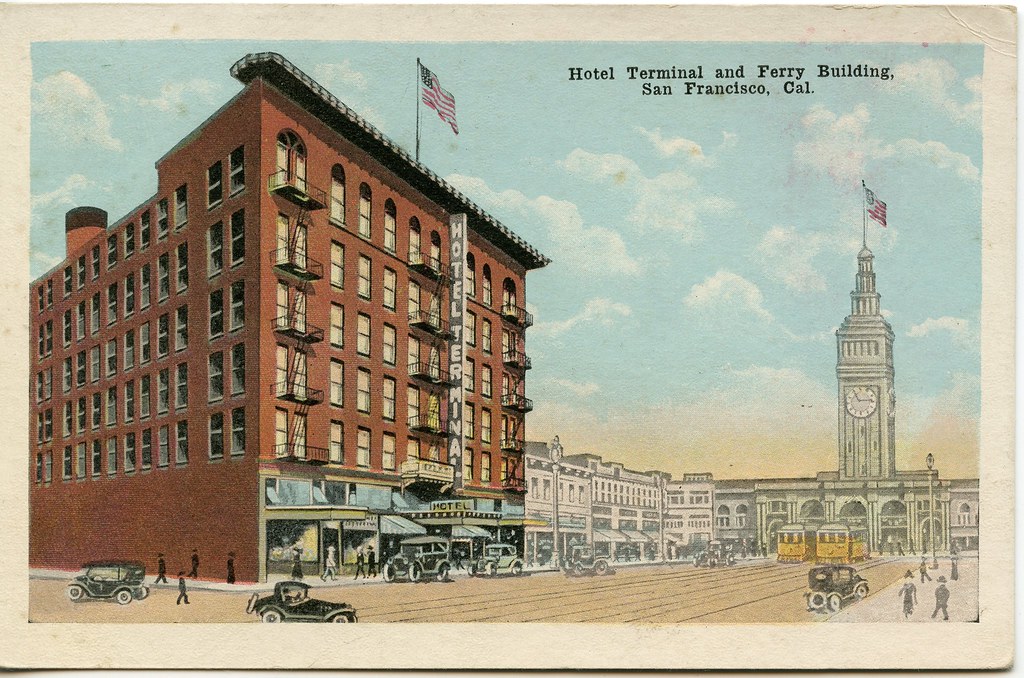
Glennon held various jobs over the years. As a boy, he operated a freight elevator and, in later years, worked as clerk, a chauffeur, and as a bartender, a job at which he excelled. Prior to Prohibition, Glennon was described as “the best mixologist in the business” while employed at the Hotel Terminal’s bar on Market Street. We can assume he had a brutish attitude, having made the news for striking an effeminate young man who had “lisped” a request for a “beauty special,” a lavender-colored cocktail with a dash of ice cream.[1] The blow cost him a ten-dollar fine. The coming of Prohibition however forced him out of bartending altogether. – at which point he found work as a special policeman.

The special police were essentially security guards and privately paid by the businesses that hired them. Special police were employed by banks, penny arcades, movie theaters, skating rinks, and the like. They worked as night watchmen in warehouses, factories, and on San Francisco waterfront. They also worked as hotel detectives. Since they carried firearms and could arrest people, they were licensed by the San Francisco Police and were considered peace officers as well. Thus, Glennon possessed a modicum of authority if there should be trouble in the hotel in the form of an unruly guest, room thief, call girl, and any other criminal acts on the hotel’s premises.

So the Arbuckle party, despite being hosted by a frequent and famous guest, couldn’t be ignored. There was liquor in plain view in Room 1220, seen by maids, bellboys, waiters, and now an assistant manager, Harry Boyle. It had also become known that an unclothed woman at the party had been found in severe distress and had to be carried to an empty room. By the time Glennon arrived late in the evening, she had already been seen four times by the two hotel doctors.

However when Glennon was a defense witness at the first Arbuckle trial, he was prevented from discussing his brief conversation with Rappe, as the prosecution objected on the basis it was hearsay.

Glennon’s account was reported in the newspapers though and, unlike the accounts provided by Drs. Kaarboe and Beardslee who said she barely spoke, he said he found Rappe to be alert and responsive to his questions. She was no longer agitated. If Glennon indulged in any small talk with her, it went unreported. Instead, Glennon got to the point, asking a battery of questions that had nothing to do with her welfare but rather serendipitously worded as though by a lawyer to exonerate Arbuckle when the time came.

Glennon said he asked Rappe if Arbuckle had hurt her and she answered “no”. Then Glennon asked if anyone had hurt her. “I do not know,” Rappe allegedly said. “I may have been hurt by falling off the bed.”[2]


[1] Universal News Service, “Beauty Special Was Too Much for This Bartender,” The [Pomona]Bulletin, 10 September 1919, 6.

[2] “Girl Said to Have Cleared Arbuckle: Clown’s Lawyer Has Statement from the Hotel Sleuth,” Daily Arkansas Gazette, 11 November 1921, 1.

100 Years Ago Today: Dr. Arthur Beardslee testifies, September 26, 1921

The morning session of the fourth day of the preliminary investigation in the courtroom of Judge Sylvain Lazarus was to be with Al Semnacher. But he was late and his place was taken by Dr. Arthur Beardslee, the St. Francis Hotel’s physician and the second to treat Rappe, who had yet to testify in any previous venue.[1] During his cross-examination under defense attorney Frank Dominguez, the sobriety of Maude Delmont came under question. Beardslee had been “missing” for over a week but had, in reality, been on an annual hunting trip in the Sierra Nevada mountains in Mono County, California.

Q: Did you notice anything about her speech that attracted your attention—Mrs. Delmont’s?

A: Not any more than she impressed me as being very positive, is all.

Q: Nothing incoherent in what she said?

A: No. In fact, much the opposite—very much to the point; and, in fact, rather arrogant.

Q: Was that arrogance due, in your opinion, to her having used any alcohol or morphine?

A: No; I thought it was her natural manner. She took charge of everything, and was the boss.

Dominguez continued. Did Beardslee see Delmont open her purse or “take a white powder”?

When this inquiry resulted in objections from the district attorneys, Milton Cohen presented the rationale: “If your Honor please, the doctor says he procured a certain history from a certain woman. If we can show that person is incompetent, or she was in such a frame of mind that the history which he prepared from the woman is unreliable, certainly it is competent testimony.”

To this, Judge Lazarus pointed out that the “lady” in question, despite being “arrogant” and “overbearing,” had never aroused Dr. Beardslee’s suspicions about her competence.

Dr. Beardslee saw no white powder. The cross-examination continued, seemingly rudderless, going back and forth between subjects already covered, such as the reason for administering an enema despite the lack of bowel gas. Then Dominguez asked if Rappe showed any signs of a “debauch” or “alcoholism.” Beardslee answered “no”.

Returning to the subject of taking Rappe to a hospital, the doctor asserted he had urged Delmont, as proxy for Arbuckle and company, to take her to the hospital. He knew, from just observing Rappe, that she had some kind of internal injury before her catheterization. That revealed the truth to him and it couldn’t have been any hypothetical kidney lesion as suggested by Dominguez.

Frank Dominguez (Calisphere)

“With the picture that I had before me,” said Dr. Beardslee, “and the urine, I had a classical ruptured bladder. There was no sign left out. Had it been a kidney complicating the condition, or had there would been kidney trouble, you would have other symptoms in other regions—you would have had other things to consider.” Beardslee then endured summary questions that he found “nonsensical”—about a hemorrhage in the bladder, his self-assurance of a bladder rupture without performing an incision, and so on.

For his part, Dominguez needed to sow as much doubt about the hotel doctor in Judge Lazarus as possible. Then, suddenly, Dominguez asked if Beardslee had been “out hunting”—to which the judge wisecracked, “He looks like it.”

Dominguez asked if Beardslee, in returning from Mono County, had been stopped by a sheriff. The judge, perhaps encouraged by some laughter at his previous remark that the court reporter left out, continued: “Traveling too fast in a machine, doctor?”

Dr. Beardslee explained that the sheriff was a friend he knew well. He admitted to a conversation in which he complained about returning to San Francisco, of having to testify. Beardslee said that he “hated to give up a good time,” to “get mixed up.” Here Dominguez cut him off to remind Beardslee of something he had allegedly said that might indicate a biased testimony.

Q: Doctor, you told him in a conversation, upon his asking you, “What is this all about?” and you said to him, “The whole trouble was with a girl that was too much high life.”

A: No, I think you are mistaken.

Q: Never mind. I think a whole lot—even with that black head of mine.

But Dominguez insisted that Beardslee had said Rappe had too much “high life.” Then Dominguez asked if Beardslee had percussed Rappe’s flanks. Since this wasn’t an anatomical term, Dominguez seemed to be having some fun at the witness’s expense after a demonstration of what he meant by flanks. “I had no reason to percuss her buttocks at all,” Beardslee answered.

Q: What do you understand by the flank of the human anatomy? Point it out to us, doctor.

A: Flank?

Q: Yes.

A: Well, it is a term which is seldom used except by a butcher or horse trader or something that way.

As the cross-examination proceeded, Dominguez made clear what his primary defense theory was — that Rappe’s injury was her own misadventure, her own fault. Her bladder was compromised by disease and it was simply a matter of time before it burst of its own accord. “Assuming,” Dominguez began, “doctor, for a long period of time, a person had been treated for bladder trouble,

and had been under the direct attention of a doctor for bladder trouble, assuming further that it was a small bladder and the walls of that bladder were abnormally thin—assuming further she had not passed water for a period of 24 hours; and assuming further, doctor, that during that time it had been dribbling over the top of the bladder; and assuming further she had made efforts, doctor, to pass water, under that condition, doctor, could there be such a thing as a spontaneous rupture?

Assistant District Attorney Milton U’Ren objected on grounds that Rappe’s micturitions were not in evidence and available for cross-examination. But Judge Lazarus proved to be lenient with the defense here and allowed it. He reasoned that future evidence might support such a theory. Thus, Dr. Beardslee was compelled to agree with Dominguez that a bladder “with a thin wall” and “subjected to treatment for organic disturbances” could easily rupture. With that, Dominguez ended his cross-examination.

In the minutes that followed, Judge Lazarus asked a serious question devoid of his courtroom wit. He asked if urine in the bladder, upon release into the abdominal cavity, could cause an infection—a question that hadn’t been answered as yet by Dr. Beardslee.

Perhaps relieved to answer a medical question, the house physician for the St. Francis Hotel assumed a certain authority and explained that urine itself didn’t cause peritonitis. Bacteria escaping from the bladder did. With that, court was adjourned until 2:30 p.m.


[1] The following is based on People vs. Arbuckle, 232ff.

100 Years Ago Today: Dismissing Dr. Beardslee, September 6, 1921

Perhaps the worst decision made by Roscoe Arbuckle and whoever had his ear was to let Maude Delmont stay with Virginia Rappe in room 1227 of the St. Francis Hotel.

Although she didn’t pretend to be a real nurse, she assumed the authority of one. (Delmont’s  younger sister, with whom she lived from time to time, was indeed a registered nurse.)

When the second hotel physician, Dr. Arthur Beardslee, came to see Rappe, he realized that this wasn’t the usual patient with a stomach ache from overindulging on rich food from the hotel kitchen or alcoholic beverages—as Delmont said. What he saw was a young woman he believed needed to be taken to a hospital for immediate surgery. But Dr. Beardslee erred on the side of hospitality, being a hotel doctor, and gave Rappe morphine injections to keep her quiet.

Meanwhile, Delmont had been going back and forth between room 1227 and the reception room of Arbuckle’s suite, room 1220.

The people in that room decided against sending Rappe to the nearby St. Francis Hospital, where Dr. Beardslee was a resident. That risked “notoriety.”

Dr. Arthur Beardslee (FamilySearch.com)

Delmont never disputed this decision. She returned to room 1227 and was satisfied with the effects of the morphine. She also convinced Dr. Beardslee that the only thing wrong with Rappe was gas. She suggested having an enema bag and Dr. Beardslee ordered one.

When he was gone, Delmont gave Rappe the enema, apparently with expertise and little mess. But undoubtedly the experience for Rappe was no less excruciating than her ruptured bladder.

Only Dr. Beardslee suspected the true nature of the injury. On his last visit, in the wee hours of Tuesday, September 6, he catheterized Rappe and extracted a little urine and clotted blood. The results alarmed him but he suppressed any expression of urgency given, perhaps, the inconvenient hour.

Still deferential to Delmont, Dr. Beardslee could only advise that his patient—whose name he incredibly failed to learn—be taken by ambulance to the hospital. Delmont, exercising a kind of medical power-of-attorney before there was ever such a thing, elected not to do so. Rappe would be treated in her hotel room.

Later that Tuesday morning, Dr. Beardslee was informed by Maude Delmont that her personal friend, a famous San Francisco surgeon who had performed an operation on her in the past, Dr. Melville Rumwell, would take over the case.