Epilogue

The following is a working draft of the epilogue to our work-in-progress, a medley of fates that came together and parted ways with the end of the Arbuckle trials in 1922.

Fatty suffered enough while he was alive. I guess that was what he had in mind.

Lew Cody to Hubbard Keavy, 1933

What has become of Fatty Arbuckle?

King Alphonse XIII of Spain to Douglas Fairbanks and Mary Pickford, 1924

Hundreds of people were directly affected by Virginia Rappe’s abbreviated time on earth over a century ago and by the Arbuckle trials.[*] Several of the fates are poignant enough to make one reconsider what happened before and after Labor Day 1921. Others are remain little more than postscripts due to the limited amount of investigation into the personal lives of Rappe, Arbuckle, and their friends, and the real Labor Day party itself, rather than the fictions that have been handed down.

Let’s start with Dr. Charles Barnes, whom Minta Durfee commended before she left Omaha en route to San Francisco to be by her estranged husband’s side. In August 1925, Dr. Barnes was arrested in the company of Andrew Durant, an actor and female impersonator. Police believed that he was “the head of an immense dope ring” that supplied morphine to scores of addicts. His bond was set at $10,000—the maximum—and ultimately faced thirty-one counts of violating the Narcotics Act, for which he could receive five years for each, 155 years in prison.

Incredibly, while under indictment for the narcotics violations in federal court, Barnes was arrested again in January 1927 and charged with first degree murder for the death of a Sunday school teacher with the unfortunate name of Wealthy Timpe Nelson. According to newspaper accounts, she was married on her deathbed as she bled out from a botched abortion for which her fiancé paid Dr. Barnes $125. But Dr. Barnes would serve no time for any of his crimes. A diabetic, he died, at the age of 46, on May 20, 1927, after a short illness attributed to his preexisting condition.

Two more defense witnesses who figured in the third trial also found themselves in trouble. Virginia Warren returned to Chicago and continued to work as a midwife and nurse, leading what appeared to be an unremarkable life until she was arrested and convicted in 1941 for assisting in an abortion. Mrs. Warren, 74 at the time, was given probation due to her age.

A year later, in 1942, Helen Whitehurst, served a five-month jail sentence for embezzling money intended for her two nephews as well as creditors from the estate of the late Paul Hershman, the Armour chemist and her boarder, for which she was the administratrix.

Mrs. Whitehurst also figured as a rebuttal defense witness in the 1931 murder trial of gangster Leo V. “Buster” Brothers for the assassination of Jake Lingle, a Chicago Tribune crime reporter believed to be on the payroll of the Chicago Outfit headed by Al Capone. Despite the apparent risk of crossing Capone, Whitehurst testified that she had seen another man, not the accused, escape from the crime scene. But under cross-examination, her credibility unraveled when it was revealed she had once approached Patrick Roche, the police detective who led the investigation into Lingle’s murder, and demanded that he investigate the death by fire of her “cousin,” whom she believed had been murdered for his estate of $300,000. Roche didn’t believe her story and refused her request.

Of the prosecution witnesses, only Grace Halston is known to have had later trouble with the law. She was accused of bigamy in August 1922. Authorities had accepted her word that her first husband was dead and she had a letter, sent from Norway by her former mother-in-law, stating as much. Although the charges were dropped, Lieutenant Halston was very much alive so Grace had to get a real divorce in order to remarry her second husband a second time.

Dr. Barnes’ antagonist at the Arbuckle trial, Catherine Fox, returned to Chicago. She didn’t win her late husband’s stake for a cemetery tract in Queens. But she apparently settled for a handsome sum and lived until 1964, when she died at the age of eighty-six.

There’s no record of Mrs. Fox ever speaking of the trial in public again. Nor did Rappe’s other “musketeers.”

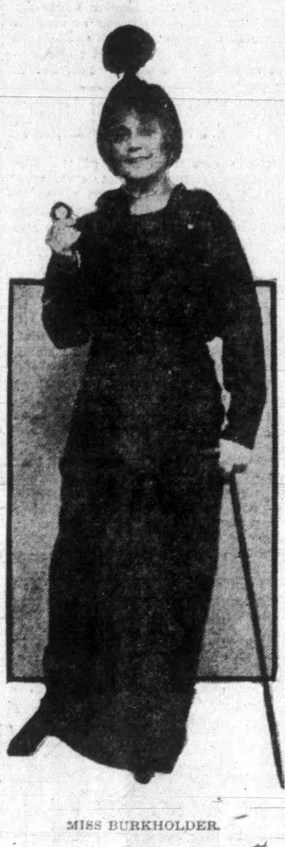
In the years after the third trial, Winifred Burkholder lived in Pasadena, California. Although that city’s directory listed her as a housekeeper, she was once again referred to as a resident of New York and a designer of gowns in the social page of the San Anselmo Herald on the occasion of a “bridge tea” in 1926, when she was feted as a guest of Jeanette Rubel and Helen Wintermute, who managed a popular resort at Stinson Beach.

In the following year, Burkholder’s son George was killed while wiring a fuse box in the Southern California Edison plant in Long Beach, this just two weeks after his marriage. Winifred herself died in 1955.

After the trial, Kate Hardebeck moved with her husband Joseph to 5519½ Virginia Avenue in Hollywood. In May 1923, after an evening of entertaining guests, “Uncle Joe” locked himself in the bathroom and shot himself in the head and in the abdomen with a .32 caliber automatic pistol. Although he left no note, Hollywood police believed he had staged the party as his farewell and attributed his suicide to financial difficulties and failing health.

Following her husband’s death, Aunt Kate lived in Los Angeles for the next two decades, making her living as a seamstress. She died in 1944—and if she had kept anything that belonged to Virginia Rappe—fashion drawings, letters, clothes, photographs, etc.—they were lost.

On March 9, 1923, Al Semnacher suffered a fatal heart attack. Although he was said to have managed several movie stars, the only name that reporters could connect him with was Virginia Rappe. A small-town newspaper in Pennsylvania, however, headlined news of his death as “Movie Industry Loses a Great Man.”

His friend and the other traveling companion to Selma and San Francisco, Maude Delmont, remained in Chicago until Saturday, March 25, 1922, when she boarded a train to Cleveland, in order “to visit friends and to get a rest.”

Delmont had been in a Chicago hospital for a week, during the course of the third Arbuckle trial. There she met with Frank Peska, the Illinois Assistant State Attorney, who represented District Attorney of San Francisco Matthew Brady.

Before boarding her train, she spoke to a reporter for the Chicago Tribune:

Every one of the depositions trying to blacken Virginia Rappe’s character was false. A great opportunity was lost in making a wonderful example of Arbuckle’s case. It’s not the first time he had done a thing like this, either. It makes me boil to see these attempts to defame Virginia’s character and none whatever of Arbuckle’s past brought up.

With that, Delmont was never heard from again. She may have reverted to her maiden name and, according to the census of 1950, a Maude B. Scott—born in New Mexico, sixty-seven years old, and divorced—lived in Riverside, a suburb of Los Angeles.

The lawyer who intimated in court that Al Semnacher and Maude Delmont were extortionists, Frank Dominguez, continued to practice law in Los Angeles. After the death of his wife, however, in 1924, his health precipitously declined and he died a year later. If Roscoe Arbuckle really told him the truth about what happened at the party—the planned pleasure drive with Mrs. Taube, finding Virginia Rappe on the bathroom floor of room 1219, and so on—Dominguez never shared his opinion. Nor did he publicly admit that counseling Arbuckle to remain silent at that first meeting with Assistant District Attorney Milton U’Ren was a mistake.

As to the lawyer who succeeded him, Gavin McNab went on to represent another motion picture comedian, Charlie Chaplin, in his contentious divorce from actress Lita Grey, his leading lady in The Kid (1921). A few months after the divorce was final, McNab died in his office in December 1927.

Nat Schmulowitz, having been promoted to senior partner by the time of McNab’s death, took over the firm and had a long and distinguished career. His death in 1966 left Judge Leo Friedman as the last surviving principal in the Arbuckle case. Others, such as Isadore Golden, Milton U’Ren, Milton Cohen, and Charles Brennan had passed away in prior decades.

The trials made the news again in 1927, when the San Francisco Bar Association conducted an investigation into the money that Mrs. Emma Duffy was paid for the room and board of Zey Prevost and Alice Blake for seventy-five days. She insisted she only received $200 of the $250 that District Attorney Matthew Brady had promised. Brady had billed the city $844 and his adversaries saw possible embezzlement but political blood. Disbarment would have ended his career.  But Brady produced evidence that Mrs. Duffy had indeed been paid $250 and that the difference covered meals downtown and movie and theater tickets. Known affectionately by the people of San Francisco as “Uncle Matt,” Brady remained in office for two more decades until he was defeated in his 1943 reelection bid by Edmund Gerald “Pat” Brown in his second attempt to unseat the long-serving district attorney. Brady died in 1954 at the age of seventy-six.

These men took any secrets of the Arbuckle case to their grave—including Albert Sabath, who certainly had taken no pleasure in coaxing his friend Harry Barker to testify “against” Virginia Rappe. As to Barker, he relocated to Los Angeles and lived a quiet life and died sometime in the early 1970s.

Although Mae Taube (nee Saunders) was sometimes referred to as an actress from New York, there is no evidence of that. By 1923, she had left Gus Taube and relocated to Los Angeles where she rose to become a prominent socialite in the film colony and a “friend” to many actors. Taube was what Virginia Rappe strived to become and may have been a rival for Arbuckle’s attention.

In 1927, Taube undertook a reinvention, at the time going by her maiden name Saunders, she married Billy Sunday Jr. in Tijuana. In an era when bigamy seemed to be somewhat commonplace, the younger Sunday was no exception and he had to back up and divorce his first wife, actress Millicent Wood-Sunday, before going back to the altar a second time with Mae in April 1928 in Yuma, Arizona. Billy Jr. was wealthy, having made a fortune in Southern California real estate. He was also an alcoholic and a womanizer, and an embarrassment to his evangelist father. The legitimized couple, however, only lasted a year.

As Mae Sunday, she remained a close companion of Bebe Daniels and Gloria Swanson—and “famous” for her pink picture hat and being “Hollywood’s favorite guest” as well as hostess. Her name appeared in movie gossip magazines and columns during the 1930s and ’40. Following her divorce from Billy Sunday Jr., she was able to afford ta spacious Spanish Mission mansion at 509 N. Hillcrest Road in Beverley Hills for over a decade. There she lived with her boyfriends, including the Hollywood lawyer Wallace Davis and the restaurateur and oil millionaire David A. Harris.

As noted earlier in this book, Mae Sunday was considered a source of Hollywood gossip and a gatekeeper to its secrets. Her value as an advisor to Arbuckle as the crisis in room 1219 unfolded was incalculable. But Mrs. Sunday is rarely mentioned in Hollywood memoirs. No investigative reporter, author, or film historian is known to have interviewed her about the party or her friendship with Arbuckle despite her prominence in Hollywood society during both the Silent Era and the Golden Age of Hollywood.

Sometime after 1947 Mae Sunday downsized to an apartment in the Piazza del Sol at 8439 W. Sunset Boulevard, married Harris, and retreated into private life that lasted nearly four decades. She passed away in Palm Springs in 1984 at the age of eighty-eight.

Another Labor Day guest, Zey Prevost, also married and retreated into private life though in quite different circumstances. At first, she attempted to capitalize on being the irascible star witness for the state. Two weeks after Arbuckle’s acquittal, Variety reported that she had made an application with Harry Weber, a New York booking agent, for a vaudeville tour with the wife of Wally Schang, the catcher for the New York Yankees. The announcement of the pairing was more likely a trial balloon than a reality however. Marie Schang wasn’t a showgirl and Prevost’s waning celebrity status wasn’t much of a draw. Around 1930, she married an oil field “roughneck” and became Mrs. Dale Manning, a housewife in Long Beach.

Unlike Prevost, Alice Blake was able to resume her career as a café entertainer and continued at that until January 1940, when she was killed in a car accident. She was forty-four at the time and a passenger in a car driven by her companion, the stage and radio singer Henry Starr, who worked with her at the El Cerrito nightclub. Starr was speeding and lost control of the car on Eastshore Highway at Ashby Avenue in Berkeley and hit a light pole. Described as a “Negro entertainer,” Starr was initially charged with negligent homicide, though the charge was likely dropped.

Blake’s companion at the Labor Day party, Lowell Sherman, lived a charmed life compared the other revelers at the party. His motion picture career was only disrupted briefly and he continued to be cast as the rake throughout the Silent Era and into the early years of sound.

During the last two years of his life, Sherman directed six films, including Becky Sharp (1934), an early technicolor film. He died of pneumonia in December 1934.

As for Arbuckle’s other companion for the Labor Day holiday, Fred Fishback, the remainder of his career was bittersweet. Working under the name “Fred Hibbard,” Fishback directed a number of comedy shorts for Educational Films, including several featuring Lloyd Hamilton, Virginia Rappe’s one-time leading man. In late 1923, at the height of this “second life,” Fishback, who neither drank nor smoked, was diagnosed with oral cancer. Although he underwent immediate surgery, the cancer returned and his condition worsened during the spring of 1924. Seeking a miracle, He read a profile in the Los Angeles Record about a woman, Mae Sheridan, who had cured the fight promoter Al Lippe with a “poultice” for which she charged nothing. Without delay, Fishback took a train to New York City in May 1924 and met Lippe, who informed Fishback that the healer lived in Los Angeles.

Too weak and sick to return home, Fishback paid to have Mrs. Sheridan brought to New York. There she treated him with a drug that had allegedly been used by her family for over 200 years. While Al Lippe had recovered and continued to manage boxers into the 1930s, Fishback’s condition worsened. Unable to talk or direct by October, he died at home in early January 1925.

As for Fishback’s friend, Ira Fortlouis, the Zelig-like outsider who assumed some of the blame for getting Virginia Rappe invited to the Labor Day party, he continued to sell clothes up and down the Pacific coast, while living in hotel rooms and boarding houses. He married for a second time two months after the last Arbuckle trial but eventually that marriage also failed.

Fortlouis was jailed by the City of San Bernardino in 1939 for an old speeding violation, an occupational hazard for a travelling salesman. In late May 1941, he was again on the road and had to check into Sacred Heart Hospital in Medford, Oregon for a medical emergency. There he was diagnosed with advanced cardiorenal disease and died on June 8, 1941, at the age of fifty-four while still in the employ of the Phil Walters Coat Company. His brother-in-law signed his death certificate.

Henry Lehrman, who played no real part in the Arbuckle trials beyond his sound and fury, must have regretted losing Virginia Rappe in the two years that followed his marriage to Jocelyn Leigh. As the former Ziegfeld Follies dancer dreamed of becoming a movie star began to fade in 1922 and ‘23, she became a liability while Lehrman himself continued to have trouble with creditors, cash flow, and finding opportunities to direct. To obtain her generous alimony and a $2,000 Chrysler from him, she went to great lengths to embarrass Lehrman in public and private, threatening a scandal such that he would do anything to be rid of her. They were divorced in December 1924.

For the next two decades, Lehrman saw his career dwindle to nothing as he failed to impress such studios as Warner Brothers and Fox. He was one of the few directors who couldn’t make the transition to sound. Perhaps feeling sorry for the veteran comedy director Darryl F. Zanuck at 20th Century-Fox kept Lehrman on, albeit barely tolerated, letting him evaluate story treatments and write memos that were often ignored. By 1941, Lehrman declared bankruptcy for the last time and, in 1945, was a victim of a wave of studio layoffs following the end of the Second World War.

In comparison, Roscoe Arbuckle had it better. He was initially allowed to return to movie-making by Will H. Hays in December 1922. Hays saw it as a kind of an early Christmas present. But soon after the protests began again. Despite editorials extolling the virtues of the jury system—that Arbuckle had been acquitted by his peers—such voices were drowned out. American clubwomen, clergy, and organizations such as the Women’s Club of Hollywood, the National Committee for Better Films and the National Federation of Women’s Clubs—even lobbied to keep the ban on Arbuckle’s movies in place and that he never again appear as an actor. This extreme retribution wasn’t out of character for the heavy-handed moralism of the era. In 1921 the Black Sox scandal had resulted in lifetime bans for eight baseball players and in 1920 the national ban on alcohol sales and consumption became law.

With a sharper eye on the business end than Hays, Adolph Zukor and Jesse Lasky shelved the three unreleased Arbuckle feature-length films as well as his previous work. This came after Zukor refused a generous offer from the songwriter and impresario Arthur Hammerstein to buy all three for $1,000,000 and present them in his theaters, even in cities that were the most antagonistic to the comedian’s comeback.

Because Arbuckle had been blacklisted as a film comedian in the United States—other talented, rotund actors filled those roles, such as Kewpie Morgan and Oliver “Babe” Hardy. Famous Players-Lasky promoted Walter Hiers as its logical successor to Arbuckle. But Hiers demurred. As he pointed out, he had come up the ranks in polite comedy and children would be better off enjoying “legitimate farce” over “slapstick and hokum.”

Meanwhile, as the Arbuckle ban became an issue again in the winter–spring of 1923, The Isle of Love, the chaotic recut of Over the Rhine, starring Rudolph Valentino and now-uncredited Rappe was released in theaters. If one recognized her, if one was reminded of what happened to her on Labor Day 1921, it would remain a personal impression, private. But the way to deal with the Arbuckle problem, too, was for his name to disappear.

In April 1923, Hays took back Arbuckle’s permission to appear in movies and was praised by the activists who wanted him punished. The film ban would remain in place, but Arbuckle was permitted to work behind the scenes. Although it wasn’t a stipulation, to prevent further public outcry he would remain uncredited.

In January 1925 Minta Durfee agreed to divorce Arbuckle on the grounds of desertion—dating back to September 1917 when he had, in her filing, “given her the air.” At the time Durfee saved face by saying there was no “other woman” though Arbuckle would marry Doris Deane in May that same year. She also said that the Rappe “tragedy” had nothing to do with the divorce—only that Arbuckle had failed to provide her with support.

Durfee was nearly broke and interest in a possible return to the stage didn’t pan out. Pilgrim Pictures still had five “Mrs. Roscoe Arbuckle” shorts and few distributors—and no one was going to back her in any more motion pictures. Save for a summer variety show in Atlantic City, Durfee had no other takers.

Meanwhile, Arbuckle managed to cope with his money troubles with support from his longtime producer, Joseph Schenck, who had purchased the West Adams mansion, rented it to Lou Anger, who, in turn, made Arbuckle his permanent guest. Side work had been assigned to Arbuckle whenever he could do it—he was drinking again. And he had made a temporary foray into stage comedy, beginning in Chicago. But the “three-a-day” vaudeville circuit was a lot of work for less money. And people noticed that he wasn’t as funny as he used to be and the women’s clubs protested his appearances, wanting to ban him from the stage as well.

While Arbuckle enjoyed the company of a pretty young woman, Doris Deane, like many in Hollywood the relationship had a quid pro quo. For Deane—and perhaps for Rappe earlier—Arbuckle provided access to the center of power in Hollywood, access to men like Buster Keaton, who had stuck with Arbuckle through his troubles and had been best man at their wedding. Keaton gave Deane a small role in his movie Seven Chances. She also managed to get a few supporting roles in the shorts that Arbuckle directed for his nephew Al St. John though that was the extent of her movie career.

In 1924, Arbuckle directed St. John in a comedy and had a brief stint directing Keaton in Sherlock Jr. though a clash of egos ended that particular collaboration and the film is credited to Keaton alone. An ironic twist is that this film was rumored to have been inspired by Edward O. Heinrich, the forensic criminologist hired by Matthew Brady to examine Room 1219 for evidence of an assault. Heinrich himself investigated as many as 2,000 cases throughout his career and died in September 1953 not only with his career intact but deserving of the title many gave him: “America’s Sherlock Holmes.”

The oft-repeated anecdote that Keaton suggested Arbuckle direct films under the name Will B. Good was almost certainly a joke among friends. Instead Arbuckle began using the more prosaic “William Goodrich,” based on his father’s first and middle names.

Arbuckle made his directorial leap from two-reelers to a feature film in 1926 when he directed Marion Davies as a Dutch girl in The Red Mill. Unfortunately, this light, romantic comedy, in which Miss Davies could display one of her talents, figure skating, failed at the box office.

Though William Randolph Hearst, as the producer, and Miss Davies both blamed Arbuckle for the film’s flopping, he continued to direct, including a comedy for Paramount, Special Delivery (1927), starring newcomer Eddie Cantor, and fans might have spotted him in occasional uncredited cameos. He also made a triumphant return to Paris in the spring of 1928, and he moved back into the Hollywood Hotel, where he had first noticed Virginia Rappe.

Arbuckle, Lou Anger, and other investors opened the Plantation Café in Culver City in 1928 and it became a popular roadhouse and supper club that, according to its original prospectus, “embodied all of the features of the old Southern regime.” There Arbuckle was often the master of ceremonies, dressed to the nines or in overalls and derby—even in blackface—mingling with the crowd.

The Plantation promised plenty of “whoopie” The clientele naturally included Arbuckle’s milieu. They came all the way out to the end of Washington Boulevard to drink and be entertained by big bands, banjo players, toe dancers, the Plantation’s All-Star Revue, and the likes of Al Jolson, who performed songs from The Jazz Singer, which had been made the year. In 1929, however, Culver City, which was a growing suburb of bungalows and young families, had had enough of the film colony and the trouble it attracted, the gangsters, the fights, and the illicit serving of alcoholic beverages. Arbuckle and Anger sold their interest in September and purchased the old Eads Castle Inn on La Brea Avenue and renamed it “Roscoe’s,” with a decidedly more family-friendly atmosphere.

Despite his troubles, Arbuckle retained his stature among his friends in the movie colony and appeared to be happy and jovial in group photographs—and no one was fooled by the name William Goodrich. He spread bonhomie among almost everyone who mattered in his life. And there were no hard feelings about how he had triggered the creation of the Hays Office. That unpleasant business and inconvenience had blown over and the stifling Production Code was yet to come.

But there was another side to Arbuckle according to Doris Deane, who described “vicious, cruel, morose, and nagging” behavior in the divorce complaint she filed in August 1928. At a beach party, she claimed Arbuckle threw a woman to the dance floor and caressed her. As the woman called for help, Deane rushed to her defense. Thereupon, Arbuckle landed a punch on her nose.

“I wish I had knocked your brains out,” he was heard saying to Deane afterward. She said Arbuckle continued to argue and insult her and drove recklessly on the way home. Her complaint also cited numerous instances of his being intoxicated. The tone of news reports about the charges indicate that this behavior wouldn’t have been much of a surprise to readers.

Nearly four years passed before Arbuckle’s second divorce was decreed and he could marry a new girlfriend. Addie McPhail, another brunette, actress, and vocalist still married to her accompanist, songwriter Lindsay McPhail. Her divorce took time, complicated by the need to find a state that would overlook the residency requirement. Thus, Arbuckle’s third marriage began in June 1932 in Erie, Pennsylvania, while Arbuckle toured the east, performing shows in sold-out appearances that many believed foreshadowed his return to motion pictures. They were right. His ban wasn’t a legal decree but a business decision enforced by the Hollywood cartel and the times had changed.

With McPhail, Arbuckle proved he had the charisma, the success, and the energy to satisfy a considerably younger woman, said to be twenty-four. McPhail also seemed to be evidence that he wasn’t the cad projected by his past with Doris Deane, Minta Durfee, or even Virginia Rappe. He was well-liked and had steadily rebuilt his reputation despite his ban from acting. By 1932 “William Goodrich” had directed over forty films. In May of that year, Columbia began negotiating with Arbuckle’s new producer Leo Morrison and manager Joseph Rivkin for a possible return to the screen. In June it was Educational Pictures and finally Warner Brothers signed him to do six two-reelers at its Vitaphone Studios in Brooklyn. The first, Hey Pop! (1932), was ready for the Christmas holiday. Three more followed in the first half of 1933.

Traveling periodically to New York City by rail, with his wife, her maid, and a line of Pullman trunks, Arbuckle spent two or three weeks at Vitagraph’s plant in Astoria filming. He made public appearances, did radio spots, and enjoyed Manhattan’s night life. His schedule was punishing and he had to work hard. Warner Brothers was taking a risk in rehabilitating Arbuckle—and he needed the money.

Physicians who listened to Arbuckle’s broad chest warned him that heart disease was a certainty. At forty-six, he was noticeably less physical. However, at a relatively trim 240 pounds, he could still get up and down off the ground, throw a punch, run after mules, and reprise many of the antics of his country bumpkin character with the too-small derby and oversized pants.

Those who saw him on the set thought he was a little nervous and tentative. But after a few takes, the old slapstick gags and “hokum” seemed to translate well enough in sound and anyone seeing these old films now might think he could have joined the ranks of W. C. Fields, Laurel & Hardy, the Marx Brothers, and the Three Stooges. (Shemp Howard, the original “third stooge,” was one of Arbuckle’s costars). The only thing wrong was the comedian’s voice. There was nothing special about it. In some scenes, he sounded jaded and in others he came off as a bully. The innocence was gone.

In June 1933, Addie and Roscoe Arbuckle returned to New York to film the last of the six shorts, Tomalio (1933), which pitted his character against a stereotypical Mexican general. That he hadn’t felt good for the past two weeks wasn’t apparent on screen.

Arbuckle was also in New York to ink a contract for the first “Fatty” Arbuckle feature-length talkie, a remake of Brewster’s Millions. After a hot day at work, he returned to his room at the Park Central Hotel in midtown, bathed, and dressed in formal attire. Then he and his wife went out to dinner at the Tavern on W. 48th Street to celebrate a belated first anniversary. After eating, Arbuckle and Addie went to the apartment of the Tavern’s owner, William Lahiff, where a party was given in their honor. Among the guests were lightweight champion Johnny Dundee, actor Johnnie Walker—who was directing Mr. Broadway (1933) with Ed Sullivan in his first film, and his manager Joseph Rivkin.

That evening, Arbuckle smoked cigarette after cigarette and drank freely for Prohibition was in the process of being repealed and no one cared anymore. He waxed on his new contract and was obviously enjoying the moment. He played backgammon. He boasted of his tickets for the heavyweight rematch between Jack Sharkey Primo Carnera on Friday night at Madison Square Gardens. He leaned over at one point and told Rivkin, “This is the happiest day of my life” though he was known for exaggerated pronouncements.

But he also complained of feeling tired. Toward midnight, the Arbuckles returned to Park Central. Then they undressed and, well, who knows what they did at the end of this auspicious day. But they slept in adjoining rooms.

Just after 2:00 in the morning, McPhail woke and went to the bathroom for a glass of water. Then, hearing only silence, she called out, “How are you? Are you sleeping all right?”

When he didn’t answer, she called the desk for a physician.

Much like what happened in the St. Francis Hotel, McPhail’s memory for details changed over time. In another account, she said she woke on hearing him groan in pain. In another, he had just gone into the bedroom and when she called to him a few minutes later, got no answer.

When the hotel doctor failed to revive Arbuckle, other physicians were summoned. They determined that Arbuckle had died in his sleep of a fatal heart attack—angina pectoris according to the death certificate—soon after the couple retired for the night.

The next day, his body lay in state at the Campbell Funeral Church at Broadway and 66th Street on Saturday, July 1. Thousands were said to have marched past.

That Arbuckle didn’t suffer was interpreted by some as a karmic sign of his innocence. That he was struck down in the last stretch of his redemption was also seen as a cruel irony.

Despite Lou Anger’s advice to the contrary, Arbuckle had been no less careless with his money at the end than he had been in his heyday. His will, in a Los Angeles bank, stipulated that Joseph Schenck would inherit a $100,000 upon his death. That money didn’t exist, but it was the thought that counted.

* * *

As for Virginia Rappe? The grass grew on her grave in Hollywood Forever Cemetery, while her remains were joined by those of her contemporaries as they died young and old over time. Conspicuously missing was Roscoe “Fatty” Arbuckle. His ashes had been scattered over the Pacific Ocean. Aside from Henry Lehrman, who would be buried by her side, following his death in 1946, Rudolph Valentino, her early co-star and whom H. L. Mencken once described as “catnip to women,” would also be buried nearby after his untimely death in 1926.

Valentino died of peritonitis as well, following an operation for gastric ulcers. And like Rappe, he had died too young to plan ahead. He was buried in a crypt originally intended for another man, much as her grave was intended for someone else. Henry Lehrman, to his credit, had done the right thing. He provided one of a pair cemetery plots, that he had purchased to share with a future wife, to be used instead for the eternal rest of Virginia Rappe and there he joined her twenty years later.

The honorary pallbearers for Arbuckle’s casket included Bert Lahr, in the middle position. (Newspapers.com)


[*] pp. 000–000: Newspapers.com, California Digital Newspaper Collection, Lantern (Media History Digital Library of the Wisconsin Center for Film and Theater Research), and Ancestry.com.


Update on the work in progress

Someone who, a hundred years from now, falsely repeats something evil about me, injures me right now.

Immanuel Kant*

Spite Work: The Trials of Virginia Rappe and “Fatty” Arbuckle, a revisionist history by James Reidel and Christopher Lewis is a completed manuscript of 970 mspp. and presently being copyedited

The titles of the book’s parts reflect the “biblical length” of the endeavor.

  • The Introduction includes a review of literature and discussion of the earlier works about the Arbuckle case and their treatment of the model and actress Virginia Rappe. This part also features a biographical essay about Roscoe C. Arbuckle from birth to about 1916.
  • 1 Virginia discusses Rappe’s origins and early life. There is even a “tortured” genealogy (she could have joined the D.A.R.).
  • 2 Virginia covers Rappe’s Hollywood period.
  • The Apocrypha of Maude focuses on Arbuckle’s Labor Day Party itself and her fatal injury in room 1219 of the St. Francis Hotel.
  • The Wisdom of Lazarus is a narrative based on the preliminary investigation of Rappe’s death as a criminal matter. As a result, a criminal trail followed. This part also includes an account of Rappe’s interment, which anticipated other fulsome Hollywood funerals to come.
  • 1 Judges through 3 Judges covers a day by day account of the three trials in which Arbuckle wasn’t the only defendant. There was a liminal one as well: the mutable personhood of Rappe herself. We end with the aftermath of the third trial.
  • The Epilogue follows the fates of key figures in the Labor Day party and Arbuckle–Rappe trials.

Needless to say, COVID-19 impacted the research and writing of this book in good ways and bad. We had hoped to meet the centenary of the Arbuckle–Rappe case with a finished book. We were also in a race against declining interest, attention spans, and all the vicissitudes of publishers wanting to pass on just about everything that comes across their iPhone screens.

But there are other scholars at work, too. So, the “special taste” for books about events that took place a hundred years ago during the hoary Silent Era have company.

Our publication plans will be announced on some future date.

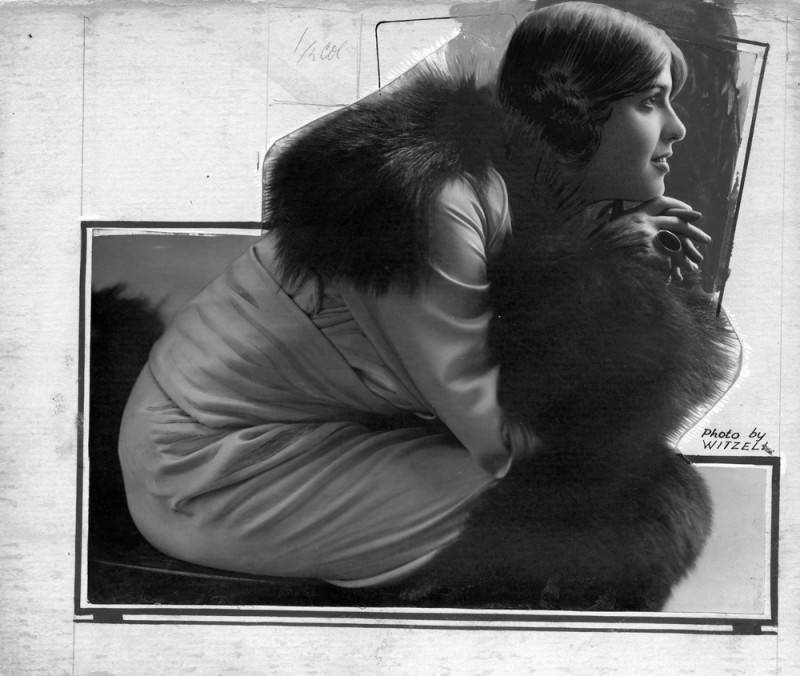
Virginia Rappe in an anticipatory pose with her favorite black obsidian ring in view, Photograph by Albert Witzel.

*The curious epigraph that prefaces the book.

The modern Sappho on the Arbuckle jury

[This entry is from our research, to trace how various individuals found their way into the Arbuckle case and how they fared afterward. Some end in tragedy. Some in ellipses, like Maude Delmont. But Irene Wilde was exceptional.]

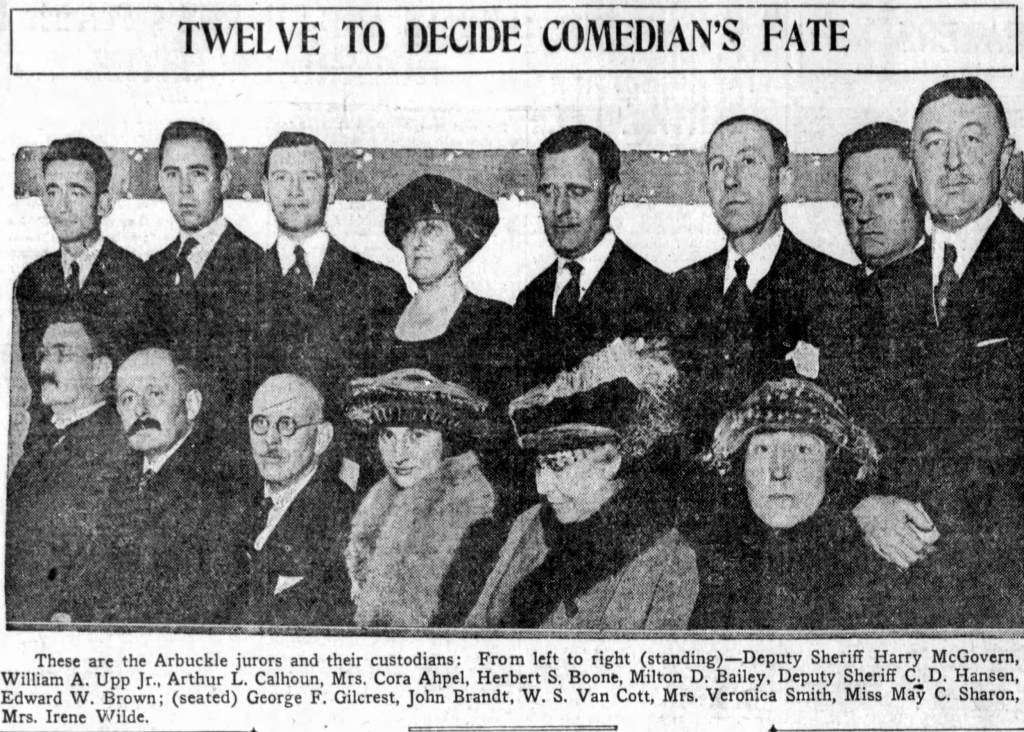
Irene Wilde (1884–1964) was one of five women on the jury of the third Arbuckle trial jury (March–April 1922). She was a poet and writer, albeit described a “newspaperwoman” by the San Francisco Call. But this was an exaggeration not of her choosing, for Wilde had won the Call‘s a runner-up prize for “Jingle of the Month” (December 1921) and was awarded for best “Molly O Poem” the following month (January 1922). The latter contest asked for paeans to Molly O, the title character in a recent film starring Mabel Normand. Normand, of course, had been Arbuckle’s costar at Keystone Studio—and the clever Mrs. Wilde brought a touch of erudition to her verse with the use of the very Irish “mavoureen” [darling].

Another exaggeration, one, that wasn’t disclosed during the trial, was that she claimed her husband, Richard Wilde, was a relative of Oscar Wilde, albeit born in California and humbly employed as a timekeeper by the Pullman Car Company.[1] But Irene had her own accomplishments. Raised on a farm in North Carolina, she attended the Baptist College for Women (i.e., Meredith College) in Raleigh and the University of Chicago. During her student years, she took joy in seeing her name in print and published many of her first poems in newspapers as Maude Irene Haire. Eventually, she made her way west, teaching high school English in Goldfield, Nevada, before arriving in Berkeley in 1918, where she married her husband, her first and his third.

Unlike the businessmen and housewives who may have felt their lives had been interrupted by their jury assignments, Wilde probably saw her month off from walking the floor as a sales clerk in an art supply store as a boon to her writing. Not only did she write poems but authored a droll insider account for the Call about the vicissitudes of being a juror.[2] This she had ready for publication the day after the jury acquitted Arbuckle for the death of Virginia Rappe on April 12.

“We felt that there was absolutely no case against Arbuckle,” Wilde said to reporters. “It was nothing but conjecture and surmise. The facts were all on the other side.”[3]

Wilde, too, signed the jury’s unprecedented statement in which they wished Arbuckle success and urged the American public to see him “entirely innocent and free from all blame.”

Source: San Francisco Examiner, 17 March 1922

The twelve men and women left it implicit that they saw Virginia Rappe as culpable for, as one of Arbuckle’s lawyers put it, for being “the pitcher that went to the well too often”—and having lived a dissolute life with a diseased bladder that happened to burst after the comedian unwittingly followed Rappe into his bedroom.

However the national coverage of the scandal and the fact that a woman died were enough to convince Paramount mogul Adolph Zukor that the public would never again see Arbuckle films as family fare—so he discreetly directed Will Hays to keep the ban on Arbuckle pictures in place. The actor soon put his beloved Pierce-Arrow “palace” car up for sale to pay his legal costs. The wife who “stood by her husband” during the trial, Minta Durfee, left him to return to her single life across the country in New York City. And Irene Wilde? She was perhaps best situated and equipped to write a tell-all book about the third Arbuckle trial. She could have indicated why the comedian’s version of events trumped everything that the prosecution did to contradict him. But books that dished about sordid trials and scandals were not yet in vogue. Instead, Wilde kept her trial stories to herself and relocated to Los Angeles in 1923, and eventually found permanent employment as a high school librarian.

She published two books of verse, won twenty-six poetry contests, and had one poem in Poetry: The Magazine of Verse. She was called a “modern Sappho” by the Los Angeles Times and nominated to be the poet laureate of California by the League of American Penwomen and her many supporters in Southern California. (The women of the Chaparral Poetry Society named one of their chapters for her.)

Source: Los Angeles Times, 7 June 1936

Wilde also published a novel in her lifetime, The Red Turban (Liveright, 1943). According to its jacket copy, the story revealed “an enlightening and stimulating contrast between the ideals of and poetry of the East, and the speed of the flashing, brilliant life of the moving picture colony in California.”


[1] “Rites for Poet Irene Wilde Set,” Los Angeles Times, 3 September 1964, III:3.

[2] See Irene Wilde, “Trials of a Trial Jury,” San Francisco Call, 13 April 1922, 2.

[3] “Arbuckle Jurors Explain Action—Unanimous from Start, They Assert,” San Francisco Chronicle, 13 April 1922, 2.

The urodynamics of the Arbuckle case

Consideration and respect for the female is all but universal in the sexual relationships of the animals
below man; it is only at the furthest remove from the “brutes” among civilized men
that sexual
“brutality” is at all common.

Havelock Ellis

Bladder rupture, the most consequential event leading to the death of Virginia Rappe, is a rare occurrence when cystitis is the cause. Other variables are needed and cystitis is a wide and generic term. In cases of interstitial cystitis (IC), a type of bladder pain syndrome (BPS), the cause is still unknown. But for a rupture to occur there must be urine retention and bladder distention as well as reduced bladder capacity due to unknown etiology, and so on.[1]

When it happens, the rupture occurs at the vault or the junction of the superior and posterior walls—i.e., the site of Rappe’s injury. The defense in the Arbuckle trials hoped to convince the jury that hers was a rare case, an exotic bladder wall disease or a spontaneous rupture, that happened by chance on September 5, 1921, at a party given by Roscoe Arbuckle and his friends at the St. Francis Hotel. The defense didn’t need to be too exacting about how likely one of those scenarios was — they merely needed to introduce doubt about the theory that Roscoe Arbuckle contributed to the rupture. They also implied that Rappe was sexually promiscuous at an early age and had been pregnant in her early teens, subtly characterizing her as a “fallen woman,” and their client had simply happened upon her in his bedroom after the rupture had occurred due to natural causes. 

Arbuckle’s lawyers found physicians in San Francisco for authority and physicians in Chicago who would state for the record that they treated or may have treated Virginia Rappe between 1908 and 1914. Truly exotic conditions, such as tuberculous cystitis weren’t mentioned during the three trials. Because it was never mentioned in the trial transcripts or newspaper coverage, they almost certainly didn’t know that Rappe’s mother, Mabel Rappé[2], had died of tuberculous lymphadenitis (also known as tuberculous adenitis or by the traditional names scrofula and the “king’s evil”). Having mentioned such a thing would have either strengthened the defense’s argument or further confused jury members who were tasked with distilling a variety of anatomical descriptions and medical conditions in their effort to find the truth.

Tuberculous lymphadenitis is the most common form of the tuberculosis infection that appears outside the lungs, which presents as a swellings and ulcerations in neck from infected lymph glands. Virginia Rappe, as an adolescent, would have been exposed to TB. The third most common is genitourinary tuberculosis, which is often misdiagnosed as a urinary tract infection (UTI) or cystitis. both acute and chronic.

The physicians who examined Rappe’s bladder shortly after her death and later, preserved in formaldehyde for weeks, didn’t see the tell-tale ulceration caused by bladder TB. They only observed what appeared to be a mild form of acute cystitis and that Rappe’s bladder was smaller than a normal human female’s bladder. And, anatomically speaking the tear in her bladder, no wider than a penny, was where it would occur if the rupture was due to a distended bladder.

As one contemporary medical text put it, “Rupture of the bladder usually results from severe crushing accidents”—and this is what Arbuckle’s prosecutors saw as the crime for which they originally wanted Arbuckle tried for murder, not manslaughter. All 264 pounds of him was the murder weapon. He had forced himself on her without her consent and caused her bladder to pop like a balloon.

Occasionally, in the diseased bladder, the pressure of retained urine may cause rupture; rarely this occurs during labor. The initial symptoms are usually as if something gave way inside. If the bladder has been greatly distended, there may be a momentary feeling of relief. Pain in the whole abdominal cavity results. Shock is added, the patient is prostrated and unable to walk. Treatment by surgical means is imperative.[3]

The term “distended bladder” was rarely used by the Arbuckle’s lawyers and prosecutors—even though Rappe, having been locked out of one bathroom in Arbuckle’s three-room suite, had been observed hurriedly walking to the vacant bathroom in Arbuckle’s bedroom—room 1219. The word “urine” also seems to have been studiously avoided during the trials—as if a matter of decorum or to avoid confusion with one of Arbuckle’s prosecutors who bore the homophonic surname of U’Ren. But urine is the bodily fluid on which the Arbuckle case sets sail, so to speak. 

Once Rappe disappeared into 1219, Arbuckle followed and closed and locked the door.

In our narrative, we have to accept that the amount of time Rappe and Arbuckle were alone in 1219 is, well, fluid. Arbuckle’s lawyers pared the time down to ten minutes. The prosecution stretched it to as long as forty-five. If one accepts that Virginia Rappe went to 1219 to pee, she was unsuccessful in accomplishing that.

In Arbuckle’s “Good Samaritan” testimony of the first and third trials, he explained that he didn’t seek help for Rappe because she had only vomited, despite the lack of any reported evidence of this other bodily fluid in the room. In his testimony he also never mentions any sexual activity.

But it is implied by the prosecution that Arbuckle assaulted Rappe, that she resisted, and that his weight caused her bladder to rupture. And for that to happen, her bladder had to be nearly full.

Without saying it explicitly, the prosecution’s intention was to show that Arbuckle didn’t give Rappe a chance to use the bathroom—and if he did—nothing came out of her—or not enough. To the prosecution, any surplus of unaccounted-for time was left to the juror’s imagination. The prosecution made no inference that Rappe did anything with Arbuckle that was consensual. They only saw a clumsy rape attempt and a coverup.

In our narrative, we see the possibility for consensual sex, but also non-consensual, and something in between that we will call “business,” for which Rappe expected a quid pro quo in the form of a career boost, a source of income to replace what she lost after her breakup with the comedy director Henry Lehrman. (That he himself had nudged her in the direction of Arbuckle as a benefactor was discussed in the film colony if not in court.) And this brings us to the most indelicate question from the Arbuckle case that, if discussed openly in the lost trial transcripts, never made the family newspapers: Can the weight of a man during intercourse cause his willing or unwilling partner’s bladder to rupture?

One intrepid medical journal gave this question at least a terse but intriguing answer. The Urologic and Cutaneous Review 26, no. 4 (1922) featured a short piece that reacts to the outcome of first trial’s hung jury of ten to two for acquittal.

Bladder Injuries from Coitus

In a recent California manslaughter case, one of the issues raised was whether bladder rupture could result from a force applied external to the abdomen during coitus. At the first trial, the jury disagreed; a hysterical jurywoman [i.e., Mrs. Helen Hubbard] insisting despite every argument on a verdict of guilty. The bladder is so protected by the abdomen that rupture from any but extreme violence producing concussional effects is doubtful and the bladder must also be unhealthy. Concussional effects of this type would produce extreme discolorations. These were not present in this case. The question is a different one where injuries of the bladder by coitus within the vagina occur.* Cases of this type have been repeatedly reported. The evidence against internal violence was so great that external violence was insisted on by the prosecution. (p. 252)

*Medical Standard.

Where does this intriguing brief take us? What is the author saying?

He (or possibly she) sees the human urinary bladder as well protected by bone and surrounding tissue inside the pelvic cavity or arch. But this protection is lost when the organ overdistended. Furthermore, the author only considers “extreme violence,” which would result in extreme abdominal bruising (ecchymosis) if we are reading this correctly. But he seems to only consider the bruises to Rappe’s arm, not those found on her midriff, thighs, and calves. This is probably because the trial testimony didn’t put emphasis on the other discolorations.

Without a solid reference to the Medical Standard, we can’t investigate what is meant by “injuries of the bladder by coitus.”[4] We can only guess what is meant by the “evidence against internal violence.” (There is, indeed, a wealth of veterinary literature from this period about bladder ruptures in female livestock due to coitus that could lend itself to the human act.) The newspaper and extant court reportage are silent on any kind of sex acts performed on Rappe beyond Arbuckle allegedly slipping ice into her vagina to, as he put it, restore her to consciousness. The prosecution only focused on a rape attempt that they discreetly referred to as an “assault,” and used pioneering fingerprint evidence taken by Edward O. Heinrich to show that a struggle occurred as Rappe presumably tried to exit room 1219 through the hallway door.

While the author of the note acknowledges a body of evidence that supports the possibility that coitus can injure a bladder, the meaning of “internal violence” is left to the imagination and left out of the Arbuckle–Rappe paradigm. What he alludes to, however, isn’t the “honeymoon night” of normal, human coitus in 1921, that is, the ventral–ventral or “missionary” position with the requisite gentle massage that leads to, at least, the male climax. Hence, we must look elsewhere for a source of “internal violence” or a combination of external and internal violence or force or pressure. 

Rappe’s escort to the Arbuckle party, Maude Delmont, as well as another attendee, said that the party got “rough.” That is to say, some men began to force themselves on women. These men were inebriated and partially clad to facilitate sexual activity. The pornography of the day, if it accurately reflects the norms of the era, rarely shows a man completely undressed. They are even shown in their shoes, stockings, and garters as though they were off to work.

Arbuckle, given his size and assuming his intention was to have a discreet “quickie” without interruption, probably would have favored a dorsal–ventral position or, in other words, doggy-style. If he was considerate to Rappe—whether consensual or submissive to her host, a “good fellow” to use Delmont’s term—such a route would have been tolerable, a small mercy.

But haste and other factors must be considered, especially in regard to Arbuckle. He had been drinking. We know from his wife, Minta Durfee, that he suffered from periodic impotence, erectile dysfunction. Any kind of erection only had a certain duration. Courtship, “spooning,” and foreplay were out of the question given the need for immediate gratification. Thus, Rappe needed something to hang onto to brace herself for intercourse from behind, whether normally or Venus aversa. There was the pedestal sink in the bathroom and possibly the toilet bowl. Two brass beds were in room 1219—with sturdy brass rails to catch any fall as well as provide a bolster. The beds themselves had either bedsprings or box springs, which would have lacked the firmness of modern mattresses and were, of course, noisy. Given the presence of the revelers in room 1220 and the atmosphere of “merrymaking,” the rhythmic report of bedsprings would have invited unwanted interruptions to privacy and the concentration that Arbuckle might have needed. But, again, this presupposes that Arbuckle’s purpose for entering the room was something other than what he described under oath. 

The “concussional effects” spoken of above—the pounding, the crush on Rappe and the hard surface underneath her—could have come with sexual climax or the urgency to revive a flagging erection or, given the obstruction of Arbuckle’s paunch, to find and keep inside his “mate” for the duration.

Let’s not laugh at the double entendre here. This could be the real tragedy that Arbuckle’s defense and prosecution had to dance around, that the motion picture industry of 1921 surely didn’t want getting out of room 1219 alive, that had to be put behind them at any cost.

Screen Shot 2022-11-13 at 12.37.16 PM


[1] See, for example, Philip M. Hanno et al. (eds.), Interstitial Cystitis (London: Springer Verlag, 1990).

[2] Her 1905 death certificate reveals that she used this spelling.

[3] “Bladder, Diseases of,” Encyclopedia Americana (New York: Encyclopedia American Corporation, 1923), IV:50. Save for treatment, this article agrees with the medical literature of the early twentieth century and to this day.

[4] The Hathi Digital Library has an almost complete run of the Medical Standard, but we have yet to find what article is cited here.

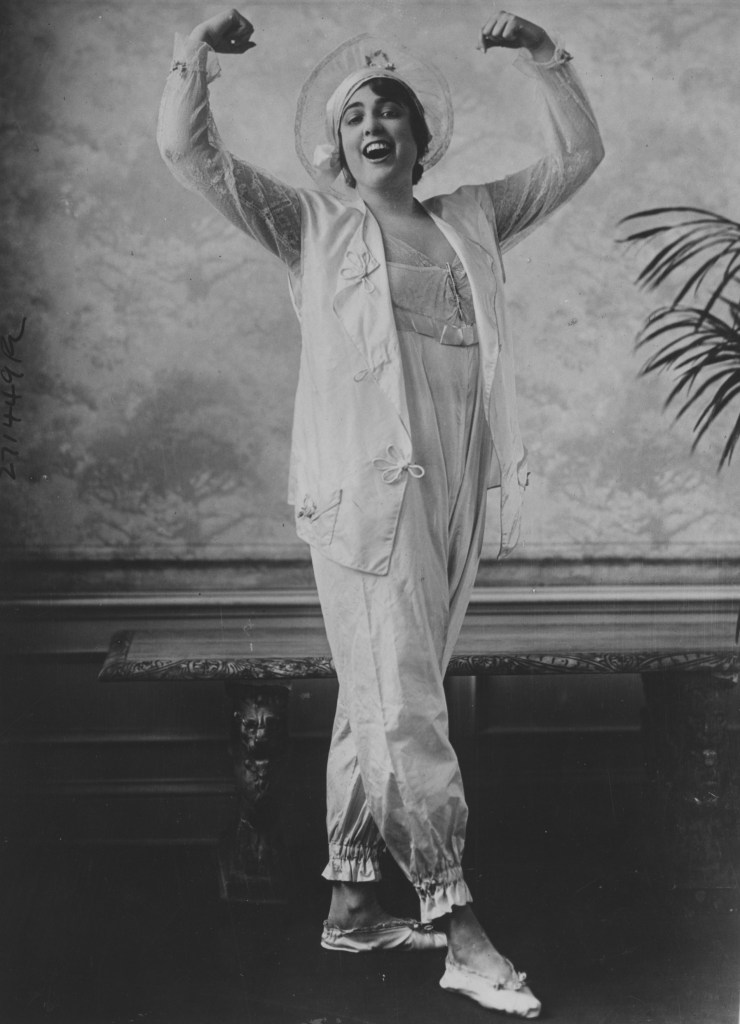
Virginia Rappe’s “Pyjamarama” of 1915

Rappe in recumbent pose (Private collection)

Anyone who writes objectively about the manslaughter trials of Roscoe Arbuckle will notice that the image of Virginia Rappe, his alleged victim, fades from the press coverage of the three trials between November 1921 and April 1922. Immediately following her death on September 9, 1921 though there was a surfeit of Rappe photographs published. Many of these were purchased and licensed by Underwood & Underwood, a pioneer of modern press photography. Newspaper publishers and editors soon discontinued using images of Rappe in their coverage of the Arbuckle case and she was reduced to a name and sometimes just a label such as “beautiful young motion picture actress”.

Perhaps the disappearance of Rappe’s image was due to column space. Despite the improvements in photo reproduction, text-driven journalism had yet to cede column space to photojournalism. Perhaps, too, newspapers were in keeping with the ban on Rappe’s on-screen image.

During the second week of September 1921, like Roscoe “Fatty” Arbuckle, motion picture executives placed a ban on any motion pictures in which Rappe appeared. In her case it wasn’t due to the public censure brought on by American clubwomen and clergymen. The mores of the time were applied differently to Rappe, for it was considered disrespectful but also distasteful to publish the image of a young woman who had died in such questionable circumstances. Details of her life and death revealed a world that was foreign to most and might influence impressionable young women or stir the more prurient desires of young men. And there was a precedent for this: Rappe’s contemporary, Olive Thomas, had died in Paris almost a year to the day before in 1920 and under suspicious circumstances—a botched suicide attempt, an overdose—due to the dangers posed by the fast lifestyle of Hollywood.

One suite of Underwood & Underwood photographs is particularly notable. It came from a fashion shoot taken in either Chicago or San Francisco in mid-1915. But none of these were published despite the quality and allure of Rappe’s poses. That is to say, we haven’t been able to locate any of these images in newspaper archives, which suggests that her mode of dress might have been considered too morbidly ironic to include in a story of a scandal where pajamas were a prominent image.

On the fated September 5, 1921, at the St. Francis Hotel in San Francisco, Roscoe “Fatty” Arbuckle wore his pajamas well into the day. He wore them when he followed Virginia into his bedroom and they became drenched in his sweat around the time of Rappe’s mortal injury. Her escort to the party, Maude Delmont, had donned the actor Lowell Sherman’s yellow silk pajamas because her street clothes made it too hot to dance in the twelfth floor suite. For his part, Sherman remained dishabille in his BVDs.

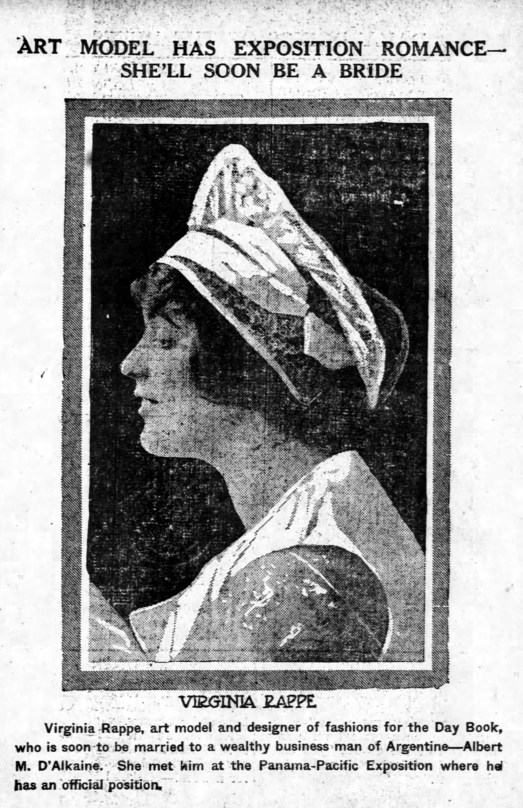
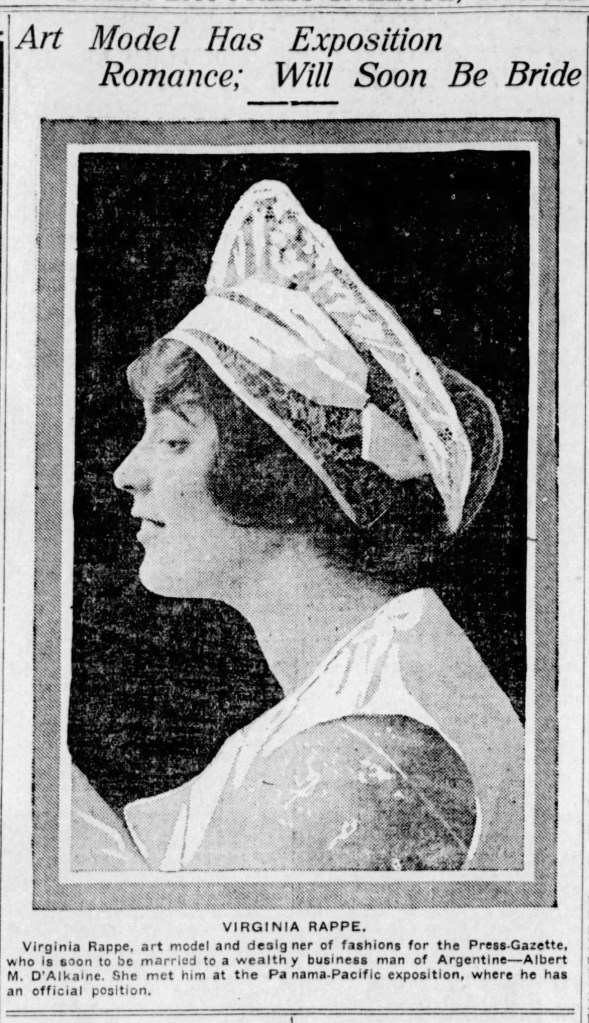
One image from the pajama shoot was published in another time and context: when Rappe was rumored to be engaged to an Argentine diplomat attached to his country’s pavilion during the 1915 Panama–Pacific International Exposition in San Francisco. Indeed, it is likely that the outfit she’s wearing was also modeled at the exposition (The wire service image was distributed with the caption, save for where the editor could insert the name of his respective newspaper to make it seem as though Rappe was an in-house fashion designer. She was independent.)

Rappe in a 1915 newspaper (Newspapers.com)

The setting for these photographs appears to be a mansion or luxury hotel. The pajamas are ahead of their time, for such a one-piece, high-waisted garment is more typical of post-WW1 sleepwear illustrated in pattern magazines and department store advertisements. The sheer fabric could be voile, silk, or gorgette. The outfit also includes a sleeveless jacket and Chinese “frog” or “knot” buttons. The billowy, Pierrot-like trousers or “pantaloons,” were considered both daring and feminist for the time but still have such feminine features as the lower legs finished with gathered bloomer cuffs.

These pajamas were also intended for loungewear given the matching silk ballet slippers. And there’s no chance the flamboyant nightcap would survive a night in bed. It is really a headpiece with wide organza crown, almost like a halo, trimmed with a ribbon, and in keeping with Rappe’s eccentric millinery designs, such as the “spider hat” and “peace hat,” that appeared in U.S. newspapers during the spring and summer of 1915.

Rappe in natural lighting (Private collection)

Unfortunately, Rappe’s designs didn’t catch on in 1915 and this motivated her to pivot her career. In spring 1916, she relocated to Southern California where she succeeded in being cast in small roles such as a juvenile vamp or slapstick love interest in the films of her reputed boyfriend, comedy director Henry Lehrman.

Rappe in prize fighter pose (Private collection)

Rappe’s type was that of a film colony “society girl” and the “best-dressed girl in Hollywood.” These titles had more to do with the company she kept, especially her intimate friends among the more committed motion picture actresses. Rappe sometimes sketched clothes for them that were executed on the sewing machine of her adopted “Aunt Kate” Hardebeck. One of these friends, Mildred Harris—the first Mrs. Charlie Chaplin—regifted a gown so that Rappe could be buried in one of her own designs.

N.b. We don’t profess to be experts in women’s sleepwear from the 1910s. Thus, grateful acknowledgement is extended to “sister” WordPress blogs, namely witness2fashion and the Vintage Traveler.

NOLA: Zey handicaps the prosecution

The following passage from our work-in-progress is based on research for an earlier deprecated post and prefaces the third Arbuckle trial narrative.


“Burn it up,” said Frank Mayo, “The Hollywood film colony is a pernicious influence.[1] Scatter it, abolish it—something ought to be down. Burn it up—I say!” The young leading man had been quoted after attending the funeral of William Desmond Taylor, as he reacted to the other actors and actresses who filled the pews of St. Paul’s Protestant Cathedral to overflowing. 

Horse Races, Oriental Park

Horse Races, Oriental Park

He blamed the mind-numbing lack of culture in Los Angeles. “One thing wrong is that there are no outside diversions. The result is everyone is bored to death. All you hear is pictures, pictures, until you are almost frantic.” Although he didn’t mention Roscoe Arbuckle by name, Mayo alluded to those actors who brought so much opprobrium for their “immorality and degeneracy.”

“You forget that some of the biggest stars in the business are among the undesirables. They have been raised to positions for which they are not fitted. They receive enormous salaries. They haven’t the brains or desire to improve themselves and they spend their money like drunken sailors. They are trying always to buy new sensations, bored to death with Hollywood and themselves.

On the day of Taylor’s funeral, February 7, Arbuckle returned to Los Angeles and kept himself and his thoughts on the murder to himself. But lying lower than the comedian was the woman who had told much of the story of one of his diversions from Hollywood on Labor Day last.

Zey Prevost had gone missing after the second trial’s verdict—and District Attorney Matthew Brady had reason to suspect that the defense was behind it. Arbuckle’s attorney Gavin McNab later claimed he had telephoned his office in the hours after the completion of the second trial and requested that “every legal method be employed to prevent the girl leaving the state.” He told Brady that he was just as anxious to have her testify at the third trial as the prosecution—and Brady later challenged that assertion, knowing that McNab was simply inoculating the defense from any insinuation that they had a role in Prevost getting away.

McNab’s telephone call came twenty-four hours after Brady discovered that Prevost had left San Francisco on Monday, February 6,  after he had issued subpoenas for her and Alice Blake to be placed under bond to ensure their appearance at the third trial. Brady also wanted to open a Grand Jury investigation into Prevost and her allegations of coerced testimony—and to pursue charging her as a hostile witness if necessary. If neither young woman could be found, Brady promised to seek bench warrants for their arrest—as well as for anyone helping them to evade his subpoenas.

The same pair of detectives were dispatched to find Blake and Prevost. Thomas Regan and Griffith Kennedy knew their haunts, the people they associated with in San Francisco’s demimonde—but they went to see the mothers first.  Blake’s assured them that her daughter was still in San Francisco and, by Monday night, Alice Blake appeared at Brady’s office. Mrs. Reis said she didn’t know her daughter’s whereabouts.

By mid-week, Prevost was still missing and the search for her widened. “I will lay the case before Chief of Police O’Brien,” Brady told the press,

and request that every police official in California be asked to watch for the missing girl. While not ready to assert positively that she has absconded, I feel nevertheless that I have good reason to take these steps. Of course, should Zey Prevost leave the state, there would be no way to compel her to return. We then would have to resort to reading into the record the testimony which she has thus far given against Arbuckle.

Despite the resignation in the District Attorney’s statement, he was determined to find Prevost. Brady knew she feared being charged with perjury and that he wanted to subject her to a Grand Jury investigation to clear his own office of any wrongdoing in extracting her initial statement as well as keeping her under the watchful eye of “Mother” Duffy. Prevost from the beginning was considered a flight risk and the only star witness known to have been approached by Arbuckle’s lawyers in the forty-eight hours after Virginia Rappe’s death.

Had Brady pressed the pursuit of Prevost across state lines he might have succeeded in pressuring her to surrender and return to San Francisco. But more likely his actions were pro forma. To justify Prevost’s testimony being read into the record of the forthcoming third trial, he had to show the court that had made an effort to find her and bring her back legally.


Although Regan and Kennedy came up empty handed, they had learned from Prevost’s friends that she was in a “Southern city.” She had been seen boarding a train at the Southern Pacific’s depot at Third and Townsend streets and was believed to be “well supplied with money.” The clue meant that Prevost had a week’s head start and that she was probably bound for New Orleans, where she had relatives—and it was the city where she been her reportedly headed when she was suspected of attempting to flee San Francisco before her first Grand Jury appearance.

Brady dispatched his detectives to New Orleans and an Associated Press wire datelined Saturday, February 11, confirmed that Regan and Kennedy were heading in that direction. Quoting “Miss Tease Dowling,” a burlesque hall performer, whose artistry was implicit in her stage name, refused to say that Prevost was in the city. “But if Zey ever got to New Orleans, she’d hike right out to Cuba. She’s in Cuba by now. Sure ‘nuff.”

The next day Regan and Kennedy arrived and were tipped off by the local press and police that a pretty young woman in silk stockings and a new fur coat who answered to Prevost’s description had been located at the Chalmette Hotel registered under the name “Zaybelle Elruy.” When a newspaperman addressed her as Zey Prevost in the lobby, Miss Elruy hotly denied being the same person—and, according to guests, claimed to be en route to Cuba.

On Monday, February 13, while the young woman kept to her room on the third floor, Regan and Kennedy staked out the lobby along with a number of reporters. As the time passed, the two detectives began to realize something wasn’t right. They went up to the Elruy room and encountered two “toughs,” one older and one younger, barring their way. While a scuffle ensued between the four, Elruy lowered several suitcases on a rope and then herself into a courtyard and fled.

Eventually, the local police arrived and arrested her champions, Arthur J. Kleinmeyer, aged 52, and George J. Beckett, 23, for disorderly conduct and interfering with police business. Inside Elruy’s room, was a theatrical trunk that likely further confirmed her real identify. But Zey Prevost didn’t need to travel on to Miami, Florida, and set sail for Havana—by steamer or the new flying boat service.

Matthew Brady, after conferring with his assistants Milton U’Ren and Leo Friedman, withdrew the detectives. California law was clear. Prevost couldn’t be compelled against her will to return to California unless she faced a criminal charge. Obviously, her daring escape spoke for her. With his limited funds, Brady would have to read Prevost’s testimony into the record. There was no other option. But her further actions, in any event, indicated the influence of Arbuckle’s defense team.

With Mardi Gras only days away, Prevost remained securely ensconced in New Orleans—and Brady followed her there in private telegrams sent by such sources as the chief of police in New Orleans, Guy Molony. He asked Brady, “Do you want her? If so, wire this office at once, stating charge.” Molony also informed Brady that Prevost was enjoying the winter racing season at the Fair Grounds until it moved on to Oriental Park in Havana—hence her desire to travel to Cuba.

Not unlike her demand that the District Attorney pay her a witness fee before the second trial, Prevost’s chutzpah before the third became public in the San Francisco Chronicle in the waning days of February.

The lure of the ponies is the only reason for her continued sojourn in the Crescent city, frankly admits the young woman, who District Attorney Brady of San Francisco would like to see back on the coast. But for all Zey cares, Brady and the other prosecutors can paddle their own canoes in trying to convict the comedian. Although her testimony at former trials of Arbuckle as to certain details of the party was considered one of the main points on which the state based its hope for conviction, Zey now sings a different tune. Friday, when greeted on Canal Street by a Chronicle representative, Miss Prevost talked freely of the Arbuckle case. 

“If you followed the trial closely, big boy,” she said in a bantering tone, “you know they ain’t no case. The would-be reformers just want to ‘pop it’ to Roscoe, and so they painted him as black as they could.

“The truth about the whole thing is that ‘Fatty’ was just giving a little party like many other persons in the moving picture and theatrical world have been accustomed to give. Fact that Miss Rappe was taken seriously ill at this party and died shortly after naturally was considered to be a result of the party.”

“Personally, I think Arbuckle was absolutely innocent of any direct causes of her death. It is true a gay time was had by all, but I do not think the funmaking should have been construed as a wild orgy, for this certainly was not the case.

“Roscoe is more to be pitied than condemned. He was really a victim of circumstances. The fact that he was one of the most famous and most widely known comedians in the world naturally resulted in his being the center of publicity. Had the party been given by some lesser light in all probability little would have been said or written about it.” 

Crescent City Jockey Club/Fair Grounds Race Course, 1900s (Library of Congress)


[1] 000–000: Mildred Morris, “‘Burn It Down!’ Mayo’s Advice on Hollywood,” San Francisco Chronicle, 7 February 1922, 2; “Prevost Girl Enigma of Arbuckle’s Third Trial,” San Francisco Call, 25 February 1922, 3; “Prevost Is Center of New Arbuckle Row,” San Francisco Call, 10 March 1922, 1; Oscar H. Fernbach, “Zey Prevost Again Cited,” San Francisco Examiner, 5 February 1922, 16; “Two Arbuckle Girls Missing; S.F. Hunt On,” San Francisco Examiner, 6 February 1922, 13; Oscar H.

Fernbach, “Zey Prevost Flees, Brady Starts Hunt,” San Francisco Examiner, 7 February 1922, 13; “Zey Prevost Flees State,” San Francisco Examiner, 10 February 1922, 6; “Trace Zey Prevost,” Birmingham News, 11 February 1922, 1; Associated Press, “Zey Prevost in 3 Floor Drop Evades Sleuths,” San Francisco Call, 13 February 1922, 1; “Zey Prevost Is Traced to New Orleans,” San Francisco Examiner, 14 February 1922, 1; “Arbuckle Case Witness Hides; Charge Needed for Return,” San Francisco Call, 24 February 1922, 3; “Arbuckle to Be Pitied, Says Zey Prevost,” San Francisco Chronicle, 25 February 1922, 13; “Brady Planning to Use Girl’s Testimony,” San Francisco Chronicle, 25 February 1922, 13; “Prevost Girl’s Return Asked,” San Francisco Chronicle, 25 February 1922, 7.

Maude Delmont’s unrealized disambiguation

The following is an interpolation from our work-in-progress that allows for a segue between the second and first Arbuckle trials.


The day after second Arbuckle trial ended in a hung jury, the San Francisco’s newspaper announced the possible engagements of the two women who were present when Virginia Rappe passed away in September.[*]

Sidi Spreckels, the widow of the late John Spreckels Jr., had been linked to Art Hickman, the musician, composer, and leader of what is now considered the first real big band: the orchestra at the Ambassador Hotel in Los Angeles. But until recently, he had been the house bandleader at the St. Francis.

“Well,” said Hickman when approached by reporters, “we are great friends and have been for a long time. Many people have asked me about this rumored engagement. I cannot say a thing.”

Three days later, her attorney, Gavin McNab’s brother John, issued a terse denial that read in part that Mrs. Spreckels “isn’t contemplating matrimony at this time” and that “her rumored engagement is only gossip.” Maude Delmont’s rumored engagement was of a longer duration and contingent on her willingness to walk on stage.

On February 1, Bambina Maude Delmont became front-page news in Omaha and Lincoln, Nebraska. Newspapers in those cities profiled her and with whatever scant information she gave them, tried to make up for what little was known of her—that she grew up in Lincoln and spent two years running a beauty shop in Omaha. But when the local reporters and editors tried to search their files for anything about her, they came up empty handed. This allowed Delmont to fill a void of two decades after she arrived in Lincoln on January 31 and registered at a downtown hotel under the name “Mrs. J. C. Hopper.”

But the presence of the “Avenger” was no secret. Reporters were waiting for her when she got off her train as it arrived from Los Angeles at 1:20 on Tuesday afternoon. The young woman who had left twenty years ago on a career that was no less an adventure in fiction—the kind Willa Cather could not have experienced or written—had come home a celebrity. But just what kind eluded the press. They called her an actress, but she had only performed at Keystone Studio but had nothing to share about working with “Fatty” or the “Little Tramp.” She only mentioned that she had appeared with Minta Durfee, whom, despite everything, was “right charming” years ago—and she wasn’t “permanently reconciled” with her husband. But Delmont did want to talk about him and the role “money and influence” had played in his troubles.

“I’d might glad if Fatty could convince me personally that he is innocent,” she said. “But I was the first one to enter the room where Miss Rappe lay ill, and Fatty, I’m afraid, never could clear himself in my eyes.” As to what happened on Labor Day 1921, Arbuckle’s predicament had temporarily drawn her to his side.

When the asked if she believed Arbuckle would be acquitted, Delmont said she was certain that he would. What made her so certain? With an ironic smile, Delmont shrugged her shoulders and simply answered, “Money.”

Her impromptu press conference continued. Delmont described meeting met Rappe (“I fell in love with the girl at first sight.”) just two days before the party in Arbuckle’s suite at the St. Francis Hotel. She mentioned the 500-mile drive from Los Angeles with Semnacher and other incidents at the party.

Delmont enjoyed the attention she got—of being the person her high school teachers called “Maudie”—just as Rappe had been allowed to call her. On her first day in Lincoln, she was recognized by one admirer after another, including Robert Druesedow, a state representative, who saw her in the hotel dining room.

“I knew her when she was a girl,” he said of Delmont, whose hair was now described as totally gray. Other diners also recognized her as well as she spoke to a reporter from the Omaha Daily Bee. “Arbuckle could never convince me of his innocence,” she said. “I was the one who told the truth at the trial. Highly paid lawyers tried to sacrifice my reputation in an effort to protect their client, Arbuckle. I am trying to forget the tragic death of my friend, Virginia.”

Delmont also intimated that she would soon stop in Omaha and continue on to New York City. She also openly discussed being a convicted “bigamist.”

That, she said, was a technical charge that cost her a total of two weeks in jail. But how she left California without violating her probation was something that she didn’t have to explain. She was in Lincoln on legal business. She had come as a representative of her mother, sister, and herself “to dispose of some modest real estate holdings” that belonged to her grandmother, a Mrs. Catherine Stone. That Delmont had no such blood relative wasn’t explained either—but there was a deceased person with that name, the widow of a small-town clothier, who had passed away on January 28 in nearby Central City, Nebraska. Her obituary had appeared in the newspapers of that city, Grand Island, and elsewhere—making it easy to borrow the late Mrs. Stone to make a better story for Delmont’s real purpose in Lincoln: her deliberate rendezvous with an old boyfriend, Lawrence T. Johnston.

screen-shot-2020-02-17-at-9.53.28-am

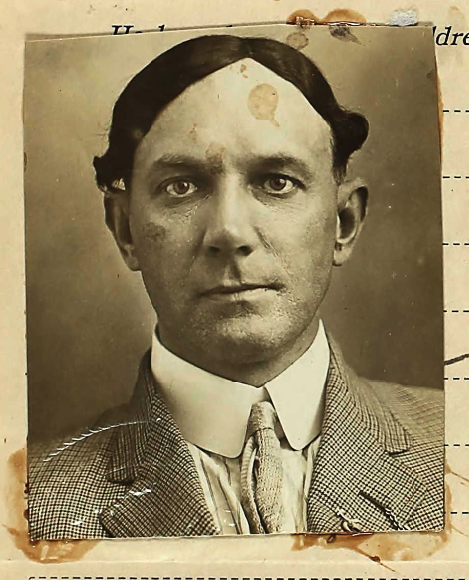
Lawrence T. Johnston, late 1910s (Ancestry.com)

The son of a prominent Nebraska lawyer, Johnston had served as a bailiff in Lincoln n the 1890s and early 1900s and later as a judge in Idaho. His real ambition, however, was in vaudeville. He studied ventriloquism and by 1920 had performed all over the United States and as far away as Australia. When he and Delmont were reunited, he was still an itinerant judge in Idaho as well as the “King of Ventriloquists,” who boasted a dummy that cried “real” tears.

Delmont and Johnston had been engaged several times before in their youth. “The last time,” however, he said, “she married a Cincinnati millionaire.” But after hearing about the death of Delmont’s grandmother and her coming to Lincoln, Johnston claimed that he left an engagement in Sioux City, Iowa to be reunited with his old flame—and to make her a star. He told the press that he was now vice president of a motion picture corporation and that his company intended soon to star Delmont. “We feel that she will be a great asset to us,” Johnston said. In the interim, however, he convinced Delmont to cash in on her notoriety.

The couple left Lincoln on Friday, February 3—the day the second Arbuckle trial ended in a hung jury—for Kansas City, Missouri. There Johnston was to appear at the Globe Theater and Delmont intended to rest due to ill health.

Once more she was met by newspapermen—but this time they wanted her reaction to the majority vote for conviction. “Politics,” Delmont said, “is playing a part in the handling of the case. I am very much surprised that the second jury stood ten for conviction and two for acquittal—surprised that the prosecution did that well.”

“Why, nobody ever thought it would be that strong,” she continued. “Everyone on the coast expected an acquittal when I left there. Arbuckle is being tried on the murder complaint to which I swore—and yet my testimony is not good enough to be introduced into the trial. They wanted to get me out of the way and they succeeded.”

Delmont also spoke of the “intrigue” that was woven throughout the affair, apparently in reference to Zey Prevost and Alice Blake, who had eclipsed her as a witness.

“Yes,” she said, “I received an offer or was ‘approached’ in connection with my testimony of the death of Miss Rappe.”

Delmont refused to answer any more questions about who had tried to get her to change or withhold her statement to San Francisco’s district attorney. But she had a reason to withhold such details, for she had been approached in another way, perhaps en route by a theater promoter, to give a lecture during the couple’s layover in Kansas City. Regarding this new opportunity, Delmont could only say that she wanted to discuss “the woman’s side of the affair”—and that many young girls who went to Hollywood so as to “get into the movies” were exploited.

Delmont’s lecture was announced in the Saturday morning Kansas City Times of February 4. The venue was Kansas City’s Empress Theater on McGee Street. Although no times were given, the tickets for her “$5,000 act” would be “at pre-war prices,” that is, ten, twenty—and thirty cents for balcony and front-row seats. The advertisement promised that Maud “Bambina” Delmont would appear as “Herself / The Woman Who Signed the Murder Charge Against Arbuckle / The Most Sensational Act on the American Stage.”

Presumably in character as the “Complaining Witness in the Arbuckle Trial,” Delmont was to “tell of the famous Arbuckle-Rappe murder case” and “rip wide the screen which hides Hollywood and the movie colony. Hers is a story for Every Father and Mother, every Young Man and Young Woman in Kansas City.”

But if she ever took the stage was left in doubt. The San Francisco Call reprinted the lone Kansas City advertisement ten days later and could only speculate that Delmont’s run at the Empress had been abortive, based on a letter that she had written to a friend in San Francisco.

Mrs. Delmont’s gray negligee with henna trimming and black hair streaked with gray, minus the usual henna trimming, is making the same hit in Kansas City that it did here when first she received representatives of the press and gave her version of the fatal party. But evidently the stage is not making much of a hit with her—or else she is not making much of a hit on the stage—for she expects to sign a contract in Chicago to appear before the women’s clubs of that country.

What is known is that Delmont had a falling out with Lawrence Johnston and the couple parted ways. Delmont traveled on to Chicago and Johnston returned to the vaudeville circuit, realizing, perhaps, that it was easier to make money with his dummy doing the talking than Maude Delmont, who turned out to be a source of disappointment for him once more. Months later, Johnston emphatically told a stage gossip columnist in Portland, Oregon, that when he reached Lincoln, he had “something to say in the matter” and that he and Maude “never were, are not and never will be married.”

mauds-kansas-city-show

[*] pp. 000–000: “Mrs. Spreckels to Wed Again?” San Francisco Examiner, 4 February 1922, 5; “Engagement Denied by Mrs. Spreckels,” San Francisco Examiner, 7 February 1922, 11; “Bambina Delmont Returns to Lincoln in Estate Case,” Morning World-Herald, 1 February 1922, 1; “Mrs. Maude Delmont Arrives in Lincoln,” Lincoln Journal Star, 1 February 1922, 4; “Longtime Romance Buds: Mrs. Delmont and Lawrence Johnston Engaged,” Nebraska State Journal, 3 February 1922, 1; “Arbuckle Witness Coming to Omaha,” Omaha Daily Bee, 2 February 1922, 2; United Press, “10 to 2 Jury Surpise to Maude Delmont,” San Francisco Chronicle, February 5, 1922, 8; “Politics Playing Part in Arbuckle Case, Woman Says: Bambina Delmont Hints at Deep-laid Intrigue,” Springfield Leader and Press, 5 February 1922, 1; “Arbuckle’s Accuser is Here Mrs. Delmont,” Kansas City Star, 5 February 1922, 10; E.C.B., “Stage Gossip and Film News,” Oregon Daily Journal, 18 September 1922, 8; “Mrs. Delmont Plays in 10-20-30s; Also in Return Engagement with Ex-Fiancé,” San Francisco Call, 13 February 1922, 3.

A magic lantern slide for A Twilight Baby, Virginia Rappe’s only star billing

As we have been writing and editing our work-in-progress on Virginia Rappe and Roscoe Arbuckle, our blog entries have been fewer in number but hardly pushed aside. We were recently alerted to the object depicted below, an artifact from a critical turning point in the life of Virginia Rappe.

Glass slide advertisement for A Twilight Baby (Authors’ collection)

Of course, many things we do and decisions we make can be regarded as turning points. It’s called the “butterfly effect.” What immediately comes to mind is Rappe’s decision, during a late breakfast in the Garden Room of the Palace Hotel in San Francisco, to accept Roscoe Arbuckle’s invitation to join his Labor Day party at the St. Francis Hotel. A decision that began a chain of events that led to her death several days later. The artifact described here represents an earlier turning point but also one that put her on the path to the ill-fated Labor Day party.

The ”artifact” in question is a specially prepared glass slide by the Excelsior Illustrating Co. obtained from a film memorabilia dealer in Australia. Typically, before the current feature and the comedy short or newsreel, the projectionist used a patented slide projector or “magic lantern” to advertise the upcoming features. In this case, it was A Twilight Baby, which premiered during the Christmas 1919 holiday, and had its run during the winter and spring of 1920. The art is by the comic book artist R. M. Brinkerhoff.

A Twilight Baby is one of the only films Henry Lehrman made at his Culver City studio, which he shared with Roscoe Arbuckle during the spring, summer, and autumn of 1919. Arbuckle made The Hayseed (1919) and The Garage (1920) there. He also enjoyed the platonic company of Virginia Rappe, who was Lehrman’s mistress at the time.

Contrary to other Arbuckle case narratives, Rappe didn’t consider herself a full-time motion picture actress. She was regarded by others as a Hollywood “society woman” though a member of the film colony “in crowd”. She preferred to model clothes. But even this vocation had become a sideline. She was literally “kept” by Lehrman, and perhaps as a small quid pro quo she was willing to lend herself to his over-the-top physical comedies.

In 1919, Lehrman planned to make an ambitious, four-reel comedy (later cut to three to appease exhibitors), his first produced on his new Culver City lot which began operating that summer. He enlisted comic actor Lloyd “Ham” Hamilton for A Twilight Baby. Lehrman envisioned a masterpiece, that would raise his profile to that of protégés, such as Arbuckle and Charlie Chaplin.

Hamilton was a popular but second-tier actor in a bowler hat who also aspired to the fame and wealth of Arbuckle and Charlie Chaplin. He had appeared in a previous Lehrman comedy, His Musical Sneeze, made for Fox Film Corporation in late 1918. Virginia Rappe also appeared in that film though there wasn’t much onscreen interaction between the two. That changed with A Twilight Baby.

Rappe had acted in a handful of motion pictures before, including her first, Paradise Garden (1917), in which she played a vamp. She also appeared alongside Rudolph Valentino in a 1918 war propaganda film-turned-comedy retitled The Isle of Love. But she likely did these out of curiosity or even for a bit of fun rather than ambition. And during the making of both films, she was in a relationship with Lehrman.

Rappe had met Lehrman no later than the spring of 1916, upon her arrival in Los Angeles and when he was at his most productive churning out slapstick two-reelers. Had she wanted to be a comedienne, he could have done that for her early on. It wasn’t until he broke with Fox a few years later that Lehrman made an obvious effort to boost Rappe’s film career.

Color-tinted lobby card (IMDb)

We say that because Lehrman had so overextended himself in 1919 and 1920 that he may used Rappe to save money. That is, he was making good on his investment in her. And Lehrman was clearly cutting costs at that time. Before he went bankrupt in late 1920, he reincorporated his company and had his accountant and “office girl” doing double-duty as directors.

Now, back to the butterfly effect. A Twilight Baby was a strange film with a strange title. The term itself seems to be original and not a reference to slang or jargon of that era. We suspect Lehrman was alluding to newborns whose mothers had taken sedatives to ease their labor. “Ham” Hamilton is the titular baby whose birth, however, was from a saxophone played by a woebegone jazz musician at sunset. As to the plot, let’s just say Hamilton is an ex-con bootlegger who finds himself at odds with a variety of characters, from outlaws to federal agents to what look like nightriders. Hamilton’s love interest is Rappe, made to look like a healthy farmer’s daughter, a part for which she may have gained weight or exploited the pounds she had gained as a society girl-turned-actress, as she was billed in publicity literature.

Trade magazine advertisement with art by R. M. Brinkerhoff (Moving Picture World)

Given the number of animals used, the elaborate stunts undertaken, the use of expensive special effects, the publicity, the costs of running the Culver City plant, and the poor return on the few productions he eked out, Lehrman’s attempt to be an independent comedy filmmaker failed in late 1920. Unsurprisingly, in the wake of this, he and Rappe began to part ways for she was a luxury he could no longer afford.

By July 1921, Henry Lehrman left Los Angeles to work under contract for Lewis J. Selznick at Ft. Lee, New Jersey, and Rappe found her own manager. She now faced either the harsh reality of surviving as an actress or finding a suitable replacement for Lehrman. (More information and images can be found at IMDb.)

Artist’s sketches from the second Arbuckle Trial

To our knowledge, the Arbuckle trials saw no courtroom artists as we have come to know their work, which often captures some compelling moment in a jury trial of public interest. During the second Arbuckle trial, however, the San Francisco Call enlisted the well-known American engraver and Western artist Fred Grayson Sayre to draw Roscoe Arbuckle and others. The Chronicle followed with several vignettes by an in-house sketch artist.

The defendant Rosce Arbuckle surrounded (clockwise) by profiles of his attorney, Gavin McNab; the prosecutor, San Francisco District Attorney Matthew Brady; his sister-in-law, Marie Durfee; and his wife, the motion picture actress Minta Durfee, San Francisco Call, January 12, 1922, p. 2 (Newspapers.com)

From left to right beginning with the top row: Marie Durfee and her sister, Minta, Arbuckle’s wife; prospective jurors (only one woman sat on the second trial’s jury); an unidentified courtroom attaché, Assistant District Attorney Milton U’Ren, and Judge Harold Louderback, San Francisco Chronicle, January 14, 1922, p. 13 (Newspapers.com).

Maude Delmont takes the blame, September 10, 1921

As we posted last week, during the second Arbuckle trial,  the defense asserted that Maude Delmont had been the first to sign a statement that accused Roscoe Arbuckle of assaulting Virginia Rappe and dragging her into room 1219—not Alice Blake and Zey Prevost. But the prosecutors insisted that Blake and Prevost had done so, hence their primacy as star witnesses. They, not Delmont, had provided enough to justify Arbuckle’s arrest—not Delmont. Delmont’s statement had come after the comedian’s arrest. Her purpose, if that is true, was only to sign a murder complaint, which the other two women likely refused to do.

When Delmont failed as a viable witness during a preliminary investigation conducted by the San Francisco coroner, she was sidelined but always kept either in reserve. She was even offered to the defense lawyers as a witness. But despite their seeming eagerness to see her on the stand, refused to call her as their own witness.

The following is the earliest statement by Delmont to the press—probably to San Francisco Call reporter Ernestine Black, during the morning of September 10. (Black bylined more than one profile of Delmont, whom she found to be a tragic if not intriguing figure in the Arbuckle case See Ernestine Black on Maude Delmont.) What is important to see here is the probably reason for the delay in Delmont making a statement to the District Attorney: she couldn’t under her doctor’s orders.


IT’S MY FAULT. BEAD ACTRESS’ GIRL CHUM CRIES[1]

A year ago Virginia Rappe and Maude Del Mont were fellow members in the cast of the glad play, Maeterlinck’s “Blue Bird.”[2] Today the former lies dead under tragic circumstances and her chum is in a state of collapse, under the care of two doctors, in her room at the Hotel St Francis.

Maude Del Mont Is haggard and frantic, finding herself only in the administrations of a trained nurse as a result of the hectic merriment in the suite of Roscoe Arbuckle which led to the death of Virginia Rappe.

“How can I get over this? It’s my fault! It’s more than I can bear.”

Such were the words she uttered today, with a frantic clasp of the hand, when a personal friend was admitted to her room.[3]

STRICKEN BY GRIEF

She lay distraught, the grief and remorse pictured on her face contrasting with the gayety of a kimono twisted about her shoulders.

In bits and snatches this is what she said:

It’s my fault. I took her there. We were pals. She was like a sister to me.

We’d been close friends for so long.[4]

What will my aunt say?[5] How can I explain this? It’s more than I can live through.

I should have been more careful. I know this—there was no better girl than Virginia and I’m ready to say it no matter what comes.[6]

I’d rather it was I who died than Virginia.

IN GRIP OF REMORSE

Her desire to express her remorse to a friend was keen, but fulfillment of it was cut short by Dr. W. P. Read, who is attending her with Dr. F. W. Callisan.[7]

Dr. Read, entering while she was talking, reiterated his order that no interviews be granted by her and said that discussion by her would only aggravate her condition. She persisted for a moment, but the physician declared he must be obeyed if he was responsible for her condition, and the friend to whom she had uttered her grief for the first time departed.

Hollywood tried to make a film adaptation of The Blue Bird a second time with Shirley Temple was the heroine. It was her last childhood role and least popular film.

[1] San Francisco Call, 10 September 1921, 2.

[2] Delmont doesn’t mean the 1918 film version directed by Maurice Tourneur. It had been filmed at Ft. Lee, not Los Angeles, and the credits for the film are fairly well documented. She means a stage production of the 1908 play, which required elaborate props and costumes if not professional actors—and there wasn’t one documented for Southern California in 1920. That said, in the first months of 1920, Maurice Maeterlinck spent a good deal of time in Los Angeles and was courted by motion picture executives to write screenplays. Among the many honors afforded to the 1911 Nobel Prize winner for Literature, the annual Orange Festival in Orange County did have a “blue bird” theme to attract the famous man. Thus, Delmont told a “white lie” to provide the missing depth to her longtime “chum.”

[3] According to his own statement to the police, Ira Fortlouis paid Maude Delmont a visit at the St. Francis during the first twenty-four hours after Rappe’s death.

[4] Delmont had only met Rappe a week earlier in Los Angeles before setting out for Selma, California, and then on to San Francisco.

[5] Delmont had no fixed address at the time. She either lived with friends in the Fresno area or with an aunt in Los Angeles.

[6] Delmont, we believe, had yet to give a full statement to the District Attorney of San Francisco. That is she wasn’t the first. How she was convinced to “willingly” sign a murder complaint against Arbuckle is a mystery. Our book does present a hypothesis.

[7] Dr. Read was a personal friend of Delmont. He taught at Stanford University’s medical school and was consulted about the feasibility of performing surgery on Virginia Rappe in a heroic effort to save her life.